Amman Travel Guide — Seven hills, one extraordinary
⏱ 11 min read📅 Updated 2026💶 €€ Mid-Range✈️ Best: Jan–Apr
€50–120/day
Daily budget
Jan–Apr & Oct–Nov
Best time
3–5 days
Ideal stay
JOD
Currency
Amman rises across seven original hills — and today across nineteen — in a cascade of honey-coloured limestone that catches the late afternoon sun in shades of amber and gold. Stand on the Citadel at dusk and the call to prayer ripples outward from a hundred minarets below while the Roman Theatre catches the last light in the valley. The scent of cardamom coffee drifts from the old souks of downtown, mixing with grilled meat smoke and fresh bread from corner bakeries. Amman is a city where a 6,000-year-old Bronze Age settlement sits a five-minute walk from a third-wave espresso bar and a contemporary art gallery. The Jordanian capital is compact enough to explore on foot across a long weekend yet layered enough to keep a traveller absorbed for a full week.
Visiting Amman often surprises travellers who expect a dusty transit stop between Petra and the Dead Sea — what they find instead is one of the Arab world's most liveable, safest and genuinely cosmopolitan capitals. Things to do in Amman range from archaeological deep dives at the Jordan Museum to late-night mezze sessions in the upscale quarter of Abdoun and street-food crawls through Hashem Restaurant's legendary downtown alley. Unlike Cairo, Amman is unhurried; unlike Dubai, it is rooted. The city has quietly become a destination in its own right, drawing design-conscious European travellers who combine it with a Wadi Rum night under the stars and a float in the Dead Sea. Prices remain refreshingly honest compared to Gulf capitals, and Jordanian hospitality — the phrase 'ahlan wa sahlan' genuinely means welcome — turns even brief encounters into memorable ones.
✦ Find your perfect destination
Is Amman really your perfect match?
Answer 12 quick questions about your travel style, budget and dates — we match you with the destinations that fit you best, from 600+ worldwide.
Amman earns its place on a serious traveller's list for reasons that go far beyond its role as a gateway city. The Citadel's Umayyad Palace and Temple of Hercules are among the Middle East's most atmospheric ruins, yet rarely overcrowded. Downtown Amman — known locally as Al-Balad — preserves the grid of a Roman colonia overlaid with Ottoman-era souks and 1950s modernist buildings in a density you can absorb in an afternoon. The city's food scene, anchored by mansaf, the national slow-cooked lamb dish, and enlivened by a wave of creative Jordanian chefs, is genuinely world-class. For European travellers, a four-hour direct flight from London, Paris or Amsterdam makes Amman one of the most accessible Middle Eastern cultural capitals on the map.
The case for going now: Amman is in the middle of a quiet renaissance. The regeneration of the Rainbow Street corridor, the expansion of the Jordan Museum's collections and a new generation of boutique guesthouses converting 1940s limestone villas into design stays all make 2026 an ideal moment to visit. The Jordanian dinar remains pegged, meaning value for European travellers has actually improved while Western inflation has risen. Tourism infrastructure has matured without yet tipping into over-tourism.
🏛️
Citadel at Sunrise
The Jabal al-Qal'a Citadel delivers panoramic views over Amman at its most cinematic. The Temple of Hercules — two massive columns with a stone hand — is the city's defining image and best photographed in early morning light.
🍽️
Mansaf & Mezze
Sitting down to mansaf — slow-braised lamb on jameed yoghurt sauce over saffron rice — at a family-style Amman restaurant is a defining cultural experience. Combine it with a downtown mezze crawl through hummus, fattoush and grilled halloumi.
🎨
Jabal Luweibdeh Arts
Amman's creative quarter clusters around Jabal Luweibdeh, where galleries like Darat al-Funun occupy a converted hillside villa above a Byzantine church ruin. Independent boutiques, murals and jazz bars make this Amman's most walkable neighbourhood for art lovers.
🌄
Wadi Rum Day Trip
Amman sits three hours from Wadi Rum's rust-red desert valleys, making an overnight extension entirely practical. The protected desert area offers jeep safaris and Bedouin camp dinners beneath a sky unobscured by any light pollution.
Amman's neighbourhoods — where to focus
Historic Core
Downtown (Al-Balad)
Downtown Amman is where the city began and where it remains most alive. The Roman Theatre anchors one end, the gold and spice souks snake through the valley, and legendary eateries like Hashem have fed locals since 1952. Chaotic, aromatic and completely authentic, Al-Balad is the essential starting point for any Amman itinerary.
Art & Cafés
Jabal Luweibdeh
Perched on one of Amman's oldest residential hills, Jabal Luweibdeh is the city's bohemian intellectual quarter. Wide stone staircases connect galleries, independent bookshops and the French Cultural Institute. Weekend brunch spots and rooftop coffee terraces attract the creative class, making it the best neighbourhood for slow morning wandering.
Boutique & Buzzing
Rainbow Street / Jabal Amman
Rainbow Street is Amman's most photogenic promenade, lined with 1940s limestone villas converted into restaurants, cocktail bars and design shops. It connects the First Circle to the Third Circle through a series of viewpoints over downtown. This is where well-travelled Ammanites and visiting Europeans converge on weekend evenings for a long dinner.
Upscale & Modern
Abdali & Sweifieh
The Abdali Boulevard development and the commercial district of Sweifieh represent modern Amman — gleaming shopping malls, international hotel chains and rooftop restaurants serving pan-Asian cuisine alongside Levantine classics. Travellers preferring comfort-focused stays with easy restaurant access will find this area both convenient and surprisingly well-priced by European standards.
Top things to do in Amman
1. #1 — Explore the Amman Citadel
The Jabal al-Qal'a, or Amman Citadel, is the single most important historical site in the Jordanian capital and the logical first stop on any Amman itinerary. Occupied continuously since the Bronze Age, the hilltop plateau holds three major monuments: the second-century Roman Temple of Hercules, whose enormous surviving columns and colossal stone hand hint at a statue that would have ranked among the ancient world's largest; the Byzantine church whose mosaic floor fragments are still visible; and the Umayyad Palace complex, a seventh-century administrative centre with a distinctively circular audience hall. The small but excellent on-site Archaeological Museum houses finds from across Jordan including rare Ain Ghazal plaster statues dating to 7000 BC. Arrive at opening time — 8 am — to have the terrace to yourself and to photograph the Roman Theatre directly below in the low morning light. Entry is included in the Jordan Pass, which most international visitors should purchase before arriving.
2. #2 — Wander Downtown and the Roman Theatre
Downtown Amman — Al-Balad — is the city's pulsating historic core, and no Amman travel guide can overstate how rewarding an unstructured morning here can be. Begin at the Roman Theatre, a 6,000-seat second-century AD amphitheatre that still hosts outdoor concerts in summer and remains the most recognisable landmark in the city. Two small museums occupy the theatre's flanking rooms: the Museum of Popular Traditions and the Jordan Folklore Museum. From the theatre, walk northwest through the covered Souk al-Bukhariyya — a covered arcade of perfume, spice and fabric stalls — until you reach the gold souk and the chaotic street-food corridor around King Faisal Street. Stop for a breakfast of falafel and hummus at Hashem Restaurant, an open-fronted institution that has served Amman's early risers since 1952. End at Al-Hussein Mosque, the city's principal mosque, whose green-and-white striped minaret is a local landmark and whose courtyard welcomes respectful non-Muslim visitors between prayer times.
3. #3 — The Jordan Museum
Opened in 2014 and continuously expanded since, the Jordan Museum in the Ras al-Ayn district is the most comprehensive single repository of Jordanian history and culture in the country — and one of the most intelligently curated national museums in the entire Middle East. The collection's undisputed highlights are the Ain Ghazal statues: a group of 25 large figurines made from lime plaster over reed frames around 7250 BC, representing some of the oldest surviving large-scale human effigies on Earth. The museum also holds the Dead Sea Scrolls copper scroll fragments and a room dedicated to the Nabataean civilisation that built Petra. Signage is thorough in English, making the Jordan Museum unusually accessible for European travellers visiting Amman without a guide. Allow two to three hours. The gift shop stocks excellent archaeology-themed ceramics and reproductions of ancient Jordanian jewellery that make distinctly non-generic souvenirs.
4. #4 — Day Trip to the Dead Sea
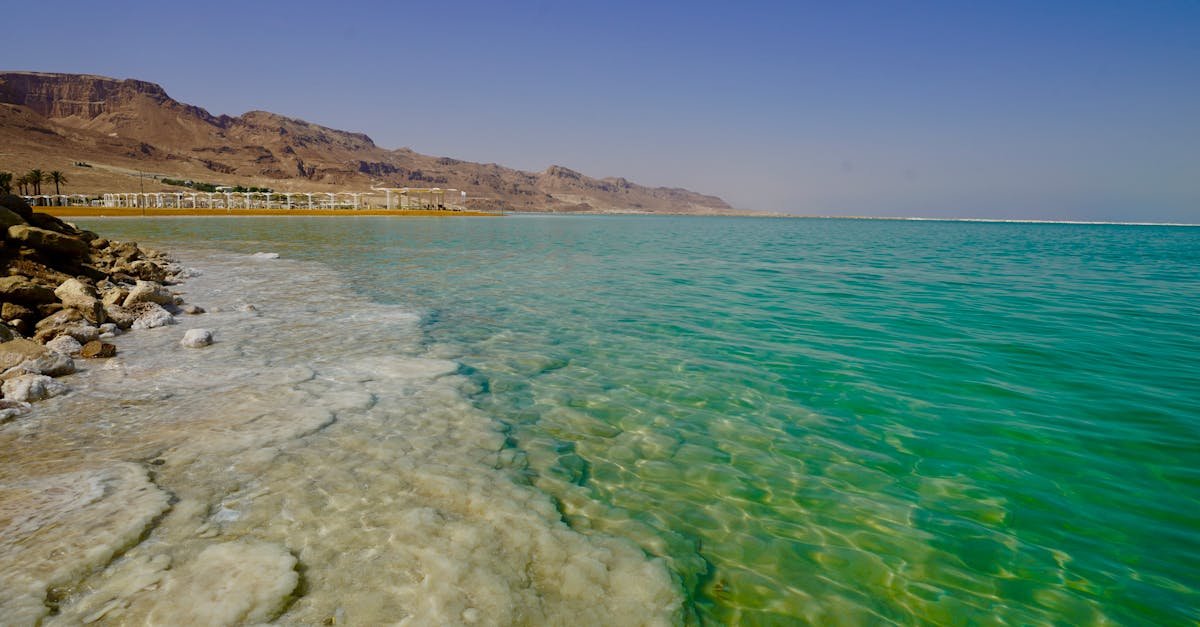
The Dead Sea lies just 55 kilometres west of Amman — less than an hour by car — making it one of the most logistically effortless day trips from any capital city in the world. At 430 metres below sea level, the Dead Sea is the lowest point on Earth's surface, and the experience of floating effortlessly in its hyper-saline waters, which are ten times saltier than the ocean, remains genuinely unlike anything else on the planet. The Jordanian shore is less commercialised than the Israeli side, and several public beach resorts charge an entrance fee of around 20–25 JOD that includes use of pools, showers and beach chairs. Smearing the famous black mineral mud from the shoreline across your skin is mandatory. Most Amman hotels can arrange shared transfers; alternatively, rent a car for a half-day and combine the Dead Sea with a stop at the mosaic-covered Byzantine churches of Madaba and the Mount Nebo viewpoint overlooking the Jordan Valley on the return journey.
What to eat in the Levant and Jordan — the essential list
Mansaf
Jordan's national dish is slow-braised lamb cooked in jameed — a dried and reconstituted goat's-milk yoghurt — served over vermicelli rice with toasted almonds and pine nuts. Eaten communally from a large tray, mansaf is ritual as much as meal.
Falafel & Hummus
Amman's downtown falafel — deep-fried chickpea fritters with a bright green herb interior — is among the best in the Arab world. Eaten wrapped in fresh khobz bread with hummus and pickled vegetables, this is the city's quintessential breakfast for under one dinar.
Knafeh
Nablus-style knafeh — shredded pastry over stretchy white cheese soaked in orange blossom syrup — is the dominant street dessert in Amman. Habibah Sweets on Prince Mohammad Street has served the definitive version since 1951 and still draws queues at 10 pm.
Musakhan
Roasted chicken layered over taboon flatbread with caramelised onions, sumac and olive oil, musakhan is a dish of Palestinian origin widely loved across Jordan. The combination of sour sumac and deeply sweet onions is arrestingly good eaten with your hands.
Mezze Spread
A proper Levantine mezze in Amman involves fifteen or more small plates: baba ghanoush, labneh, tabbouleh, warak dawali (stuffed vine leaves), and fried cauliflower with tahini. In good Amman restaurants this spread alone constitutes a complete and deeply satisfying meal.
Zarb
Originally a Bedouin method of slow-cooking meat buried underground in a sealed vessel, zarb — usually chicken or lamb — arrives at the table as falling-tender, smoke-kissed meat over spiced rice. Several Amman restaurants have adopted zarb as a centrepiece sharing dish.
Where to eat in Amman — our top 4 picks
Fine Dining
Fakhreldin
📍 King Hussein Street, 2nd Circle, Amman
Occupying a lovingly restored 1950s villa, Fakhreldin has been Amman's most celebrated Lebanese-Jordanian restaurant for decades. The mezze here is encyclopaedic — order the mixed platter for two — and the grilled lamb chops arrive over a bed of rice worthy of a national dish. Service is formal and attentive.
Fancy & Photogenic
Sufra
📍 Rainbow Street, 1st Circle, Amman
Set inside a 1940s stone villa on Rainbow Street, Sufra serves elevated traditional Jordanian cooking in one of Amman's most beautiful dining rooms — high ceilings, arched windows and hand-painted tile floors. The mansaf here is cooked to order and the meze selection is impeccable. Book a window table for city views.
Good & Authentic
Hashem Restaurant
📍 Al-Amir Mohammad Street, Downtown Amman
Perhaps the most famous restaurant in Jordan, Hashem has served falafel, ful medames and hummus from its open-fronted downtown kitchen since 1952. King Abdullah II is said to eat here. There is no menu, no decor and no pretension — just excellent food at prices that seem impossible by European standards.
The Unexpected
Shams El Balad
📍 19 Paris Square, Jabal Luweibdeh, Amman
A farm-to-table pioneer in a city not known for the concept, Shams El Balad sources organic Jordanian produce to build seasonal mezze plates that feel both ancient and contemporary. The labneh with wild thyme honey is one of the most memorable single bites in Amman. The terrace is a neighbourhood gathering point on weekend lunchtimes.
Amman's Café Culture — top 3 cafés
The Institution
Books@Café
📍 Omar Bin Al-Khattab Street, 1st Circle, Amman
One of Amman's longest-running cultural venues, Books@Café combines a substantial second-hand bookshop with a terrace café that overlooks downtown from the first circle. It was a pioneering openly inclusive space in Jordan and remains a touchstone of the city's liberal cultural identity. The cardamom coffee and mint lemonade are benchmarks.
The Aesthetic Hub
Jabal Amman Bakery & Café
📍 Rainbow Street, Jabal Amman, Amman
A beautifully designed café-bakery inside a restored 1940s limestone house on Rainbow Street, this spot produces exceptional sourdough alongside Arabic pastries and serves single-origin espresso from a thoughtfully curated menu. The interior — exposed stone walls, trailing plants, brass fittings — photographs as well as any café in the region.
The Local Hangout
Al Qods Café
📍 King Faisal Street, Downtown Amman
A no-frills downtown institution where Amman's taxi drivers, students and retired merchants have been drinking heavily sugared tea and smoking argileh since the 1970s. Formica tables, football on television and an overwhelming sense of authentic local life make Al Qods the genuine antidote to Instagram coffee tourism. Order the qishr — spiced coffee husk drink.
Best time to visit Amman
Jan
Feb
Mar
Apr
May
Jun
Jul
Aug
Sep
Oct
Nov
Dec
Peak Season (Jan–Apr & Dec) — mild sunny days, 14–22°C, ideal for sightseeing and day tripsShoulder Season (Oct–Nov) — warm and clear, slightly busier than springHot or Transition (May–Sep) — summer heat 35°C+, quieter, best for budget travellers
Amman events & festivals 2026
Whether you're planning around a specific celebration or simply want to know what's happening, this guide covers the best events and festivals in Amman — from major annual traditions to cultural highlights worth timing your trip around.
April 2026culture
Souk Jara
One of the Local artisans, food producers and designers fill the outdoor market with handmade ceramics, embroidered textiles and Jordanian olive oils. It has been Amman's most beloved weekly cultural gathering since 2009.
July 2026culture
Jerash Festival of Culture and Arts
Held annually within the Roman ruins of Jerash, just 50 kilometres north of Amman, this three-week festival of theatre, dance, music and poetry transforms the ancient Oval Plaza and Hippodrome into an open-air stage. Arab and international performers appear alongside Jordanian traditional music ensembles — one of the best festivals in the wider Amman region.
March 2026culture
Amman International Film Festival — Awal Film
The Awal Film Festival celebrates debut feature films from Arab directors and screens international first features at venues across Amman including the Royal Film Commission. Discussions, workshops and industry panels make it a genuine cultural exchange rather than a celebrity parade. It is a highlight of the Amman arts calendar each spring.
November 2026music
Sounds of Jordan Festival
An annual celebration of traditional and contemporary Jordanian and Arab music performed across intimate venues in Amman's creative quarters. Genres range from maqam classical Arabic music to fusion ensembles blending oud with electronic production. The festival has been growing its international audience steadily since its founding.
February 2026religious
Isra' Mi'raj
Commemorating the Prophet Mohammed's Night Journey, Isra' Mi'raj sees Amman's mosques, streets and historic buildings illuminate across the city. The Al-Husseini Mosque in downtown and the King Abdullah I Mosque both hold special evening prayers. For visiting travellers, the atmospheric street lighting and festive energy make a beautiful late-evening walk.
October 2026culture
Jordan Running Adventure Race
An increasingly popular trail running event that takes competitors through Amman's seven hills and the surrounding wadis. The race attracts both elite Jordanian athletes and recreational international runners. The route passes through archaeological zones and residential districts rarely visited by standard tourists, offering a unique perspective on greater Amman.
December 2026market
Amman Christmas Market
Jordan's Christian community — roughly four percent of the population — holds a festive Christmas market in the western Amman districts of Sweifieh and Abdali each December. Alongside nativity displays, the market sells handmade olive-wood crafts, Jordanian sweets and imported European goods. The atmosphere is warm and cross-community.
April 2026culture
Jordan Heritage Festival
Organised across multiple Amman cultural institutions, the Jordan Heritage Festival showcases intangible cultural heritage including Bedouin storytelling, traditional weaving demonstrations, dabke folk dancing and the preparation of ceremonial mansaf. Events take place at the Jordan Museum, the Royal Cultural Centre and open squares across downtown Amman.
September 2026culture
Amman Design Week
Launched as a regional platform for Arab creative industries, Amman Design Week fills the Ras al-Ayn district with installations, product design exhibitions and architecture talks. Jordanian graduates exhibit alongside established regional studios. The event has helped position Amman as the Arab world's emerging design capital alongside Beirut.
June 2026music
Amman Jazz Festival
An annual summer jazz event held at venues including the Roman Theatre and outdoor stages in Jabal Luweibdeh, the Amman Jazz Festival features Jordanian musicians alongside invited international performers. Evening concerts against the lit backdrop of the Roman
Hostels in downtown Amman, falafel breakfasts at Hashem, shared taxis (service) and Jordan Pass for site entry.
€€ Mid-range
€50–120/day
Boutique guesthouses on Rainbow Street, sit-down restaurants, private taxis and one or two day trip excursions.
€€€ Luxury
€150+/day
Four and five-star hotels such as the Four Seasons or Kempinski, private guided tours and fine dining at Fakhreldin.
Getting to and around Amman (Transport Tips)
By air: Queen Alia International Airport (AMM) is Jordan's main hub, located 32 kilometres south of central Amman. Royal Jordanian operates direct flights from London Heathrow, Paris CDG, Amsterdam, Frankfurt and several other European capitals. Budget carriers including Ryanair and Wizz Air have added seasonal routes, making Amman increasingly accessible to European travellers at competitive fares.
From the airport: The JETT Airport Express Bus runs from Queen Alia Airport to the 7th Circle in Amman for approximately 3 JOD (around €4) and takes 45–60 minutes depending on traffic. Metered taxis from the official taxi rank cost 20–25 JOD to downtown. Ride-hailing apps Careem and Uber both operate at the airport and offer fixed-price quotes with no negotiation required. Avoid unofficial drivers who approach inside the terminal building.
Getting around the city: Central Amman's main sites are clustered enough to walk between them with some uphill effort — the Citadel, downtown and Rainbow Street are all within a 30-minute walk on the same ridgeline. For cross-city travel, Careem and Uber are the recommended options: reliable, air-conditioned and very affordable at roughly 2–5 JOD per ride within central Amman. Yellow metered taxis also work well provided you insist the driver uses the meter. A limited bus network exists but is impractical for most visitor itineraries.
Transport Safety & Scam Prevention:
Insist on the Taxi Meter: Some downtown taxi drivers will quote a flat fare significantly above the metered rate to tourists. Simply say 'meter please' before entering. The short ride from downtown to Rainbow Street should cost under 3 JOD on the meter.
Buy the Jordan Pass Before You Fly: The Jordan Pass (purchased online before arrival from jordanpass.jo) covers the visa fee and entry to over 40 sites including Petra and the Amman Citadel. Buying it in-country or via a hotel concierge sometimes attracts an unnecessary commission fee.
Currency Exchange — Skip Airport Desks: Airport currency exchange counters offer poor rates on the Jordanian dinar. Use an ATM on arrival or exchange at the many reputable exchange offices in downtown Amman, where rates are significantly better and no commission is charged.
Do I need a visa for Amman?
Visa requirements for Amman depend on your nationality. Select your passport below for an instant answer — based on the Passport Index dataset for entry into Jordan.
ℹ️ Indicative only. Always verify with the official consulate before booking. Data: Passport Index, April 2026.
For detailed requirements, documentation checklists and processing times by nationality: TravelDoc →
Search & Book your trip to Amman
Find the best flight routes and hotel combinations using our partner Kiwi.com.
Frequently Asked Questions
Is Amman safe for tourists?
Amman is consistently rated one of the safest capital cities in the Middle East and North Africa region for international travellers. Jordan's political stability, strong rule of law and a culture of hospitality toward foreign visitors mean that petty crime affecting tourists is genuinely rare. Solo female travellers visit widely and report feeling secure in most central neighbourhoods, though as with any city, avoiding poorly lit areas late at night is sensible. The main safety consideration for Amman visitors is Jordan's regional geopolitical context — the UK and German foreign offices monitor the situation but currently advise normal travel. Always check current government travel advisories before departure.
Can I drink the tap water in Amman?
Amman's tap water is technically treated and declared safe by municipal standards, but most residents and experienced travellers drink bottled water due to the ageing distribution infrastructure and the high mineral content of the local supply. Bottled water is extremely cheap — 0.30 JOD for a 1.5-litre bottle from any supermarket or corner shop — so there is no financial reason to risk stomach discomfort. Use tap water freely for brushing teeth. Restaurants universally serve bottled water, and free filtered water refill stations exist at the Jordan Museum and several major tourist sites.
What is the best time to visit Amman?
The best time to visit Amman is between January and April, when temperatures sit between 10°C and 22°C — warm enough for sightseeing at the Citadel and outdoor dining on Rainbow Street, cool enough for long walking days. Spring also brings wildflowers to the surrounding hills and clear skies ideal for the drive to Wadi Rum and the Dead Sea. October and November offer a second pleasant window with warm days and cooling evenings. Summer (June–August) brings genuine heat — 35°C+ regularly — and is best left to budget travellers who benefit from reduced hotel rates and quieter sites.
How many days do you need in Amman?
For the city itself — Citadel, Roman Theatre, Jordan Museum, downtown souks and the neighbourhoods of Jabal Luweibdeh and Rainbow Street — three full days is the right minimum for a satisfying Amman itinerary. However, Amman's greatest strength is as a base: the Dead Sea (one hour), Madaba and Mount Nebo (90 minutes), Jerash (one hour) and Petra (three hours) are all realistic day or overnight trips. A five-day Amman-based stay combining the city with two or three excursions is the configuration most visitors find ideal. If you plan to extend into Wadi Rum and Petra overnight, seven to ten days gives you a genuinely complete Jordan experience without feeling rushed.
Amman vs Beirut — which should you choose?
Amman and Beirut are both Levantine Arab capitals with rich food cultures, hilltop neighbourhoods and cosmopolitan populations, but they offer quite different experiences in 2026. Amman is calmer, more affordable, significantly safer for first-time Middle East visitors and better positioned as a base for Jordan's extraordinary archaeological sites — Petra, Jerash and Wadi Rum are all easy from Amman. Beirut has historically offered a more electric nightlife, a richer French-influenced architectural heritage and a more edgy creative scene, but ongoing economic and security instability makes it a more complex destination to navigate. For most European first-time visitors to the region, Amman is the more straightforward and rewarding choice, with Beirut better suited to experienced regional travellers.
Do people speak English in Amman?
English is widely spoken in Amman by hotel staff, restaurant workers, taxi drivers, museum guides and most people working in the tourism and business sectors. Jordan's educated urban population has a high rate of English literacy, and university-educated Ammanis often speak excellent English alongside Arabic and French. In downtown markets and local cafés you may encounter less English, but basic transactional communication is almost always possible and locals are consistently patient and helpful with visitors. Learning a few Arabic phrases — 'shukran' (thank you), 'min fadlak' (please), 'kam hatha' (how much) — is warmly received and will noticeably improve your interactions across the city.
★ Hidden Gems Weekly
Like this? One place per week, in your inbox.
No spam, no fluff — just one underrated destination, every Tuesday.
Hand-picked and verified by Max, who founded Vacanexus from Luxembourg in 2026. No sponsorships, no paid placements. Every recommendation — restaurants, neighbourhoods, things to do — is selected for authenticity over popularity.