Bilbao Travel Guide — Where industrial grit became architectural legend
⏱ 11 min read📅 Updated 2026💶 €€ Mid-Range✈️ Best: Apr–Aug
€50–120/day
Daily budget
Apr–Aug
Best time
3–5 days
Ideal stay
EUR
Currency
Bilbao greets you with the smell of Atlantic rain on old stone and the hiss of something frying in olive oil two streets away. The city sits in a steep river valley in Spain's Basque Country, its hillsides stitched together by funiculars and footbridges, its old quarter loud with laughter spilling from pintxos bars on Calle García Rivero. Bilbao feels genuinely alive in a way that larger Spanish cities sometimes forget to be — compact enough to cross on foot, complex enough to reward a full week. The titanium scales of the Guggenheim catch afternoon light like a living creature breathing at the water's edge, and the experience of arriving at it for the first time remains one of European travel's great theatrical moments.
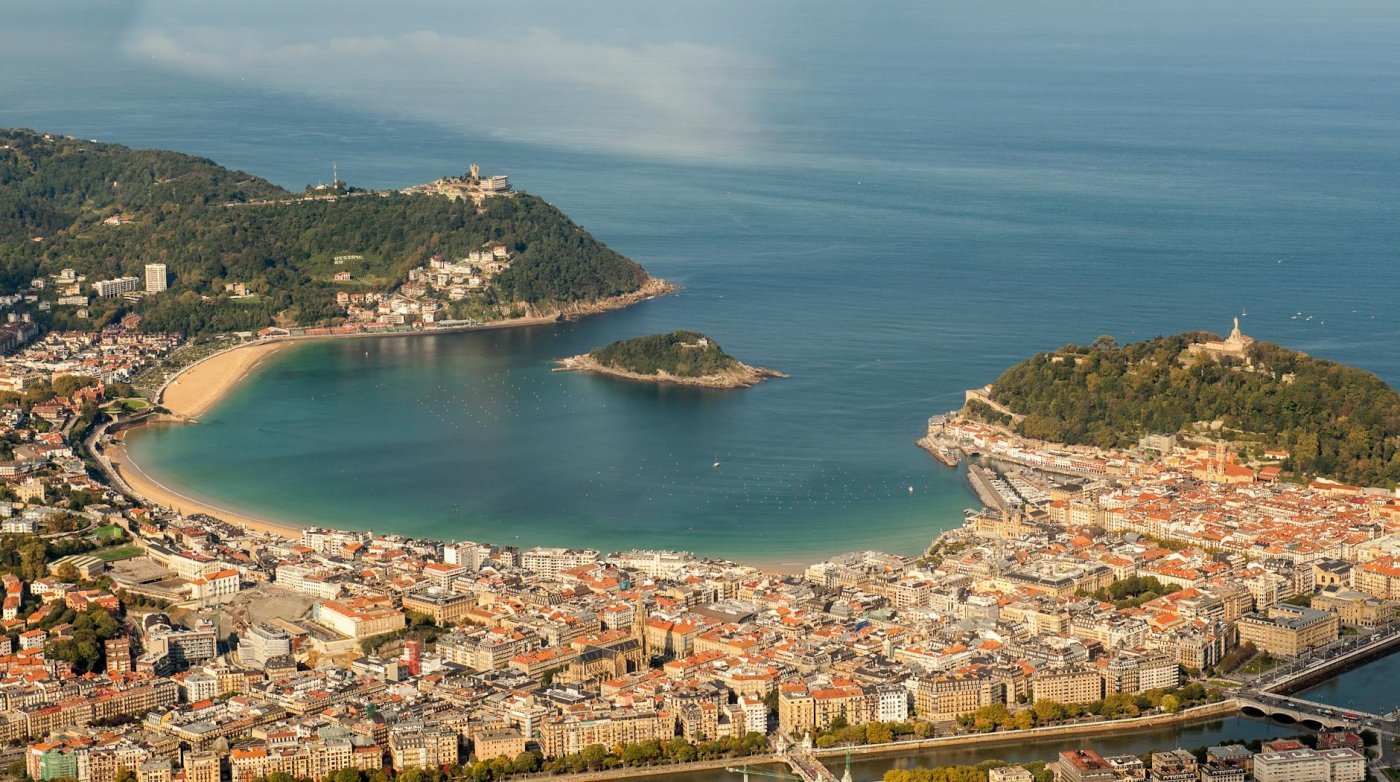
Compared to San Sebastián, which dazzles with beach glamour and Michelin density, visiting Bilbao feels rawer and more surprising — a place that reinvented itself spectacularly rather than simply polishing its existing beauty. Things to do in Bilbao span world-class contemporary art, a genuinely labyrinthine medieval quarter, mountainside villages reachable in twenty minutes, and a pintxos culture that arguably rivals anything the rest of Spain produces at street level. The Bilbao itinerary that most satisfies tends to mix the grand set-pieces — Guggenheim, the covered Mercado de la Ribera, the Zubizuri footbridge — with getting happily lost between bars in the Casco Viejo as dusk rolls in off the Nervión river.
✦ Find your perfect destination
Is Bilbao really your perfect match?
Answer 12 quick questions about your travel style, budget and dates — we match you with the destinations that fit you best, from 600+ worldwide.
Bilbao is one of Europe's most compelling urban turnaround stories. In the 1980s it was a post-industrial city struggling with unemployment and pollution; today it is a benchmark for what architecture, public investment, and cultural ambition can do to a city's soul. The Guggenheim Bilbao catalysed a transformation that economists literally named the Bilbao Effect. Yet beyond that headline building, Bilbao rewards visitors with one of Spain's most serious food cultures, a medieval old town that stayed lived-in and local, and green Basque mountains on every horizon. It is more affordable than San Sebastián and more authentic than many comparable European city-break destinations.
The case for going now: Bilbao is hitting a sweet spot in 2025–2026: the metro system has expanded its southern connections, the Alhóndiga cultural centre continues to grow its programme, and Basque gastronomy is attracting more international attention than ever without yet pricing out the mid-range traveller. Direct flights from Paris, Amsterdam, Brussels, and London have multiplied, making a long weekend in Bilbao more accessible than at any previous point. Visit before the crowds that still cluster in San Sebastián discover that Bilbao offers equivalent pleasures at noticeably lower prices.
🏛️
Guggenheim Bilbao
Frank Gehry's titanium masterpiece is not just a museum but an urban event. The building's fluid curves alongside the Nervión river contain some of the most significant contemporary art collections in Europe.
🍷
Pintxos Crawl
Bilbao's bar counters groan under architectural towers of bread, anchovy, and jamón. The Casco Viejo's Siete Calles district turns an evening pintxos crawl into a competitive, delicious sport.
🌅
Mount Artxanda Views
A short funicular ride from the Casco Viejo delivers panoramic views over the entire Bilbao valley. Sunset here, with the city spread below and the Pyrenean foothills behind, is genuinely breathtaking.
🎭
Casco Viejo Wander
The medieval seven-street core of Bilbao is compact, pedestrianised, and packed with independent shops, market halls, and churches that predate the city's industrial explosion by five centuries.
Bilbao's neighbourhoods — where to focus
Historic Core
Casco Viejo
The original medieval heart of Bilbao clusters around the Siete Calles — seven narrow streets dating to the 14th century. Today it is the beating social centre of the city: pintxos bars open at noon, the Mercado de la Ribera anchors the riverfront, and the Gothic Catedral de Santiago watches over the whole energetic scene.
Museum District
Abandoibarra
The former docklands along the left bank of the Nervión were transformed from the 1990s onward into Bilbao's grand cultural promenade. The Guggenheim, the Euskalduna Concert Hall, and the Palacio de Congresos all sit here, linked by Santiago Calatrava's elegant Zubizuri footbridge and wide riverside walkways.
Bourgeois Elegance
Ensanche
Bilbao's 19th-century extension was planned on a rational grid and filled with wide boulevards, art nouveau facades, and the city's finest department stores. The Gran Vía de Don Diego López de Haro runs through its spine, lined with banks, hotels, and the graceful Parque de Doña Casilda that locals use as an urban lung.
Creative & Local
Bilbao La Vieja
Just across the Nervión from the Casco Viejo, this formerly rough neighbourhood has been slowly colonised by studios, craft beer bars, independent galleries, and multicultural restaurants. It retains a genuine edge that the rest of Bilbao's increasingly polished centre has largely lost, making it essential for understanding the city's actual present.
Top things to do in Bilbao
1. Explore the Guggenheim Museum
No Bilbao travel guide can sidestep the Guggenheim, and none should try — it genuinely deserves its reputation. Designed by Frank Gehry and opened in 1997, the museum is simultaneously a building, a sculpture, and a piece of civic theatre. Its permanent collection includes Richard Serra's monumental Matter of Time installation, a series of vast weathered steel ellipses that visitors walk through in a genuinely disorienting, memorable experience. The temporary exhibitions change seasonally and frequently draw touring shows of international significance. Allow at least three hours inside, then spend another thirty minutes simply circling the exterior — the building looks different from every angle and at every hour of the day. Jeff Koons's flower-covered Puppy guards the main entrance and has become the unofficial mascot of modern Bilbao.
2. Follow a Pintxos Route Through Casco Viejo
The pintxos culture of Bilbao is not a tourist performance — it is how the city actually eats and socialises, which is exactly what makes it so compelling. The protocol is simple: stand at the bar, point at whatever looks extraordinary on the counter, order a small glass of txakoli or local beer, eat, pay, and move on to the next bar fifty metres away. The Siete Calles district in the Casco Viejo offers the densest concentration of serious pintxos bars in Bilbao: Bar Gure Toki on Plaza Nueva does creative seafood combinations; El Globo on Calle Diputación is legendary for its gildas and tortilla. Budget roughly €2–3 per pintxo and €2 per drink, plan for five to seven stops, and start no earlier than 7pm when the bars are at their liveliest and the pintxos freshest.
3. Ride the Funicular to Mount Artxanda
Bilbao sits in a valley so steep that the surrounding mountains feel like walls until you climb one. The Funicular de Artxanda has been transporting residents to the summit since 1915 and remains one of the most affordable and rewarding short trips in the Basque Country. The ride takes just three minutes from the city-centre station near the Ayuntamiento bridge, but the view from the top is a complete revelation: the entire Bilbao metropolitan valley unfolds below, with the river Nervión threading through it and the Guggenheim just visible among the buildings. There is a modest restaurant and park at the top, and several walking trails extend further along the ridge. Sunset from Artxanda, particularly in summer when the light holds until well past 9pm, is one of the best free experiences in Bilbao.
4. Visit the Mercado de la Ribera
The Mercado de la Ribera claims the title of Europe's largest covered market, a fact that becomes believable once you are inside its three-storey art deco interior overlooking the Nervión. Built in 1929 and recently renovated, the market is where Bilbao's serious cooks and restaurants source their produce each morning: whole turbots, glistening anchovies from the Cantabrian coast, wild mushrooms from the surrounding hills, and Idiazabal cheese wheels aged in mountain caves. The ground floor has increasingly tilted toward casual eating with good pintxos bars and fresh juice stands, making it as good for breakfast as for a market browse. Come between 9am and 1pm on a weekday to see it at full working intensity, and pick up a bag of dried Gernika peppers as an edible souvenir that will survive the journey home.
What to eat in the Basque Country — the essential list
Pintxos
The defining Basque small bite — a slice of crusty bread topped with anything from a single anchovy to an elaborate tower of crab, pepper, and aioli. In Bilbao, eating pintxos at a crowded bar counter is the primary social ritual.
Bacalao al Pil-Pil
Salt cod cooked slowly in olive oil and garlic until the gelatin from the fish creates a thick, silky emulsified sauce. This deceptively simple Basque classic is a staple of Bilbao's traditional restaurants and almost impossible to replicate at home.
Gilda
The original pintxo: a single skewer of a pickled guindilla pepper, a fat brined olive, and a salted anchovy. Named after the Rita Hayworth film, it is salty, spicy, and briny all at once — perfect with cold txakoli wine.
Marmitako
A hearty Basque fisherman's stew of bonito tuna, potato, onion, and choricero pepper. Traditionally made at sea, it is now a fixture of Bilbao's home cooking and appears on menus throughout the autumn tuna season.
Txakoli
The local white wine of the Basque Country — poured from height to create a light natural fizz, bracingly acidic, low in alcohol, and the ideal companion to seafood pintxos. Produced in vineyards just thirty minutes from Bilbao.
Idiazabal Cheese
A firm, lightly smoked sheep's milk cheese made in the mountains of the Basque Country and Navarra. It appears on pintxos counters sliced thin, grilled with quince jam, or simply with a glass of local red wine.
Where to eat in Bilbao — our top 4 picks
Fine Dining
Azurmendi
📍 Legina Auzoa, s/n, 48196 Larrabetzu, Bilbao
Chef Eneko Atxa's three-Michelin-star restaurant outside Bilbao is one of Spain's most celebrated tables, combining avant-garde Basque cooking with an extraordinary commitment to sustainability. The tasting menu begins in the greenhouse and ends at a table overlooking the vineyards — a complete sensory experience worth every euro.
Fancy & Photogenic
Restaurante Nerua
📍 Abandoibarra Etorbidea, 2, 48009 Bilbao
Located inside the Guggenheim Museum itself, Nerua has one Michelin star and a menu that reads like a love letter to the Basque coast. The dining room is all clean lines and museum-quality light; the cooking is precise and product-focused, with Cantabrian seafood at its centre. Book weeks in advance.
Good & Authentic
Restaurante Gure Toki
📍 Plaza Nueva, 12, 48005 Bilbao
On the elegant arcaded Plaza Nueva, Gure Toki manages to be simultaneously a serious pintxos bar and a sit-down restaurant worth lingering in. The counter pintxos are creative and well-executed; the full menu leans into traditional Basque preparations with quality ingredients. Prices are reasonable given the address and calibre.
The Unexpected
Mina Restaurante
📍 Muelle Marzana, s/n, 48003 Bilbao
Set in a former warehouse on the riverbank at the edge of the Casco Viejo, Mina has one Michelin star and a devoted local following. Chef Álvaro Garrido produces technically refined tasting menus that feel personal rather than performative — quieter in tone than Bilbao's more famous tables but arguably more consistently satisfying.
Bilbao's Café Culture — top 3 cafés
The Institution
Café Bar Bilbao
📍 Plaza Nueva, 6, 48005 Bilbao
A Bilbao institution that has occupied the corner of Plaza Nueva since 1911, its interior preserved in beautiful early-20th-century tilework and dark wood. The coffee is strong and properly made; the counter holds a reliable selection of classic pintxos at all hours. A morning visit here sets the tone for the whole city.
The Aesthetic Hub
La Granja
📍 Plaza Circular, 3, 48001 Bilbao
A grand art nouveau café near the main train station with soaring ceilings, leather banquettes, and a clientele that mixes business lunches with unhurried coffee drinkers. The hot chocolate here is thick enough to require a spoon, and the churros are among the best in the Basque Country. A beautiful space to sit and watch Bilbao move past the windows.
The Local Hangout
Berton Kafea
📍 Calle Jardines, 11, 48005 Bilbao
A neighbourhood café deep in the Casco Viejo that operates on strictly Basque time: pintxos at noon, a set lunch menu for workers, and coffee conversations that extend well past the hour. No tourist trappings, mismatched furniture, and a txakoli-by-the-glass list that would embarrass many wine bars. Exactly the kind of place Bilbao does effortlessly.
Best time to visit Bilbao
Jan
Feb
Mar
Apr
May
Jun
Jul
Aug
Sep
Oct
Nov
Dec
Peak Season (Apr–Aug) — long days, outdoor dining, festivals, warmest temperaturesShoulder Season (Mar, Sep–Oct) — quieter, good value, mild weather with occasional rainOff-Season (Nov–Feb) — cooler and wetter; indoor culture and pintxos still excellent
Bilbao events & festivals 2026
Whether you're planning around a specific celebration or simply want to know what's happening, this guide covers the best events and festivals in Bilbao — from major annual traditions to cultural highlights worth timing your trip around.
August 2026culture
Aste Nagusia (Big Week)
Bilbao's defining annual festival transforms the entire city for nine days in mid-August. More than a million people attend; events span concerts, txosnas (traditional food and drink tents), fireworks competitions, and Basque rural sports. Visiting Bilbao in August means experiencing Aste Nagusia — plan accommodation months ahead.
July 2026music
BBK Live Festival
One of Spain's most respected music festivals, held across three days on Mount Kobetamendi overlooking Bilbao. The lineup consistently draws major international acts across multiple stages. The festival site offers panoramic views of the city below, making it one of the most scenic festival settings in Europe.
April 2026culture
Bilbao Exhibition Centre Trade Fairs
Spring brings a series of major trade and consumer fairs to the BEC in Barakaldo, adjacent to Bilbao. The annual furniture and interiors fair in April is open to the public and reflects the Basque Country's strong design culture. A good addition to a Bilbao itinerary in early spring when other crowds are thin.
June 2026music
Bilbao BBK Music Legends Festival
A separate event from BBK Live, this June festival in Bilbao focuses on classic rock and pop acts, drawing an older crowd than the main summer festival.
September 2026culture
Bilbao International Film Festival (Zinebi)
Held annually since 1959, Zinebi is Spain's oldest film festival and focuses on documentary and short film. Screenings take place across city cinemas during late November, but the September programme announcements draw early bookings. A culturally serious event that rewards film-focused visitors to Bilbao.
January 2026religious
Festividad de San Antón
On 17 January, the neighbourhoods surrounding the church of San Antón in the Casco Viejo celebrate with bonfires, traditional music, and the blessing of animals. One of Bilbao's most atmospheric and genuinely local winter festivals, offering a window into Basque religious and folk traditions.
May 2026culture
Bilbao Night Marathon
The annual Bilbao Night Marathon routes thousands of runners through the city's most iconic streets and riverside paths after dark in May. Spectators line the Abandoibarra waterfront and the Casco Viejo, making it an unexpectedly festive evening even for non-runners visiting Bilbao at that time.
December 2026market
Santo Tomás Market
On 21 December, the feast of Saint Thomas, Plaza Nueva and surrounding streets fill with farmers and producers from across the Basque Country selling traditional foods, cheese, cider, and handmade goods. A genuinely agricultural market rather than a tourist Christmas affair — one of the most authentic seasonal events in Bilbao.
October 2026culture
Bilbao Basket Week
The Bilbao Basket professional team's home season begins in autumn, and the Bilbao Arena fills with passionate Basque sports fans for each home match. Basketball is the second religion of the Basque Country after Athletic Club football, and attending a game is one of the most underrated local experiences in the city.
February 2026culture
Bilbao Carnival (Inauteriak)
Bilbao's carnival celebrations follow Basque tradition with satirical floats, elaborate costumes, and the ceremonial trial and burning of the sardine figure that marks the end of festivities. The Casco Viejo hosts the most concentrated street celebrations, and the Basque-language humour and music give the event a distinctly local character.
Hostel dorm or simple guesthouse, pintxos for meals, free museums on certain days, metro transport.
€€ Mid-range
€70–120/day
Central 3-star hotel, sit-down lunches, Guggenheim entry, occasional taxi, wine with dinner.
€€€ Luxury
€180+/day
Gran Domine or Gran Hotel Domine, Michelin-starred dinners, private tours, taxis everywhere.
Getting to and around Bilbao (Transport Tips)
By air: Bilbao Airport (BIO), officially Aeropuerto de Bilbao, sits 12km north of the city centre and is served by direct flights from most major European hubs. Ryanair, Vueling, Iberia, easyJet, and Transavia connect Bilbao to London, Paris, Amsterdam, Brussels, Frankfurt, Rome, and Lisbon, among others. Journey times from London Stansted are approximately two hours.
From the airport: The most convenient option from Bilbao Airport into the city centre is the Bizkaibus A3247 express bus, which runs every 30 minutes and reaches Termibús bus station in around 30 minutes for under €3. Taxis are metered and cost approximately €25–30 to the Casco Viejo. Uber and Cabify both operate in Bilbao and typically undercut the taxi fare. There is no direct metro connection to the airport.
Getting around the city: Bilbao has one of Spain's most user-friendly urban transport systems. The metro, designed with stations by Norman Foster, covers the city and extends along the coast to Getxo and Plentzia. A single metro ticket costs €1.75; a rechargeable Barik card reduces this significantly. Trams (EuskoTran) link the Casco Viejo with the Guggenheim and Abandoibarra waterfront for €1.50. The city is also extremely walkable — the Casco Viejo to the Guggenheim is a flat 20-minute walk along the river.
Transport Safety & Scam Prevention:
Taxi Overcharging from Airport: Always ensure the taxi metre is running from Bilbao Airport. The legitimate metered fare to the city centre should be €25–30; if a driver quotes a flat rate significantly above this, decline and take the next cab or the Bizkaibus instead.
Unofficial Pintxos Pricing: In a small number of tourist-facing bars near the Guggenheim, pintxos may be priced at €4–5 each without clear display. Legitimate Bilbao pintxos bars display their prices clearly on the bar or a nearby board; if pricing is absent, ask before ordering.
Pickpocketing in Casco Viejo Crowds: Bilbao is very safe by European standards, but the dense crowds around the Siete Calles during Aste Nagusia create the usual festival pickpocket risk. Use a front pocket or zipped bag during the big August festival week and in the most crowded bar streets at night.
Do I need a visa for Bilbao?
Visa requirements for Bilbao depend on your nationality. Select your passport below for an instant answer — based on the Passport Index dataset for entry into Spain.
ℹ️ Indicative only. Always verify with the official consulate before booking. Data: Passport Index, April 2026.
For detailed requirements, documentation checklists and processing times by nationality: TravelDoc →
Search & Book your trip to Bilbao
Find the best flight routes and hotel combinations using our partner Kiwi.com.
Frequently Asked Questions
Is Bilbao safe for tourists?
Bilbao is one of the safest mid-sized cities in Spain and consistently ranks well in European urban safety comparisons. Violent crime affecting tourists is extremely rare. The Casco Viejo and Abandoibarra waterfront are busy and well-lit at all hours. The only area requiring minor awareness is Bilbao La Vieja after midnight, where the nightlife scene can become noisy and occasionally boisterous, though serious incidents are uncommon. Standard precautions during the Aste Nagusia festival crowds in August apply — keep valuables secured in dense street gatherings.
Can I drink the tap water in Bilbao?
Yes, tap water in Bilbao is treated to high standards and is perfectly safe to drink. The water quality meets all EU drinking water directives. Some visitors find it has a mild chlorine taste, particularly in summer, so a filtered water bottle is a comfortable option if you are sensitive to this. Locals generally drink tap water at home without concern, though restaurants will default to offering bottled water — simply ask for 'agua del grifo' to get tap water at no charge.
What is the best time to visit Bilbao?
The best time to visit Bilbao is between April and August. Spring (April–June) offers mild temperatures, longer days, green Basque hillsides, and manageable crowds, making it ideal for combining museum visits with walking and day trips. July brings the BBK Live festival and warm weather. August is dominated by the extraordinary Aste Nagusia festival but is also the busiest and most expensive month. September and October are excellent shoulder months with comfortable temperatures and significantly fewer visitors. Winter is rainy and cool but never truly cold, and the city's pintxos culture continues year-round.
How many days do you need in Bilbao?
Three days covers Bilbao's essential highlights comfortably: the Guggenheim, the Casco Viejo and its pintxos culture, the Mercado de la Ribera, and a trip up to Artxanda. Five days allows you to add meaningful day trips — Gernika, Getxo's coast, or the hanging bridge at Bizkaia — plus time to sit in the city's cafés and explore the Ensanche and Bilbao La Vieja neighbourhoods at a realistic pace. A full week suits travellers who want to add Rioja wine country or San Sebastián, venture deeper into Basque gastronomy with a tasting menu reservation, or simply absorb the city's rhythm without rushing between sights.
Bilbao vs San Sebastián — which should you choose?
Bilbao and San Sebastián are different cities that happen to share a region, a language, and an extraordinary food culture. San Sebastián dazzles with La Concha beach, a higher density of Michelin stars per capita than anywhere else in the world, and an undeniable beauty that can tip into self-consciousness. Bilbao is rawer, more urban, more surprising — a city you discover rather than admire from the outside. San Sebastián suits travellers prioritising beach, refined dining, and a polished experience; Bilbao suits those who prefer cultural depth, contemporary architecture, neighbourhood authenticity, and significantly lower prices. Ideally, visit both — they are 90 minutes apart by train.
Do people speak English in Bilbao?
English is widely spoken in tourist-facing contexts in Bilbao — at the Guggenheim, in hotels across all price ranges, and in restaurants in the Abandoibarra district and upmarket parts of the Ensanche. In the Casco Viejo's pintxos bars and neighbourhood cafés, English capability is variable and often limited, though communication over a bar counter is usually manageable with pointing and a few words of Spanish. Learning a handful of Basque phrases — 'eskerrik asko' for thank you, 'agur' for goodbye — is appreciated by locals and reflects well on the visitor, even if Spanish remains the practical working language of most daily interactions in Bilbao.
★ Hotel guide
Where to stay in Bilbao
7+ hand-picked hotels across luxury, mid-range and budget — verified by Max.
Hand-picked and verified by Max, who founded Vacanexus from Luxembourg in 2026. No sponsorships, no paid placements. Every recommendation — restaurants, neighbourhoods, things to do — is selected for authenticity over popularity.