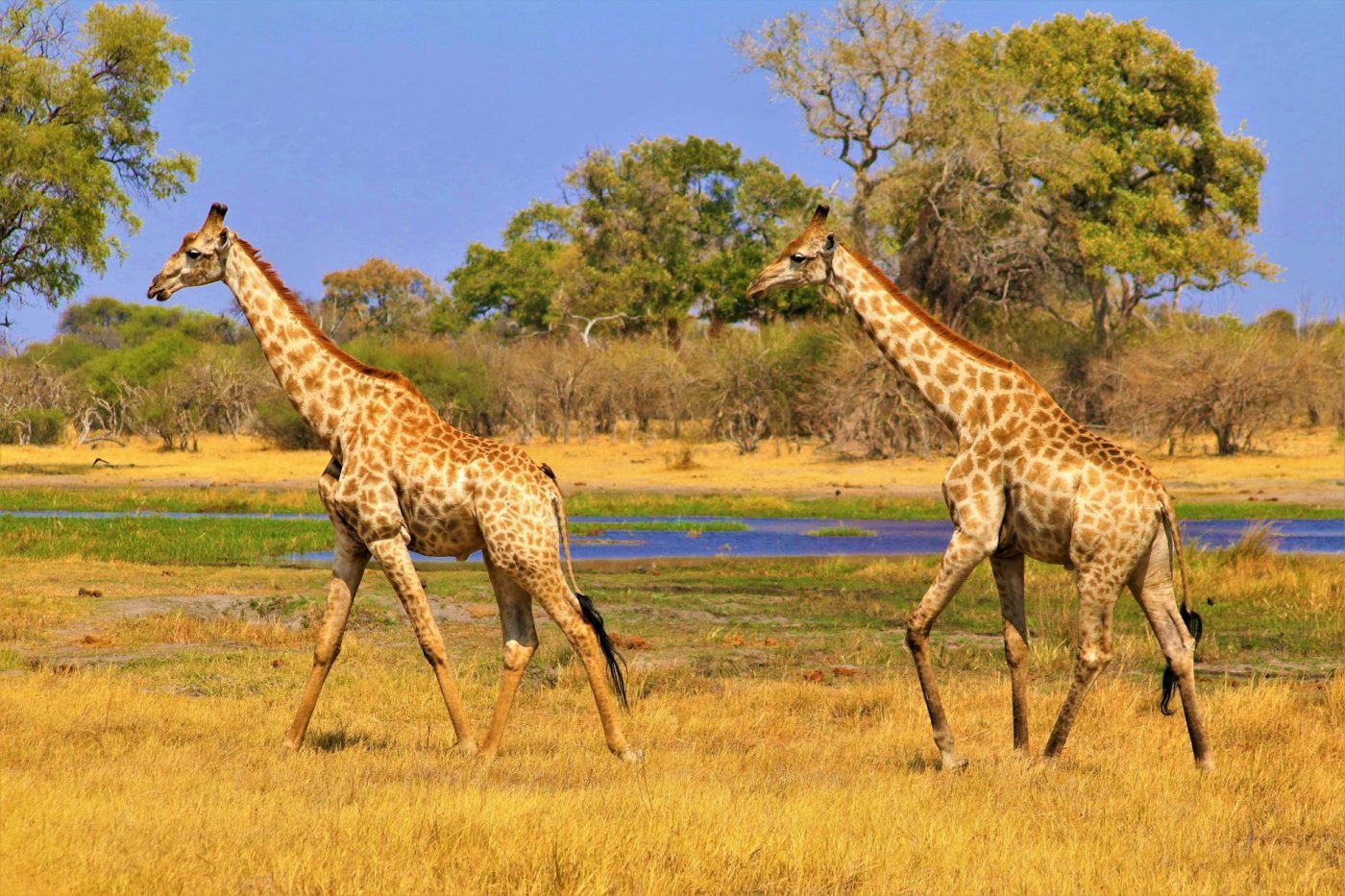
Few places on earth can reduce a seasoned traveller to silence, but Chobe has that rare power. As the afternoon light turns copper over the Chobe River, a herd of three hundred African elephants emerges from the mopane woodland and wades into the shallows, their rumbles reverberating across the water like slow thunder. Chobe National Park, tucked into Botswana's far north, holds the highest concentration of elephants on the African continent — a staggering 120,000 individuals — and the sheer, unhurried drama of watching them drink, splash and cross the channel from a small wooden boat is an encounter that rewires something deep in the chest.
Visiting Chobe is fundamentally different from the crowded game drives you might endure at more famous East African parks. Botswana's conservation model deliberately limits visitor numbers and bans high-volume tourism, which means you share a riverbank with buffalo and lion on your own terms, not sandwiched between a queue of minibuses. Things to do in Chobe extend well beyond elephant-watching: the park shelters vast prides of lion, rare African wild dog, Nile crocodile and more than 450 bird species. With Victoria Falls just an hour's drive across the Zimbabwean border, Chobe also functions as the anchor of one of southern Africa's greatest adventure circuits, making a Chobe itinerary as dense with possibility as the bush itself.
✦ Find your perfect destination
Is Chobe really your perfect match?
Answer 12 quick questions about your travel style, budget and dates — we match you with the destinations that fit you best, from 600+ worldwide.
Chobe belongs on your travel list because it delivers wildlife spectacle at a scale that no other destination on earth can replicate. The Chobe Riverfront is the only place in Africa where you board a flat-bottomed boat and drift past breeding herds of elephants at eye level, close enough to hear them breathe. Beyond the river, Chobe's Savuti Marsh draws legendary lion prides famous for hunting elephants, while the Linyanti Wetlands offer total wilderness seclusion. Because Botswana caps visitor numbers across its parks, Chobe consistently feels uncrowded and genuinely wild — a quality that is vanishingly rare in 2026.
The case for going now: Chobe is entering a golden window for travellers right now. A new generation of owner-run boutique safari lodges opened along the riverfront between 2023 and 2025, offering intimate experiences at prices that still undercut comparable camps in Kenya or Tanzania. The Botswana Pula has remained stable, meaning European budgets stretch further than they have in a decade. With Southern African tourism rebounding strongly after years of reduced visitor numbers, wildlife populations are thriving and sightings are extraordinary — making 2026 an ideal moment to lock in your Chobe travel plans before demand peaks.
🐘
River Elephant Safaris
Board a flat-bottomed pontoon boat at sunrise and drift alongside elephant herds that wade across the Chobe River in columns of fifty or more. The water-level perspective creates photography and intimacy impossible from any game-drive vehicle.
🦁
Savuti Lion Hunts
Drive south into the Savuti region to witness the world-famous elephant-hunting prides — large coalitions of lion that have developed the remarkable behaviour of taking down adult elephants, a sight documented in landmark wildlife films.
🌅
Sunset Sundowner Cruises
Chobe's nightly sundowner cruise is a ritual every visitor should observe: cold gin-and-tonic in hand as hippos yawn in the shallows, fish eagles dive overhead and the entire western sky ignites in orange and deep crimson.
🦅
Birdwatching Wetlands
With more than 450 recorded species, Chobe is a premier birding destination year-round. Carmine bee-eaters nest in riverbank colonies each October, while African skimmers, Pel's fishing owls and rare slaty egrets reward patient observers.
Chobe's neighbourhoods — where to focus
Safari HQ
Chobe Riverfront
The northern edge of the park running along the Chobe River is the most visited and most rewarding corridor, home to the legendary elephant concentrations. Kasane town sits at its eastern end, serving as the main gateway with a cluster of lodges, the park's main entry gates and boat-charter operators. This is where most Chobe itineraries begin and end.
Remote Wilderness
Savuti
Four hours south of Kasane by sandy track, Savuti is Chobe's wild interior — a vast fossil lake basin centred on the Savuti Channel. The open grasslands attract enormous concentrations of zebra and buffalo during the dry season, drawing the legendary lion prides and spotted hyena clans that have made this region famous in wildlife documentary circles.
Exclusive Seclusion
Linyanti Wetlands
The Linyanti concession in the park's northwest corner is accessible only to guests of the handful of ultra-exclusive camps permitted to operate there. Sharing the same water system as the Okavango Delta, Linyanti offers mokoro canoe rides through papyrus channels, exceptional wild dog sightings and a level of privacy that money can barely buy elsewhere in Africa.
Town Base
Kasane
Sitting at the confluence of four countries — Botswana, Zimbabwe, Zambia and Namibia — Kasane is a small, functional town with a surprisingly good selection of mid-range guesthouses, supermarkets and tour operators. It works well as a budget-friendlier base for day trips into Chobe and as the staging point for the quick border crossing to Victoria Falls.
Top things to do in Chobe
1. #1 — Chobe River Boat Safari
The single most defining thing to do in Chobe is climbing aboard a river safari boat and spending two to three hours watching African wildlife at water level. Most lodges and operators run morning and late-afternoon departures from the Kasane riverfront, and the afternoon shift is particularly extraordinary: elephants arrive in their hundreds to drink as the light softens, hippos surface and submerge in slow rotation, Nile crocodiles sprawl on sandbanks and African fish eagles perform their looping dives just metres from the bow. Because Botswana restricts the size of vessels permitted on the river, crowds rarely feel intrusive. Even budget pontoon boats operated from Kasane offer an encounter that rival parks simply cannot match. Book independently through operators along the Kasane waterfront for the most competitive rates, or arrange through your lodge for seamless transfers.
2. #2 — Game Drives in Chobe National Park
A Chobe game drive delivers some of southern Africa's most reliably dramatic wildlife viewing. The riverfront road north of Kasane is famous for all-day elephant presence — it is entirely possible to count several hundred individuals in a single three-hour circuit. But Chobe's predator viewing is equally compelling: lion prides patrol the mopane woodland, leopard are regularly spotted in fever trees near the water, and African wild dog packs occasionally move through the eastern sectors. Self-drive is permitted inside Chobe, making it one of the few Botswana parks accessible without a guided vehicle — hire a sturdy 4WD from Kasane, download an offline map and carry sufficient fuel. Guided game drives offered by riverfront lodges use open vehicles with expert trackers and offer a richer interpretive experience for first-time visitors to the park.
3. #3 — Day Trip to Victoria Falls
One of the great advantages of basing yourself in Chobe is the proximity to Victoria Falls, arguably the most spectacular natural landmark in all of Africa. From Kasane, it is just 80 kilometres across the Zimbabwean border to the town of Victoria Falls, and the crossing is straightforward with a KAZA UniVisa covering both Botswana and Zimbabwe for most European passport holders. At the falls themselves, you can walk the rainforest path that runs along the entire Zimbabwean side of the gorge, soaking in 1,700 metres of cascading water — the world's largest waterfall by combined width and flow. Adrenaline activities available at the falls include white-water rafting grade V rapids through the Batoka Gorge, bungee jumping from the historic Victoria Falls Bridge and tandem micro-lighting over the spray cloud. Most Chobe operators organise full-day transfers with ease.
4. #4 — Walking Safaris & Mokoro Experiences
For travellers seeking a more immediate, ground-level connection with the African bush, Chobe offers guided walking safaris departing from several camps in the Linyanti and Savuti areas. Walking in the same savannah as elephant, buffalo and lion — tracked by an armed professional guide — is an entirely different emotional register from a vehicle-based drive, demanding quiet and focus that makes every cracked twig significant. In the wetland areas of Linyanti, the traditional mokoro — a dugout canoe poled by a local guide through papyrus channels — provides a profoundly calm counterpoint to the intensity of big-game viewing. Gliding silently past roosting herons and grazing lechwe antelope, with the only sounds being the gentle splash of the pole and birdsong overhead, is one of those travel experiences that stays with you for years. Chobe's combination of both walking and water experiences in a single trip sets it apart from purely land-based safari destinations.
What to eat in Northern Botswana — the essential list
Seswaa
Botswana's national dish, made by boiling beef or goat until the meat falls apart, then pounding it roughly with salt. Deeply savoury and satisfying, it is typically served with pap — a stiff maize porridge — and wilted morogo greens alongside.
Braai (Southern African Barbecue)
No evening in Chobe lodge culture is complete without a bush braai — meat grilled over mopane wood coals while the smell of woodsmoke mingles with the nighttime chorus of frogs and hyenas. Impala, kudu and oryx steaks are lodge staples that taste extraordinary under open African skies.
Morogo
A simple, nutritious side dish of wild spinach or other indigenous leafy greens, sautéed with onion and tomato. Morogo is found in local guesthouses and traditional restaurants throughout Kasane, offering an authentic taste of Botswana home cooking.
Vetkoek
Inherited from South African and Afrikaner culinary tradition, vetkoek are deep-fried dough balls split open and filled with savoury mince or sweet syrup. Available from street vendors and bakeries in Kasane, they make an inexpensive and comforting breakfast on early-morning game-drive departures.
Mopane Worm Stew
For adventurous palates, mopane worms — the dried caterpillars of the emperor moth harvested from mopane trees — are rehydrated and simmered in tomato and onion sauce. High in protein and genuinely delicious, they are a traditional staple across northern Botswana and Zimbabwe.
Bogobe jwa Lerotse
A traditional Setswana porridge made from fermented sorghum and wild melon, bogobe jwa lerotse is subtly sour and comforting. It appears on the menus of cultural restaurants in Kasane and is increasingly featured at lodge dinners as a nod to authentic Botswana culinary heritage.
Where to eat in Chobe — our top 4 picks
Fine Dining
Chobe Game Lodge Restaurant
📍 Chobe Game Lodge, Kasane, North-West District, Botswana
Set inside Chobe's most famous historic lodge — where Elizabeth Taylor and Richard Burton honeymooned — this elegant riverfront restaurant serves modern African cuisine: think wild herb-crusted kudu loin and butternut bisque with toasted Kalahari truffle. Tables on the open deck overlook the river, making elephant sightings during dinner entirely routine. Reserve well ahead.
Fancy & Photogenic
Muchenje Safari Lodge Restaurant
📍 Muchenje, Chobe Forest Reserve, Botswana
Perched on a dramatic escarpment above the Chobe floodplains, Muchenje's open-air dining deck offers a panoramic view across the national park that stretches fifty kilometres to the horizon. Sundowner cocktails here — served with snacks as elephants move through the valley below — rank among the most photographed moments on any Chobe itinerary.
Good & Authentic
The Old House Restaurant
📍 Kasane Waterfront Road, Kasane, Botswana
A consistently popular local restaurant in Kasane beloved for straightforward grilled meats, fresh river fish and generous portions of seswaa with pap at very reasonable prices. The outdoor terrace has partial river views and a convivial atmosphere that draws both Botswana residents and visiting travellers seeking genuine home-style cooking without lodge prices.
The Unexpected
Baraka Restaurant at Cresta Mowana Lodge
📍 Cresta Mowana Safari Resort, Kasane, Botswana
Built around an ancient baobab tree that grows dramatically through the floor and ceiling of the dining room, Baraka is Chobe's most architecturally memorable meal. The menu blends international comfort food with Botswana flavours, and the swim-up bar beside the baobab-shaded pool is a perfect afternoon stop between morning and evening game activities.
Chobe's Café Culture — top 3 cafés
The Institution
Elephant Valley Lodge Café
📍 Elephant Valley Lodge, Kasane, Botswana
The breakfast terrace at this long-established lodge functions as the social heart of the Kasane safari community. Guides, researchers and returning safari guests converge each morning over strong filter coffee and egg-and-bacon rolls. The lodge's waterhole in front of the deck regularly draws impala and warthog — making it arguably the world's most rewarding café view.
The Aesthetic Hub
Thebe River Safaris Riverside Café
📍 Thebe River Safaris, Kasane Riverfront, Botswana
Tucked along the Kasane waterfront near the main boat launch, this relaxed open-air café serves fresh juices, toasted sandwiches and homemade cake with direct views across to Namibia's Chobe River bank. It doubles as a booking hub for river cruises, making it a practical and photogenic first stop when arriving in Chobe for the first time.
The Local Hangout
Savanna Sands Café
📍 Hunters Africa Complex, Kasane Main Road, Botswana
A no-frills favourite among Kasane locals — government workers, lodge staff and overland truck crews all gravitate here for enormous mugs of builder's tea, fried egg sandwiches and the freshest vetkoek in town. It opens at 6am to catch early game-drive departures and stays lively until mid-afternoon, offering reliable wi-fi and honest, affordable food.
Best time to visit Chobe
Jan
Feb
Mar
Apr
May
Jun
Jul
Aug
Sep
Oct
Nov
Dec
Dry Season (May–Oct) — Best game viewing; elephants crowd the river, predator activity peaks, no rainShoulder & Green Season (Nov–Apr) — Lush scenery, excellent birding, baby animals; some afternoon rainN/A — Chobe is rewarding year-round with no true off-season
Chobe events & festivals 2026
Whether you're planning around a specific celebration or simply want to know what's happening, this guide covers the best events and festivals in Chobe — from major annual traditions to cultural highlights worth timing your trip around.
March 2026culture
Kasane Cultural Festival
An annual celebration of the diverse cultures converging at Botswana's four-corners border region. Traditional dance, music and craft demonstrations draw visitors from Botswana, Zambia, Zimbabwe and Namibia. One of the most
May 2026culture
Chobe National Park Dry Season Opening
May marks the beginning of Chobe's legendary dry season, when elephant concentrations peak along the river and wildlife viewing reaches its annual climax. Tour operators launch special dry-season programming including extended night drives, photographic hides and exclusive river cruises — making May a prime month on any Chobe itinerary.
July 2026culture
Botswana President's Day Celebrations
Botswana's national public holiday weekend in mid-July brings traditional cultural performances, community sports events and festive gatherings to Kasane and surrounding villages. Travellers visiting Chobe in July can witness civic pride in a stable, prosperous African democracy — a genuinely uplifting experience alongside the extraordinary game viewing of peak dry season.
August 2026music
Kasane River Festival
A growing outdoor festival on the Kasane waterfront celebrating music, arts and Botswana culture under open skies. Local bands, regional musicians and craft traders set up along the river as elephants continue their evening parade in the background — one of the best Chobe festivals for travellers combining culture with wildlife.
September 2026culture
Chobe Safari Photographic Awards
An annual competition drawing professional and amateur wildlife photographers to Chobe during the peak game-viewing month of September. Exhibition prints are displayed at lodges around Kasane, and guided photographic workshops with experts run throughout the week, making this an ideal addition to a dedicated photography-focused Chobe travel experience.
October 2026culture
Carmine Bee-Eater Nesting Season
Each October, thousands of vivid carmine bee-eaters colonise the sandy Chobe riverbanks to nest, creating one of Africa's most spectacular birding events. Guided ornithology cruises focus specifically on the nesting colonies during this period, and the combination of bee-eater photography with the first green-season rains makes October uniquely rewarding.
November 2026culture
Botswana Day of the Family
A national occasion celebrated with community events, school performances and family gatherings across Kasane. Visiting Chobe in November coincides with the arrival of the first rains, bringing flush green vegetation, newborn antelope and exceptional birding as migratory species arrive from the northern hemisphere.
December 2026market
Kasane Christmas Craft Market
A festive outdoor market held along the Kasane waterfront in the weeks before Christmas, bringing together local craftspeople selling hand-carved wooden wildlife sculptures, woven baskets, beadwork and Botswana food stalls. An excellent opportunity to purchase authentic souvenirs directly from artisans during a Chobe December visit.
January 2026culture
Green Season Wildlife Spectacle
January is the height of the green season in Chobe, when the floodplains are lush, newborn impalas and zebras abound, and African wild dog dens are active with pups. Birding reaches its peak with over 400 species possible, and the entire park glows luminous emerald — a completely different and beautiful Chobe to the dry-season version.
June 2026religious
Mosi-oa-Tunya Heritage Day
Celebrated on both the Zimbabwean and Botswana sides of the Chobe–Victoria Falls corridor, this annual commemoration marks UNESCO World Heritage recognition of the Victoria Falls landscape. Cultural ceremonies, conservation talks and guided heritage walks at the falls operate across the long weekend, making it an enriching addition to a combined Chobe and Victoria Falls trip.
Kasane guesthouse, self-drive park entry, pontoon boat shared cruises, local restaurant meals and vetkoek breakfasts.
€€ Mid-range
€120–250/day
Comfortable lodge with included game drives and river cruises, guided tours, one Victoria Falls day trip and good dinners.
€€€ Luxury
€400+/day
Exclusive private-concession camps in Linyanti or Savuti; all inclusive — walks, drives, premium food, private boats and flights.
Getting to and around Chobe (Transport Tips)
By air: The main gateway to Chobe is Kasane Airport (BBK), served by daily connecting flights from Johannesburg's OR Tambo International Airport with Airlink and similar regional carriers. Most European travellers fly to Johannesburg and connect onward, with the entire journey taking approximately twelve hours from major European hubs including Amsterdam, London and Frankfurt.
From the airport: Kasane Airport sits just five kilometres from the town centre and the Chobe Riverfront, making transfers quick and straightforward. Most lodges include complimentary airport transfers in their rates — confirm at booking. Taxis are available at the terminal, typically charging 80–120 BWP into town. Car hire is available at the airport from Avis and local operators, essential if you plan to self-drive inside Chobe National Park.
Getting around the city: Within Chobe and Kasane, the primary transport mode is the 4WD vehicle — either your own rental or your lodge's game-drive car. Self-drive is permitted inside Chobe National Park on main tracks, though a high-clearance 4WD is mandatory, particularly for reaching Savuti. River boat transfers between the lodge area and the park's riverfront are standard. From Kasane to Victoria Falls, shared transfers operate daily via the Kazungula Bridge border crossing, taking around ninety minutes door-to-door.
Transport Safety & Scam Prevention:
Agree River Cruise Prices Upfront: Independent boat operators on the Kasane waterfront occasionally quote one price and attempt to add fuel surcharges or 'park fees' upon return. Always agree the total, all-inclusive price in writing before boarding, and confirm whether park entry is included or paid separately at the gate.
Use Metered or Lodge Taxis Only: Informal taxi drivers near the Kasane bus station can inflate prices significantly for unaware tourists. Your lodge will arrange reliable, priced transfers on request, and legitimate metered taxis display an official registration number. For the Victoria Falls border crossing, use only licensed transfer operators.
Check KAZA Univisa Eligibility Before Crossing: The KAZA UniVisa covers Botswana and Zimbabwe and allows easy back-and-forth crossing for day trips to Victoria Falls. However, not all European nationalities qualify, and applying at the border without knowing your status can cause delays. Check the official KAZA visa list before your trip and purchase online if eligible.
Do I need a visa for Chobe?
Visa requirements for Chobe depend on your nationality. Select your passport below for an instant answer — based on the Passport Index dataset for entry into Botswana.
ℹ️ Indicative only. Always verify with the official consulate before booking. Data: Passport Index, April 2026.
For detailed requirements, documentation checklists and processing times by nationality: TravelDoc →
Search & Book your trip to Chobe
Find the best flight routes and hotel combinations using our partner Kiwi.com.
Frequently Asked Questions
Is Chobe safe for tourists?
Chobe and the surrounding Kasane area are considered safe for tourists by southern African standards. Botswana is one of the continent's most politically stable and low-crime nations, and the main risks in Chobe are wildlife-related rather than criminal. Never walk outside lodge perimeters at night unescorted — elephant, hippo and lion move through lodge areas after dark. Keep vehicle windows up near elephant herds during game drives, follow your guide's instructions precisely, and store food securely in camp. With those common-sense precautions in place, Chobe is a very safe destination for solo travellers, couples and families alike.
Can I drink the tap water in Chobe?
Tap water quality in Kasane is generally considered acceptable by local standards, but most travellers and all lodges recommend drinking bottled or filtered water throughout your stay. The Chobe River and wetland environments can carry waterborne pathogens, particularly during and after the rainy season when run-off enters the system. All reputable lodges provide filtered or bottled water at no extra charge. Avoid ice from unknown sources in smaller local establishments, and carry a quality water-purification bottle if you plan multi-day self-drive camping in the park.
What is the best time to visit Chobe?
The best time to visit Chobe for wildlife viewing is the dry season from May to October, when animals concentrate along the Chobe River in extraordinary numbers and vegetation is low enough to maximise sightings. July, August and September are peak months with the highest elephant concentrations and most reliable predator viewing. However, Chobe rewards year-round visits — the green season from November to April brings lush scenery, exceptional birding with migratory species, newborn animals and dramatically fewer crowds at lower lodge rates. November and December are particularly underrated months to visit Chobe for photographers seeking vivid colours and baby wildlife.
How many days do you need in Chobe?
For a satisfying first Chobe experience, plan a minimum of four nights — this allows two full days in the park including both river cruises and game drives, plus a day trip to Victoria Falls without feeling rushed. Five to seven nights is the ideal Chobe itinerary length for travellers who want to explore beyond the riverfront: a night or two in Savuti and a night in the Linyanti area transforms Chobe from a single destination into a complete southern African wilderness circuit. Ten days allows a genuinely immersive deep-dive, ideal for repeat Africa visitors or serious wildlife photographers who want to cover every ecosystem in the park at a relaxed, unhurried pace.
Chobe vs Okavango Delta — which should you choose?
Chobe and the Okavango Delta are southern Africa's two great Botswana wildlife destinations, and they feel surprisingly different from each other. Chobe excels in sheer volume and accessibility: the elephant concentrations are unmatched, self-drive is possible, and the proximity to Victoria Falls makes it a natural circuit anchor. The Okavango Delta is wilder, more remote and more expensive — accessed by light aircraft, it offers a pristine flooded wilderness of mokoro channels and hippo pools with exceptional all-round predator viewing. If your priority is maximum wildlife spectacle at a more manageable budget, choose Chobe. If you want total immersion in an otherworldly African landscape with complete exclusivity, choose the Delta. Many travellers wisely combine both destinations in a single ten-to-fourteen-day Botswana trip.
Do people speak English in Chobe?
English is one of Botswana's two official languages alongside Setswana, and it is widely spoken throughout Kasane and Chobe. All lodge staff, park rangers, tour guides and boat operators communicate fluently in English, and menus, signage and park information are consistently presented in English. In local markets and smaller restaurants, basic English is generally sufficient for transactions, though learning a few words of Setswana — dumela for hello, ke a leboga for thank you — is warmly received by locals and reflects respectful travel practice.
★ Hidden Gems Weekly
Like this? One place per week, in your inbox.
No spam, no fluff — just one underrated destination, every Tuesday.
Hand-picked and verified by Max, who founded Vacanexus from Luxembourg in 2026. No sponsorships, no paid placements. Every recommendation — restaurants, neighbourhoods, things to do — is selected for authenticity over popularity.