Giza Pyramids Travel Guide — The last surviving wonder of the ancient world, still standing
⏱ 11 min read📅 Updated 2026💶 €€ Mid-range✈️ Best: Jan–Apr
€50–120/day
Daily budget
Jan–Apr
Best time
2–4 days
Ideal stay
EGP
Currency
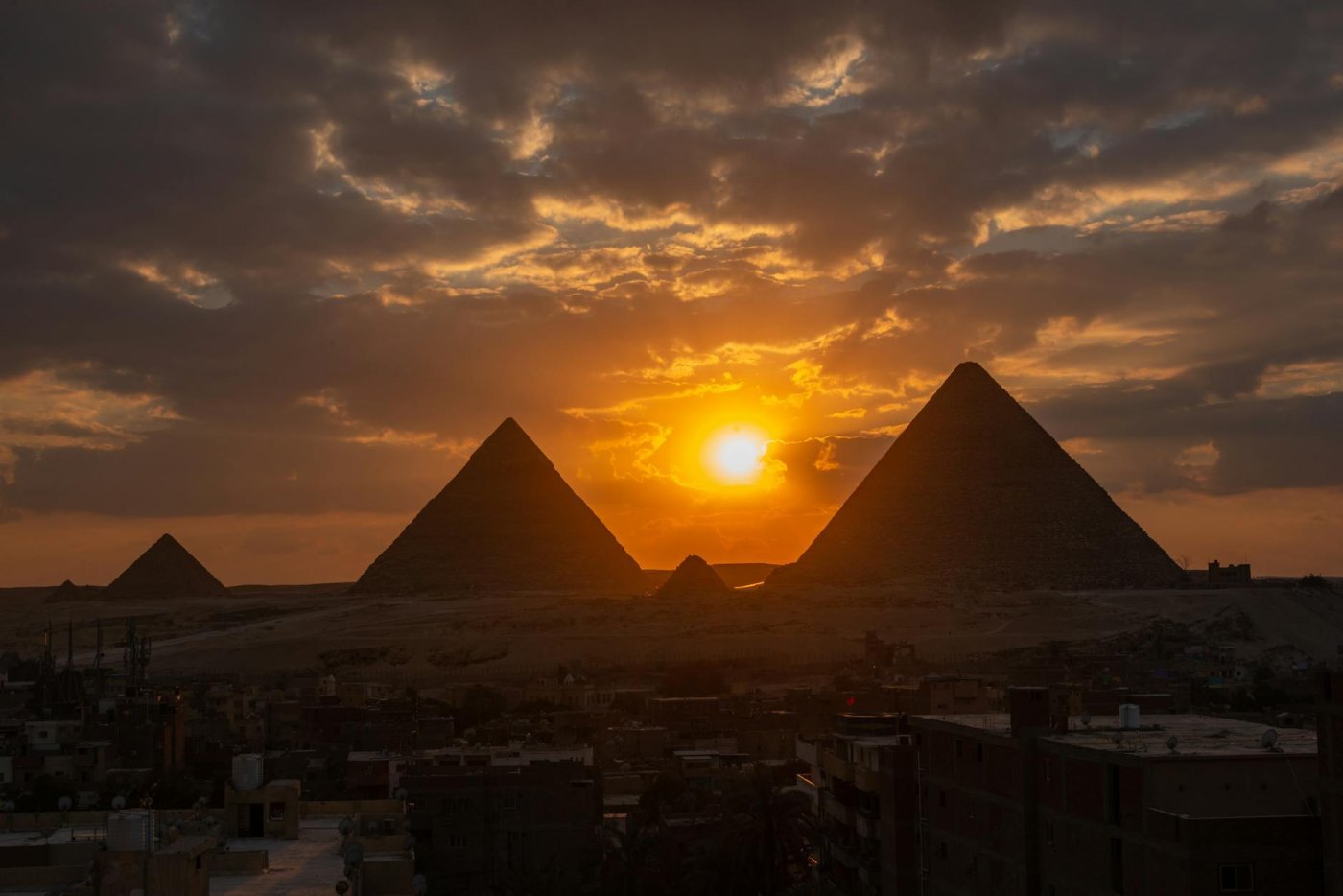
Stand at the foot of the Great Pyramid of Giza and every superlative you have ever read suddenly feels inadequate. The sheer mass of 2.3 million limestone blocks, stacked with an almost offensive precision, crowds out rational thought. The desert light shifts from pale gold at dawn to a deep amber at dusk, throwing shadows that carve the plateau into something almost theatrical. A dry, mineral wind carries the faint scent of sand from the Sahara, and somewhere behind you, the megacity of Cairo rumbles on — indifferent to the fact that these structures have watched every empire rise and fall for more than 45 centuries. Giza is not a ruin. It is a monument that simply refuses to become one.
Visiting Giza is unlike any other cultural site on Earth, and that comparison is not made lightly. Where Petra impresses with its rose-red drama and Machu Picchu seduces with its cloud-wrapped mystery, the Giza Pyramids overwhelm with sheer, unmediated scale and historical weight. Things to do in Giza extend far beyond snapping a photograph of the Sphinx: you can descend into the ancient burial chambers of Khafre, ride a camel along the desert ridge at sunrise, explore the Solar Boat Museum, and make a half-day trip to the equally astonishing Step Pyramid at Saqqara. For travelers who want to understand the very roots of human civilization, no destination delivers with more authority.
✦ Find your perfect destination
Is Giza Pyramids really your perfect match?
Answer 12 quick questions about your travel style, budget and dates — we match you with the destinations that fit you best, from 600+ worldwide.
The Giza Pyramids make the list not because they are famous but because they are genuinely, irreplaceably extraordinary. Built as royal tombs for Pharaohs Khufu, Khafre, and Menkaure during Egypt's Old Kingdom period, the three pyramids and their guardian Sphinx represent the apex of ancient engineering ambition. No other site compresses so much history — architectural, astronomical, political, and spiritual — into a single plateau visible from a city of twenty million people. The Giza necropolis continues to yield new archaeological discoveries every season, meaning a visit in 2026 offers context that simply did not exist a decade ago.
The case for going now: Egypt's tourism infrastructure has undergone a quiet revolution in recent years. The Grand Egyptian Museum, a colossal new facility at the edge of the Giza plateau, officially opened its full galleries in 2024 and houses the complete Tutankhamun collection under one roof for the first time. Entry ticket pricing remains extremely favorable for European visitors given the EGP exchange rate, making this one of the best-value major heritage sites in the world right now. Visitor management improvements also mean early-morning access is calmer and better organized than it has been in years.
🏛️
Pyramid Interiors
Ducking into the narrow ascending passage of the Great Pyramid and emerging into the Grand Gallery is a genuinely visceral experience. Separate tickets grant access to Khafre's chamber and the smaller Pyramid of Menkaure.
🗿
The Great Sphinx
Carved from a single outcrop of limestone, the Sphinx crouches just east of Khafre's pyramid with a quiet authority that photographs cannot convey. The adjacent Sphinx Temple adds further ancient context to the encounter.
🌅
Desert Sunrise Ride
Riding a horse or camel along the southwest desert ridge at sunrise gives the panoramic 'three pyramids in a row' view that defines the Giza experience. Dawn light and empty sands make this the photographer's essential moment.
🎭
Sound & Light Show
The evening sound-and-light show projects vivid narration and color onto the Sphinx and pyramid faces. Theatrical rather than scholarly, it offers a dramatic way to experience the plateau after most day-trippers have left.
Giza Pyramids's neighbourhoods — where to focus
The Plateau
Giza Necropolis
The archaeological plateau itself is the heart of any visit to Giza. Entry gates on the eastern and western sides control access to the pyramids, Sphinx enclosure, and ancillary tombs of nobles and queens. Arrive before 8 a.m. to experience the site before tour groups and heat both reach their peak.
Museum Quarter
Grand Egyptian Museum
Opened in full in 2024, the Grand Egyptian Museum sits just 2 km from the plateau and contains over 100,000 artefacts including all 5,000 objects from Tutankhamun's tomb. An entire half-day is the minimum needed to do justice to the Ramp Hall and Royal Mummies Gallery.
Urban Base
Zamalek & Downtown Cairo
Most travelers stay in central Cairo and commute to the plateau. Zamalek, set on a Nile island, offers excellent mid-range hotels, waterfront cafés, and a relaxed European quarter feel. Downtown Cairo provides more budget options and easy access to the Egyptian Museum on Tahrir Square.
Day Trip
Saqqara & Dahshur
Just 30 km south of Giza, Saqqara houses the Step Pyramid of Djoser — the world's oldest complete stone building — alongside extensive mastaba tomb complexes. Dahshur adds the architecturally revolutionary Bent Pyramid and Red Pyramid, making a combined day trip one of the most rewarding things to do near Giza.
Top things to do in Giza Pyramids
1. Enter the Great Pyramid of Khufu
Only 300 tickets are sold per day for entry into the Great Pyramid, split between morning and afternoon sessions, which means booking in advance — or arriving at the gate before it opens — is essential. Once inside, a narrow ascending corridor leads to the remarkable Grand Gallery, a corbelled limestone passage nearly nine meters high that channels you upward toward the King's Chamber. Inside that chamber, an empty red granite sarcophagus sits in dim artificial light, stripped of its contents millennia ago but still radiating an uncanny sense of purpose. The heat and close quarters are real: wear light clothing, bring water, and avoid this experience if you suffer from claustrophobia. No cameras are permitted inside, a rule strictly enforced. The experience lasts roughly 30 to 40 minutes and is, by almost universal agreement, one of the most singular things a human being can do.
2. Explore the Solar Boat Museum
Immediately south of the Great Pyramid, the Solar Boat Museum houses one of ancient Egypt's most remarkable artefacts: a fully reconstructed 43-meter cedar vessel buried beside the pyramid around 2500 BCE. Discovered in 1954 in a sealed limestone pit, the boat — assembled from 1,224 individual pieces of Lebanese cedar — is believed to have carried Khufu's body to his burial site and was then entombed to serve him in the afterlife. A second pit nearby contained additional disassembled boat timbers now undergoing conservation. The museum itself is climate-controlled, providing welcome relief from the plateau heat, and the scale of the vessel — viewed from elevated walkways — genuinely surprises visitors who expect a small ceremonial craft. Entry is covered by a separate ticket and takes approximately 45 minutes.
3. Ride the Desert Ridge at Dawn
The western desert ridge southwest of the pyramid complex offers the only vantage point from which all three Giza pyramids appear in clean alignment, undisturbed by the Cairo skyline creeping in from the east. Reaching it on horseback or camel at sunrise, before the plateau gate opens and the first bus tours arrive, is the closest modern visitors can come to experiencing the ancient landscape as it was intended to be seen. Licensed horse and camel operators can be found near the Nazlet El-Semman village at the plateau's edge; agree on a price before departure and confirm the duration. A one-hour ride giving time for photography costs roughly €15–20 through a reputable operator. The silence, the long desert shadows, and the three peaks catching first light constitute one of the most photogenic — and genuinely moving — moments in travel.
4. Visit Saqqara and the Step Pyramid
The Giza Pyramids itinerary is significantly enriched by a half-day excursion to Saqqara, approximately 30 kilometers south and easily combined with Dahshur in a single day. The Step Pyramid of Djoser, designed by the architect Imhotep around 2650 BCE, predates Khufu's pyramid by roughly a century and represents the moment Egyptian builders made the conceptual leap from flat mastaba tombs to vertical, sky-reaching monuments. The surrounding funerary complex has been extensively restored and the pyramid itself reopened to visitors in 2020 following a 14-year conservation program. Beyond Djoser's monument, Saqqara contains the Pyramid of Teti — whose interior walls bear some of the earliest Pyramid Texts ever found — and the richly painted Mastaba of Ti. Combined, Giza and Saqqara give visitors a complete arc of early Egyptian pyramid evolution that no museum can replicate.
What to eat in Greater Cairo and the Nile Delta — the essential list
Koshari
Egypt's beloved national street dish layers lentils, rice, macaroni, and chickpeas under spiced tomato sauce and crispy fried onions. Served in dedicated koshari shops around Cairo for pocket-change prices, it is hearty, vegetarian, and completely addictive.
Ful Medames
A breakfast staple across Egypt, slow-cooked fava beans are mashed with olive oil, cumin, lemon juice, and garlic, then eaten with warm flatbread. Simple and sustaining, ful medames fuels Giza visitors through long morning walks on the plateau.
Hawawshi
Spiced minced meat — typically beef or lamb seasoned with onion, pepper, and herbs — is stuffed inside dough or flatbread and baked until crisp. A popular late-night snack throughout Cairo, hawawshi is best eaten fresh from a bakery oven.
Molokhia
This signature Egyptian stew is made from finely chopped jute leaves cooked with chicken or rabbit stock and finished with a sizzling garlic and coriander bloom. Earthy, silky, and deeply flavored, it is served over rice or with bread.
Om Ali
Often described as Egypt's national dessert, Om Ali is a warm bread pudding layered with puff pastry, cream, nuts, coconut, and raisins, then baked until golden. Rich and comforting, it is served throughout Cairo restaurants and hotel dining rooms.
Feteer Meshaltet
Ancient Egyptian flaky pastry folded layer upon layer with butter, feteer can be savory or sweet and is sold fresh from dedicated shops and market stalls. The sweet version topped with honey, jam, or powdered sugar makes a satisfying breakfast near the plateau.
Where to eat in Giza Pyramids — our top 4 picks
Fine Dining
Khufu's Restaurant
📍 Pyramids Road (Sharia al-Ahram), Giza Plateau area, Giza
Positioned with direct pyramid views from its upper terrace, Khufu's serves elevated Egyptian and international cuisine in a formal setting. The grilled kofta with tahini and the slow-roasted lamb shoulder are house signatures. Reserve a window table for sunset over the plateau — it is worth every extra pound.
Fancy & Photogenic
Sequoia
📍 26 Abu El Feda Street, Zamalek, Cairo
Set on a dramatic Nile-edge terrace on the northern tip of Zamalek island, Sequoia blends Egyptian and Mediterranean flavors in a garden setting strung with warm lighting. The grilled sea bass and mezze spreads photograph beautifully. An ideal spot to unwind after a full day at the Giza plateau.
Good & Authentic
Abou El Sid
📍 157 26th July Street, Zamalek, Cairo
This beloved Cairo institution serves classic Egyptian home cooking — hamam mahshi (stuffed pigeon), molokhia, and kofta — in a warmly decorated interior draped with vintage textiles. Abou El Sid is the best place in the city to eat dishes that Cairo families actually cook at home. Reservations are strongly recommended on weekends.
The Unexpected
Zooba
📍 Multiple locations including Maadi and Sheikh Zayed, Cairo
Zooba reimagines Egyptian street food as a design-forward, modern café-restaurant concept. Koshari served in neat individual portions, ful medames with premium toppings, and taameya burgers attract a young professional crowd. The branding is playful, the quality consistent, and the prices far below what the interiors suggest.
El Fishawy has operated continuously since 1773, making it one of the oldest cafés in the Arab world. Brass trays of mint tea and shisha pass between mirrored walls and ornate mashrabiya screens in the heart of Khan el-Khalili. Naguib Mahfouz drank here regularly, and the atmosphere has changed very little since his time.
The Aesthetic Hub
Beano's Café
📍 Multiple Cairo locations including Zamalek and Heliopolis
The most photogenic specialty coffee chain in Cairo, Beano's serves well-executed espresso drinks alongside freshly baked pastries in airy, plant-filled interiors. Popular with Cairo's creative class and a practical stop for solo travelers looking for reliable Wi-Fi and a quiet corner to plan the next day's Giza itinerary.
The Local Hangout
Café Riche
📍 17 Talaat Harb Street, Downtown Cairo
Open since 1908 in the heart of Downtown Cairo, Café Riche carries the weight of revolutionary history — it served as a meeting point for intellectuals and political dissidents through the twentieth century. The dark wood paneling, worn marble tables, and Egyptian-style coffee make it a genuinely atmospheric stop between the Egyptian Museum and Tahrir Square.
Best time to visit Giza Pyramids
Jan
Feb
Mar
Apr
May
Jun
Jul
Aug
Sep
Oct
Nov
Dec
Best season (Jan–Apr & Dec) — cool, clear desert days ideal for plateau walks and photographyShoulder season (Oct–Nov) — warm but manageable, fewer crowds than peakSummer heat (May–Sep) — temperatures exceed 40°C; plateau visits are exhausting and require very early starts
Giza Pyramids events & festivals 2026
Whether you're planning around a specific celebration or simply want to know what's happening, this guide covers the best events and festivals in Giza Pyramids — from major annual traditions to cultural highlights worth timing your trip around.
January 2026culture
Cairo International Book Fair
One of the largest book fairs in the world, held annually at the Cairo International Fair grounds and attracting millions of visitors from across the Arab world. The fair runs for two weeks in late January and showcases publishing from over 50 countries.
March 2026culture
Spring Equinox Pyramid Alignment
Each year around the spring equinox, the rising sun aligns precisely with the Great Pyramid's eastern face, a phenomenon that draws archaeoastronomers and photographers to the Giza plateau. The event is not formally organized but the plateau fills with observers in the predawn hours. A remarkable overlap of ancient engineering and natural calendar worth planning a Giza itinerary around.
April 2026culture
Sham El-Nessim
An ancient Egyptian spring festival dating back over 4,500 years, Sham El-Nessim falls the day after Coptic Easter and is celebrated nationwide with family picnics, salted fish, and colored eggs. Parks across Cairo fill with Egyptians marking the return of spring. The festival's pharaonic roots make it a particularly resonant experience for travelers at the Giza plateau.
June 2026culture
Summer Solstice Pyramid Event
The summer solstice produces a dramatic sunset alignment where the sun sets directly between the Great and Khafre pyramids when viewed from the Sphinx, a sight that the pyramid builders almost certainly intended. Independent photographers and small tour groups gather on the eastern plateau. Despite the summer heat, this single phenomenon draws dedicated visitors to Giza each year.
September 2026music
Cairo Jazz Festival
An annual multi-day jazz festival held at Cairo's prestigious music venues and outdoor stages, featuring Egyptian and international musicians across contemporary jazz, fusion, and world music. The festival has grown consistently since its founding and now draws audiences from across the region. A vibrant cultural contrast to daytime visits to the Giza plateau.
October 2026religious
Moulid El-Nabi
The Prophet Muhammad's birthday is celebrated across Egypt with street processions, lanterns, sweets, and Sufi dhikr ceremonies particularly vivid in Islamic Cairo around Al-Hussein Mosque. The celebrations transform the Khan el-Khalili district into a festival of light and communal gathering. A deeply atmospheric event for travelers respectfully visiting Giza and Cairo in October.
October 2026culture
Cairo International Film Festival
One of Africa's oldest and most prestigious film festivals, held annually in October at downtown Cairo cinemas. The festival screens Arab, African, and international cinema and awards the Golden Pyramid prize. Attending a screening between pyramid visits gives travelers a layered view of modern Egyptian cultural life beyond the ancient sites.
November 2026market
Khan el-Khalili Winter Market
As temperatures drop to comfortable levels, the Khan el-Khalili bazaar district accelerates its trading season with extended hours, artisan demonstrations, and temporary stalls selling handcrafted lanterns, inlaid woodwork, and alabaster goods. November is one of the most pleasant times to browse the market after a morning at the Giza plateau.
November 2026culture
Luxor African Film Festival
Though held in Luxor, this annual African cinema celebration is easily incorporated into a Nile itinerary that begins or ends at Giza. The festival promotes African filmmakers and has grown into one of the continent's most important cultural events. Travelers combining Cairo and Upper Egypt can attend screenings as part of a broader Giza-to-Luxor travel itinerary.
December 2026culture
New Year's Nile Celebrations
Cairo marks the New Year with Nile-side festivities, fireworks visible from the Zamalek corniche, and concerts in major hotels and cultural centers. The Giza plateau remains accessible on New Year's Eve for evening visitors, and the combination of floodlit pyramids and a celebratory city atmosphere makes December a surprisingly festive time to visit Giza.
Getting to and around Giza Pyramids (Transport Tips)
By air: Cairo International Airport (CAI) is the main gateway and is exceptionally well served from Europe, with direct flights from Amsterdam, Paris, Frankfurt, London, and Brussels on carriers including EgyptAir, Lufthansa, Air France, and easyJet. Flight times from Western Europe range from four to five hours, making Giza an accessible long-weekend destination from most major European cities.
From the airport: Cairo International Airport sits approximately 22 kilometers northeast of central Cairo and 35 kilometers from the Giza plateau. The Cairo Metro does not serve the airport directly, so most travelers use the airport bus (Line CTA-356 to central Cairo), licensed airport taxis negotiated at fixed desks inside arrivals, or pre-booked private transfers. Journey times to Zamalek or Downtown Cairo run 30 to 60 minutes depending on traffic, which can be severe during morning and evening peak hours.
Getting around the city: The Cairo Metro is clean, inexpensive, and fast for reaching central areas including Tahrir Square and Dokki, both useful bases for Giza trips. From Giza Metro station, a short taxi or tuk-tuk ride covers the final few kilometers to the plateau gate. Licensed white taxis and Uber are the most practical options for direct plateau access. Negotiate all non-app taxi fares firmly before entering the vehicle — agree in Egyptian pounds and confirm the price covers the complete journey.
Transport Safety & Scam Prevention:
The 'Pyramid Closed' Redirect: A common Giza scam involves drivers or touts claiming the official plateau gate is closed and steering you to a private stable or viewpoint where entrance fees and camel rides are heavily marked up. The official gate hours are posted online; verify before arrival and proceed directly to the ticket office regardless of what you are told.
Unofficial Guides on the Plateau: Men who approach you inside the plateau claiming to be official guides are almost always unlicensed touts. Official Egyptologist guides are arranged in advance through licensed agencies or your accommodation. Engaging an unofficial guide typically leads to pressure for large cash payments and visits to affiliated papyrus or alabaster shops.
Camel Ride Return Fee Dispute: A frequently reported issue involves agreeing a camel ride price for the outward journey only to be demanded an additional fee — sometimes aggressively — for the return. Always agree the full round-trip price before mounting, confirm it includes walking back to the starting point, and ideally use a fixed-price operator recommended by your hotel.
Do I need a visa for Giza Pyramids?
Visa requirements for Giza Pyramids depend on your nationality. Select your passport below for an instant answer — based on the Passport Index dataset for entry into Egypt.
ℹ️ Indicative only. Always verify with the official consulate before booking. Data: Passport Index, April 2026.
For detailed requirements, documentation checklists and processing times by nationality: TravelDoc →
Search & Book your trip to Giza Pyramids
Find the best flight routes and hotel combinations using our partner Kiwi.com.
Frequently Asked Questions
Is Giza safe for tourists?
The Giza plateau itself is a well-policed, heavily touristed site where serious crime against visitors is rare. The main concerns are persistent (sometimes aggressive) harassment from unlicensed guides, camel operators, and souvenir sellers rather than physical danger. Staying alert, ignoring unsolicited approaches with firm but polite refusals, and using pre-arranged transport minimizes disruption significantly. The broader Cairo city environment is generally safe for tourists who exercise standard urban caution — avoid political gatherings, keep valuables discreet, and use licensed taxis or Uber for night journeys. Solo female travelers should be aware that street harassment is common and dress modestly, particularly outside tourist zones.
Can I drink the tap water in Giza?
Tap water in Giza and Cairo is technically treated and not immediately dangerous, but the quality and taste are inconsistent enough that all health authorities recommend avoiding it for drinking. Stomach upsets from unfiltered tap water are the most common health complaint among Egypt visitors. Bottled water is extremely cheap, universally available, and the sensible choice throughout your stay. Use bottled water also for brushing teeth if your system is sensitive to changes in water mineral content. Ice in reputable hotels and restaurants is generally safe, but exercise caution with fresh-squeezed juice from street stalls where tap water may be used.
What is the best time to visit Giza Pyramids?
The best time to visit Giza is between November and April, when daytime temperatures on the plateau range from a comfortable 15°C to 25°C — ideal for extended walking. January through March represent the absolute peak of the season, with clear skies, low humidity, and the most pleasant conditions for photography. April adds the spring equinox alignment phenomenon. Summer months from June to September see plateau temperatures regularly exceeding 40°C, making any visit before 9 a.m. essential and afternoon exploration genuinely grueling. Ramadan brings a different atmosphere with reduced food options during daylight hours but a uniquely atmospheric Cairo by night.
How many days do you need at the Giza Pyramids?
A focused visitor can cover the Giza plateau itself — Great Pyramid interior, Sphinx, Solar Boat Museum, and a desert ridge viewpoint — in a single full day if they arrive at opening time. However, the Giza Pyramids itinerary becomes significantly richer with two to three days that allow time for the Grand Egyptian Museum, a day trip to Saqqara and Dahshur, and the evening Sound and Light Show. For travelers wanting to combine Giza with Islamic Cairo, the Egyptian Museum, Coptic Cairo, and the Khan el-Khalili bazaar, a minimum of four to five days is needed to avoid a rushed experience. Ten days allows the full archaeological arc from Giza to Saqqara, Dahshur, and even a Nile cruise north to Alexandria.
Giza Pyramids vs Petra — which should you choose?
Both Giza and Petra represent the absolute apex of ancient world heritage tourism, but they deliver very different experiences. The Giza Pyramids are defined by scale, mathematical precision, and the surreal experience of standing before structures that predate writing as we know it by only a few centuries — combined with a living megalopolis that makes the contrast even more striking. Petra is a city carved into rose-red rock, intimate in scale and theatrical in revelation, best experienced by walking the Siq gorge at dawn. Giza suits travelers who want the full immersion of a major city (Cairo) alongside the ancient site; Petra appeals to those who prefer a quieter, more trekking-oriented experience in southern Jordan. If budget allows, both destinations are within a short flight of each other and pair beautifully in a single two-week Middle East itinerary.
Do people speak English in Giza?
English proficiency varies considerably across Giza and Cairo. At the plateau itself, ticket office staff, official guides, and most tourist facility workers communicate adequately in English. In four- and five-star hotels throughout Cairo, English is spoken fluently. Away from the main tourist zones — in local restaurants, markets, and residential neighborhoods — English drops away quickly and Arabic becomes essential. Learning a handful of Arabic phrases (shukran for thank you, bikam for how much, la for no) is both practically useful and warmly received by Egyptians who appreciate any effort with their language. Translation apps work reasonably well in most tourist-adjacent situations.
★ Hidden Gems Weekly
Like this? One place per week, in your inbox.
No spam, no fluff — just one underrated destination, every Tuesday.
Hand-picked and verified by Max, who founded Vacanexus from Luxembourg in 2026. No sponsorships, no paid placements. Every recommendation — restaurants, neighbourhoods, things to do — is selected for authenticity over popularity.