Interlaken Travel Guide — Switzerland's ultimate adventure base camp
⏱ 12 min read📅 Updated 2026💶 €€€€ Luxury✈️ Best: Jun–Sep
CHF 250–400/day
Daily budget
Jun–Sep
Best time
3–5 days
Ideal stay
CHF (Swiss Franc)
Currency
Interlaken sits pinned between two glacial lakes — Thun to the west and Brienz to the east — with the Eiger, Mönch, and Jungfrau looming so close that their snowfields seem to hang directly above the town's café terraces. The air here carries a particular crispness, laced with pine resin and glacial melt, that sharpens your senses the moment you step off the train. Interlaken is not merely a pretty Alpine town; it is a launchpad, a place where paragliders drift in thermal columns above the Harder Kulm and canyoneers plunge through ice-cold gorges before lunch. The Bernese Oberland stretches outward in every direction, offering terrain that ranges from meadow-lined valley walks to the forbidding granite of the Eiger's notorious north face. No other Swiss destination concentrates so much natural drama and so many high-adrenaline possibilities into a single compact base.
Visiting Interlaken means accepting that the mountains will dictate your schedule — cloud cover over the Jungfrau can rewrite a day's plan in minutes, and that unpredictability is part of the appeal. Unlike Zermatt, which orbits a single iconic peak and is car-free, Interlaken is a more open, accessible town that welcomes independent travellers without requiring a special cog-railway pilgrimage just to arrive. Compared to Grindelwald, which sits higher and can feel isolated in winter, Interlaken operates year-round as a genuine town with supermarkets, international restaurants, and a lively Höheweg promenade. Things to do in Interlaken span the full spectrum from tandem skydiving at 4,000 metres to slow afternoon lake cruises and cheesemaking visits in the surrounding valley farms — making it legitimately versatile for groups of mixed adventure appetite.
✦ Find your perfect destination
Is Interlaken really your perfect match?
Answer 12 quick questions about your travel style, budget and dates — we match you with the destinations that fit you best, from 600+ worldwide.
Interlaken belongs on your travel list because it delivers the Swiss Alpine experience in its most concentrated, action-ready form. The town sits at 567 metres above sea level, yet within ninety minutes you can stand at 3,454 metres on the Jungfraujoch — the highest railway station in Europe — surveying a UNESCO World Heritage glacier panorama. Interlaken's adventure sports infrastructure is genuinely world-class: operators here have been running paragliding, canyoning, white-water rafting, and bungee jumps for decades, with impeccable safety records and multilingual guides. The surrounding Bernese Oberland villages of Lauterbrunnen, Grindelwald, and Mürren are each extraordinary day trips. Switzerland's efficient rail network ties all of it together.
The case for going now: The Swiss Tourism Board's investment in sustainable trail infrastructure means Interlaken's hiking network has never been better marked or more accessible, with new via ferrata routes opening along the Aare gorge in recent seasons. The strong euro and pound relative to the franc have narrowed the cost gap slightly, making 2026 a comparatively reasonable moment to absorb Switzerland's famously steep prices. Early booking of Jungfraujoch sunrise tickets — now available in limited allocations — is the single smartest move any 2026 visitor can make.
🪂
Tandem Paragliding
Launch from Beatenberg or Männlichen with a certified pilot and soar above twin lakes and three iconic summits. Flights last 15–25 minutes and reach altitudes where the Eiger fills your entire field of vision.
🚞
Jungfraujoch Summit
Board the cogwheel railway from Kleine Scheidegg and ascend to Europe's highest station at 3,454 metres. The Aletsch Glacier panorama from the Sphinx Observatory is among the most dramatic views on the continent.
🏔️
Canyoning Saxetenbach
Abseil, slide, and jump through the Saxetenbach gorge's sculpted limestone channels fed by snowmelt. Guided half-day canyoning sessions depart from central Interlaken and suit beginners with moderate fitness.
🛶
Lake Brienz Cruise
Board a vintage paddle steamer and cross the turquoise waters of Brienzersee toward the village of Iseltwald, made globally famous by the Korean series Crash Landing on You.
Interlaken's neighbourhoods — where to focus
Main Promenade
Höheweg
The grand boulevard connecting the two train stations is Interlaken's social spine — lined with luxury watch boutiques, adventure-tour agencies, and terrace restaurants with unobstructed views of the Jungfrau. It is the place to book activities, people-watch, and orient yourself on arrival. The famous Kursaal casino and its manicured gardens anchor the eastern end.
Old Town Feel
Unterseen
Cross the Aare River and you enter Interlaken's quieter historic twin, Unterseen, whose medieval marketplace and 17th-century church tower predate the tourism boom by centuries. Fewer souvenir shops and more genuine bakeries and butchers give it an authentic local character. It rewards an evening stroll when the day-trippers have departed.
Lakeside Escape
Interlaken West Shore
The western shore of Thunersee near the West Bahnhof is quieter and greener, dotted with benches, small beach areas, and joggers. The views across the water toward Spiez castle and the Stockhorn range are spectacular at sunrise. Several guesthouses on this side offer better value and a genuine residential neighbourhood atmosphere.
Adventure Quarter
Matten bei Interlaken
Immediately south of the Ost Bahnhof, the suburb of Matten is where many of the town's adventure operators are headquartered, sharing space with family-run guesthouses and independent restaurants that cater to backpackers and budget-conscious mountaineers. The energy here is younger, louder, and more international than central Interlaken, with hostel common rooms that feel like expedition basecamp briefing rooms.
Top things to do in Interlaken
1. Jungfraujoch — Top of Europe
No visit to Interlaken is complete without making the extraordinary ascent to the Jungfraujoch, the saddle between the Mönch and Jungfrau at 3,454 metres. The journey itself is half the experience: two separate cog railways climb through tunnels blasted through living rock, with intermediate stops at Eigergletscher and Eismeer — windows carved directly into the north face of the Eiger — before emerging into blinding high-altitude light. At the top, the Sphinx Observatory offers a 360-degree panorama across the 23-kilometre Aletsch Glacier, the longest in the Alps. The Ice Palace, an underground network of sculpted tunnels, and a snow-covered plateau ideal for sledding round out the summit experience. Book the first morning train from Interlaken Ost for the clearest skies and fewest crowds, and dress in thermal layers regardless of the season.
2. Paragliding Over the Bernese Oberland
Paragliding in Interlaken is genuinely one of the finest tandem experiences in Europe, and not merely by reputation. Launch sites at Beatenberg ridge and the Männlichen plateau place you in thermal currents that carry pilots high above both lakes, with the Eiger's north face filling the horizon ahead and the patchwork Bernese farmland below. Reputable operators including Alpin Xtreme and Paragliding Interlaken run multiple daily departures throughout summer, with flight times of 20–30 minutes. Your pilot handles all technical elements, leaving you free to absorb the view and attempt photographs. GoPro helmet mounts and post-flight video packages are standard. Weight limits apply — most operators cap at 100–110 kg — and flights are weather-dependent, so build a flexible day around your booking. The sensation of banking silently above Interlaken's toy-town streets is reliably life-resetting.
3. Lauterbrunnen Valley & Waterfalls
Twenty minutes by train from Interlaken Ost lies one of the most extravagant valley landscapes in the Alps — Lauterbrunnen, a deep U-shaped glacial trough with 72 waterfalls thundering down its vertical walls. Staubbach Falls, at 297 metres, plunges almost free-fall from a cliff edge directly behind the village and can be entered through a viewing tunnel carved into the rock face. The valley floor trail connecting Lauterbrunnen to Trümmelbach Falls — a series of glacial meltwater falls roaring inside the mountain itself — takes roughly 90 minutes at a leisurely pace. From Lauterbrunnen, cable cars and trains ascend to the car-free villages of Wengen and Mürren, both perched on sunny terraces above the valley floor with direct sightlines to the Jungfrau group. Mürren in particular, at 1,638 metres, rewards those willing to make the effort with an almost impossibly perfect mountain village atmosphere.
4. Harder Kulm & the Two-Lakes Bridge
For an effortless panorama that rivals anything in the region, the Harder Kulm funicular departs from Interlaken Ost and reaches its 1,322-metre summit in eight minutes. At the top, the Two-Lakes Bridge — a cantilevered viewing platform extending out over the forested ridge — frames both Thunersee and Brienzersee simultaneously with the Jungfrau massif as a backdrop. The platform is genuinely photogenic at sunrise and at dusk, when the lakes turn a deep copper-gold. A mountaintop restaurant serves regional dishes and warming Raclette, making it a civilised half-day excursion even for travellers who have no intention of tackling anything more strenuous. The funicular runs until late evening in summer, and the night view over the illuminated valley is worth the extra thirty minutes.
What to eat in the Bernese Oberland — the essential list
Rösti
The Bernese Oberland's definitive potato dish — coarsely grated, pan-fried until golden and crisp, often topped with a fried egg, bacon, or melted Gruyère. Every alpine restaurant in Interlaken serves a version, and no two are quite identical.
Raclette
A half-wheel of Swiss raclette cheese is held to heat until the surface bubbles and browns, then scraped over boiled potatoes with pickled gherkins and silverskin onions alongside. A deeply satisfying mountain meal, perfect after a day of altitude and cold air.
Fondue Bourguignonne
Though fondue is available everywhere in Switzerland, the Bernese Oberland's cattle farming heritage makes it particularly authentic here. Cubes of prime beef are cooked at the table in either hot oil or broth and served with an array of house-made sauces.
Berner Platte
A monumental platter of smoked and salted meats — including pork belly, beef tongue, and various sausages — served over a bed of sauerkraut and dried beans. This traditional Bernese feast dish is hearty fuel for mountain-tired bodies.
Meringue with Double Cream
The Bernese Oberland's famous dessert is deceptively simple: crisp handmade meringue shells, cracked open and filled with Greyerzer Doppelrahm — the region's extraordinarily thick double cream. Brisk mountain air and exercise make it taste even better than it sounds.
Laugen Bread & Emmental
Swiss bakeries around Interlaken produce dark, pretzel-crusted laugen rolls that pair beautifully with locally produced Emmental cheese and mountain butter. A wrapped version from a Bäckerei makes the perfect trail-side breakfast before a cable car ascent.
Where to eat in Interlaken — our top 4 picks
Fine Dining
Restaurant Schuh
📍 Höheweg 56, 3800 Interlaken
An Interlaken institution since 1818, Restaurant Schuh occupies a grand building facing the Jungfrau with white-tablecloth service and a menu of classic Swiss dishes elevated with careful technique. The Filet Stroganoff and house dessert cart remain signatures after two centuries of operation.
Fancy & Photogenic
Restaurant Harder Kulm
📍 Harder Kulm, 3800 Interlaken (via funicular)
Perched at 1,322 metres above Interlaken, this mountaintop restaurant serves Raclette and Swiss mountain cuisine on a terrace overlooking both alpine lakes. The photographic opportunities from the table alone justify the funicular fare. Reserve sunset slots weeks in advance in summer.
Good & Authentic
Restaurant Laterne
📍 Obere Gasse 2, 3800 Unterseen
Hidden in the quieter historic quarter of Unterseen, Laterne offers some of Interlaken's most honest regional cooking — Bernese Platte, house-made rösti, and locally sourced trout — at prices slightly below the Höheweg average. The low-beamed interior fills with locals on weekday evenings.
The Unexpected
El Azteca
📍 Jungfraustrasse 30, 3800 Interlaken
Interlaken's most visited Mexican restaurant sounds incongruous in the Swiss Alps but has earned genuine loyalty from the town's international adventure-sport community. Generous portions, house-made guacamole, and a tequila selection that outlasts the après-hike crowd keep tables full most evenings.
Interlaken's Café Culture — top 3 cafés
The Institution
Café Schuh Confiserie
📍 Höheweg 56, 3800 Interlaken
The ground-floor confectionery and café attached to Restaurant Schuh has operated since the early 19th century and remains Interlaken's most storied coffee stop. Display cases gleam with handmade Swiss chocolates, Nussipfle nut pastries, and seasonal fruit tarts. Order a Milchkaffee and claim a window table overlooking the Jungfrau.
The Aesthetic Hub
Baked Interlaken
📍 Postgasse 2, 3800 Interlaken
A modern specialty coffee shop occupying a converted corner unit near the West station, Baked draws a young and international crowd with single-origin pour-overs, avocado toast, and banana bread that is genuinely worth the mountaineer hype. The minimalist Scandinavian interior is consistently used as a backdrop for travel photography.
The Local Hangout
Café de Paris
📍 Centralstrasse 12, 3800 Interlaken
Away from the tourist promenade, Café de Paris serves a working Swiss clientele — ski instructors, hotel staff, and construction workers — their morning Gipfeli and flat white. Prices are sharply lower than Höheweg equivalents and the counter atmosphere is genuinely warm and unhurried. A useful calibration point when Interlaken's tourist pricing starts to sting.
Best time to visit Interlaken
Jan
Feb
Mar
Apr
May
Jun
Jul
Aug
Sep
Oct
Nov
Dec
Peak season (Jun–Sep) — warmest days, all activities open, maximum Jungfraujoch visibilityShoulder season (Apr–May, Oct) — fewer crowds, good hiking, lower pricesOff-season (Nov–Mar) — some lifts closed, winter sports require travel to higher resorts
Interlaken events & festivals 2026
Whether you're planning around a specific celebration or simply want to know what's happening, this guide covers the best events and festivals in Interlaken — from major annual traditions to cultural highlights worth timing your trip around.
July 2026music
Greenfield Festival
One of Switzerland's largest open-air rock and metal festivals takes place annually near Interlaken's airport grounds each July. Greenfield draws international headliners to the spectacular Alpine setting and is among the The three-day format includes camping with Jungfrau views.
August 2026culture
William Tell Open-Air Theatre
The Tellspiele Interlaken performs Friedrich Schiller's Wilhelm Tell on an outdoor stage in Interlaken's Rugen forest each summer, a tradition running since 1912. The Swiss national founding myth is performed in German with natural forest scenery as backdrop. This remains one of the most atmospheric cultural events in the Bernese Oberland.
September 2026culture
Unspunnen Festival
Held periodically in Interlaken's Unspunnen meadow, this grand Swiss folklore gathering celebrates traditional alpine culture through yodelling, alphorn concerts, Schwingen wrestling, and the famous Unspunnen stone-throwing competition. When it occurs, it draws tens of thousands and is a defining Bernese Oberland cultural event.
June 2026culture
Jungfrau Marathon
The Jungfrau Marathon starting line sits in Interlaken and the course climbs brutally to Kleine Scheidegg at 2,061 metres — consistently ranked among the world's most spectacular mountain running events. Spectators line the valley route through Lauterbrunnen making it an electrifying experience even for non-runners visiting Interlaken in June.
October 2026music
Alpenrock Harder Festival
A smaller Alpine rock and folk crossover festival staged on the Harder Kulm summit plateau each autumn, combining live music with the dramatic seasonal colours of the Bernese Oberland. The combination of live sound and mountain panorama at 1,322 metres creates a genuinely unusual concert atmosphere.
December 2026religious
Interlaken Christmas Market
The Christmas market along Interlaken's Höheweg promenade runs through December with wooden chalets selling Swiss handicrafts, raclette, mulled wine, and handmade ornaments. The snow-capped Jungfrau illuminated behind the market stalls creates one of the most classically beautiful winter scenes in Switzerland.
January 2026culture
Harder Kulm New Year Events
Interlaken's New Year celebrations extend through January with fondue evenings and torch-lit descent events on the Harder Kulm ridge. Local hotels and mountain restaurants organise special Alpine gala dinners with panoramic fireworks over both lakes visible from elevated terraces.
May 2026market
Unterseen Spring Market
Each May, Unterseen's medieval marketplace hosts a regional spring market with Bernese farmers bringing cheese, cured meats, honey, and fresh alpine produce directly into the historic square. It marks the official opening of Interlaken's outdoor café season and draws a pleasingly local rather than tourist crowd.
August 2026culture
Swiss National Day Celebrations
August 1st Swiss National Day is celebrated in Interlaken with bonfires on the surrounding hillsides, fireworks over Thunersee, and community gatherings across the town. The reflection of fireworks on both alpine lakes simultaneously makes the Interlaken National Day display particularly memorable and photogenic.
April 2026culture
Bernese Oberland Hiking Season Opening
Each April, the major trail networks across the Bernese Oberland officially reopen after winter and tourism offices in Interlaken mark the occasion with guided group hikes and trail-running events across the valley. It is the best Interlaken itinerary anchor for spring travellers wanting to combine culture and outdoor activity.
Hostel dorm, supermarket meals, free hiking, occasional cable car. Possible but requires strict discipline in Switzerland.
€€ Mid-range
CHF 200–280/day
3-star hotel, restaurant dinners, one major excursion daily, adventure activity every other day.
€€€ Luxury
CHF 400+/day
Victoria Jungfrau Grand Hotel, full Jungfraujoch tickets, private guided adventures, fine dining nightly.
Getting to and around Interlaken (Transport Tips)
By air: Zurich Airport (ZRH) is the primary international gateway, approximately 2 hours from Interlaken by direct train. Geneva Airport (GVA) offers a slightly longer connection of around 2.5 hours by rail. Bern Airport (BRN) handles limited European routes but is closer in distance to the Bernese Oberland.
From the airport: From Zurich Airport, take the direct InterCity train to Bern, then a connecting train to Interlaken Ost — a seamless two-transfer journey that requires no taxi or bus. Swiss Rail passes covering the entire Bernese Oberland network can be purchased at the airport arrivals hall. From Geneva, the direct IC route runs to Interlaken via Bern with connections every two hours throughout the day.
Getting around the city: Interlaken itself is compact and walkable between the two train stations — West and Ost — in around 20 minutes on foot along the Höheweg. Regional trains, cable cars, and cogwheel railways fan outward to every surrounding village and summit, all covered by the Swiss Travel Pass. Local buses connect the town's residential neighbourhoods, and most visitors hire bikes from the Ost station for the flat lakeside cycling routes.
Transport Safety & Scam Prevention:
Check Rail Pass Coverage Before Booking: Not all mountain railways are fully covered by the Swiss Travel Pass — Jungfraujoch specifically requires a supplement even with a valid pass. Confirm each excursion's pass discount or surcharge before arriving at the ticket window to avoid frustration at peak queuing times.
Book Adventure Sports Through Licensed Operators Only: Interlaken's adventure sports reputation attracts unauthorised vendors offering cut-price paragliding or canyoning on the street. Only use operators registered with the Swiss Adventure Sports Association, identifiable by their official certification displayed at reception. Cheap unlicensed trips have resulted in safety incidents.
Beware Airport Transfer Touts: Private taxi services at Zurich Airport sometimes approach arrivals with offers of direct Interlaken transfers at inflated flat rates — often CHF 300 or more. The train is faster, equally comfortable, and typically costs CHF 50–80 per person. Purchase rail tickets from the official SBB machines or desk inside the terminal.
Do I need a visa for Interlaken?
Visa requirements for Interlaken depend on your nationality. Select your passport below for an instant answer — based on the Passport Index dataset for entry into Switzerland.
ℹ️ Indicative only. Always verify with the official consulate before booking. Data: Passport Index, April 2026.
For detailed requirements, documentation checklists and processing times by nationality: TravelDoc →
Search & Book your trip to Interlaken
Find the best flight routes and hotel combinations using our partner Kiwi.com.
Frequently Asked Questions
Is Interlaken safe for tourists?
Interlaken is one of the safest destinations in Europe for international tourists. Switzerland consistently ranks among the world's lowest-crime countries, and Interlaken specifically benefits from a well-funded local police presence and a long-established tourism infrastructure. The main risks are environmental — altitude sickness on high-elevation excursions, sudden Alpine weather changes, and the inherent physical risks of adventure sports. Always use certified operators for any activity, check weather forecasts before mountain ascents, and carry adequate travel insurance covering adventure sports. Solo female travellers report feeling entirely comfortable in Interlaken after dark.
Can I drink the tap water in Interlaken?
Tap water in Interlaken is excellent — some of the purest in Europe, sourced from Alpine springs and glacial meltwater filtered through limestone. The water is tested daily and consistently exceeds EU drinking water standards despite Switzerland not being an EU member. Locals drink tap water exclusively, and restaurants will provide it on request without charge in most establishments. Buying bottled water in Interlaken is both unnecessary and environmentally wasteful given the quality of what flows from every tap and public fountain in the region.
What is the best time to visit Interlaken?
The best time to visit Interlaken is June through September, when mountain weather is most stable, all cable cars and hiking trails are fully operational, and the famous paragliding and adventure sports season is in full swing. July and August offer the warmest temperatures and the longest daylight hours — ideal for Jungfraujoch day trips that benefit from early morning clarity. June is excellent for wildflower meadows and slightly fewer crowds than peak summer. September brings spectacular autumn colours and still-warm days with noticeably thinner crowds. April and May are rewarding for hiking if you accept some trail closures at altitude, while winter focuses mainly on the higher ski resorts rather than Interlaken's valley base.
How many days do you need in Interlaken?
A minimum of three days is needed to experience Interlaken properly — one dedicated to Jungfraujoch, one for a major adventure activity such as paragliding or canyoning, and one for exploring the Lauterbrunnen valley and surrounding villages. However, five days allows a genuinely comfortable Interlaken itinerary that adds a lake cruise, Harder Kulm, a second valley village like Mürren or Grindelwald, and time to simply absorb the environment without rushing. Ten days suits travellers who want to tick off multiple summits, try several adventure sports categories, and include day trips to Brienz and the Sigriswil gorge bridge. Most European visitors settle on four to five nights as the sweet spot between depth and budget.
Interlaken vs Zermatt — which should you choose?
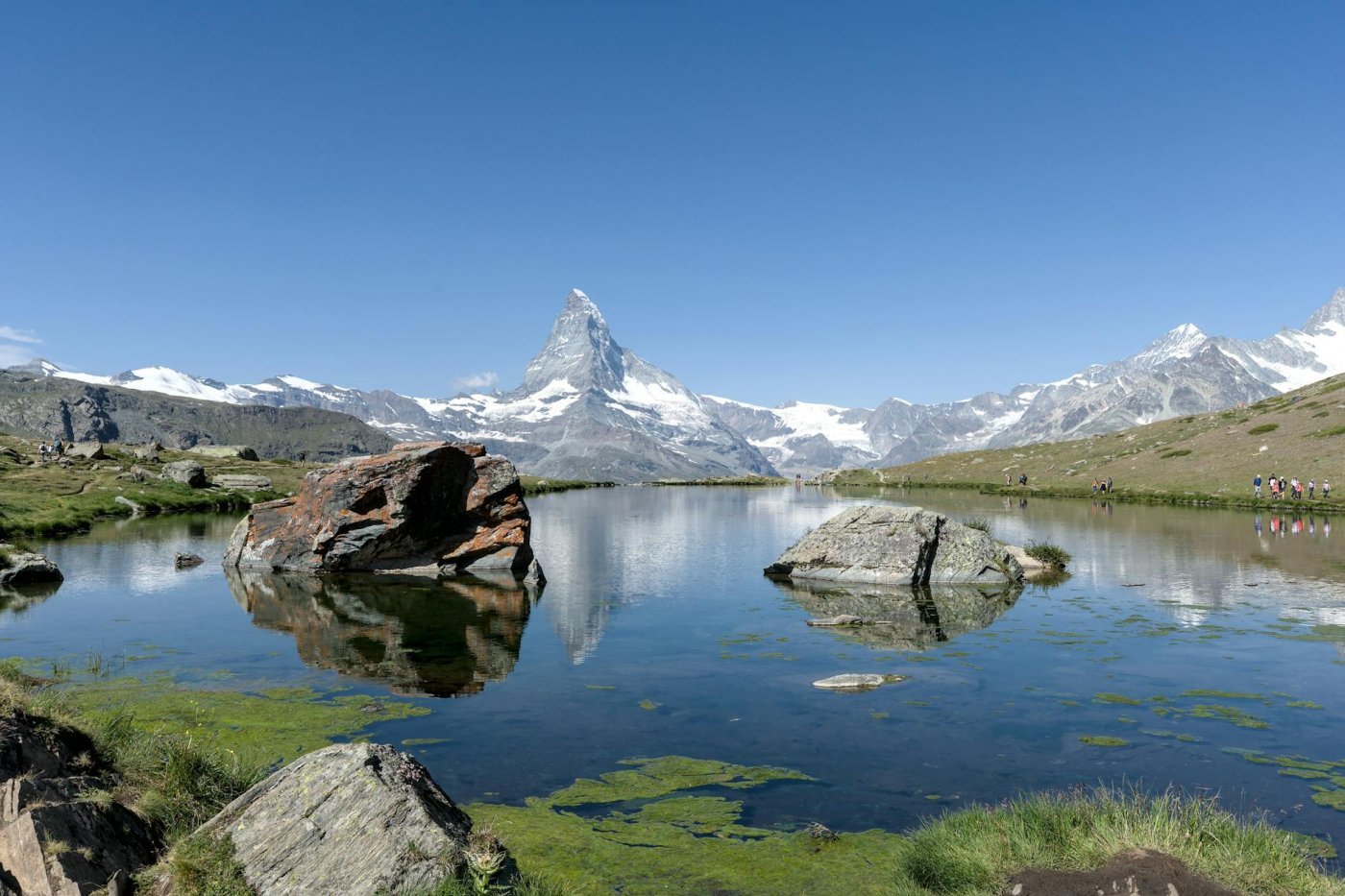
Interlaken and Zermatt offer distinctly different versions of the Swiss Alpine experience. Zermatt is entirely car-free, orbits the singular iconic Matterhorn, and has a more exclusive, quieter village atmosphere that suits honeymooners and dedicated mountain photographers. Interlaken is more accessible, more diverse in its activity offering, and substantially easier to reach from international airports without a special cog-railway approach. Interlaken's adventure sports infrastructure — paragliding, canyoning, skydiving, white-water rafting — far outpaces Zermatt's. For families, groups with mixed interests, or first-time Switzerland visitors wanting to cover multiple landscapes including two lakes, the Jungfrau group, and valley villages in a single base, Interlaken is the stronger choice. Zermatt rewards those who want singular focus and are prepared to pay a further premium for the experience.
Do people speak English in Interlaken?
English is spoken to an excellent standard throughout Interlaken, making it one of the easiest Swiss destinations for non-German speakers to navigate. The town has hosted international tourists for over 150 years and its hospitality workforce is accustomed to communicating in English, French, Japanese, Korean, and a dozen other languages simultaneously. Hotel reception staff, adventure sport operators, rail ticket offices, and most restaurants will switch to fluent English immediately. In the surrounding villages of Grindelwald, Lauterbrunnen, and Mürren, English comprehension remains very good even among older locals. The local Swiss German dialect (Berndeutsch) is charming to hear but you will never need it.
★ Hidden Gems Weekly
Like this? One place per week, in your inbox.
No spam, no fluff — just one underrated destination, every Tuesday.
Hand-picked and verified by Max, who founded Vacanexus from Luxembourg in 2026. No sponsorships, no paid placements. Every recommendation — restaurants, neighbourhoods, things to do — is selected for authenticity over popularity.