Paros Travel Guide — The Cyclades at their most unvulgarized
⏱ 11 min read📅 Updated 2026💶 €€ Mid-Range✈️ Best: Apr–Sep
€50–120/day
Daily budget
Apr–Sep
Best time
5–7 days
Ideal stay
EUR
Currency
Paros hits you first as a smell — wild thyme on warm marble dust, sun-baked fishing nets drying near the harbour, ouzo exhaled from a doorway you haven't found yet. The island sits dead-centre in the Cyclades, its low marble hills catching the afternoon light in shades of amber that photographers chase for hours without fully capturing. Paros is the island the Greeks themselves return to every August, the one they recommend quietly to friends who have already done Santorini and Mykonos and are ready for something more real. With its arc of windsurfing bays, the fishing-village-turned-cosmopolitan harbour of Naoussa, and lanes of bougainvillea so dense they form tunnels of pink and violet, Paros makes a case for itself without shouting.
Visiting Paros means accepting a bargain most travellers don't realise is on the table: Cycladic beauty at roughly half the price and none of the influencer traffic of its famous neighbours. Things to do in Paros range from renting a scooter and chasing empty beaches around the cape to hiring a sailing boat at dusk and watching the sun melt behind Antiparos. The ferry from Piraeus takes four hours; the ferry from Mykonos takes under one. Yet the distance in atmosphere is enormous — no DJ sets audible from the beach at 9 am, no €30 cocktails, no queues for sunbeds. What you get instead is one of the Aegean's most charming medieval capitals, a windsurfing spot that ranks among Europe's best, and a food scene quietly earning serious attention.
✦ Find your perfect destination
Is Paros really your perfect match?
Answer 12 quick questions about your travel style, budget and dates — we match you with the destinations that fit you best, from 600+ worldwide.
Paros earns its place on any serious Aegean itinerary because it refuses to flatten itself into a single postcard image. The island delivers whitewashed cubic architecture, marble quarries that supplied ancient Athens, and a coastline with fourteen distinct beach types — from protected family coves to the relentless wind corridor at Pounta that draws kitesurf champions each summer. Paros also functions as a ferry hub, making it effortless to day-trip to Naxos, Antiparos, or Koufonisia. The local taverna culture remains genuinely unpretentious, and the island's size — small enough to explore fully in a week, large enough to avoid feeling trapped — is close to perfect.
The case for going now: Naoussa has quietly attracted a new generation of chef-owners opening small, ingredient-focused restaurants that are drawing food press attention without yet inflating prices. Ferry connections from Athens improved again in 2025, cutting peak-season journey times. Most compellingly, Paros still offers genuine value by Cycladic standards — a harbourfront table with grilled octopus and a carafe of local wine costs a third of what the equivalent experience runs on Mykonos, and the sunsets are identical.
🏄
Windsurfing Pounta Bay
The channel between Paros and Antiparos funnels the meltemi into a consistent force-5 corridor. Pounta hosts the PWA Windsurfing World Cup and welcomes beginners through certified schools with rental gear.
🏛️
Ekatontapyliani Church
One of the oldest intact Byzantine churches in Greece, the Ekatontapyliani — the Church of a Hundred Doors — anchors Parikia with 4th-century mosaics and a courtyard that feels completely removed from tourist bustle.
🌅
Naoussa Harbour at Dusk
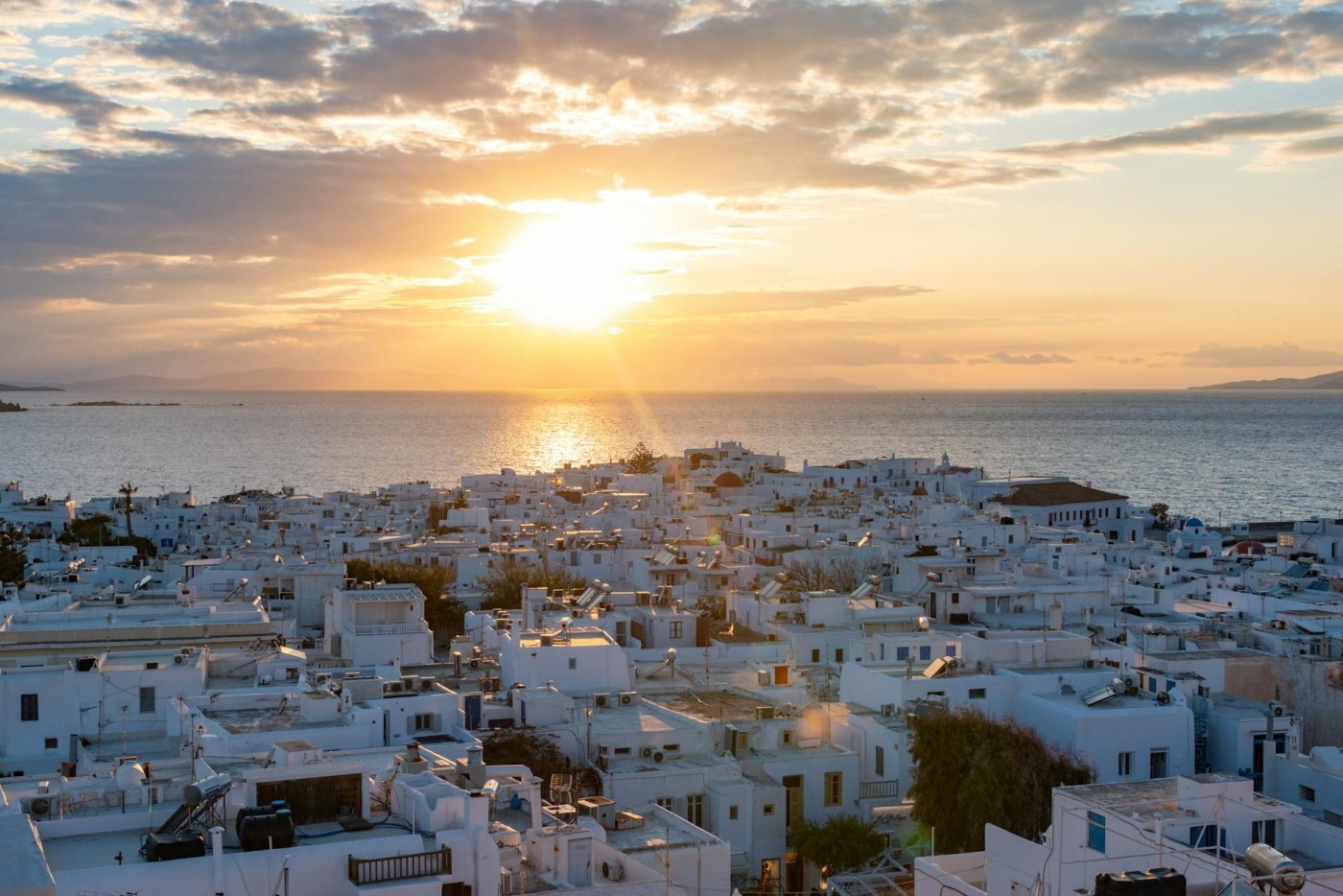
The crescent harbour of Naoussa fills with fishing caïques at golden hour. Walking the breakwater, watching the castle ruins glow pink above the water, is the defining Paros image — unhurried and genuinely beautiful.
🥾
Byzantine Road Trek
A 10-kilometre marble-paved Byzantine road connects Lefkes to Prodromos through olive groves and dry-stone terraces. The trail is well-maintained, largely shaded, and almost entirely free of other tourists even in high season.
Paros's neighbourhoods — where to focus
The Capital
Parikia
Parikia is the island's port town and its beating heart. The kastro quarter — a Venetian fortress built over a classical temple — spirals into a maze of white lanes packed with bakeries, jewellers, and no-menu tavernas. It's busier than anywhere else on the island, but the back streets empty out quickly after the ferry crowds thin.
Cosmopolitan Fishing Village
Naoussa
Naoussa pulls off the rare trick of being genuinely sophisticated without losing its soul. The harbour front is ringed with good restaurants and aperitivo bars, the surrounding beaches — Kolymbithres, Santa Maria, Lageri — are among Paros's finest, and the nightlife runs late without becoming oppressive.
Mountain Village
Lefkes
Set in the marble hills above the island's centre, Lefkes served as the island's capital during the Ottoman period and retains an unhurried, deeply traditional feel. Its amphitheatre position makes for panoramic views toward Naxos. The village has perhaps a dozen tourist shops and feels about twenty years behind the coast.
Low-Key Beach Base
Alyki
Alyki in the island's south is where Athenian families return year after year for a reason — a sheltered bay with calm water, a handful of fish tavernas, salt flats that catch extraordinary late light, and almost none of the pressure-to-perform atmosphere of the northern villages.
Top things to do in Paros
1. #1 — Explore Naoussa & Its Beaches
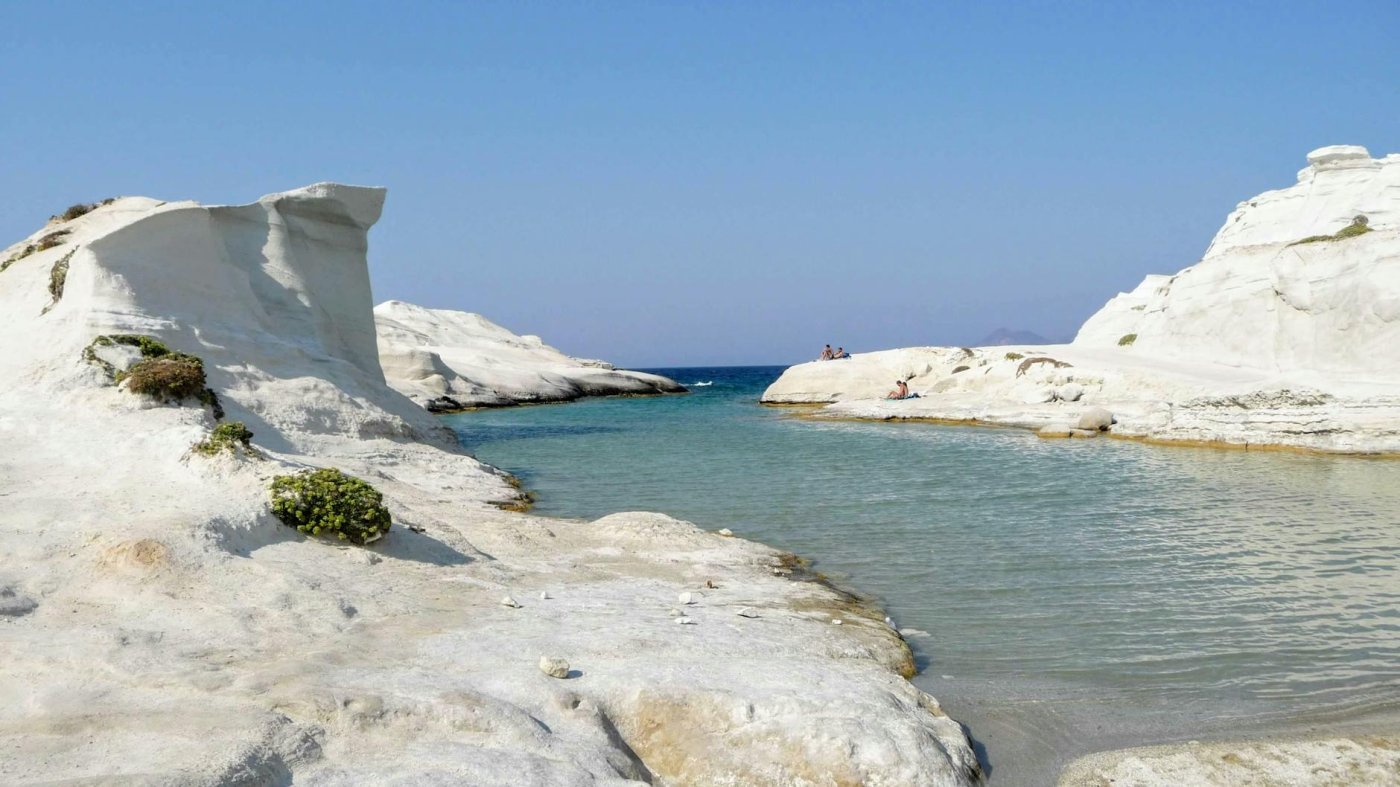
Naoussa is the fulcrum around which any Paros itinerary should pivot. Start with coffee on the harbourfront while the fishing boats head out, then pick up a rental scooter or quad bike and work your way around the northern beaches. Kolymbithres is first — its granite boulders sculpted by millennia of wind and water create natural pools and channels unlike anything else in the Cyclades. From there, Santa Maria beach offers kite-surfing and beach volleyball on a long arc of pale sand. Lageri, at the end of a dirt track, rewards the effort with a broad, clothing-optional stretch adored by those in the know. Return to Naoussa for sunset on the breakwater, then settle into one of the harbourside restaurants for grilled fresh catch and white Parian wine.
2. #2 — Windsurf or Kiteboard at Pounta
The strait between Paros and Antiparos is one of the most reliably windy passages in the Aegean, and the village of Pounta has grown around this meteorological fact. The meltemi wind blows from roughly June through September, delivering force-4 to force-6 conditions on most afternoons. The Paros Windsurf Club is the hub for gear rental and instruction for beginners, while experienced riders arrive independently having tracked the forecast for weeks. The PWA Windsurfing World Cup, held here annually, transforms the bay for about a week each summer into a spectator event worth watching even if you never set foot on a board. Kite schools operate along the same bay; lessons are broadly affordable by European resort standards and equipment hire is plentiful.
3. #3 — Walk the Byzantine Road to Lefkes
The marble-paved path that connects Lefkes to Prodromos dates to the Byzantine period and remains one of the best-preserved ancient roads in the Greek islands. The walking distance is approximately ten kilometres round trip, easily manageable in a half-day. Start from the mountain village of Lefkes in the morning while temperatures are still mild — the village itself deserves an hour of wandering, particularly the main square's twin-towered church. The path descends through terraced fields, abandoned windmills, and hillside chapels before arriving in Prodromos. Returning by local bus or taxi is straightforward. The walk costs nothing, requires only comfortable shoes, and delivers a view of Parian landscape that beach-hopping alone misses entirely.
4. #4 — Day Trip to Antiparos
Antiparos lies just fifteen minutes by car ferry from Pounta, or twenty-five minutes by passenger boat from Parikia, and the contrast with Paros is instructive. The island has perhaps 1,200 year-round residents, one main village, a long beach running north from the port, and a famous stalactite cave in the island's interior that has been visited by travellers since the 16th century. The pace is slower than slow. There are a handful of excellent tavernas concentrated around the port square, and several secluded beaches reachable only by scooter or on foot. Antiparos makes for a perfect single-day escape from Paros — bring lunch supplies or arrive hungry and eat at the port — and the last ferry back runs conveniently late into the evening.
What to eat in the Cyclades — the essential list
Grilled Octopus
Hung on lines to dry in the sun, then charcoal-grilled with olive oil and red-wine vinegar, Parian octopus is among the Aegean's simplest and most satisfying dishes. Order it anywhere with a view of the harbour and a glass of local white.
Kakavia
The fisherman's soup of the Cyclades — a clear broth of whatever was caught that morning, brightened with lemon and olive oil. Kakavia varies daily and by cook; the best versions include scorpionfish and sea bream and are served with rough village bread.
Gouna
Gouna is salted and sun-dried mackerel, a Parian speciality that has been produced on the island for centuries. It is typically pan-fried quickly and served as a meze with capers and lemon — intensely savoury and unlike anything you'll find packaged at home.
Tyropita from the Bakery
Paros's bakeries produce cheese pies layered with local graviera and local goat's cheese in pastry that shatters when you bite it. Eaten warm at seven in the morning near the ferry port, it is the definitive Parian breakfast.
Revithia Soup
Slow-cooked chickpea soup seasoned with nothing but good olive oil and rosemary, revithia is a Cycladic Sunday staple eaten from earthenware bowls. A few old-school tavernas still serve it on weekend lunchtimes; finding one is worth the search.
Local White Wine
Paros has its own appellation — Paros PDO — producing dry whites from the Monemvasia grape that pair precisely with the island's seafood. Crisp, mineral, and slightly saline, these wines rarely leave the island and taste best at their source.
Where to eat in Paros — our top 4 picks
Fine Dining
Soso Restaurant
📍 Naoussa Harbour, Naoussa, Paros
Soso sits right on the Naoussa waterfront and earns its reputation through rigorous sourcing — fish landed that morning, vegetables from the family garden, olive oil pressed on the island. The tasting menu format works beautifully here; book the terrace table well in advance for summer evenings.
Fancy & Photogenic
Barbarossa
📍 Naoussa Harbour, Naoussa, Paros
Barbarossa is possibly the most photographed restaurant in Paros — its stone terrace overhangs the harbour entrance directly beside the ruined Venetian castle. The food is solidly good Aegean seafood; the location is extraordinary. Arrive at sunset and you will understand why the table reservation waitlist runs weeks long.
Good & Authentic
Taverna Argo
📍 Parikia waterfront, Parikia, Paros
Argo is the kind of Parikia taverna that locals consider their own — long communal tables, a chalkboard menu written in Greek first and English second, grilled meats and daily fish at prices that feel increasingly rare in the Cyclades. No reservations, no fuss, excellent house wine.
The Unexpected
Ephyra Restaurant
📍 Parikia, Paros
Ephyra surprises with a menu that leans into Parian ingredients with more imagination than most island kitchens risk — think smoked aubergine with aged Parian cheese, or slow-braised lamb with wild mountain herbs. The courtyard setting in a converted Parikia townhouse adds to the sense of discovery.
Paros's Café Culture — top 3 cafés
The Institution
Café Distrato
📍 Naoussa village centre, Naoussa, Paros
Distrato has been the morning meeting point for Naoussa's year-round community for decades. The coffee is Greek-standard strong, the pastries rotate with the seasons, and the atmosphere is a masterclass in unhurried Cycladic morning life. It gets busy after ferry arrivals; timing matters.
The Aesthetic Hub
Pebbles Cocktail Bar
📍 Parikia old town, Parikia, Paros
Pebbles occupies a stepped terrace in the Parikia kastro quarter with a clear sightline to the windmills and the bay beyond. By day it serves excellent freddo espresso and granita; by evening it transitions into one of the island's most atmospheric spots for an aperitivo.
The Local Hangout
Café Margarita
📍 Lefkes village square, Lefkes, Paros
Tucked into the main square of mountain-village Lefkes, Margarita is where hikers finishing the Byzantine road trail collapse gratefully with cold water and a frappe. The owner is invariably there, invariably interested in where you've come from, and invariably able to call a taxi if you need one.
Best time to visit Paros
Jan
Feb
Mar
Apr
May
Jun
Jul
Aug
Sep
Oct
Nov
Dec
Peak season (May–Sep) — warm Aegean water, full ferry connections, meltemi winds for windsurfingShoulder season (Apr & Oct) — quieter beaches, lower prices, pleasant hiking temperaturesOff-season (Nov–Mar) — most businesses closed, ferry frequency reduced, but authentic island life visible
Paros events & festivals 2026
Whether you're planning around a specific celebration or simply want to know what's happening, this guide covers the best events and festivals in Paros — from major annual traditions to cultural highlights worth timing your trip around.
July 2026culture
PWA Windsurfing World Cup Paros
The annual PWA Windsurf World Cup transforms Pounta Bay into one of the Aegean's most electrifying sporting spectacles each July. Elite riders from across the globe compete in slalom and wave disciplines in front of free-access beach grandstands.
August 15, 2026religious
Dormition of the Virgin — Ekatontapyliani
The feast of the Dormition of the Virgin is the most important religious celebration in Paros, centred on the Ekatontapyliani church in Parikia. Pilgrims arrive by boat from across the Cyclades, candlelit processions wind through the old town, and the atmosphere is devout, festive, and wholly authentic.
June 2026music
Paros Culinaria
Paros Culinaria is an annual food and wine festival held in Naoussa each early summer, bringing together island producers, chefs, and wine growers for tastings, cooking demonstrations, and harbour dinners. An excellent reason to visit Paros in June when prices are lower and beaches less crowded.
August 2026culture
Naoussa Pirate Festival
Naoussa's annual Pirate Festival commemorates the town's historical resistance to pirate raids with costumed re-enactments on the harbour, traditional music, and torchlit processions. The entire harbour fills with spectators and the event runs across several evenings in mid-August, making it a highlight of any Paros itinerary in summer.
July 2026culture
Antiparos International Film Festival
The small-island Antiparos International Film Festival screens independent and arthouse films on an open-air harbour screen each July. Easily combined with a Paros stay via the short ferry crossing, this is one of the most pleasantly low-key film events in the Greek islands.
Easter 2026religious
Greek Orthodox Easter Paros
Greek Orthodox Easter on Paros is spectacular and sincere — candlelit midnight processions wind through Parikia and Naoussa, the smell of roasting lamb fills every street on Easter Sunday, and locals welcome visitors with characteristic warmth. The best time to visit Paros for cultural immersion outside peak beach season.
September 2026culture
Aegean Festival of Arts
An annual September programme of open-air concerts, theatrical performances, and art exhibitions held across Parikia and Naoussa as the summer crowds thin. The Aegean Festival makes the shoulder season particularly appealing for culturally minded travellers seeking Paros without July and August prices.
August 2026market
Lefkes Traditional Craft Market
The mountain village of Lefkes hosts an annual summer craft market celebrating Parian artisan traditions — hand-woven textiles, marble jewellery, local ceramics, and preserved foods. The market runs over a weekend in August and draws artisans from across the Cyclades to the village square.
May 2026culture
Paros Environment Festival
The annual Paros Environment Festival in May brings together island conservation groups, marine biologists, and sustainable tourism advocates for talks, beach clean-ups, and guided nature walks. A quieter event that appeals to ecologically conscious travellers visiting Paros in the shoulder season.
October 2026culture
Parian Wine Harvest Festival
Each October the island's small wineries open their doors for the grape harvest, inviting visitors to join the picking, observe the pressing, and taste new vintages of Paros PDO white wine. A wonderful reason to extend a Paros travel itinerary into autumn when the island settles back into local rhythms.
Hostel or studio rental, bakery breakfasts, taverna lunch specials, cooking your own dinners, public bus transport around the island.
€€ Mid-Range
€70–120/day
Private rooms or small hotel, restaurant meals twice daily, scooter hire, one windsurfing lesson, occasional ferry day trip to Antiparos.
€€€ Luxury
€180+/day
Boutique hotel with pool, fine dining every evening at Naoussa harbourfront restaurants, private sailing charter, spa treatments.
Getting to and around Paros (Transport Tips)
By air: The nearest airport to Paros is Paros National Airport (PAS), a small island airport with seasonal direct flights from Athens (35 minutes) and several European cities including Amsterdam and Paris during summer months. Most travellers from northern Europe connect via Athens, where onward flights to Paros operate frequently from May through September.
From the airport: Paros Airport sits just 10 kilometres south of Parikia, and the journey by taxi takes around 15 minutes and costs approximately €12–15. There is no direct bus connection from the airport to town, but taxis are reliably available at the terminal exit. Alternatively, many hotels and rental villas offer airport transfers if booked in advance, which is advisable during peak summer months when taxis are in high demand.
Getting around the city: Paros has a reasonably good local bus network (KTEL) connecting Parikia with Naoussa, Alyki, Golden Beach, and Lefkes at regular intervals during summer. For flexibility, scooter and quad-bike hire is widely available from €20–30 per day in Parikia and Naoussa and is by far the most enjoyable way to explore the island. Taxis exist and are affordable by Cycladic standards, though they should be pre-booked during August. Car hire is available but roads are narrow and parking in villages is difficult.
Transport Safety & Scam Prevention:
Meter Taxis at the Port: Taxis meeting ferries at Parikia port occasionally quote flat rates well above the metered fare to disoriented new arrivals. Ask for the meter to be used or agree the fare before boarding — the airport and most villages should cost €10–20.
Scooter Damage Claims: Some rental shops photograph scooters poorly at handover and later claim damage on return. Before you ride, photograph every scratch and dent carefully and ensure the shop representative acknowledges the pre-existing condition in writing or by email.
Unmarked Beach Sunbeds: On busier beaches, sunbeds occasionally lack clear price signage. Ask the price before sitting down — the standard is €5–8 per bed — and pay only after confirming the figure to avoid surprise charges when you rise to leave.
Do I need a visa for Paros?
Visa requirements for Paros depend on your nationality. Select your passport below for an instant answer — based on the Passport Index dataset for entry into Greece.
ℹ️ Indicative only. Always verify with the official consulate before booking. Data: Passport Index, April 2026.
For detailed requirements, documentation checklists and processing times by nationality: TravelDoc →
Search & Book your trip to Paros
Find the best flight routes and hotel combinations using our partner Kiwi.com.
Frequently Asked Questions
Is Paros safe for tourists?
Paros is one of the safest destinations in Greece and in the Mediterranean more broadly. Serious crime is extremely rare, and solo travellers — including women travelling alone — consistently report feeling comfortable at all hours in both Parikia and Naoussa. The main risks are minor: scooter accidents on poorly lit rural roads (drive carefully, wear a helmet), sunburn and dehydration in July and August heat, and the occasional petty theft from unattended bags on crowded beaches. Standard common-sense precautions are more than sufficient for a safe Paros trip.
Can I drink the tap water in Paros?
Tap water in Paros is technically safe to drink but has a noticeable mineral and salt taste due to the island's limited freshwater resources and desalination infrastructure. Most residents and long-stay visitors drink bottled or filtered water. Restaurants routinely serve bottled water; if you are environmentally conscious, bring a refillable bottle with a filter cartridge, which works well and significantly reduces plastic waste on the island.
What is the best time to visit Paros?
The best time to visit Paros is May, June, and September. These shoulder months deliver warm Aegean water temperatures (above 22°C), reliable sunshine, fully operational ferry connections, and dramatically fewer crowds than the July–August peak. June is particularly sweet: the meltemi wind has not yet reached its full August intensity, flower-filled landscapes are at their best, and restaurant tables are available without booking weeks in advance. July and August are excellent for windsurfing and kiteboarding but bring significant crowds and higher accommodation prices. April and October offer genuine bargains and authentic local life at the cost of cooler water and some business closures.
How many days do you need in Paros?
Five to seven days is the ideal Paros itinerary length for most travellers. Three days is enough to cover the highlights — Naoussa, Kolymbithres, Parikia's kastro, and a day trip to Antiparos — but you will leave feeling rushed. Five days allows you to slow down, find your favourite beach, hike the Byzantine road, try windsurfing, and still have evenings free to explore the food scene without ticking boxes. Seven days or more suits travellers who want to incorporate day trips to Naxos or Koufonisia, or who simply want to do nothing more demanding than reading on a different beach each morning. Paros also works well as part of a Cyclades island-hopping itinerary, pairing naturally with Naxos, Antiparos, or the Small Cyclades.
Paros vs Mykonos — which should you choose?
Paros and Mykonos are a ferry hour apart but occupy entirely different positions on the Cyclades spectrum. Mykonos delivers world-famous nightlife, designer boutiques, and beach clubs where sunbeds cost more than a Paros dinner; it is genuinely glamorous and genuinely expensive. Paros gives you whitewashed Cycladic architecture, equally beautiful beaches, and a food and wine scene that is improving rapidly — all at roughly half the price and without the pressure-to-be-seen atmosphere. If you want to party on a superyacht level, Mykonos is the correct answer. If you want the Aegean honestly, with good taverna food, windsurfing, hiking, and a harbour sunset that hasn't been sponsored by a vodka brand, Paros wins comfortably.
Do people speak English in Paros?
English is widely spoken in tourist-facing settings across Paros — restaurants, hotels, rental agencies, ferry offices, and shops in Parikia and Naoussa almost all have English-speaking staff, particularly from May through September. Younger Greeks throughout the island typically speak good English. In rural villages such as Lefkes or Drios, and in conversations with older residents, English proficiency drops noticeably, but Greek people in general respond warmly to any attempt at basic Greek phrases. Learning kalimera (good morning), efcharisto (thank you), and parakalo (please/you're welcome) will earn genuine appreciation wherever you are on the island.
★ Hotel guide
Where to stay in Paros
7+ hand-picked hotels across luxury, mid-range and budget — verified by Max.
Hand-picked and verified by Max, who founded Vacanexus from Luxembourg in 2026. No sponsorships, no paid placements. Every recommendation — restaurants, neighbourhoods, things to do — is selected for authenticity over popularity.