Queen Elizabeth NP Travel Guide — Tree-Climbing Lions, Chimps & the Kazinga Channel
⏱ 11 min read📅 Updated 2026💶 €€€ Comfort✈️ Best: Jun–Sep
€120–250/day
Daily budget
Jun–Sep & Dec–Feb
Best time
4–6 nights
Ideal stay
UGX (Ugandan Shilling)
Currency
Queen Elizabeth National Park sprawls across 1,978 square kilometres of south-western Uganda, where the flat-topped acacia woodlands of the Maramagambo forest meet the glittering waters of the Kazinga Channel and the volcanic craters of the Albertine Rift. The air at dawn carries the rumble of hippos and the distant whoop of fish eagles, while elephants file silently through the tall golden grass just metres from the murram road. Queen Elizabeth NP is a place of almost theatrical biodiversity — more than 600 bird species, 95 mammal species, and a landscape that shifts from open savanna to lush rainforest within a single afternoon drive.
Visiting Queen Elizabeth NP feels fundamentally different from the high-volume game reserves of East Africa. There are no convoys of twenty identical safari jeeps circling a single lion; instead, you might spend a quiet hour watching a leopard draped over an acacia branch with nothing but birdsong for company. Things to do in Queen Elizabeth NP span an extraordinary range — from the famous tree-climbing lions of the Ishasha sector to chimpanzee trekking in the cathedral-like depths of Kyambura Gorge, to afternoon boat safaris past yawning hippo pods on the Kazinga Channel. Uganda's flagship park rewards slow, curious travellers who prefer genuine wilderness over polished safari theatre.
✦ Find your perfect destination
Is Queen Elizabeth NP really your perfect match?
Answer 12 quick questions about your travel style, budget and dates — we match you with the destinations that fit you best, from 600+ worldwide.
Your Queen Elizabeth NP itinerary — choose your style
🗓 Weekend Break — 2 days
🧭 City Explorer — 5 days
🌍 Deep Dive — 10 days
Your pace:
Why Queen Elizabeth NP belongs on your travel list
Queen Elizabeth National Park holds a rare double distinction: it sits within the Albertine Rift biodiversity hotspot, one of the most species-rich regions on Earth, and it connects three separate ecosystems in a single park boundary. No other Uganda safari destination puts tree-climbing lions, chimpanzee trekking and a hippo-dense boat safari within a two-hour radius of each other. The park also supports the livelihoods of surrounding communities through well-managed tourism, making a visit here a genuinely meaningful contribution to Ugandan conservation. For travellers seeking raw, crowd-free wilderness with extraordinary variety, Queen Elizabeth NP belongs firmly at the top of any African safari list.
The case for going now: Uganda's investment in tourism infrastructure has accelerated sharply since 2023, with improved roads to the Ishasha sector and several new eco-lodges opening near Mweya Peninsula. The Ugandan shilling continues to offer European and UK travellers excellent value relative to comparable Kenyan or Tanzanian parks. Visitor numbers remain substantially lower than Serengeti or Masai Mara, meaning 2026 is an exceptional window to experience Queen Elizabeth NP before mainstream safari tourism fully discovers it.
🦁
Tree-Climbing Lions
The Ishasha sector in the south is one of only two places on Earth where lions routinely lounge in fig trees. Tracking them through the sector's open plains is one of Africa's most unusual wildlife encounters.
🦧
Chimp Trekking
Kyambura Gorge hides a habituated chimpanzee community deep in a forest canyon. Trekking into the gorge with a Uganda Wildlife Authority ranger is an atmospheric, close-up experience unlike any primate encounter in East Africa.
🚤
Kazinga Channel Cruise
A two-hour boat safari on the Kazinga Channel passes within arm's reach of hippo pods, buffalo herds drinking at the bank, and clouds of pied kingfishers. Afternoon light makes this the best photography session of any Uganda itinerary.
🐦
Birding Expeditions
With over 600 recorded species including the African skimmer and shoebill in nearby wetlands, Queen Elizabeth NP is a birder's obsession. Guided dawn walks through Maramagambo Forest reveal forest specials invisible from a vehicle.
Queen Elizabeth NP's neighbourhoods — where to focus
Headquarters & Hub
Mweya Peninsula
Mweya is the beating heart of Queen Elizabeth NP — a finger of land jutting into Lake Edward where the Uganda Wildlife Authority headquarters, the iconic Mweya Safari Lodge, and the boat launch all sit within walking distance. Elephants and warthogs regularly wander through the lodge grounds at dusk, and the peninsula's clifftop position gives sweeping views across the Kazinga Channel toward the Rwenzori Mountains.
Chimp Country
Kyambura Gorge
This dramatic, forested gorge cuts through the otherwise open savanna like a secret world. The gorge holds a habituated chimp community, red-tailed monkeys, and an abundance of forest birds. Most visitors stay at lodges on the gorge rim, waking to mist rising from the forest canopy below — one of the most cinematic morning views in Uganda.
Lion Territory
Ishasha Sector
The remote southern Ishasha sector borders the Democratic Republic of Congo and feels genuinely wild. Roads here are rougher, lodges fewer, and the reward is proportionate: the fig-tree-climbing lions and grazing topi are encountered in near-solitude. The crossing of the Ishasha River at dawn, with hippos surfacing in the early light, is pure, unfiltered Africa.
Forest & Primates
Maramagambo Forest
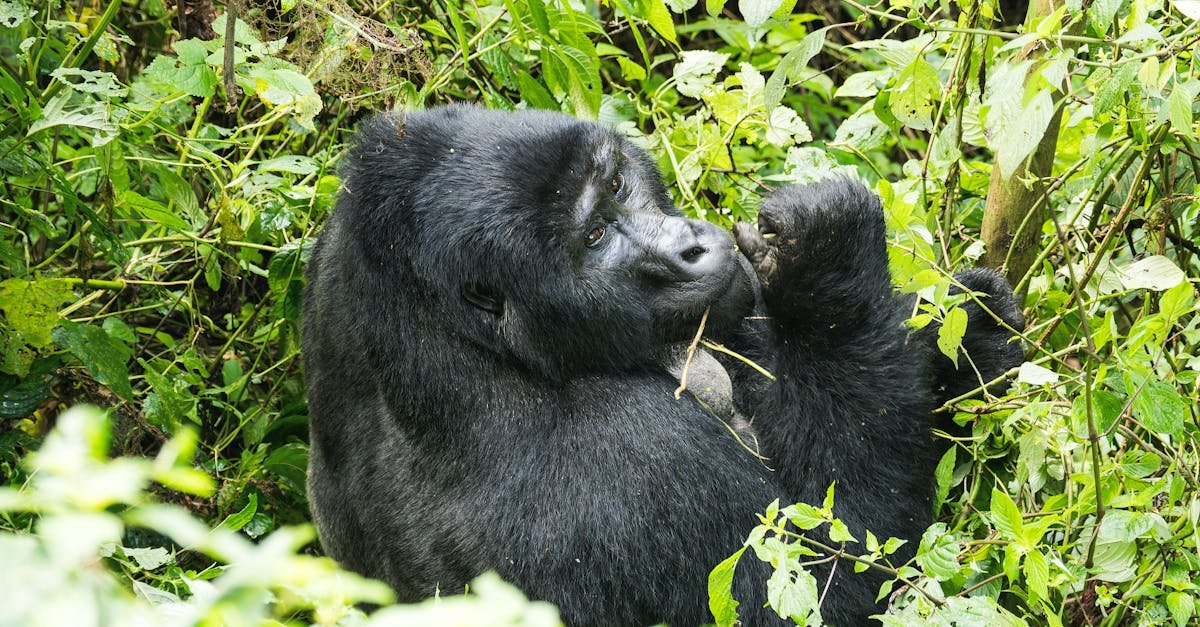
Covering the eastern edge of the park, Maramagambo is a dense, ancient rainforest where chimpanzees, red-tailed monkeys and L'Hoest's monkeys share the canopy. The famous Python Cave — a subterranean bat colony patrolled by enormous pythons — sits within the forest and makes for one of Uganda's strangest wildlife experiences.
Top things to do in Queen Elizabeth NP
1. #1 Track Tree-Climbing Lions in Ishasha
The southern Ishasha sector of Queen Elizabeth National Park is one of only two places in Africa — the other being Tanzania's Lake Manyara — where lions have developed the peculiar habit of resting in the branches of large fig and acacia trees. Game drives here begin before dawn, when the lions are most active and the low light turns the flat-topped trees into silhouettes against a tangerine sky. Rangers know which trees the resident prides favour, and a successful sighting — a lioness sprawled across a horizontal branch ten metres above the ground — is the kind of image that defines an entire Africa trip. The Ishasha sector is a four-hour drive from Mweya, so most visitors stay at one of the small bush camps nearby; spending two nights here rather than day-tripping makes an enormous difference to your chances and to the quality of the experience.
2. #2 Trek Chimpanzees in Kyambura Gorge
Kyambura Gorge chimpanzee trekking is among the most atmospheric wildlife encounters in all of Uganda. The gorge descends abruptly from the surrounding savanna, and within minutes of entering you are in deep tropical forest, following the calls of a habituated community of roughly fifteen individuals. Uganda Wildlife Authority rangers lead small groups of up to six trekkers, tracking the chimps through the gorge floor and up its steep walls. When you find them — cracking nuts overhead, grooming each other on a low branch, or charging dramatically through the understorey — the hour-long permitted viewing time passes in what feels like seconds. The gorge itself is scenically extraordinary, and the contrast between the open grasslands above and the dense forest below creates a sense of discovering a hidden world. Book permits well in advance through the Uganda Wildlife Authority; weekday slots are easier to secure than weekend ones.
3. #3 Boat Safari on the Kazinga Channel
The Kazinga Channel is a 32-kilometre natural waterway connecting Lake George to Lake Edward, and the afternoon launch from Mweya is one of the most reliably spectacular wildlife experiences in the entire Queen Elizabeth NP itinerary. The channel's banks hold one of Africa's highest concentrations of hippos — estimated at over 2,000 individuals — and the boat passes close enough to see the pink of their skin and hear the bass-drum exhalation as they resurface. Buffalo gather in herds of hundreds at the water's edge, elephant families wade into the shallows to drink, and the birdlife is relentless: giant kingfishers, pied kingfishers hovering and diving, African skimmers, yellow-billed storks and goliath herons all make regular appearances. The two-hour trip departs at 9am and 3pm from Mweya; the afternoon departure offers the best photographic light and tends to see more activity as the heat of the day subsides.
4. #4 Crater Drive & Explosion Craters
The northern sector of Queen Elizabeth National Park is dotted with dozens of ancient explosion craters, many filled with algae-rich water that turns a vivid flamingo-pink or deep turquoise depending on the season. The Crater Drive is a self-guided or ranger-guided loop that climbs between craters offering panoramic views across the Rift Valley, Lake George and, on a clear morning, the snow-capped Rwenzori Mountains glinting to the north. The craters themselves are geologically extraordinary — formed by volcanic steam explosions thousands of years ago rather than by lava flow — and the viewpoints above them are the best spots in the park for landscape photography. Lions and leopards use the crater rims as vantage points, and hyena dens are common in the crater walls. Pair the Crater Drive with a morning game drive through the Kasenyi Plains for a full day that captures the essential drama of the northern sector.
What to eat in Western Uganda — the essential list
Rolex
Uganda's beloved street snack — a chapati rolled around a fried egg omelette with tomatoes and cabbage — is available at roadside stalls near Kasese town and around the park gate. Quick, filling, and genuinely delicious after an early morning game drive.
Matoke
Steamed and mashed green banana is the staple starch of western Uganda, served alongside stewed beans, groundnut sauce or grilled tilapia. At lodge restaurants around Queen Elizabeth NP, matoke is often presented as a refined accompaniment to locally sourced proteins.
Nile Tilapia
Freshly caught tilapia from Lake George or Lake Edward appears on almost every lodge menu around Queen Elizabeth NP. Grilled whole over charcoal with lemon and chilli, it is one of the freshest, simplest and most satisfying meals the region offers.
Groundnut Stew
A rich, slow-cooked peanut-based stew with chicken or beef, served over rice or matoke, is the comfort food of western Uganda. The version made with fresh groundnuts from local farms around Kasese is deeply savoury and unlike anything from a jar.
Muchomo (Grilled Meat)
Muchomo — skewered and fire-grilled goat or beef — is the social food of Uganda, eaten at roadside stands with a cold Club beer. Near the park gates in the late afternoon, the smoke from muchomo grills is one of the most evocative arrival smells imaginable.
Matooke & Beans
The workhorse combination of western Ugandan cuisine: slow-cooked kidney beans in a tomato and onion sauce, piled alongside matoke. Wholesome, affordable, and eaten by guides and rangers alike — ordering it at a local canteen feels like the most honest thing you can do.
Where to eat in Queen Elizabeth NP — our top 4 picks
Fine Dining
Mweya Safari Lodge Restaurant
📍 Mweya Peninsula, Queen Elizabeth NP, Kasese District
The main dining room at Mweya Safari Lodge serves the most accomplished food in the park — three-course dinners using locally sourced tilapia, Ugandan beef and seasonal vegetables, with cliff-edge views across the Kazinga Channel. The Sunday buffet is a ritual for guests from every camp in the area.
Fancy & Photogenic
Kyambura Gorge Lodge Restaurant
📍 Kyambura Gorge, Queen Elizabeth NP, Rubirizi District
Perched on the gorge rim, this open-sided restaurant serves beautifully presented farm-to-table meals — herb-crusted tilapia, roasted vegetable tagines, home-baked sourdough — with a dining terrace overlooking the forest canopy below. Sundowner cocktails here are among the most scenic in Uganda.
Good & Authentic
Simba Restaurant, Katunguru
📍 Katunguru Trading Centre, Kasese–Mbarara Road, near Queen Elizabeth NP
A honest, family-run local restaurant just outside the park's northern boundary, serving groundnut stew, matoke, posho and grilled tilapia to rangers, guides and budget-conscious travellers. The food is freshly cooked to order, portions are enormous and the welcome is genuine.
The Unexpected
Pumba Bar & Grill, Mweya
📍 Mweya Peninsula, Queen Elizabeth NP, Kasese District
A casual outdoor grill near the boat launch where locals and lodge guests mix over cold Nile Special beer, muchomo skewers and chapati. Warthogs frequently wander between the plastic tables at dusk, giving this laid-back spot an entirely unplanned entertainment.
Queen Elizabeth NP's Café Culture — top 3 cafés
The Institution
UWA Visitor Centre Café, Mweya
📍 Uganda Wildlife Authority HQ, Mweya Peninsula, Queen Elizabeth NP
The simple café at the UWA visitor centre has served strong Ugandan robusta coffee and fresh mandazi doughnuts to generations of safari-goers. It opens before the morning game drive launches and is the best place to fuel up while picking up park maps and ranger briefings.
The Aesthetic Hub
Enganzi Lodge Lounge Café
📍 Enganzi Game Lodge, Queen Elizabeth NP, Rubirizi District
Enganzi Lodge's open lounge serves specialty Ugandan single-origin coffee, fresh fruit smoothies and home-baked cakes on a terrace surrounded by acacia trees. The design is warmly East African — woven textiles, natural wood, fire pit — and the afternoon light through the trees is beautifully soft.
The Local Hangout
Kasese Town Coffee Corner
📍 Stanley Street, Kasese Town, Western Uganda
A simple roadside coffee shop in Kasese town where guides, drivers and travellers in transit meet over Rwenzori mountain coffee and mandazi. The coffee is strong, local and exceptionally cheap — a reminder that Uganda grows some of Africa's finest robusta just a few kilometres away.
Best time to visit Queen Elizabeth NP
Jan
Feb
Mar
Apr
May
Jun
Jul
Aug
Sep
Oct
Nov
Dec
Peak Season (Jun–Sep & Dec) — dry conditions, best game viewing, chimps most accessibleShoulder Season — warm with occasional rains, fewer visitors, good valueWet Season (Mar–May & Oct–Nov) — lush and green, muddy tracks, reduced chimp trekking access
Queen Elizabeth NP events & festivals 2026
Whether you're planning around a specific celebration or simply want to know what's happening, this guide covers the best events and festivals in Queen Elizabeth NP — from major annual traditions to cultural highlights worth timing your trip around.
June 2026culture
Pearl of Africa Tourism Expo
Uganda's flagship annual tourism exhibition brings together safari operators, cultural performers and conservation organisations.
July 2026culture
Bakonzo Cultural Festival, Kasese
The Bakonzo people of the Rwenzori foothills celebrate their heritage with traditional music, storytelling and dress in Kasese town each July. Travellers basing themselves in Queen Elizabeth NP can make the short trip to Kasese for an authentic immersion in one of Uganda's most distinctive highland cultures.
August 2026music
Rwenzori Mountains Music Fest
A regional outdoor music festival held near Kasese celebrating Ugandan Afrobeats, traditional Batooro drumming and Congolese rumba. The festival draws musicians from across the Great Lakes region and is one of the best Queen Elizabeth NP festivals for travellers wanting to combine safari with genuine local culture.
September 2026culture
Uganda Wildlife Conservation Day
Celebrated annually in September, Uganda Wildlife Conservation Day sees Queen Elizabeth NP host ranger-led community events, free educational game drives and conservation talks at Mweya. It coincides with peak dry season, making this one of the finest times to be in the park for both wildlife and cultural engagement.
October 2026religious
Eid al-Adha Celebrations, Kasese
Kasese's significant Muslim community celebrates Eid al-Adha with communal prayers, feasting and charitable giving across the town. Safari travellers passing through Kasese during the celebrations will find the market exceptionally lively and local restaurants serving special roasted meat dishes.
December 2026culture
Uganda Martyrs Day Pilgrimage
Though centred on Namugongo near Kampala, Uganda Martyrs Day in late November through December inspires cultural travel across the country. Several Queen Elizabeth NP lodges mark the season with community fundraisers and cultural evenings involving local Bakonzo performers.
January 2026market
Kasese Crafts & Coffee Market
A seasonal artisan market operating from January through February in Kasese town, featuring woven Bakonzo baskets, hand-carved wooden wildlife sculptures and locally grown Rwenzori Arabica coffee. It is a reliable stop for safari travellers transiting between Queen Elizabeth NP and Bwindi Impenetrable Forest.
February 2026culture
Kazinga Channel Fishermen's Festival
Local fishing communities along the Kazinga Channel celebrate the February fishing season with canoe races, net-making demonstrations and communal fish roasts on the lake shore. Guided visits organised through Mweya lodge operators offer travellers a rare glimpse into the lives of families who share the park's waters with hippos daily.
April 2026culture
World Earth Day Park Events
Queen Elizabeth NP participates in World Earth Day each April with tree-planting events, ranger-guided conservation walks and open-air community cinema screenings on wildlife protection themes. Accommodation costs are lower in April, making this a budget-friendly moment to visit despite the occasional rains.
November 2026music
Kampala Jazz Festival Regional Stage
While the main Kampala Jazz Festival takes place in the capital, regional satellite stages are established in Kasese and Fort Portal each November, bringing professional Ugandan and Rwandan jazz musicians to western Uganda for a weekend of outdoor performances well within reach of Queen Elizabeth NP.
Bandas or basic guesthouses near Katunguru, self-catering, shared game drives — genuine park access on modest means.
€€ Mid-range
€120–180/day
Comfortable lodge with meals, dedicated game drives, Kazinga cruise and chimp trekking permit included in packages.
€€€ Luxury
€250–500+/day
Exclusive lodges like Wilderness Lodges Mweya, private vehicle, all activities, gourmet dining and conservation concession access.
Getting to and around Queen Elizabeth NP (Transport Tips)
By air: Kasese Airport (KSE) receives charter and scheduled flights from Entebbe International Airport, cutting the overland journey from five hours to forty-five minutes. Aerolink Uganda and BAR Aviation operate regular services. International arrivals land at Entebbe (EBB), with connecting charters arranged by most lodges as part of packages.
From the airport: From Kasese Airport, lodges provide direct transfers to Mweya Peninsula in under two hours. From Entebbe, the overland journey via Masaka and Mbarara takes approximately five to six hours on paved roads in reasonable condition. Many travellers combine the drive with a night in Mbarara to break the journey. Self-drive is feasible for experienced African road travellers but guided transport is strongly recommended for first-timers.
Getting around the city: Within Queen Elizabeth National Park, all game drives require a four-wheel-drive vehicle; ordinary saloon cars cannot access the Kasenyi Plains or Ishasha sector tracks. Lodge-arranged game drives with dedicated drivers are standard at mid-range and luxury properties. Self-drive game drives are permitted with a UWA ranger escort. The Kazinga Channel boat launch operates from Mweya and is included in most lodge packages or bookable directly at the UWA office.
Transport Safety & Scam Prevention:
Verify Chimp Permits Before Arrival: Kyambura Gorge chimpanzee trekking permits must be purchased through Uganda Wildlife Authority in advance. Touts near the park gate sometimes claim to sell permits — always book directly at ugandawildlife.org or through your lodge to guarantee authenticity and avoid fraudulent charges.
Agree Game Drive Rates in Writing: Independent freelance drivers at Kasese Airport sometimes quote lower rates then add fuel surcharges, ranger fees and park entry costs upon arrival. Confirm all-inclusive pricing in writing before departure to avoid unexpected additions that can double the quoted cost of a game drive.
Use Official UWA Boat Schedules: The Kazinga Channel cruise operates on fixed UWA schedules; private operators near the launch sometimes offer 'private charters' at inflated prices for services that are identical to the official boat. Check the UWA noticeboard at Mweya for current departure times and the official per-person rate before negotiating.
Do I need a visa for Queen Elizabeth NP?
Visa requirements for Queen Elizabeth NP depend on your nationality. Select your passport below for an instant answer — based on the Passport Index dataset for entry into Uganda.
ℹ️ Indicative only. Always verify with the official consulate before booking. Data: Passport Index, April 2026.
For detailed requirements, documentation checklists and processing times by nationality: TravelDoc →
Search & Book your trip to Queen Elizabeth NP
Find the best flight routes and hotel combinations using our partner Kiwi.com.
Frequently Asked Questions
Is Queen Elizabeth NP safe for tourists?
Queen Elizabeth National Park is considered safe for tourists and receives tens of thousands of international visitors each year without significant incident. The Uganda Wildlife Authority maintains a permanent ranger presence throughout the park, and armed rangers accompany all chimp treks and forest walks as a precaution. The main risk for visitors is wildlife — elephants near camp and hippos near water demand respectful distance — rather than personal security. The Ishasha sector, which borders the DRC, occasionally requires security checks; your lodge will advise you of current conditions before travel. Registering with your embassy and following lodge briefings is standard practice.
Can I drink the tap water in Queen Elizabeth NP?
Tap water in Uganda, including in and around Queen Elizabeth National Park, is not reliably safe to drink untreated. All lodges and camps provide filtered or bottled drinking water, and most supply reusable bottles to reduce plastic waste — a responsible practice you should support. In Kasese town, bottled water is inexpensive and widely available. If you are staying in budget bandas or self-catering, use a portable filter or purification tablets. Avoid ice in drinks at local restaurants unless you can confirm its source.
What is the best time to visit Queen Elizabeth NP?
The best time to visit Queen Elizabeth NP is during the dry seasons: June to September and December to February. Dry conditions mean shorter grass, easier wildlife spotting and fully accessible roads to both the Kasenyi Plains and the remote Ishasha sector. Chimpanzee trekking in Kyambura Gorge is most reliable when gorge tracks are not muddy. June to September is the longer and generally preferred window, with July and August representing peak conditions. The wet seasons of March to May and October to November bring lush scenery and fewer visitors, but road access to Ishasha can become difficult, and chimp treks are sometimes suspended after heavy rain.
How many days do you need in Queen Elizabeth NP?
A minimum of three nights allows you to cover the Kazinga Channel cruise, one Kasenyi Plains game drive and either a chimp trek or crater drive — satisfying but rushed. Four to five nights is the sweet spot for a Queen Elizabeth NP itinerary that includes both the Mweya sector and the Ishasha sector for tree-climbing lions, which requires at minimum one dedicated overnight in the south. If you are adding a Maramagambo Forest walk, Python Cave visit and Lake George birding boat, budget six nights comfortably. Ten days allows a genuinely slow, unhurried deep dive into every ecosystem the park holds, and many repeat visitors find this the most rewarding way to experience Uganda's flagship reserve.
Queen Elizabeth NP vs Bwindi Impenetrable Forest — which should you choose?
Queen Elizabeth NP and Bwindi Impenetrable Forest are Uganda's two flagship parks and they serve very different travel styles. Bwindi is the world's premier destination for mountain gorilla trekking — an intensely emotional, single-focus experience for which most visitors budget one permit day. Queen Elizabeth NP offers extraordinary diversity across a week: game drives, boat safaris, chimp trekking, birding and volcanic landscapes all within one park. For travellers with limited time who want the gorilla encounter, Bwindi is essential. For those who want the breadth and rhythm of a classic multi-activity safari with genuine African wilderness, Queen Elizabeth NP is superior. Many experienced Uganda itineraries combine both parks in seven to ten days.
Do people speak English in Queen Elizabeth NP?
English is Uganda's official language and is spoken widely throughout Queen Elizabeth NP and the surrounding Kasese region. Uganda Wildlife Authority rangers, lodge staff, drivers and guides all communicate confidently in English, which is taught as a primary language in Ugandan schools. Travellers from the UK, Ireland, Australia and other English-speaking countries will have no language difficulties anywhere in the park. In smaller villages near Katunguru and Kasese town, conversational English is common among younger residents. French speakers may find limited comprehension outside lodge environments, though most premium lodges can arrange French-speaking guides with advance notice.
★ Hidden Gems Weekly
Like this? One place per week, in your inbox.
No spam, no fluff — just one underrated destination, every Tuesday.
Hand-picked and verified by Max, who founded Vacanexus from Luxembourg in 2026. No sponsorships, no paid placements. Every recommendation — restaurants, neighbourhoods, things to do — is selected for authenticity over popularity.