Rajasthan Circuit Travel Guide — Blue cities, lake palaces and golden dunes — royal Rajasthan
⏱ 12 min read📅 Updated 2026💶 €€ Mid-Range✈️ Best: Jan–Mar
€50–120/day
Daily budget
Jan–Mar & Oct–Nov
Best time
10–14 days
Ideal stay
INR (₹)
Currency
Rajasthan hits you like a sandstorm of colour and sensation the moment you step off the train at Jodhpur: the air thick with cumin and marigold garlands, indigo-painted facades stacked up the hillside beneath a medieval fortress, and the distant cry of peacocks echoing through narrow bazaar lanes. This is the India of collective imagination — turbaned maharajas, camel caravans crossing amber dunes, mirror-inlaid palaces floating on still lakes — except it is entirely, breathtakingly real. Rajasthan, India's largest state, packs more architectural grandeur, culinary fire and vivid tradition into a single circuit than most countries manage in their entirety. The Rajasthan Circuit is not a single destination but a royal journey.
What separates the Rajasthan Circuit from, say, the Golden Triangle of Delhi–Agra–Jaipur is depth and drama. Visiting Rajasthan on this loop means trading the tourist conveyor belt for a slower, richer revelation: Jaipur's Pink City as a warm-up, then the cobalt intensity of Jodhpur, the sand-castle mirage of Jaisalmer pressing against the Pakistani border, and finally the shimmering lakes of Udaipur. Things to do in Rajasthan span sunrise camel treks, Haveli architecture walks, classical Kathak performances by firelight and one-on-one cooking classes with Brahmin families. No other Indian circuit rewards a 10-day investment quite so completely, or leaves quite so many indelible images in the mind.
✦ Find your perfect destination
Is Rajasthan Circuit really your perfect match?
Answer 12 quick questions about your travel style, budget and dates — we match you with the destinations that fit you best, from 600+ worldwide.
Your Rajasthan Circuit itinerary — choose your style
🗓 Weekend Break — 2 days
🧭 City Explorer — 5 days
🌍 Deep Dive — 10 days
Your pace:
Why Rajasthan Circuit belongs on your travel list
Rajasthan concentrates India's most spectacular heritage in a logical, loopable circuit. The state is home to six UNESCO-listed hill forts, more palace hotels per square kilometre than anywhere on earth, and a living craft tradition — block-printing, blue pottery, miniature painting — that has survived empires. Unlike the chaotic intensity of Mumbai or Delhi, Rajasthan moves at a pace that lets you actually absorb what you are seeing. The food alone — rich laal maas lamb curries, saffron-scented kheer, dal baati churma baked in desert coals — justifies the flight. Rajasthan belongs on every serious traveller's life list.
The case for going now: The rupee remains exceptionally favourable for European visitors in 2026, meaning palace hotels that cost Parisian prices now come in under €80 a night. India's expanded Vande Bharat express network now links Jaipur, Jodhpur, Jaisalmer and Udaipur faster than ever, cutting travel times and unlocking flexible Rajasthan itineraries. Heritage conservation money is also flowing into the circuit — several forts have new illuminated night tours launched in 2025 — making now the ideal window before visitor numbers catch up with the investment.
🏰
Fort Exploration
Mehrangarh in Jodhpur and Jaisalmer's living fort are among Asia's most dramatic citadels. Both reward two-hour self-guided walks through palace chambers, cannon terraces and carved marble lattice screens.
🐪
Desert Camel Trek
A sunrise camel ride into the Thar Desert from Jaisalmer delivers silence, undulating gold dunes and tea brewed over a dung fire. Overnight camps under the Milky Way are the circuit's most memorable nights.
🚤
Lake Palace Sunset
Udaipur's Lake Pichola at dusk, viewed from a slow wooden boat, frames the white marble Jal Mahal palace against pink Aravalli hills. No photograph fully captures the floating dreamlike quality of this moment.
🎨
Living Craft Culture
Jaipur's artisan workshops produce hand-blocked cotton, blue pottery and gem-cutting you can watch — and buy direct. A morning in the old city's Johari Bazaar and Tripolia Bazar outclasses any design museum.
Rajasthan Circuit's neighbourhoods — where to focus
Pink City Grandeur
Jaipur Old City
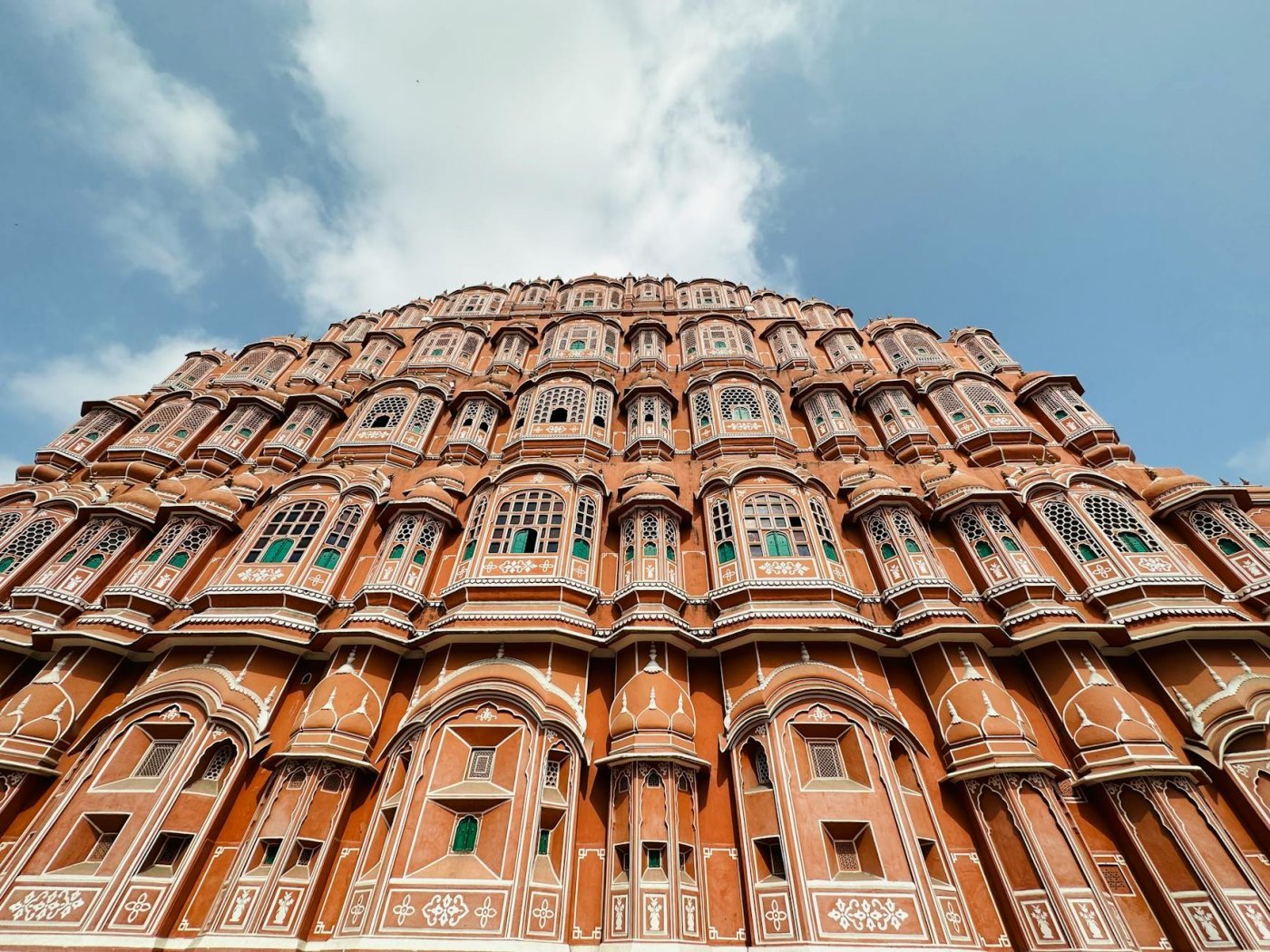
Jaipur's walled old city, painted its distinctive terracotta-pink since 1876, is the circuit's natural starting point. The Hawa Mahal, City Palace and Jantar Mantar astronomical observatory sit within walking distance of each other, while Johari Bazaar's jewellers and Bapu Bazaar's fabric stalls provide the retail theatre Rajasthan is famous for.
The Blue City
Jodhpur Old City
Radiating outward from the base of Mehrangarh Fort, Jodhpur's old city is a labyrinth of indigo- and cobalt-painted homes that gave it the Blue City name. The maze-like lanes around Sardar Market are bewildering and beautiful, crammed with spice merchants, blue-lacquer bangles and rooftop cafés staring directly up at the fort.
Desert Citadel
Jaisalmer Fort Quarter
Uniquely among India's great forts, Jaisalmer's Sonar Quila — the Golden Fort — is still a living neighbourhood where several thousand residents share their streets with travellers. Staying inside the fort walls, among Jain temples, antique Havelis and rooftop restaurants, is an experience the rest of the Rajasthan Circuit cannot replicate.
Lake City Romance
Udaipur Old City
Built across hills and islands above Lake Pichola, Udaipur's old city is the most romantically beautiful stop on the circuit. The City Palace complex dominates the eastern shore while the Bagore Ki Haveli and Jagdish Temple anchor the lakeside ghats. Lal Ghat's guesthouses offer balcony views that have drawn honeymooners and painters for generations.
Top things to do in Rajasthan Circuit
1. #1 — Mehrangarh Fort, Jodhpur
Mehrangarh Fort is arguably the most awe-inspiring structure in Rajasthan, and that is a fiercely contested title. Perched 125 metres above the blue city on a sheer rock outcrop, the fort's museum houses a collection of royal palanquins, jewelled howdahs and Mughal-era armour that rivals national museums in Delhi and Mumbai. The audio guide narrated by Sir Ben Kingsley (available at the entrance in multiple European languages) sets a remarkable standard. Walk the rampart walls at dawn before the tour groups arrive, when the entire blue city below still smoulders in a violet morning haze. Allow a minimum of three hours, and do not skip the Chamunda Mata temple at the fort's northern tip, where locals come daily to offer prayers with a fervour that has nothing to do with tourism. The fort's Chokelao Bagh garden restaurant serves an outstanding thali lunch inside the walls.
2. #2 — Overnight Desert Camp, Jaisalmer
The Thar Desert accounts for nearly two-thirds of Rajasthan's geography, and spending a night in it near Jaisalmer's Sam Sand Dunes is the circuit's single most transformative experience. Reputable operators such as Trotters or Royal Desert Camps arrange camel rides from the village of Khuri — more authentic and far less crowded than Sam — at sunset, followed by dinner around a fire while Manganiyar musicians play rawanhatta fiddle. The darkness beyond the camp is absolute: no light pollution reaches the dunes at Khuri, making the Milky Way visible in a way that most Europeans have simply never witnessed. Temperatures drop sharply after midnight even in winter, so pack a proper layer. Book tents with attached bathrooms for comfort, and verify the camp sits well away from the highway before you pay. A pre-dawn camel ride back to watch the sun ignite the dunes from the highest ridge is the correct way to finish.
3. #3 — Boat Ride on Lake Pichola, Udaipur
Udaipur's Lake Pichola rewards the person who actually gets onto the water rather than simply photographing it from a rooftop. Shared wooden boats depart from Rameshwar Ghat throughout the day, circling the famous Jag Niwas island — now the Taj Lake Palace hotel — and the smaller Jagmandir island, where the Gul Mahal pavilion served as refuge for the future Mughal emperor Shah Jahan. The one-hour circuit costs a few hundred rupees and delivers close-up views of carved marble facades emerging directly from green water, framed by the Aravalli hills beyond. The light is best for photography in the two hours before sunset, when the white marble turns amber and rose. Take a second boat ride on your last evening in Udaipur specifically to watch the City Palace complex illuminate after dark — the effect across still water is genuinely spectacular and ranks among the finest evening experiences on the entire Rajasthan circuit.
4. #4 — Jaipur's City Palace & Jantar Mantar
Jaipur's old city contains two adjacent monuments that together justify an entire day. The City Palace remains a partially inhabited royal residence — the current Maharaja still occupies a private wing — giving it a lived-in grandeur that purely tourist palaces lack. The Mubarak Mahal textile collection and the Sileh Khana armoury (housing a 190-kilogram suit of armour built for an obese maharaja) are genuinely fascinating. A short walk away, Jantar Mantar is the largest stone astronomical observatory ever built, constructed by Maharaja Jai Singh II in 1734 to make celestial measurements that were accurate to two seconds. The instruments look like minimalist modern sculpture but each one served precise scientific purpose — the Samrat Yantra sundial is still accurate to twenty seconds. Hiring a guide at the entrance for Jantar Mantar specifically is strongly recommended, as the instruments are opaque without explanation. The combination of these two sites anchors any Rajasthan itinerary firmly in Jaipur.
What to eat in Rajasthan — the essential list
Dal Baati Churma
Rajasthan's defining dish: dense wheat dough balls baked in cow-dung coals, split and drowned in spiced lentil dal and sweet crumbled churma. Earthy, filling and unlike anything else in Indian cuisine — order it at a dhaba for the most authentic result.
Laal Maas
A fire-red lamb curry made with Mathania dried chillies from near Jodhpur, this dish defined Rajput hunting-camp cooking. Proper laal maas is genuinely fiery. It is best eaten at a restaurant that sources Mathania chillies specifically rather than substituting kashmiri.
Ker Sangri
A desert pickle-stir-fry of dried ker berries and sangri beans, both foraged from thorny Thar Desert trees. Ker sangri is Rajasthan's most distinctive vegetarian side dish — tangy, slightly smoky and served alongside dal baati at traditional meals.
Pyaaz Kachori
Jodhpur's most beloved street snack: a deep-fried pastry shell bursting with spiced onion filling, served with tamarind and green coriander chutneys. Rawat Mishthan Bhandar in Jaipur is the definitive address, but every Jodhpur market also excels at these.
Gatte ki Sabzi
Chickpea flour dumplings poached in a tangy yoghurt-based gravy, this Rajasthani staple solves the desert region's historic shortage of fresh vegetables with considerable ingenuity. The gravy is thick, mildly sour and perfect scooped up with millet roti.
Mawa Kachori
The sweet cousin of the savoury kachori: a fried pastry shell packed with reduced sweetened milk (mawa), nuts and saffron, then drenched in sugar syrup. A Jodhpur invention, best eaten fresh from a mithai shop in the old city before 10am.
Where to eat in Rajasthan Circuit — our top 4 picks
Fine Dining
Suvarna Mahal, Taj Rambagh Palace
📍 Bhawani Singh Road, Jaipur 302005
Set inside a former royal banquet hall dripping in gold leaf and crystal chandeliers, Suvarna Mahal serves refined Mughal-Rajasthani tasting menus to an audience of ten tables. The slow-cooked raan (leg of lamb) and saffron kulfi finale justify the splurge entirely. Dress elegantly and book a week ahead.
Fancy & Photogenic
Upre by 1559 AD
📍 Lake Pichola Hotel, 1 Lal Ghat, Udaipur 313001
Cantilevered over Lake Pichola on a rooftop terrace, Upre delivers arguably the best dining view in Rajasthan: the Jag Niwas palace floating across the water while you eat modern Rajasthani cuisine with French technique. Reserve the corner table with direct lake frontage and arrive for the golden-hour sitting.
Good & Authentic
Indique Restaurant
📍 Hotel Hilltop Palace, 5 Ambavgarh, Jodhpur 342006
Perched on the hilltop with an unobstructed panorama of the blue city and Mehrangarh Fort illuminated at dusk, Indique serves solid, honest Rajasthani cooking — laal maas, dal baati, safed maas — at prices that feel impossibly reasonable given the drama of the setting. Locals and long-term travellers both rate it.
The Unexpected
Chokhi Dhani Village Resort
📍 12 Miles Tonk Road, Sitapura, Jaipur 302022
Part theme village, part genuine ethnographic experience, Chokhi Dhani stages a full Rajasthani evening: camel rides, folk puppeteers, fire dancers and a traditional thali served on a leaf plate while you sit cross-legged on the floor. It sounds touristy and absolutely is — but it is also genuinely joyful and unexpectedly moving.
Rajasthan Circuit's Café Culture — top 3 cafés
The Institution
Lassiwala (Shop 312)
📍 Shop 312, MI Road, Jaipur 302001
A Jaipur institution since 1944, this narrow stand sells exactly one thing: thick, set-curd lassi poured into disposable clay cups. The queue forms by 8am. When the day's lassi runs out — usually by midday — the shutter comes down. Worth building your morning around. Cash only, no seats, absolute perfection.
An Italian-inspired garden café set inside a heritage hotel, Palladio's cobalt-and-white Indo-Moorish dining room is the most beautiful café interior in all of Rajasthan. The pastries, granitas and cold brews are genuinely excellent. It photographs spectacularly but is also an entirely pleasant place to spend two hours in the afternoon heat.
The Local Hangout
Jaisalmer Coffee House
📍 Gandhi Chowk, Jaisalmer Fort, Jaisalmer 345001
Inside the fort walls at Gandhi Chowk, this relaxed terrace café buzzes with travellers, local students and fort residents from early morning. The masala chai arrives in thick glass tumblers and the thali lunch is among the cheapest and most satisfying inside Jaisalmer. The rooftop view of the sandstone fort streets is effortlessly cinematic.
Best time to visit Rajasthan Circuit
Jan
Feb
Mar
Apr
May
Jun
Jul
Aug
Sep
Oct
Nov
Dec
Jan–Mar: Peak season — cool days, clear skies, all festivals activeOct–Dec: Shoulder — warm, dry, quieter crowds, good valueApr–Sep: Off-season — extreme heat (Apr–May) then monsoon (Jun–Sep), manageable with planning
Rajasthan Circuit events & festivals 2026
Whether you're planning around a specific celebration or simply want to know what's happening, this guide covers the best events and festivals in Rajasthan Circuit — from major annual traditions to cultural highlights worth timing your trip around.
January 2026culture
Jaipur Literature Festival
One of the world's largest free literary gatherings, held at Diggi Palace in Jaipur every January. It draws 250,000+ visitors and speakers from 50+ countries. Among the
February 2026culture
Nagaur Cattle & Craft Fair
Held at Nagaur between Jodhpur and Bikaner, this is one of India's largest livestock fairs and a riotous spectacle of camel trading, folk musicians, tug-of-war contests and Rajasthani wrestling. Far less touristed than the Pushkar fair, it delivers an authentically raw visiting Rajasthan experience.
February 2026culture
Jaisalmer Desert Festival
Held on the dunes outside Jaisalmer each February around Holi, the Desert Festival stages camel races, Mr Desert contests, turban-tying competitions and classical music concerts on the open sand. This is the single most photogenic event on the entire Rajasthan circuit itinerary.
March 2026religious
Holi Festival (Rajasthan)
Rajasthan's Holi celebrations are among India's most intense — Jaipur's streets erupt in coloured powder, Udaipur holds a royal procession and Pushkar hosts bonfires on the ghats the night before. Visiting Rajasthan during Holi in March is a life-altering experience; book accommodation months ahead.
October 2026culture
Pushkar Camel Fair
Held over twelve days near Ajmer, the Pushkar Camel Fair brings 50,000 camels, horses and cattle to a vast desert plain for trading, races and bathing rituals in the sacred lake. Attended by pilgrims, merchants and photographers from across the world, it remains Rajasthan's most iconic annual event.
October 2026religious
Navratri & Dussehra, Kullu & Kota
Kota in eastern Rajasthan hosts one of India's grandest Dussehra celebrations with a 75-foot Ravana effigy burned amid fireworks by the Chambal river. The ten-day Navratri festival preceding it fills Rajasthani temples with dancers and all-night devotional singing across every major city on the circuit.
November 2026music
Jodhpur RIFF (World Sacred Spirit Festival)
The Rajasthan International Folk Festival takes over Mehrangarh Fort for five nights each October–November, staging Sufi singers, Manganiyar musicians, Celtic harpers and Mongolian throat singers against the fort's illuminated battlements. It is one of the finest world music experiences in Asia.
November 2026market
Diwali Markets, Jaipur & Udaipur
Rajasthan's Diwali is spectacular: Udaipur illuminates its lake palaces with thousands of oil lamps reflected in still water, while Jaipur's bazaars sell fireworks, silver diyas and sweets until midnight. The fortnight of markets before Diwali is among the best times to buy handicrafts directly from artisans.
January 2026culture
Makar Sankranti Kite Festival
On 14 January each year, Jaipur's skies fill with thousands of kites as the harvest festival of Makar Sankranti turns every rooftop into a battlefield. Locals compete fiercely to cut rival kites with abrasive manja thread.
March 2026culture
Elephant Festival, Jaipur
Held on the day of Holi at Chaugan Stadium in Jaipur, the Elephant Festival features decorated and bejewelled elephants parading in procession, elephant polo, tug-of-war between men and elephants, and classical performances. A highly visual Rajasthan itinerary highlight for the final day of the winter season.
Getting to and around Rajasthan Circuit (Transport Tips)
By air: The Rajasthan Circuit is best accessed via Jaipur International Airport (JAI), which receives direct flights from London Heathrow (British Airways, ~9h), Dubai, Doha and several European hubs via one-stop connections. Alternatively, fly into Delhi and take the 5-hour Vande Bharat Express to Jaipur to begin the circuit immediately without returning to the capital.
From the airport: Jaipur Airport sits 12 km from the old city. Pre-paid taxis from the official counter outside arrivals cost approximately ₹400–600 (€4–7) and take 25–40 minutes depending on traffic. Ride-hailing apps Ola and Uber operate reliably and are often slightly cheaper. Avoid unmarked taxi touts inside the terminal. Udaipur and Jodhpur airports also have pre-paid taxi counters for their respective old city destinations.
Getting around the city: The Rajasthan Circuit is best navigated by overnight train between cities: Jaipur–Jodhpur (~5h), Jodhpur–Jaisalmer (~5.5h) and Jaisalmer–Udaipur (~12h, overnight sleeper). Book on IRCTC at least two weeks ahead; 3A air-conditioned sleeper is the recommended class. Within cities, auto-rickshaws are the standard mode — agree a price before boarding or insist on meter use. Hiring a private driver for two or more people for the full circuit works out competitively and saves considerable planning effort.
Transport Safety & Scam Prevention:
The Gem Shop Detour: Auto-rickshaw and taxi drivers throughout Jaipur and Jaisalmer receive commissions for delivering tourists to specific gem and carpet shops. If a driver insists on a 'detour' or says your intended destination is 'closed today', exit the vehicle and find another. Book directly with hotels for trusted auto-rickshaw referrals.
Train Ticket Touts: Around Jaipur station, individuals approach tourists claiming the train is full or sold out, steering them toward private bus services on which they earn commission. Ignore them entirely. Check availability yourself at IRCTC.co.in or at the official Foreign Tourist Quota window inside the station building.
Unofficial 'Tourist Offices': Numerous shops around Jaipur, Jodhpur and Jaisalmer display signs reading 'Government Tourist Information' or 'Tourist Help Centre' but are entirely private commission-based operations. The only official Rajasthan Tourism offices are inside the main railway stations. Trust those, and use your hotel for all local recommendations.
Do I need a visa for Rajasthan Circuit?
Visa requirements for Rajasthan Circuit depend on your nationality. Select your passport below for an instant answer — based on the Passport Index dataset for entry into India.
ℹ️ Indicative only. Always verify with the official consulate before booking. Data: Passport Index, April 2026.
For detailed requirements, documentation checklists and processing times by nationality: TravelDoc →
Search & Book your trip to Rajasthan Circuit
Find the best flight routes and hotel combinations using our partner Kiwi.com.
Frequently Asked Questions
Is Rajasthan safe for tourists?
Rajasthan is considered one of India's safer states for foreign tourists, and solo travellers — including women travelling alone — visit the circuit regularly without incident. Petty scams targeting tourists (gem shop commissions, fake tourist offices) are common but not dangerous. Standard urban precautions apply: keep valuables secured, use pre-paid taxis or app-based rides, and trust hotel staff over street touts. The main cities on the circuit — Jaipur, Jodhpur, Jaisalmer and Udaipur — have substantial tourist police presences, particularly around major monuments.
Can I drink the tap water in Rajasthan?
Tap water in Rajasthan is not safe to drink for foreign visitors, and this applies throughout the circuit including in upmarket hotels. Drink sealed bottled water only, available everywhere for ₹20–30 per 1-litre bottle. To reduce plastic waste, carry a SteriPen UV purifier or a filter bottle such as a LifeStraw. Ice in tourist restaurants is generally made from purified water but it is reasonable to ask. Bottled water is always the safest choice.
What is the best time to visit Rajasthan?
The best time to visit Rajasthan is October through March when temperatures are manageable and the desert air is clear and dry. January through March is peak season: cool days (15–25°C), no rain, all major festivals active and maximum visibility at the forts. October and November are excellent shoulder months with thinner crowds and competitive hotel prices. April and May are intensely hot (up to 45°C), while June through September brings monsoon rains that make desert roads difficult. European winter (December–January) aligns perfectly with Rajasthan's best weather.
How many days do you need in Rajasthan?
Ten days is the minimum to experience the core Rajasthan Circuit — Jaipur (3 nights), Jodhpur (2 nights), Jaisalmer (2 nights including a desert camp) and Udaipur (3 nights) — without feeling rushed. Fourteen days is ideal and allows for a day trip to Pushkar from Jaipur, the Bishnoi villages from Jodhpur, and Eklingji temple near Udaipur. A 5-day trip to Rajasthan is possible if you focus on just one city, with Udaipur or Jaipur being the most rewarding standalone options. Attempting all four cities in fewer than 8 nights means spending more time on trains than seeing anything. Budget at least two full days for Mehrangarh Fort and Jodhpur alone.
Rajasthan vs Kerala — which should you choose?
Rajasthan and Kerala are India's two most beloved travel regions, but they offer almost entirely opposite experiences. Rajasthan delivers desert grandeur, fortress architecture, royal palaces and immersive bazaars — the India of turbans, camels and warrior history. Kerala offers tropical backwaters, spice-scented hill stations, Ayurvedic retreats and seafood-rich coastal cuisine in a lush, monsoon-green landscape. If you want one transformative heritage circuit with maximum visual drama, choose Rajasthan. If you want slower, nature-oriented travel with water, yoga and peaceful village life, Kerala wins. Both require at least 10 days to do justice. First-time India visitors often find Rajasthan more immediately spectacular but more intense; Kerala is gentler and more digestible.
Do people speak English in Rajasthan?
English is widely understood in tourist areas throughout the Rajasthan Circuit. Hotel staff, tour guides, restaurant owners and transport workers in Jaipur, Jodhpur, Jaisalmer and Udaipur generally communicate effectively in English, often quite fluently. In rural villages, local markets and with older generations, Hindi or Rajasthani is necessary. Learning a few basic Hindi phrases — 'kitna hai?' (how much?), 'dhanyavaad' (thank you) — is warmly received. Signage at major monuments is bilingual in Hindi and English. Overall, English is good enough across the circuit that language is rarely a barrier for European visitors.
★ Hidden Gems Weekly
Like this? One place per week, in your inbox.
No spam, no fluff — just one underrated destination, every Tuesday.
Hand-picked and verified by Max, who founded Vacanexus from Luxembourg in 2026. No sponsorships, no paid placements. Every recommendation — restaurants, neighbourhoods, things to do — is selected for authenticity over popularity.