Svalbard Travel Guide — Where polar bears outnumber people and the sun never sets — Svalbard is frontier planet
⏱ 12 min read📅 Updated 2026💶 €€€€ Expedition✈️ Best: May–Sep
€250–450/day
Daily budget
May–August
Best time
5–10 days
Ideal stay
NOK
Currency
Step off the plane at Longyearbyen and you instantly feel it: the air is different here, colder and cleaner than anywhere you have ever breathed, carrying the faint mineral scent of glaciers that stretch unbroken to the horizon. Svalbard, the Norwegian High Arctic archipelago straddling 74° to 81° North, is one of the last genuinely wild places on Earth that ordinary travelers can reach with a commercial flight. Reindeer wander across the runway apron. Snowmobile tracks trace the tundra like pencil lines. Signs at the edge of town remind you to carry a rifle because polar bears — roughly 3,000 of them — roam freely across an island chain the size of Ireland. Svalbard does not ease you in gently; it grabs you by the collar from the first moment and never quite lets go.
Visiting Svalbard is nothing like visiting Iceland or northern Norway, destinations that share the word 'Arctic' in tourist brochures but feel fundamentally civilised in comparison. Things to do in Svalbard revolve around genuine wilderness: multi-day boat expeditions into ice-choked fjords, snowmobile safaris across frozen tundra, guided hikes to glaciers that calve directly into the sea, and evenings spent watching walruses haul out on gravel beaches under a sun that simply refuses to set. The archipelago's only real settlement, Longyearbyen, is small enough to walk end to end in twenty minutes, yet it punches far above its weight with excellent restaurants, a superb museum, and a community of scientists, guides, and adventurers who have chosen to live at the very edge of the habitable world.
✦ Find your perfect destination
Is Svalbard really your perfect match?
Answer 12 quick questions about your travel style, budget and dates — we match you with the destinations that fit you best, from 600+ worldwide.
Svalbard belongs on your travel list because it offers something almost no other destination on Earth can match: the sensation of standing at the edge of the known world, surrounded by ice, silence, and wildlife that has never learned to fear humans. More than 60 percent of the archipelago is protected as national park or nature reserve, meaning the landscapes you encounter are essentially primordial. The midnight sun between late April and late August bathes glaciers and polar peaks in honeyed light at two in the morning, creating photographic conditions that professional wildlife photographers travel specifically to capture. Svalbard is also, remarkably, visa-free for citizens of most nations, making it one of the most accessible true Arctic destinations on the planet.
The case for going now: Climate science has placed Svalbard firmly in global headlines: the archipelago is warming faster than almost anywhere else on Earth, and glaciers that existed a decade ago are visibly retreating season by season. Traveling here now — while certain ice formations and wildlife corridors still exist in their current form — carries an urgency that few other destinations can claim. Longyearbyen's infrastructure has also matured considerably: boutique expedition operators now offer smaller, more intimate group sizes, and new hybrid-electric vessels are opening quieter, deeper fjord systems to responsible tourism.
🐻❄️
Polar Bear Safaris
Board a small expedition vessel and cruise remote fjords where polar bears hunt ringed seals on sea ice. Expert naturalist guides interpret behaviour and ensure safe, respectful distances.
🏔️
Glacier Hiking
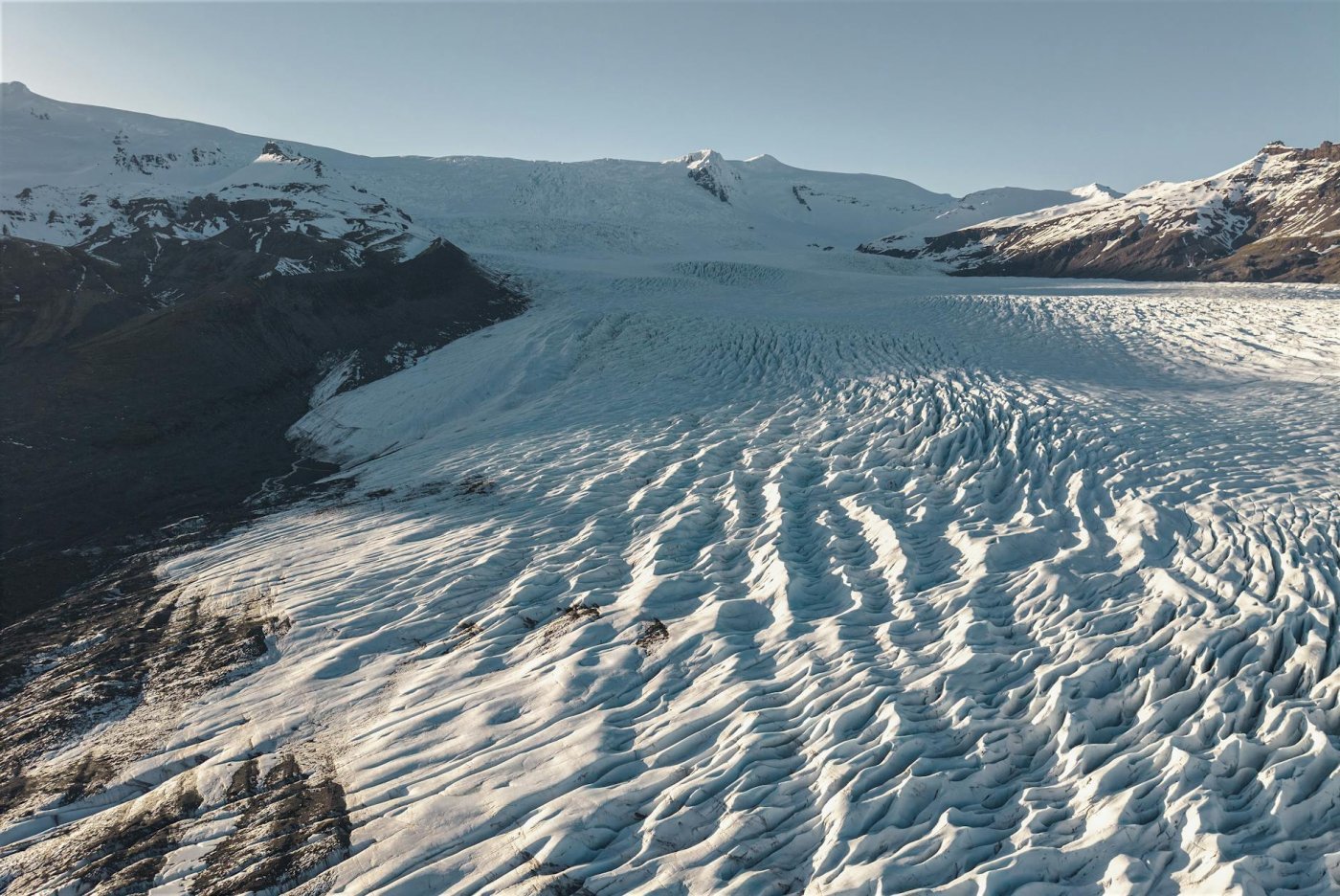
Strap crampons on and walk across living glaciers like Longyearbreen or Nordenskiöldbreen, reading ten-thousand-year-old ice while crevasse fields glitter blue in the Arctic sun.
🌅
Midnight Sun Cruises
From late April through August the sun circles the horizon without setting. Evening boat trips along Isfjorden reveal mountains, icebergs, and Arctic foxes gilded in continuous golden light.
🎿
Snowmobile Expeditions
In late winter and spring, guided snowmobile safaris cross vast frozen plateaux to remote cabins, frozen waterfalls, and overlooks where the tundra seems to go on forever.
Svalbard's neighbourhoods — where to focus
The Hub
Longyearbyen Centre
The world's northernmost proper town and the gateway to all Svalbard adventures. Nybyen Road hosts the main shops, tour operators, and the Svalbard Museum. Everything you need is within a short walk, and the surrounding mountain panorama is so dramatic that even a simple errand feels cinematic.
Historic Quarter
Nybyen
Once a workers' barracks district on the eastern edge of Longyearbyen, Nybyen now houses researchers, artists, and the popular Huset cultural centre. Rows of corrugated-iron cabins painted in faded reds and yellows stand against the mountain, giving the neighbourhood an authentic end-of-the-world character that feels lived-in rather than curated.
Wilderness Base
Barentsburg
The Russian coal-mining settlement of Barentsburg sits two hours by boat across Van Keulenfjorden and operates as a functioning slice of Soviet-era life transplanted to the High Arctic. A Lenin statue stands in the main square, a small brewery produces Arctic beer, and the contrast with Norwegian Longyearbyen is startling and thought-provoking.
Remote Outpost
Ny-Ålesund
At 78°55'N, Ny-Ålesund is the world's northernmost permanent civilian settlement and one of the planet's most important Arctic research stations. Access is by small plane or expedition boat only, no private tourism without a guide, which means the handful of travelers who do reach it find an atmosphere of pure, focused scientific purpose with extraordinary wildlife on the doorstep.
Top things to do in Svalbard
1. #1 – Expedition Boat Wildlife Cruise
The definitive Svalbard experience is boarding a small expedition vessel — typically carrying between 12 and 100 passengers — and navigating the archipelago's western and northern coastlines in search of the Big Five: polar bear, walrus, Arctic fox, Svalbard reindeer, and bearded seal. Operators such as Hurtigruten Expeditions and Oceanwide Expeditions deploy inflatable Zodiac craft to bring guests within respectful distance of wildlife and dramatic glacier faces. On a good day you might watch a polar bear stalk seals across pack ice for an hour, then cruise past a cliff face stacked with thousands of nesting little auks before anchoring in a silent fjord for a midnight BBQ on a gravel beach. The sheer scale of what you witness from a small boat in Svalbard is genuinely difficult to convey to anyone who has not stood on a deck at 2 a.m. with a polar bear on the ice fifty metres away and the sun still blazing overhead.
2. #2 – Dog Sledding & Snowmobile Touring
Svalbard's winter and spring season — roughly November through April — transforms the archipelago into a white, wind-scoured wilderness best explored by snowmobile or dog sled. Guided snowmobile day trips from Longyearbyen cross the Nordenskiöld Land plateau, climbing to high mountain passes with views across frozen fjords toward distant nunataks poking through the ice cap. Multi-day snowmobile expeditions push deeper, overnighting in unmanned Norwegian Polar Institute huts or tented camps. Dog sledding with local operators provides a slower, quieter alternative: the only sounds are the hiss of runners on packed snow and the steady breathing of your team of huskies. Both activities require a guide by Svalbard law outside the settlement boundary, a sensible precaution given the polar bear density across the tundra. The experience of driving a snowmobile across a frozen bay with 1,000-metre peaks on every side is one of the most viscerally exciting things a traveler can do in Europe.
3. #3 – Svalbard Museum & Cultural Immersion
Longyearbyen's Svalbard Museum is one of the finest regional museums in all of Norway and an essential half-day stop for any visitor who wants to understand the archipelago before heading into the wilderness. Permanent exhibitions cover the history of Arctic whaling — which in the 17th and 18th centuries essentially wiped out Svalbard's bowhead whale population — as well as the coal mining era that defines Longyearbyen's built character, and the scientific research that now represents the island's most important industry. The museum handles the sobering realities of climate change data with honesty and clarity, showing glacial retreat maps that make abstract statistics viscerally real. Adjacent to the museum, a short walk leads to Mine 7, the last operating coal mine on the island, which offers winter tours into the mountain. The Global Seed Vault, carved into the permafrost above town and storing seed samples from virtually every food crop on Earth, can be viewed externally — its dramatic concrete entrance jutting from the mountainside represents one of Svalbard's most photographed modern landmarks.
4. #4 – Northern Lights & Dark Season Exploration
Between late October and mid-February, Svalbard enters polar night — a period when the sun does not rise above the horizon at all — and the sky becomes a canvas for the most intense aurora displays anywhere in the Northern Hemisphere. Because Longyearbyen sits directly beneath the auroral oval, the northern lights appear not as a faint shimmer on the horizon but as curtains of green, violet, and white that sweep directly overhead, filling your entire field of vision. Guided snowmobile tours take groups away from town light pollution to dark tundra viewpoints where the only illumination is the aurora itself and the stars, which appear in Arctic air with a startling density. Many visitors combine northern lights viewing with dog sledding at dusk, a combination that produces memories genuinely difficult to rival anywhere else in Europe or beyond. Dedicated astrophotography tours with local guides who know the best stable foregrounds — frozen lakes, moored wooden boats, abandoned mine infrastructure — are growing in popularity and book out months in advance.
What to eat in the High Arctic — the essential list
Svalbard Reindeer
The small, hardy Svalbard reindeer is legally hunted in autumn and appears on menus across Longyearbyen. The meat is extraordinarily lean and flavourful, often served as a slow-braised stew or pan-seared medallions with cloudberry reduction and Arctic herbs.
King Crab
Giant red king crabs are harvested from the cold waters around Svalbard's coast and served freshly cooked in Longyearbyen's restaurants. The claws are enormous, the meat sweet and dense, and pairing them with local butter and wild herbs is one of the archipelago's purest culinary pleasures.
Arctic Char
This beautiful freshwater fish, closely related to salmon, thrives in Svalbard's glacial lakes. Typically served simply, cured or pan-fried, Arctic char's pink flesh has a delicate, clean flavour that pairs perfectly with pickled coastal vegetables and a dill crème fraîche.
Cloudberry Desserts
Cloudberries — the golden, jewel-like Arctic berry — ripen briefly on Svalbard's tundra in late summer. Local restaurants incorporate them into creamy parfaits, jams served with aged brown cheese, and tangy sauces accompanying game meat. Their flavour is unlike any other berry: tart, floral, and complex.
Svalbard Craft Beer
Svalbard Bryggeri brews beer using glacial meltwater at the world's northernmost brewery in Longyearbyen. Their Polar Night Porter and Arctic Pale Ale are local institutions, best enjoyed after a long day in the field with the satisfying weight of earned exhaustion.
Whale & Seal (Historical)
Historically central to Svalbard's diet during the whaling and trapping eras, whale and seal meat still occasionally appear on menus and in museum context. Understanding this culinary history is key to grasping how humans survived and worked in one of Earth's most extreme environments.
Where to eat in Svalbard — our top 4 picks
Fine Dining
Huset Restaurant
📍 Lars Hillesgate 19, Longyearbyen
Huset is consistently ranked among Norway's most remote fine dining experiences, operating a wine cellar of over 20,000 bottles — the world's northernmost — beneath a cultural centre that doubles as the town's concert hall. The kitchen focuses on Arctic ingredients: reindeer, king crab, and wild berries prepared with Nordic precision and genuine creativity. Booking well in advance is essential, particularly in summer.
Fancy & Photogenic
Kroa Arctic Bar & Restaurant
📍 Sentrum, Longyearbyen
With its warm timber interior hung with vintage expedition photographs and hunting trophies, Kroa occupies the visual sweet spot between wilderness lodge and elegant bistro. The menu leans into Svalbard's Norwegian identity with excellent stockfish, reindeer burgers, and a seafood chowder that is the perfect antidote to a cold afternoon on the tundra. The bar draws an eclectic crowd of guides, researchers, and expedition passengers.
Good & Authentic
Fruene Kaffe og Vinbar
📍 Lompensenteret, Longyearbyen
A beloved neighbourhood favourite run with genuine warmth, Fruene serves honest Norwegian home cooking in a cosy interior that feels like someone's living room transplanted to 78°N. Daily specials rotate around what is available — fresh fish, local game stews, hearty soups — and the wine list is thoughtfully curated. This is where scientists and long-term residents eat when they want to feel at home.
The Unexpected
Thai House Longyearbyen
📍 Sentrum, Longyearbyen
The improbable existence of a genuinely good Thai restaurant at 78°N is one of Svalbard's endearing quirks, reflecting the community's surprisingly international character. Run by a Thai family who have called Longyearbyen home for many years, Thai House serves comforting curries and noodle dishes that taste remarkably authentic — and hit particularly well after a long cold day on the ice.
Svalbard's Café Culture — top 3 cafés
The Institution
Kaffebrenneriet Svalbard
📍 Lompensenteret Shopping Centre, Longyearbyen
The Svalbard outpost of Norway's respected Kaffebrenneriet roastery chain is the undisputed morning gathering point for guides, researchers, and travelers preparing to head into the field. The espresso is properly made, the pastries are fresh-baked daily, and the floor-to-ceiling windows frame a mountain panorama so dramatic it feels staged. Order a flat white and let the ambition of the day ahead settle over you.
The Aesthetic Hub
Svalbard Folkehøgskole Café
📍 Nybyen, Longyearbyen
The folk high school café in Nybyen serves the student and artist community that gives this district its creative energy. The interior is covered in student artwork and expedition photography, the coffee is strong, and conversation tends toward the genuinely interesting. It operates informal hours and occasionally hosts evening talks by scientists and explorers — check the noticeboard on arrival.
The Local Hangout
Bareksten Spirits & Svalbard Bryggeri Tap Room
📍 Nybyen, Longyearbyen
In the evenings, the tap room of Svalbard Bryggeri becomes the most convivial spot in town: expedition leaders debrief their groups, solo travelers swap stories with walrus researchers, and everyone drinks the same glacial-water beer under the same Arctic light. It is informal, unpretentious, and entirely representative of what makes the Svalbard community feel uniquely warm for somewhere so cold.
Best time to visit Svalbard
Jan
Feb
Mar
Apr
May
Jun
Jul
Aug
Sep
Oct
Nov
Dec
Midnight Sun Season (May–Aug) — 24-hour daylight, wildlife cruises, glacier hiking, peak accessibilityShoulder Arctic (Apr & Sep) — late snowmobile or early boat season, softer light, fewer crowdsPolar Night & Dark Season (Oct–Mar) — extreme cold, limited access, northern lights, specialist expeditions only
Svalbard events & festivals 2026
Whether you're planning around a specific celebration or simply want to know what's happening, this guide covers the best events and festivals in Svalbard — from major annual traditions to cultural highlights worth timing your trip around.
March 2026culture
Solfestuka – Sun Festival
Svalbard's most-loved annual celebration marks the return of the sun after months of polar night. The festival fills Longyearbyen with concerts, outdoor activities, ski races, and a communal warmth that is one of the Locals and visitors line the slopes of Sukkertoppen to greet the first direct sunlight of the year.
March 2026culture
Svalbard Skimaraton
One of the world's northernmost ski races draws competitors from across Scandinavia and beyond to race across the frozen Adventdalen valley. The marathon-distance course passes through genuine Arctic wilderness, and the combination of competitive sport and polar landscape makes it one of the most atmospheric sporting events in the Norwegian High Arctic.
April 2026culture
Polarjazz Festival
Longyearbyen's annual jazz festival is a remarkable event — world-class musicians performing intimate concerts in a town of under 2,500 people. The juxtaposition of sophisticated live jazz with snowmobiles parked outside and polar bears somewhere in the tundra beyond makes Polarjazz one of the most memorable festival experiences in the Arctic world.
June 2026culture
Midnight Sun Marathon
Runners from dozens of countries compete in a full marathon course around Longyearbyen under unbroken 24-hour daylight — a spectacle that combines athletic achievement with one of nature's most extraordinary phenomena. The course offers mountain and fjord scenery throughout, and post-race celebrations continue well past midnight in the perpetual Arctic daylight.
August 2026music
Svalbard International Jazz Festival
A summer edition of the jazz celebrations brings outdoor concerts and informal sessions to Longyearbyen during peak midnight sun season. The festivals are a great reason to time a Svalbard itinerary for late August, when the light is softer and the wildlife viewing remains excellent alongside the cultural programming.
October 2026culture
Dark Season Blues
As polar night descends, Longyearbyen hosts a blues music festival that leans deliberately into the dramatic psychological reality of a months-long Arctic darkness. Artists from across Norway and internationally gather to perform in small venues, creating an intimate, emotionally resonant atmosphere uniquely suited to this singular destination.
February 2026culture
Svalbard Dog Sled Race
Local mushers and their teams compete across frozen tundra in an annual race that celebrates the dog-sledding tradition central to Svalbard's exploration history. Spectators line the course at the edges of Longyearbyen to cheer teams through in temperatures that frequently drop below minus 20°C — a genuinely Arctic sports experience.
May 2026culture
Constitution Day – 17. mai
Norway's national day is celebrated with particular verve in Longyearbyen, where the small but fiercely proud Norwegian community organises a full parade, children's events, and outdoor celebrations under the returning midnight sun. Visiting Svalbard on 17 May provides a rare window into the tight-knit identity of this remote Arctic town.
September 2026culture
Svalbard Science Week
International researchers and climate scientists converge on Longyearbyen annually to present findings and open lectures to the public. For travelers with an intellectual interest in Arctic ecology, climate change, or glaciology, attending one of the public-facing events during science week adds a layer of depth to any Svalbard travel guide itinerary.
December 2026religious
Arctic Christmas – Julaften
Svalbard celebrates a deeply atmospheric Norwegian Christmas under total polar darkness, with the main church illuminated, wooden houses strung with lights, and the entire community gathering for traditional Julaften celebrations. The extraordinary juxtaposition of hygge warmth and -30°C darkness outside makes this a uniquely powerful way to experience the Christmas period.
Boutique hotel, all-inclusive expedition vessel, private guide, fine dining at Huset, helicopter transfers.
Getting to and around Svalbard (Transport Tips)
By air: Svalbard Airport Longyearbyen (LYR) is served by direct flights from Oslo (SAS and Norwegian) and Tromsø, with flight times of approximately three hours from Oslo. There are no flights from outside Norway to Svalbard, so all international travelers must connect via Oslo Airport Gardermoen. Flights operate year-round regardless of season.
From the airport: Longyearbyen Airport is just three kilometres from the town centre, and a shared airport bus connects arrivals to the main hotels and guesthouses for a modest fare. Most visitors simply take the bus or arrange hotel pickup in advance, as taxi services exist but are expensive by Norwegian standards. The airport itself is remarkably small — you can walk from the airside gate to your transfer in under ten minutes.
Getting around the city: Longyearbyen is a small enough settlement that virtually everything in town is reachable on foot within fifteen minutes. There is no public bus network within the town itself. Snowmobiles are the dominant private transport in winter and can be rented with a valid driving licence, though travel outside town boundaries requires a licensed guide due to polar bear risk. In summer, e-bike hire is increasingly popular for exploring the Adventdalen valley, and guided vehicles serve outlying attractions.
Transport Safety & Scam Prevention:
Always Book Guides in Advance: Svalbard law requires a licensed guide for travel outside Longyearbyen's settlement boundary due to polar bear danger. Independent travel into the wilderness without a guide is illegal and genuinely life-threatening — do not attempt it regardless of experience level.
Verify Operator Credentials: Expedition operators vary significantly in quality, safety standards, and naturalist expertise. Choose companies affiliated with the Association of Arctic Expedition Cruise Operators (AECO) and read recent traveler reviews carefully before booking any wildlife cruise or snowmobile tour.
Budget for Hidden Costs: Svalbard's extreme remoteness means that everything from food to fuel is expensive. Gear rental, guided activities, and meals cost significantly more than mainland Norway. Build a substantial contingency into your Svalbard budget and do not rely on cashback or unexpected savings on the ground.
Do I need a visa for Svalbard?
Visa requirements for Svalbard depend on your nationality. Select your passport below for an instant answer — based on the Passport Index dataset for entry into Norway.
ℹ️ Indicative only. Always verify with the official consulate before booking. Data: Passport Index, April 2026.
For detailed requirements, documentation checklists and processing times by nationality: TravelDoc →
Search & Book your trip to Svalbard
Find the best flight routes and hotel combinations using our partner Kiwi.com.
Frequently Asked Questions
Is Svalbard safe for tourists?
Svalbard is very safe in terms of human crime — the community is tiny and the social trust is extremely high. The primary safety concern is polar bears, which roam freely across the archipelago and have seriously injured people who have left Longyearbyen without a trained guide and rifle. The law is clear: you must have an armed guide outside the settlement boundary. Within town, Svalbard is as safe as any Norwegian village. Emergency medical facilities in Longyearbyen are competent but limited, so comprehensive travel insurance including Arctic medical evacuation cover is strongly recommended before you travel.
Can I drink the tap water in Svalbard?
Yes, tap water in Longyearbyen is excellent — among the cleanest you will ever taste anywhere in the world. The water supply comes from Isdammen, a glacial lake above the town, and requires minimal treatment because of its natural purity. Many visitors remark that the tap water in Longyearbyen tastes noticeably different from water elsewhere in Europe — crisper and entirely free of the chemical flavour common in urban supplies. There is no reason to purchase bottled water during your Svalbard visit.
What is the best time to visit Svalbard?
The best time to visit Svalbard depends entirely on what you want to experience. For wildlife cruises, glacier hiking, and midnight sun photography, May through August is peak season, with June and July offering 24-hour daylight and the best chance of encountering polar bears on sea ice. April and September offer shoulder-season value with either lingering snowmobile conditions or early autumn wildlife activity. For northern lights and snowmobile expeditions, January through March is optimal despite the extreme cold and total polar darkness. Svalbard is genuinely one of the few destinations on Earth where every season offers a completely different and compelling experience.
How many days do you need in Svalbard?
A minimum of five days is recommended for a first Svalbard visit if you want to experience more than just Longyearbyen town. Three of those days should ideally include at least one multi-day boat expedition or a combination of guided glacier, wildlife, and cultural experiences. Budget travelers often spend five to seven days combining day tours from Longyearbyen. For those booking an expedition cruise around the archipelago, vessels typically operate 7–12 day itineraries that cover far more of the wilderness than land-based travel can reach. Serious wildlife and photography enthusiasts regularly spend ten or more days in Svalbard, finding that the more time you invest, the more the Arctic rewards you with extraordinary encounters.
Svalbard vs Iceland — which should you choose?
Iceland and Svalbard are both Arctic destinations, but they are radically different experiences and choosing between them comes down to what kind of traveler you are. Iceland is accessible, well-developed for tourism, and offers spectacular landscapes alongside reasonable infrastructure, nightlife, and golden circle-style independent itineraries. Svalbard is rawer, more extreme, more expensive, and requires guided access to most of its wilderness — but rewards you with wildlife encounters, polar bear sightings, and a genuine end-of-the-world atmosphere that Iceland simply cannot match. If you want comfortable adventure with great restaurants and easy logistics, Iceland is the choice. If you want the real Arctic — one of the last genuinely frontier destinations on Earth — Svalbard is incomparable.
Do people speak English in Svalbard?
English is spoken to an excellent standard virtually everywhere in Svalbard. The resident community of Longyearbyen is highly international — scientists, researchers, guides, and service workers from across Europe, Asia, and the Americas all live and work here — and English functions as the de facto common language alongside Norwegian. All guided tours operate in English as standard. Restaurant menus, museum exhibitions, and tourist information are available in English throughout. You will encounter no meaningful language barrier at any point during a Svalbard visit, which makes it considerably more accessible than many remote destinations at equivalent latitudes.
★ Hidden Gems Weekly
Like this? One place per week, in your inbox.
No spam, no fluff — just one underrated destination, every Tuesday.
Hand-picked and verified by Max, who founded Vacanexus from Luxembourg in 2026. No sponsorships, no paid placements. Every recommendation — restaurants, neighbourhoods, things to do — is selected for authenticity over popularity.