Tangier Travel Guide — Where Europe meets Africa across a shimmering strait
⏱ 11 min read📅 Updated 2026💶 €€ Mid-Range✈️ Best: Mar–Nov
€50–120/day
Daily budget
Mar–Nov
Best time
3–5 days
Ideal stay
MAD (Moroccan Dirham)
Currency
Tangier crackles with an electricity that is entirely its own — a city balanced on the edge of two continents, where the Atlantic crashes into the Mediterranean and the call to prayer drifts over whitewashed rooftops toward the distant silhouette of Spain. Stand on the Kasbah ramparts at dusk and you can see both worlds at once: Europe glittering across the Strait of Gibraltar, Africa stretching deep and limitless behind you. Tangier's medina lanes smell of cedar smoke and cumin, its grand boulevard cafes hum with Arabic, Darija, French and the occasional snippet of Spanish, and its light — that famous Moroccan light — turns everything gold.
Visiting Tangier is fundamentally different from visiting Marrakech or Fez. There are no vast palace complexes to queue for, no carpet-seller armies quite so relentless, and the pace carries a distinctly Mediterranean cafe culture. Things to do in Tangier range from navigating the reborn medina alleys to sitting in the legendary Café de Paris watching diplomats and artists pass by. The city that once housed Paul Bowles, William Burroughs and Henri Matisse has spent the last decade reinventing itself — a spanking new port, a tram line, gleaming contemporary galleries — without erasing the cinematic grit that makes it irreplaceable.
✦ Find your perfect destination
Is Tangier really your perfect match?
Answer 12 quick questions about your travel style, budget and dates — we match you with the destinations that fit you best, from 600+ worldwide.
Tangier occupies one of the most dramatic geographical positions of any city on earth — fourteen kilometres from Europe, where two seas meet and two continents lock eyes. That accident of geography shaped everything: the Phoenicians settled here, the Romans built a capital, the Beats found inspiration, and today's travellers find a city that is simultaneously North African medina, Mediterranean port town and cosmopolitan crossroads. Tangier's renovated Grand Socco, its cliff-top Kasbah Museum and its thriving contemporary art scene offer a cultural depth that rewards slow exploration, while the surrounding Rif foothills and Atlantic beaches mean natural escape is always within reach.
The case for going now: Tangier is mid-transformation and this is precisely when to go. The high-speed Al Boraq rail link to Casablanca has made the city newly accessible, boutique riad openings in the medina are accelerating, and the Tangier free-trade zone is drawing international investment that is upgrading infrastructure without yet homogenising the city's singular character. Prices remain dramatically lower than comparable European coastal cities, and the dirham gives European visitors exceptional purchasing power right now.
🏛️
Kasbah Ramparts
Walk the ancient fortified walls above the medina at golden hour for staggering views over the Strait of Gibraltar. The Kasbah Museum of Mediterranean Cultures fills the former sultan's palace below.
☕
Grand Socco Cafes
Claim a marble table at one of Tangier's historic boulevard cafes and watch the city's extraordinary human crossroads unfold over a glass of sweet mint tea or a noir café.
🌊
Cap Spartel Sunset
Drive fourteen kilometres west to the point where the Atlantic meets the Mediterranean. The lighthouse, sea caves of Hercules and the crashing waves deliver one of Morocco's most elemental sunsets.
🎨
Beat Generation Trail
Follow in the footsteps of Bowles, Burroughs and Ginsberg through the Interzone. The Forbes Museum, the Legation, and Café Hafa on the cliffs are all still standing and still utterly atmospheric.
Tangier's neighbourhoods — where to focus
Historic Core
Medina
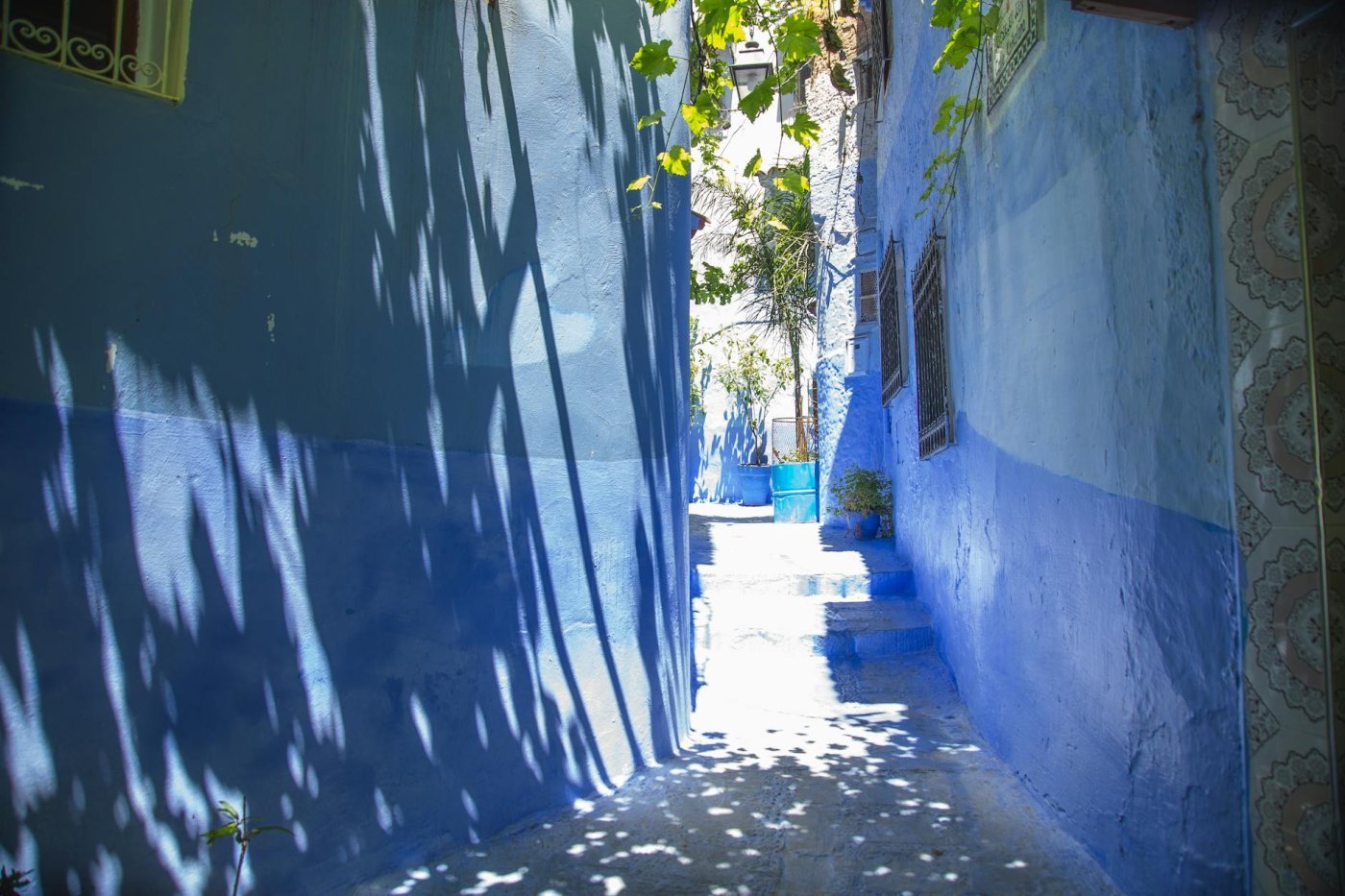
Tangier's ancient walled city is a labyrinth of whitewashed lanes, Moorish arched doorways and tiny artisan workshops where leather-workers and weavers operate as they have for centuries. The medina runs from the Grand Socco market square up through tight residential streets to the Kasbah at its summit, the whole quarter now cleaned up, freshly lit and dotted with excellent riads.
European Quarter
Ville Nouvelle
Built during the colonial International Zone era, the Ville Nouvelle along Boulevard Pasteur retains wide Haussmann-influenced avenues, art deco facades and French-style patisseries sitting beside Moroccan cafes. This is where the city's moneyed professional class lives, where the best contemporary restaurants cluster and where you find the famous Café de Paris on the main square.
Clifftop Retreat
La Montagne
The residential hillside district above the medina is where Tangier's old diplomatic and artistic community built their villas. Shaded by eucalyptus and bougainvillea, La Montagne is quieter and cooler than the city below. The cemetery where Paul Bowles chose to be buried and several discreet boutique guesthouses make it a serene counterpoint to the medina bustle.
Port & Marina
Tanja Marina Bay
The newly developed marina district south of the old port is Tangier's most contemporary face: gleaming seafront promenades, international chain hotels, marina restaurants serving fresh Atlantic fish and a beach club scene that draws Moroccan weekend visitors from Casablanca. It offers a stylish breather from medina immersion without leaving the city.
Top things to do in Tangier
1. Explore the Kasbah & Museum
The Kasbah sits at the highest point of Tangier's medina, enclosed behind its own set of ancient walls and reached via steep, winding lanes that thin to single-file width near the top. Inside, the Place de la Kasbah opens unexpectedly wide, revealing the Dar el Makhzen — a former sultan's palace now housing the Museum of Mediterranean Cultures. Its exhibition rooms circle a beautiful central courtyard of carved stucco, painted cedarwood ceilings and Andalusian-influenced tilework. Rooms display Phoenician amphorae, Roman bronzes from Volubilis and medieval Islamic ceramics in chronological flow. Save time to walk the full circuit of the ramparts afterward — the views across the strait toward Spain and down into the medina below are among the finest urban panoramas in all of Morocco.
2. Walk the Beat Generation Trail
Between the 1940s and 1970s, Tangier was the most mythologised city in the literary world — a tax-free International Zone where censorship barely existed and the cast of characters included Paul Bowles, William Burroughs writing Naked Lunch at the Hotel Muniria, Truman Capote, Jack Kerouac, Tennessee Williams and Francis Bacon. Piecing together their Tangier itinerary is one of the most rewarding things to do in Tangier today. Start at the American Legation Museum in the medina, the only US National Historic Landmark on foreign soil, which holds Bowles archives and rotating art exhibitions. Then walk north to Café Hafa — open since 1921, built on terraces cut into the cliff above the strait, unchanged in its plastic chairs and breathtaking views. Order mint tea and stay for an hour. The Hotel Continental, where Bowles hosted guests, is still open and still atmospheric.
3. Day Trip to Cap Spartel & Caves of Hercules
A short taxi ride west of Tangier delivers you to one of the most geographically dramatic spots in the world: Cap Spartel, where the Atlantic Ocean meets the Mediterranean Sea at the northwestern tip of Africa. The 1864 lighthouse marks the precise point; the sea below churns with the collision of two bodies of water in conditions that change with every visit. Two kilometres south, the Caves of Hercules are a complex of sea-carved caverns that open through a distinctive Africa-shaped mouth directly onto crashing Atlantic waves — a view that photographs extraordinarily well in late afternoon light. The caves have been used for millennia, with evidence of millstone cutting visible in the rock. Combine both stops in a half-day, allowing time to walk the eucalyptus-lined coastal path between them and linger at the clifftop viewpoint as the sun drops toward the Atlantic horizon.
4. Tangier Medina Food & Souk Tour
The medina markets reward early morning visits before heat builds and tourist groups arrive. Enter via the Grand Socco — officially Place du Grand 9 Avril 1947 — where Rif mountain women in distinctive striped haiks sell herbs, olives and seasonal produce from wicker baskets. Follow Rue es Siaghine into the heart of the old city past silversmith workshops and spice vendors whose stalls form pyramids of ras el hanout, saffron and dried rose petals. The Petit Socco, the medina's inner square, was once the city's most notorious meeting point for smugglers and spies; today it is ringed with old-fashioned cafes where you can take breakfast for two for under three euros. Look for the covered textile souks running off the Petit Socco's northern side, and end at a family-run stall serving meloui flatbread fresh from a charcoal griddle, eaten with argan oil and amlou almond paste — Tangier's finest breakfast.
What to eat in Northern Morocco — the essential list
Pastilla au Poisson
Tangier's celebrated fish pastilla — layers of flaky warqa pastry encasing spiced white fish, vermicelli and egg — is a northern Moroccan speciality. Sweet, savoury and deeply fragrant with saffron, it is distinct from the better-known pigeon version of Fez.
Bissara
A thick, warming soup of dried fava beans blended with cumin and drizzled with olive oil and chilli. Bissara is the working breakfast of Tangier — sold from pavement stalls from dawn, eaten with crusty bread and costing almost nothing. Essential morning fuel.
Grilled Sardines
The Atlantic waters off Tangier produce exceptional sardines, and the city's port-adjacent restaurants grill them simply over charcoal with sea salt, lemon and chermoula herb paste. Eaten fresh with khobz bread, they are one of Morocco's most satisfying cheap meals.
Meloui with Amlou
Meloui is a flaky, layered Moroccan flatbread cooked on a circular griddle until golden and lacy. Eaten with amlou — a paste of roasted almonds, argan oil and honey — it is the signature morning meal of Tangier's medina and deeply addictive.
Harira
This rich tomato, lentil and chickpea soup thickened with flour and brightened with fresh coriander is beloved across Morocco but reaches particular depth in Tangier's home kitchens. Served with a squeeze of lemon and a date, it is traditionally eaten to break the Ramadan fast.
Mint Tea Ceremony
Atay b'naana — gunpowder green tea steeped with fresh spearmint and poured from height to create a froth — is Tangier's social adhesive. No transaction, negotiation or friendship begins without it. Accepting a glass is a cultural act as much as a culinary one.
Where to eat in Tangier — our top 4 picks
Fine Dining
El Reducto
📍 12 Rue Commandan Jusuf, Kasbah, Tangier
Set inside a beautifully restored Kasbah townhouse, El Reducto serves refined Andalusian-Moroccan cuisine in candlelit rooms of carved plasterwork and antique lanterns. The fish pastilla and the lamb tagine with preserved lemon are standouts. Reserve ahead — the intimate dining room fills nightly.
Fancy & Photogenic
Nord-Pinus Tanger
📍 11 Rue Riad Sultan, Kasbah, Tangier
The rooftop terrace of this celebrated design hotel in the Kasbah is one of Tangier's most photographed spaces — white banquettes, trailing bougainvillea and an uninterrupted panorama of the strait. The kitchen produces elegant Moroccan-Mediterranean dishes. Come for lunch when the light is at its most dramatic.
Good & Authentic
Restaurant Populaire Saveur de Poisson
📍 2 Escalier Waller, Ville Nouvelle, Tangier
There is no menu here — the owner serves whatever the morning's catch dictated, in a procession of courses that might include fried whitebait, stuffed squid and the house fish tajine. Fixed price, communal tables, zero pretension. One of the most authentic meals in all of northern Morocco.
The Unexpected
Salon Bleu
📍 Rue Amrah, Medina, Tangier
Hidden above the medina with a blue-tiled terrace that overlooks the rooftops and the strait beyond, Salon Bleu serves simple Moroccan salads, tagines and mezze plates at remarkably fair prices. The atmosphere — fairy lights, ceramic lanterns, the sound of the city below — is entirely magical at dusk.
Tangier's Café Culture — top 3 cafés
The Institution
Café de Paris
📍 Place de France, Ville Nouvelle, Tangier
Open since 1927 and a former hub for spies, diplomats and artists during Tangier's International Zone era, Café de Paris on Place de France is still the city's great social theatre. Order a café noir, unfold a newspaper and watch the human crossroads of the boulevard unfold at a table on the broad terrace.
The Aesthetic Hub
Café Hafa
📍 Avenue Mohammed Tazi, Marshan Cliff, Tangier
Perched on clifftop terraces cut into the hillside overlooking the strait, Café Hafa has served mint tea unchanged since 1921. The Rolling Stones came here; the Beatles came here; Paul Bowles practically lived here. Mismatched chairs, sea breeze and views across to Spain make it the most atmospheric cafe in Morocco.
The Local Hangout
Gran Café de Central
📍 Petit Socco, Medina, Tangier
The innermost square of the medina, the Petit Socco, is ringed with old-fashioned cafes where local men nurse café cassé — coffee cut with steamed milk — at all hours. Gran Café de Central is the best of them, unchanged in its tiled floors, ceiling fans and extraordinary cast of neighbourhood regulars.
Best time to visit Tangier
Jan
Feb
Mar
Apr
May
Jun
Jul
Aug
Sep
Oct
Nov
Dec
Best Season (Mar–Jun, Sep–Nov) — warm, clear skies, comfortable heat, ideal for medina walks and coastal day tripsShoulder Season (Jan–Feb, Dec) — mild and quieter, some rain, atmospheric low-season feel with fewer visitorsSummer Heat (Jul–Aug) — very hot, crowded with Moroccan tourists, beach-focused; rooftop evenings remain pleasant
Tangier events & festivals 2026
Whether you're planning around a specific celebration or simply want to know what's happening, this guide covers the best events and festivals in Tangier — from major annual traditions to cultural highlights worth timing your trip around.
June 2026culture
Tanjazz Festival
Tangier's acclaimed jazz festival brings international and Moroccan musicians to open-air stages across the city each June, with concerts in the Kasbah, the Grand Socco and various riads. Among the
July 2026music
Mawazine Rhythms of the World
While the main stages of Morocco's largest music festival are in Rabat, satellite events and fringe programming frequently extend to Tangier venues in July. International headliners and regional Gnawa, chaabi and fusion acts create an extraordinary musical atmosphere across northern Morocco.
March 2026culture
Asilah International Cultural Moussem
The Asilah Arts Festival, held 45 minutes south of Tangier by train, is one of Morocco's most celebrated cultural gatherings, featuring live mural painting on medina walls, poetry readings, calligraphy exhibitions and international artist residencies. A perfect addition to any Tangier itinerary in spring.
April 2026religious
Eid al-Fitr Celebrations
The end of Ramadan transforms Tangier into a city of celebratory street life. Families dress in new clothes and fill the Grand Socco and the Ville Nouvelle boulevards; patisseries sell chebakia and sellou pastries; the mosques overflow with worshippers at dawn prayers. An extraordinary time for cultural immersion.
August 2026culture
Tangier Summer Festival
The annual summer festival fills August evenings with Moroccan and international music performances, theatrical events and open-air film screenings in parks and public squares across Tangier. The festival programme increasingly features contemporary Moroccan electronic and hip-hop artists alongside traditional Andalusian classical ensembles.
September 2026culture
Tanger Med Literary Festival
A growing autumn literary festival celebrating Tangier's extraordinary role in world literature — from Ibn Battuta through Paul Bowles to contemporary Moroccan francophone writers. Panel discussions, readings and walking tours following the city's literary geography make this event ideal for book-loving visitors planning a September Tangier itinerary.
October 2026market
Grand Socco Harvest Market
Each autumn the Grand Socco swells with Rif mountain farmers bringing the season's harvest to Tangier — pomegranates, dried figs, fresh walnuts, wild herbs and the year's new olive oil. The market intensifies on Friday mornings when Berber women in traditional striped haiks descend from the hills in greatest numbers.
November 2026culture
Moroccan Documentary Film Festival
Tangier has hosted an important documentary film festival each autumn, screening North African, European and international documentary films in historic cinema venues and cultural centres across the Ville Nouvelle. The festival emphasises cross-Mediterranean stories and Moroccan social documentary with English subtitles widely available.
February 2026culture
Al-Mawlid al-Nabawi
The celebration of the Prophet Muhammad's birthday fills Tangier with candlelit processions, Sufi music and communal street meals shared between neighbours. The medina is at its most generously open to respectful visitors during this occasion, with the sound of Gnawa music drifting through the lanes until well after midnight.
May 2026culture
Tangier International Art Fair
An increasingly prominent spring art fair hosted at venues along the Tangier waterfront and in the Ville Nouvelle galleries, presenting contemporary Moroccan painting, sculpture and photography alongside invited North African and European artists. A sign of Tangier's growing stature as a regional contemporary art destination.
Medina guesthouse, bissara soup breakfasts, shared taxis, local cafes and street food markets keep costs very low.
€€ Mid-range
€50–120/day
Boutique riad, restaurant dinners with wine, private taxis and museum entry; genuinely comfortable without extravagance.
€€€ Luxury
€120+/day
Design hotel or top-end riad, fine dining at El Reducto, private driver for day trips, hammam and spa treatments.
Getting to and around Tangier (Transport Tips)
By air: Tangier Ibn Battouta Airport (TNG) is served by direct flights from Paris CDG, Madrid, Amsterdam, Brussels, London Stansted and several other European cities, primarily via Royal Air Maroc, Ryanair and easyJet. Flight time from London is approximately 3 hours, from Paris under 2.5 hours, making Tangier easily accessible for a long weekend from most of western Europe.
From the airport: The airport sits 15 kilometres south of the city centre. Official petit taxis charge a fixed rate of around 150–200 MAD (€14–18) to the medina or Ville Nouvelle and take 20–25 minutes. Shared grand taxis operate the same route more cheaply but require assembling a full load of passengers. Ride-hailing apps including Careem and inDrive now operate in Tangier and offer transparent pricing as a useful alternative.
Getting around the city: Tangier's medina is almost entirely pedestrian and must be navigated on foot — its lanes are far too narrow for vehicles. The Ville Nouvelle is comfortably walkable. Petit taxis (small red metered cabs) cover the wider city cheaply; insist the meter is running before departure. Grand taxis link Tangier to surrounding towns including Tetouan and Asilah. The Al Boraq high-speed train connects Tangier Ville station to Casablanca in just over two hours, with stops at Rabat.
Transport Safety & Scam Prevention:
Unsolicited Guides: Men near the Grand Socco will offer to guide you into the medina for free and then demand payment or commission from shops. A polite firm refusal works; licensed guides can be booked through your riad or the official tourism office at a fair fixed rate.
Taxi Meters: Some petit taxi drivers will quote an inflated flat fare to tourists rather than use the meter. Always ask the driver to start the compteur before the journey begins; the meter fare will almost always be significantly lower than any quoted price.
Ferry Port Fixers: The Tangier ferry terminal attracts unofficial helpers who will insist on carrying your bags or steering you toward specific ticket desks. Keep luggage close, ignore persistent offers of assistance, and buy ferry tickets in advance online or at official operator desks only.
Do I need a visa for Tangier?
Visa requirements for Tangier depend on your nationality. Select your passport below for an instant answer — based on the Passport Index dataset for entry into Morocco.
ℹ️ Indicative only. Always verify with the official consulate before booking. Data: Passport Index, April 2026.
For detailed requirements, documentation checklists and processing times by nationality: TravelDoc →
Search & Book your trip to Tangier
Find the best flight routes and hotel combinations using our partner Kiwi.com.
Frequently Asked Questions
Is Tangier safe for tourists?
Tangier is generally safe for tourists and has improved dramatically in the past decade following significant policing investment in the medina and tourist areas. Petty theft, persistent touts near the Grand Socco and occasional scams targeting new arrivals remain the primary concerns rather than violent crime. Women travelling solo report mixed experiences; covering shoulders and avoiding poorly lit medina lanes at night is sensible. Keep a firm grip on bags in crowded market areas and book guides through your accommodation rather than accepting street approaches, and most visits pass without incident.
Can I drink the tap water in Tangier?
Tap water in Tangier is technically treated and not acutely dangerous, but most visitors and locals prefer bottled water due to inconsistent infrastructure quality in older medina buildings. Bottled water is cheap and widely available everywhere. Avoid ice in medina street stalls and exercise the same caution with raw salads washed in tap water at very budget establishments. In mid-range and upscale restaurants and riads, hygiene standards are generally reliable.
What is the best time to visit Tangier?
The best time to visit Tangier is spring (March to May) or autumn (September to November). Spring brings warm days of 18–24°C, lower visitor numbers than summer and the medina markets bursting with seasonal produce. September and October offer the same comfortable temperatures after the peak summer heat subsides. Summer (July–August) sees Tangier crowded with domestic Moroccan tourists from Casablanca and Rabat, prices rise and heat peaks around 32°C. Winter is mild and atmospheric with occasional Atlantic rain, making it the quietest and cheapest window for independent travellers who do not mind grey skies.
How many days do you need in Tangier?
Three full days is the ideal minimum for a focused Tangier itinerary that covers the essentials: the Kasbah and its museum, the medina souks, the Beat Generation literary trail, Café Hafa and a half-day at Cap Spartel. Five days allows you to add a day trip to Tetouan or Asilah and explore the city at a more relaxed pace, spending time in neighbourhood cafes rather than just hitting highlights. Ten days suits travellers who want to extend into the surrounding Rif mountains, overnight in Chefchaouen and explore the broader Tangier-Tetouan region fully. Many European visitors find Tangier ideal for a long weekend given the short flight times.
Tangier vs Marrakech — which should you choose?
Tangier and Marrakech offer fundamentally different Moroccan experiences and attract different types of traveller. Marrakech is Morocco's tourism showpiece — larger medina, more intense sensory bombardment, more polished luxury riads and a well-oiled tourist infrastructure. Tangier is rawer, more authentically urban, historically richer in its European and literary connections, and considerably less expensive. Tangier suits travellers interested in history, literature, Mediterranean culture and the genuine texture of Moroccan street life without the package-tour crowds. Marrakech suits those wanting a more orchestrated experience with easier access to the desert and Atlas Mountains. If you have time for both, combine them on an Al Boraq train journey — they are complementary rather than competing.
Do people speak English in Tangier?
English is spoken with varying competence in Tangier but is not as widely understood as French or Spanish. In medina tourist areas, riad staff, museum guides and restaurant workers in the Ville Nouvelle typically manage functional English. Away from tourist zones, French is the most useful European language — most educated Moroccans speak it fluently — and Spanish is widely understood given Tangier's proximity to Spain and its history as a Spanish protectorate zone. Learning a handful of Arabic or Darija phrases (shukran for thank you, la shukran for no thank you) is warmly appreciated and helps navigate the more persistent touts.
★ Hotel guide
Where to stay in Tangier
7+ hand-picked hotels across luxury, mid-range and budget — verified by Max.
Hand-picked and verified by Max, who founded Vacanexus from Luxembourg in 2026. No sponsorships, no paid placements. Every recommendation — restaurants, neighbourhoods, things to do — is selected for authenticity over popularity.