Tuscany Travel Guide — Cypress roads, Renaissance masterpieces and Chianti at sunset
⏱ 12 min read📅 Updated 2026💶 €€€ Luxury✈️ Best: Apr–Sep
€120–250/day
Daily budget
Apr–Jun, Sep
Best time
7–10 days
Ideal stay
EUR
Currency
Tuscany is the landscape that taught the world what Italy was supposed to look like. Rolling green hills ribboned with cypress alleys, medieval towers rising above fields of sunflowers, and the amber glow of Chianti villages at dusk — this is a region that has been perfecting the art of beauty for seven hundred years. Driving through the Val d'Orcia on a spring morning, with mist still clinging to the valleys below hilltop San Quirico, you understand why painters, poets and pilgrims have been making this journey for centuries. Tuscany rewards slowness: a long lunch in Montalcino, a white-wine aperitivo on a Florentine rooftop, an afternoon doing absolutely nothing at a thermal spa near Saturnia.
Compared to the crowded coastal resorts of Amalfi or the urban intensity of Rome, visiting Tuscany feels like stepping into a more deliberate, more considered version of Italy. The things to do in Tuscany span high culture and deep countryside: world-class museums sit within twenty minutes of organic olive groves where you can press your own oil. What sets the region apart is density — Renaissance frescoes, Romanesque churches, Etruscan ruins and Michelin-starred trattorias are layered so thickly that even a two-week Tuscany itinerary only scratches the surface. For travellers who want beauty without the frantic pace of a city break, this is the benchmark.
✦ Find your perfect destination
Is Tuscany really your perfect match?
Answer 12 quick questions about your travel style, budget and dates — we match you with the destinations that fit you best, from 600+ worldwide.
Tuscany occupies a unique position in world travel: it is simultaneously one of the most visited regions in Europe and one where it still feels possible to find an empty piazza, a family-run enoteca with no English menu, and a vineyard road with no other car in sight. The sheer variety is staggering — Florence alone holds more UNESCO-listed art than any other city on Earth, while the Crete Senesi south of Siena looks like a Tarkovsky film set. Tuscany's food and wine culture is arguably Italy's most evolved, from Brunello di Montalcino to bistecca alla Fiorentina, and the region's agritourism infrastructure means even first-time visitors can access it with remarkable ease.
The case for going now: Tuscany's agriturismo and boutique hotel scene has matured enormously in recent years, with several new luxury spa properties opening across the Val d'Orcia and Chianti Classico zone, making 2026 an exceptional moment to visit at the high end. The post-pandemic renaissance of slow travel has also pushed a new generation of operators to open curated food, wine and cycling experiences that didn't exist five years ago. If you go in shoulder season — April, May or September — you get perfect weather, lower prices and genuinely less crowded piazzas.
🍷
Chianti Wine Roads
Wind through the Chianti Classico zone, stopping at family estates for barrel tastings and vineyard lunches. The SR222 between Florence and Siena is the definitive wine road of Italy.
🏛️
Florence Art & Architecture
The Uffizi, Brunelleschi's dome and Michelangelo's David in a single city — Florence concentrates more Renaissance masterworks per square kilometre than anywhere on Earth.
🌅
Val d'Orcia Sunrises
The UNESCO-listed Val d'Orcia delivers the Tuscany of every imagination: cypress alleys, lone farmhouses on bare hilltops and light that turns amber precisely at golden hour.
🧖
Thermal Spa Towns
Saturnia, Bagno Vignoni and Terme di Petriolo offer natural hot springs set in medieval stone villages — a deeply restorative counterpoint to a week of sightseeing.
Tuscany's neighbourhoods — where to focus
Renaissance Capital
Florence Historic Centre
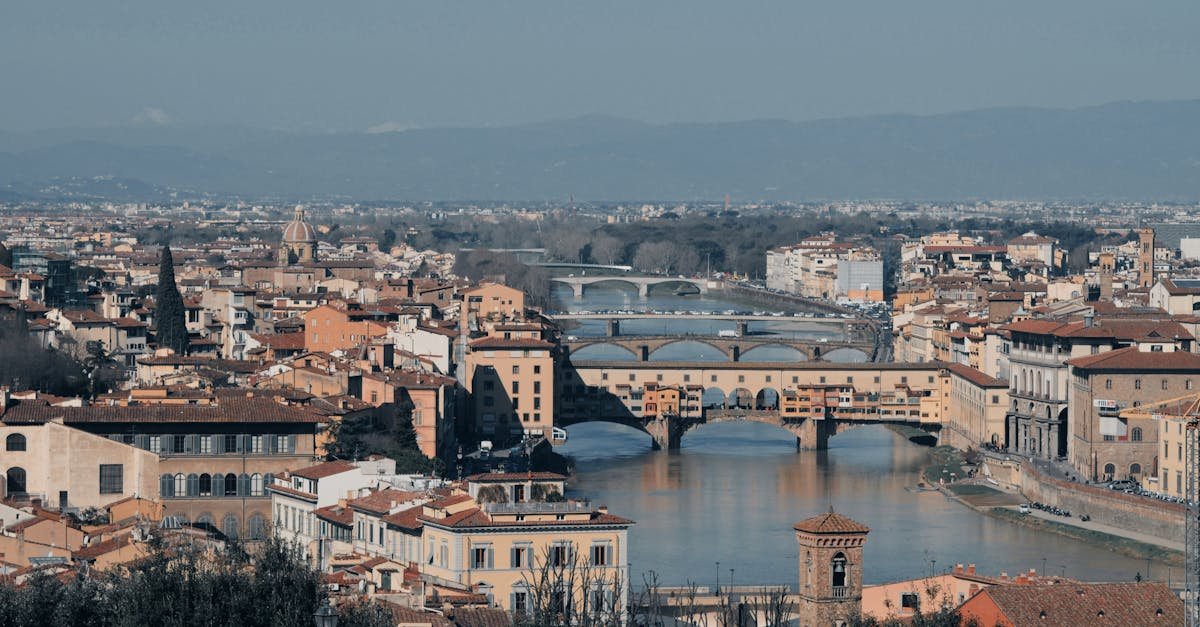
The Oltrarno and Santa Croce quarters offer the most liveable version of Florence — artisan workshops, neighbourhood bars and trattorias that feel genuinely local. Stay here to walk to the Uffizi and the Ponte Vecchio while avoiding the worst tourist-hotel clusters near the station.
Medieval Drama
Siena
Built on three hills and still governed by its ancient contrade districts, Siena is arguably the most perfectly preserved medieval city in Europe. The shell-shaped Piazza del Campo alone justifies an overnight stay, and the Gothic Duomo is rivalled only by Florence's for sheer ambition.
Wine Country
Greve in Chianti
The informal capital of the Chianti Classico zone, Greve sits at the heart of the wine road with a handsome arcaded piazza, a legendary butcher selling Chianina beef and easy access to estates like Castello di Ama and Badia a Coltibuono within fifteen minutes.
Hilltop Perfection
Montepulciano
Perched at 605 metres above sea level, Montepulciano is a Renaissance hill town of extraordinary integrity, with a cathedral, ancient wine cellars carved beneath the streets and Vino Nobile — one of Italy's great red wines — produced within the town walls themselves.
Top things to do in Tuscany
1. Explore the Uffizi Gallery
No Tuscany itinerary is complete without a morning inside the Uffizi, and visiting Florence's greatest museum rewards proper preparation. Book tickets weeks in advance for any date between May and September — same-day entry is essentially impossible in peak season. Start at the top floor with Botticelli's Birth of Venus and Primavera, then work back through Giotto, Caravaggio and Leonardo before descending to the loggia overlooking the Arno. Most visitors make the mistake of rushing; the Uffizi is best treated as a half-day experience with deliberate pauses. The museum café on the upper terrace has arguably the finest view of the Palazzo Vecchio in Florence, which is reason enough to budget the extra time.
2. Drive the Strada del Vino
The Chianti Classico wine route — the SR222 and its tributaries — is one of the great self-drive experiences in all of Europe. Collect a hire car in Florence, head south through Greve, Panzano and Radda in Chianti, and stop at the estates that take your interest. Many of Tuscany's finest producers, including Fontodi, Rocca di Castagnoli and Castello di Brolio, accept walk-in visitors for cellar tours and tastings, though booking ahead guarantees a guided experience. Plan the drive over two days rather than one: a night in a Chianti farmhouse agriturismo between stages lets you eat a long dinner with Sangiovese pairings and wake up to mist in the valley rather than rushing back to Florence in the dark.
3. Walk the Val d'Orcia Villages
The UNESCO-protected Val d'Orcia is Tuscany at its most cinematically perfect, and the best way to experience it is on foot between its small stone villages. Pienza — the ideal Renaissance city commissioned by Pope Pius II in a single burst of ambition — sits above the valley and can be explored in two hours. Bagno Vignoni, barely a hamlet, is built around a Renaissance thermal pool that once hosted Catherine of Siena and Lorenzo de' Medici. San Quirico d'Orcia has a Romanesque church of startling beauty. String these together on a clear April or September day, with a long lunch of Pecorino di Pienza and Brunello, and you have one of the finest days Tuscany can offer any visitor.
4. Attend the Palio di Siena
Twice each summer — on 2 July and 16 August — Siena transforms its Piazza del Campo into a bare-earth racetrack for the Palio, a bareback horse race between the city's seventeen contrade districts that has been run almost without interruption since the thirteenth century. This is not a folkloric performance for tourists: Sienese families plan their year around it, jockeys are bribed and poisoned and centuries-old rivalries are prosecuted with genuine passion. Standing tickets in the central campo are free but require arriving at dawn and remaining in the crowd for eight hours. Balcony seats on the piazza cost several hundred euros and must be booked a year ahead. Either way, the Palio is the most viscerally Italian thing you will witness in Tuscany.
What to eat in Tuscany — the essential list
Bistecca alla Fiorentina
A thick T-bone of Chianina or Maremmana beef, grilled over oak charcoal to rare perfection and served by weight — typically 800g minimum. This is Tuscany's most iconic dish and a non-negotiable for carnivores.
Ribollita
A dense, re-boiled bread and vegetable soup built on cavolo nero, cannellini beans and stale Tuscan bread. Deeply humble in origin, ribollita is now celebrated across Tuscany as a masterpiece of peasant economy turned into comfort food.
Pici Cacio e Pepe
Pici are hand-rolled thick spaghetti, native to the Siena province, with a satisfying chew that holds sauce beautifully. Tossed with just Pecorino and cracked pepper, they demonstrate the Tuscan genius for extracting maximum flavour from minimum ingredients.
Brunello di Montalcino
Italy's most prestigious red wine, produced exclusively from Sangiovese Grosso grapes grown around the hill town of Montalcino. Aged for years in oak before release, Brunello is a wine of extraordinary structure and longevity — worth seeking at source.
Pecorino di Pienza
The sheep's milk cheese of the Val d'Orcia, aged from fresh and milky to sharp and crystalline over months. Buying a wedge directly from a Pienza cheesemonger and eating it on a hillside with local honey is one of Tuscany's simplest and finest pleasures.
Cantucci e Vin Santo
Almond biscotti baked twice for crunch, served alongside a small glass of Vin Santo — a rich amber dessert wine made from dried Trebbiano grapes. This is the classic Tuscan meal-ender and one of the most pleasurable rituals in Italian food culture.
Where to eat in Tuscany — our top 4 picks
Fine Dining
Osteria di Passignano
📍 Via Passignano 33, Badia a Passignano, Chianti
Set within a twelfth-century abbey in the heart of Chianti Classico, Passignano holds a Michelin star for its precise modern Tuscan cooking. The cellar is one of the finest in the region, and the abbey setting — stone arches, candlelight — is completely without peer for a special-occasion dinner.
Fancy & Photogenic
La Bandita Townhouse Restaurant
📍 Corso Il Rossellino 111, Pienza, Val d'Orcia
A beautifully designed restaurant inside a restored Pienza townhouse, with a terrace overlooking the Val d'Orcia that is among the most photographed dining views in Tuscany. The menu is seasonal, ingredient-driven and intelligently modern without losing its Tuscan roots.
Good & Authentic
Trattoria Mario
📍 Via Rosina 2, Florence
A communal-table Florentine institution since 1953, Trattoria Mario serves ribollita, lampredotto and bistecca to market workers and lucky tourists alike with zero ceremony and enormous portions. Cash only, no reservations — arrive before noon or queue. This is what Florentine eating actually looks like.
The Unexpected
Dario DOC
📍 Via XX Luglio 11, Panzano in Chianti
The butcher-restaurant of Dario Cecchini, who has turned Chianina beef reverence into performance art. The set lunch at Dario DOC includes multiple beef courses served at long communal tables with house wine — theatrical, carnivorous and utterly unlike anything else in Tuscany.
Tuscany's Café Culture — top 3 cafés
The Institution
Caffè Rivoire
📍 Piazza della Signoria 5r, Florence
Founded in 1872 and still occupying its corner of Piazza della Signoria, Rivoire is famous for its thick hot chocolate and house-made cioccolato. The outdoor tables face the Palazzo Vecchio directly — expensive, touristy and completely worth it for the setting alone.
The Aesthetic Hub
Ditta Artigianale
📍 Via dei Neri 32r, Florence
Florence's most acclaimed specialty coffee roaster, with a beautifully designed space in the Santa Croce neighbourhood. Single-origin filter coffee, outstanding pastries and a knowledgeable barista team make this the destination for serious coffee lovers visiting Tuscany's capital.
The Local Hangout
Bar Pasticceria Buti
📍 Piazza del Mercato 1, Greve in Chianti
A proper Chianti market-square bar where local winemakers, farmers and cyclists stop for a macchiato and a cornetto before the day begins. No pretension, fair prices and a front-row seat to daily life in the wine country make this the most authentic coffee stop on the Chiantigiana road.
Best time to visit Tuscany
Jan
Feb
Mar
Apr
May
Jun
Jul
Aug
Sep
Oct
Nov
Dec
Peak season (Apr–Jun, Sep) — ideal weather, wildflowers or harvest, best light for photographyShoulder season (Mar, Jul–Aug, Oct) — warm and largely sunny but busier or slightly hot in July–AugustOff-season (Nov–Feb) — cooler, some closures, but uncrowded and atmospheric for truffle season in Nov
Tuscany events & festivals 2026
Whether you're planning around a specific celebration or simply want to know what's happening, this guide covers the best events and festivals in Tuscany — from major annual traditions to cultural highlights worth timing your trip around.
July 2026culture
Palio di Siena (2 July)
The most Weeks of medieval pageantry, drumming and flag-throwing precede the ninety-second race itself. Book balcony seats a year ahead.
August 2026culture
Palio di Siena (16 August)
The second running of the Palio in summer 2026 is typically even more charged than July's, as contrade that lost in July seek revenge. The Campo fills with sixty thousand spectators and the city's medieval emotion is entirely unperformed — this is Siena's beating heart on display.
April 2026religious
Scoppio del Carro, Florence
On Easter Sunday, a Renaissance ox cart packed with fireworks is exploded in Piazza del Duomo to test the harvest year ahead — a Florentine tradition since the eleventh century. The best Tuscany festivals for cultural authenticity are rarely this ancient or this spectacular.
September 2026culture
Giostra del Saracino, Arezzo
A medieval jousting tournament held twice yearly in Arezzo's Piazza Grande, with knights in full armour representing the city's four quarters. The September edition draws thousands of visitors to a genuinely thrilling event that has changed little since the thirteenth century.
October 2026market
Fiera del Tartufo Bianco, San Miniato
San Miniato's white truffle fair runs across three weekends in November and October, drawing chefs, foragers and food lovers from across Europe to one of Tuscany's most anticipated autumn gatherings. Fresh truffle shaved over scrambled eggs at dawn is the essential experience.
November 2026market
Mostra Mercato del Tartufo Bianco, San Giovanni d'Asso
A smaller, more intimate truffle market in the Crete Senesi landscape south of Siena, where local hunters sell directly to visitors. The setting — a medieval village surrounded by bare clay hills — perfectly captures Tuscany's austere November beauty.
June 2026music
Puccini Festival, Torre del Lago
Held on an open-air stage directly beside Lake Massaciuccoli near Lucca, the Puccini Festival presents fully staged opera productions beneath the stars in the lakeside garden where the composer lived and worked. A uniquely Tuscan evening combining great music and water reflections.
May 2026culture
Maggio Musicale Fiorentino
Florence's spring opera and orchestral festival, one of the oldest in Italy, runs from late April through June at the Teatro del Maggio and outdoor stages across the city. For visitors building a Florence itinerary in May, the combination of peak festival season and spring light is exceptional.
September 2026culture
Grape Harvest (Vendemmia), Chianti
September brings the vendemmia — grape harvest — across Chianti and Montalcino, with many estates welcoming visitors to pick alongside workers. Arriving during harvest is the single best way to understand Tuscan wine culture at its most visceral and celebratory.
March 2026culture
Carnevale di Viareggio
One of Italy's great carnivals, Viareggio's seafront procession features enormous satirical floats built over months by competing artisan teams. The Tuscan coast city transforms for four weekends in February and March into a spectacle that rivals Venice for theatrical ambition.
Hostel dorm or budget B&B, trattoria lunch menus, local buses and free museum days.
€€ Mid-range
€90–180/day
Three-star hotel or agriturismo, restaurant dinners, hire car and selected paid museums.
€€€ Luxury
€180–400+/day
Boutique villa or five-star relais, Michelin dining, private wine tours and thermal spa access.
Getting to and around Tuscany (Transport Tips)
By air: The main gateway to Tuscany is Florence Airport (FLR), served by direct flights from London, Paris, Amsterdam, Berlin, Brussels and most major European hubs. Pisa International Airport (PSA) is a second strong option, particularly for low-cost carriers including Ryanair and easyJet, and sits just one hour from Florence by train.
From the airport: From Florence Airport, the tram line T2 runs directly to the city centre (Santa Maria Novella station) in around twenty minutes for €1.70 — straightforward and reliable. From Pisa Airport, the Pisa Mover shuttle connects to Pisa Centrale station in eight minutes, from where direct trains to Florence take sixty to ninety minutes depending on service. Taxis from either airport to central Florence cost €20–35.
Getting around the city: Florence is eminently walkable within its historic centre, and most major sights cluster within fifteen minutes on foot of the Duomo. The ATAF city bus network covers the wider city reliably. Across the broader Tuscany region, a hire car is strongly recommended — trains connect the main cities (Florence, Siena, Lucca, Arezzo, Cortona), but smaller Val d'Orcia villages, Chianti estates and Maremma coastline are effectively inaccessible without your own wheels.
Transport Safety & Scam Prevention:
Florence Taxi Overcharging: Only use official white taxis with meters in Florence — unlicensed drivers outside Santa Maria Novella station routinely charge three to four times the metered fare to tourists. The app itTaxi books official cabs with upfront pricing and is strongly recommended for airport journeys.
ZTL Driving Zones: Florence, Siena, Lucca and most Tuscan hilltop towns operate ZTL restricted traffic zones in their historic centres. Entering without a permit generates an automatic fine of €80–150 delivered weeks later to your home address via the hire car company. Check your hotel's parking advice before driving into any walled town.
Wine Tour Price Transparency: Private Chianti wine tour operators vary dramatically in quality and value — always confirm in advance exactly which estates are visited, whether lunch is included and what the tasting fee covers. Reputable operators price from €120–180 per person; anything significantly cheaper typically involves commission-driven shops rather than genuine estate visits.
Do I need a visa for Tuscany?
Visa requirements for Tuscany depend on your nationality. Select your passport below for an instant answer — based on the Passport Index dataset for entry into Italy.
ℹ️ Indicative only. Always verify with the official consulate before booking. Data: Passport Index, April 2026.
For detailed requirements, documentation checklists and processing times by nationality: TravelDoc →
Search & Book your trip to Tuscany
Find the best flight routes and hotel combinations using our partner Kiwi.com.
Frequently Asked Questions
Is Tuscany safe for tourists?
Tuscany is one of the safest travel destinations in Europe, with very low rates of violent crime in both its cities and countryside. The main concern for visitors is petty theft — particularly pickpocketing on Florence's crowded tourist streets and at the main train station. Keep bags zipped, avoid displaying expensive cameras in market crowds and use hotel safes for passports. Solo female travellers, families and older visitors consistently report feeling entirely comfortable throughout the region, including at night in smaller hilltop towns.
Can I drink the tap water in Tuscany?
Yes — tap water is safe and drinkable throughout Tuscany, including in smaller village accommodation. Italians culturally prefer bottled water at restaurants, where asking for acqua del rubinetto (tap water) may earn a puzzled look, but it is perfectly acceptable. In the Val d'Orcia and Chianti countryside, some agriturismos draw from private wells; if in doubt, simply ask. Buying single-use plastic water bottles is genuinely unnecessary and environmentally costly in a region that takes great pride in its water quality.
What is the best time to visit Tuscany?
The best time to visit Tuscany is April to early June and September, when temperatures are warm but not oppressive (22–28°C), wildflowers are in bloom across the Val d'Orcia and visitor crowds are noticeably thinner than July and August. Late September and early October bring the grape harvest, which adds a particular energy to the Chianti and Montalcino wine zones. July and August are hot (often above 35°C), very busy in Florence and premium-priced, though the coast and spa towns remain attractive. November brings truffle season and extraordinary emptiness.
How many days do you need in Tuscany?
A minimum Tuscany itinerary of five days allows two nights in Florence plus three days exploring the Chianti wine road and one Val d'Orcia village. Seven to ten days is the ideal window, giving time for Florence without rushing, a proper Chianti drive, Siena, Montalcino, the Val d'Orcia and a thermal spa visit. Two weeks allows you to add Lucca, the Maremma coast, Arezzo, Cortona and the Etruscan south without feeling hurried. First-time visitors who underestimate Tuscany's size and depth almost universally wish they had stayed longer — book at least seven nights.
Tuscany vs Umbria — which should you choose?
Tuscany and Umbria share the same rolling hilltop landscape but differ in character and infrastructure. Tuscany is richer, more visited and more polished — its agriturismo network, wine tourism and museum quality are unmatched in Italy. Umbria is quieter, more affordable and arguably more authentic: Assisi, Spoleto and Orvieto attract fewer crowds, accommodation costs less and the Sagrantino di Montefalco wine zone rivals Chianti without the price tag. Choose Tuscany if wine, Renaissance art and well-curated rural luxury are priorities; choose Umbria if you prefer emptier piazzas, lower budgets and a rawer version of central Italian countryside.
Do people speak English in Tuscany?
English is spoken at a good to excellent standard in Florence's tourist industry — hotels, major museums, restaurants and tour operators communicate confidently in English. In smaller Chianti villages, hilltop towns and family trattorias, English levels drop considerably, though patience and some basic Italian phrases (buongiorno, grazie, un tavolo per due) go a very long way. The further south you travel into the Val d'Orcia and Maremma, the less English you will encounter — which is also where Tuscany feels most authentically itself. Learning a handful of Italian words is genuinely rewarded by warmth.
★ Hidden Gems Weekly
Like this? One place per week, in your inbox.
No spam, no fluff — just one underrated destination, every Tuesday.
Hand-picked and verified by Max, who founded Vacanexus from Luxembourg in 2026. No sponsorships, no paid placements. Every recommendation — restaurants, neighbourhoods, things to do — is selected for authenticity over popularity.