⏱ 9 min read📅 Updated 2026💶 € Budget✈️ Best: Nov–Feb
€15–35
Daily budget
Nov–Feb
Best time
3–4 days
Ideal stay
LAK (Kip)
Currency
Very Safe
For solo travel
Basic
English level
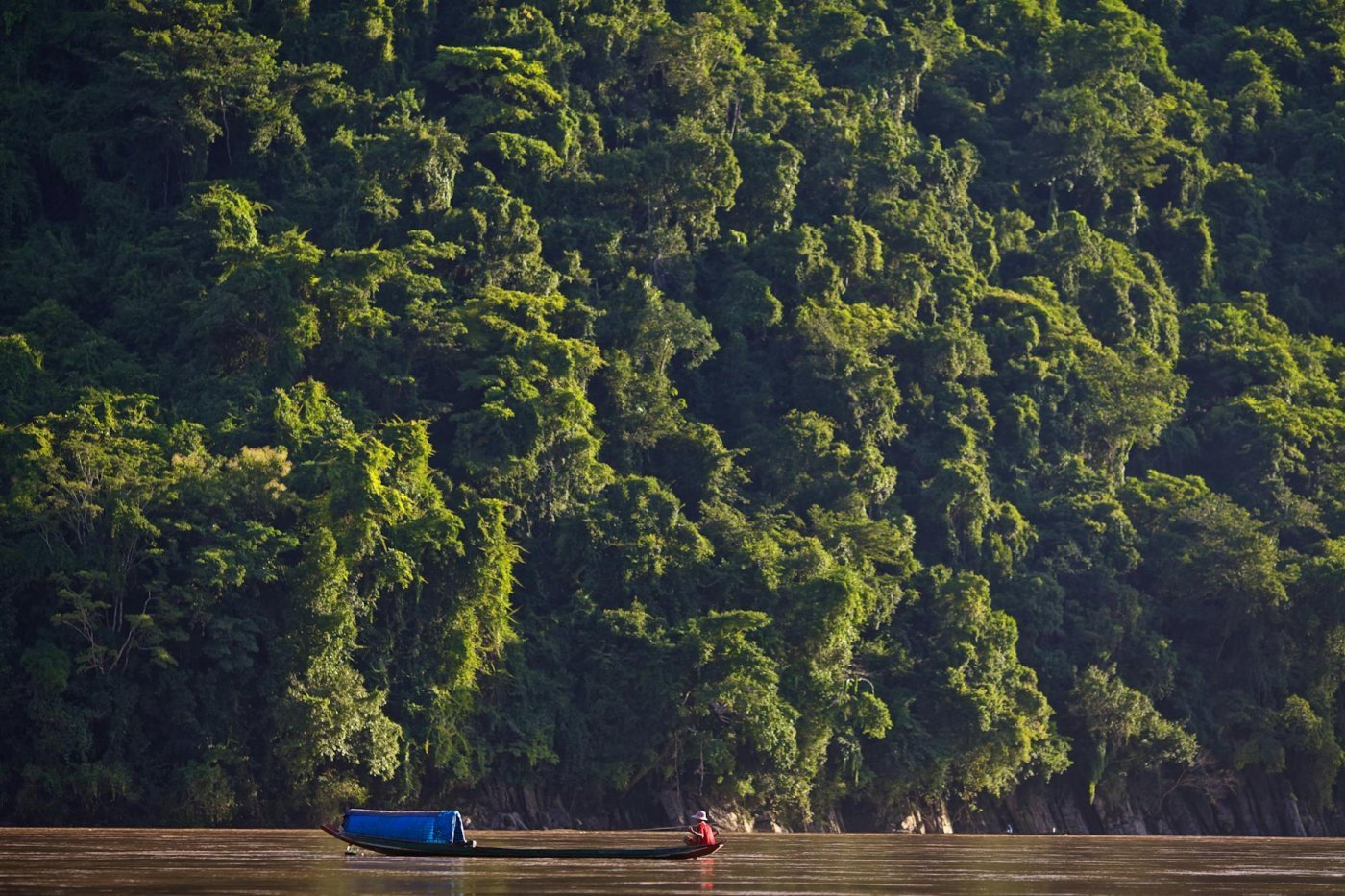
The Mekong slows here. South of Pakse, where Laos brushes against the Cambodian border, the great river fans out into an inland delta of more than four thousand islands — Si Phan Don in Lao — most of them no bigger than a sandbar, half of them swallowed by the river when it floods. The rest, a handful of green crescents dotted with stilt houses, bamboo bungalows and the last working railway the French built east of Bangkok, are home to one of Southeast Asia's most quietly addictive corners.
You come here to do almost nothing. Hammock, beer, sunset, repeat — that's the local rhythm, and after twenty-four hours on Don Det's sunset strip you'll understand why backpackers have a hard time leaving. But the area rewards anyone willing to climb on a bicycle: you can pedal across a 1910 iron bridge to neighbouring Don Khon, watch the largest waterfall in Southeast Asia thunder past at Khone Phapheng, and circle back to your guesthouse in time for grilled fish from the Mekong. This guide covers everything — the three islands worth your time, where to sleep and eat, how to get in without losing a day to mini-vans, and why the dolphins everyone mentions are, sadly, no longer here.
✦ Find your perfect destination
Is Si Phan Don really your perfect match?
Answer 12 quick questions about your travel style, budget and dates — we match you with the destinations that fit you best, from 600+ worldwide.
Si Phan Don belongs on the list of travellers who've earned the right to do nothing — those who have ridden the night bus from Hanoi, climbed every temple in Angkor, dodged the Vang Vieng tubing crowds, and now want a hammock over slow brown water and a Beerlao within arm's reach. It's not a destination of monuments and queues. It's a destination of negative space: no Wifi in half the guesthouses, no ATM after dark, no 24-hour electricity on some islands, and an evening that consists entirely of watching the sun crash into the Mekong while a kid catches dinner with a hand net thirty feet away.
The case for going now: Si Phan Don is changing fast — a new bridge from Don Det to the mainland is being talked about, hostels with proper Wifi are arriving, and the old electricity-free magic is shorter by the year. The Irrawaddy dolphins that drew thousands of visitors are already extinct on the Lao side as of 2022. Go before the slow-river atmosphere becomes a marketed product.
🌅
Sunset on the sunset strip
Don Det's western shore is the best sunset bar in Southeast Asia — Beerlao, a hammock, the Mekong on fire.
🚂
The French colonial railway
Walk the narrow-gauge tracks the French built in 1893 to bypass Khone Phapheng Falls — the only railway Laos ever had.
💦
Khone Phapheng Falls
10.7 km wide at flood — the widest waterfall in the world, and the reason no boat ever made it from Saigon to Luang Prabang.
🚲
Bicycle the islands
Cross the 1910 iron bridge to Don Khon, pedal between rice paddies, water buffalo and Buddhist temples for 20,000 kip.
Si Phan Don's neighbourhoods — where to focus
Backpacker Hub
Don Det
The headline island, just 7.2 km around. Two strips — sunrise and sunset — line either shore, packed with bamboo bungalows from 30,000 kip and a hammock culture that has been refined to an art form. This is where you start and where almost everyone ends up.
Colonial Quiet
Don Khon
Across the old French iron bridge from Don Det. Slightly fewer travellers, distinctly more history: the abandoned narrow-gauge railway, the rusting locomotive at Ban Khone Tai, and the access point to Li Phi (Tat Somphamit) Falls. Cheaper guesthouses and a calmer pace.
Authentic Laos
Don Khong
The largest of the islands, reachable by separate boat from Hat Xai Khun. Almost no foreign tourists, almost no English. Wooden stilt houses, paddy fields, fishing boats — what Si Phan Don looked like before the backpackers arrived. Worth a day trip if you crave a quiet contrast.
Top things to do in Si Phan Don
1. Watch sunset from a sunset-side hammock on Don Det
There's no shortcut and no spectacle — just the Mekong turning copper and a Beerlao slowly warming. Adam's Bar on the north tip is the social option; Mr B's Guesthouse hammock terrace is the quiet one. Sunset hits around 18:00 in the dry season. Stay until the bats come out — they do, in clouds, just after dark.
2. Bicycle across the French Iron Bridge to Don Khon
Rent a bicycle for 10,000–20,000 kip a day from any guesthouse, head south past the rice fields, and cross the bridge the French finished in 1910. The 20,000 kip day pass for Don Khon is collected at the bridge's southern end. Beyond, the old narrow-gauge railway runs through the jungle to Ban Khone Tai, where a rusted locomotive sits where it stopped a hundred years ago.
3. Walk the Li Phi (Tat Somphamit) Falls and Khone Phapheng
On Don Khon, Tat Somphamit's rapids tumble through limestone gates — locals call them the 'spirit trap' because they're rough enough to swallow river debris whole. For the bigger spectacle, take a tuk-tuk and boat combo to Khone Phapheng Falls on the mainland: 10.7 km wide at flood season, the widest waterfall on Earth by surface area. Entrance 30,000 kip.
4. Take a kayak or slow boat across the quiet channels
Half-day kayaking trips run from Don Det (~100,000 kip) through narrow side channels where there's no engine noise, only the sound of paddles and birds. Sunset boat trips run later and usually include a Beerlao or two on board. The Irrawaddy dolphins that used to gather near the Cambodian border are gone from the Lao side as of 2022 — be wary of guides still promising them.
What to eat in Si Phan Don — the essential list
Laap (Lao minced meat salad)
The national dish of Laos: minced fish, pork or chicken tossed with lime, fish sauce, toasted rice powder, chillies and herbs. Find it at any 'tasca'-style restaurant on Don Det — Mr Vong's makes the best.
Or lam (Luang Prabang stew, found here too)
Thick stew of buffalo or chicken with lemongrass, eggplant, jeow bong (chilli paste) and dill. Heartier than most Lao dishes — perfect after a long bicycle day.
Grilled Mekong fish
Tilapia, snakehead or pa beuk (giant Mekong catfish, when available, though increasingly rare) grilled whole over charcoal and served with sticky rice and chilli paste. Try it at Garden of Nang's sand cove on Don Det.
Sticky rice (khao niao)
Eaten with the fingers from a small bamboo basket (tip kao). Roll a ball, dip it in jeow (chilli sauce), eat. Comes with everything in Laos — accept that you'll be eating a lot of it.
Beerlao
The national beer, made with jasmine rice — light, drinkable, and somehow the perfect companion to a Mekong sunset. A large bottle is 10,000 kip (less than a euro). The dark version is excellent too.
Lao fruit shakes
Banana, mango, pineapple, coconut — usually with sweetened condensed milk and crushed ice, blended on demand for 15,000 kip. Every guesthouse café serves them and you'll have three a day before you know it.
Where to eat in Si Phan Don — our top 4 picks
Sunset Local
Garden of Nang
📍 Southwest shore of Don Det, signposted from the perimeter path
A small Lao-run beach restaurant on its own sand cove. Grilled Mekong fish, fresh river prawns, sticky rice, and Beerlao at sunset — eaten under a thatched roof with your toes in the sand. Cash only, expect to wait.
Backpacker Crossroads
Adam's Bar and Restaurant
📍 North tip of Don Det
The first place most arrivals end up at: pool table, decent Wifi, Friday open-mic nights, and a wraparound deck for sunsets. Mix of Lao and Western food (banana pancakes, fried rice, burgers). Cheap, social, reliable.
Best Lentil Curry
Mr Mans Restaurant
📍 Opposite the cluster of guesthouses on Don Det's main path
Almost no Western food on the menu, almost no English on the staff. The lentil curry is famous on the backpacker trail — under 25,000 kip, served on a banana leaf, with sticky rice on the side. Cash only.
Crepes & Comfort
Paradise Restaurant
📍 About 10 minutes south of the boat landing, Don Det
Western backpacker comfort food done well: crepes (sweet or savoury), shakshuka, lentil curry, and proper coffee. A reliable refuge for travellers reaching their Lao food saturation point. Riverfront seating.
Best time to visit Si Phan Don
Jan
Feb
Mar
Apr
May
Jun
Jul
Aug
Sep
Oct
Nov
Dec
Cool dry season: pleasant 20–30°C, the lowest river level (you can see sandbars and beaches), comfortable for cycling and dining outside. The big festival is Boun Suang Heua boat racing in nearby Khong Sedon.Shoulder months: warm, mostly dry, river still navigable. February–March can hit 35°C; January has the lowest mosquito count of the year.Hot/wet season: temperatures climb past 38°C in April, then the monsoon arrives May–September. Mosquitoes thicken, river levels rise dramatically (many islands flood), and overland transport becomes occasionally chaotic. Lower prices, no crowds.
Si Phan Don events & festivals 2026
Whether you're planning around a specific celebration or simply want to know what's happening, this guide covers the best events and festivals in Si Phan Don — from major annual traditions to cultural highlights worth timing your trip around.
April 13–15, 2026culture
Boun Pi Mai (Lao New Year)
Lao New Year is celebrated across Si Phan Don with water-throwing, temple processions and family reunions. Expect to be soaked. Quieter than Luang Prabang but more authentic — locals welcome travellers warmly into village gatherings.
May 2026religious
Boun Bang Fai (Rocket Festival)
Villages compete to launch homemade bamboo rockets into the sky to ask the rain spirits for a good monsoon. Loud, smoky, full of beer — a beloved rural Lao tradition, observable in villages around Khong district.
July 2026religious
Khao Phansa (Buddhist Lent begins)
Three months of Buddhist retreat for monks begin. Candle processions take place at the wat (temple) on Don Det and Don Khon. A quiet, contemplative atmosphere — and the start of the heavy rains.
October 2026religious
Boun Awk Phansa
End of the Buddhist Lent, marked by candle-lit boat releases on the Mekong. Si Phan Don's stretch of river is one of the most evocative places in the country to witness this — hundreds of tiny lit boats drift past at dusk.
October–November 2026culture
Boun Suang Heua (Mekong boat races)
Pirogue races on the Mekong between villages — teams of 50+ paddlers competing in long wooden boats. The biggest local races are at Khong Sedon and Champasak, both reachable from Pakse on the way back north.
November 2026religious
That Luang Festival (Vientiane, festival-pilgrimage season)
While the main festival is in Vientiane, the season triggers village-level merit-making at every wat in Champasak Province — including small temple ceremonies on the islands. A culturally rich time to visit.
Late October 2026sports
Pakse Boat Racing Festival
If you're transiting through Pakse on the way to Si Phan Don in late October, the city's boat racing festival is worth a day's stop. Cheering crowds along the Mekong, food stalls, and Beerlao in industrial quantities.
December–February 2026market
Cool-season backpacker peak
Not an official festival but worth knowing: Don Det fills up properly during the cool dry season. Sunset bars host live music nightly, guesthouses raise rates 20–30%, and the islands take on a low-key festival atmosphere of their own.
Bamboo bungalow on the sunset strip (30,000–50,000 kip), all meals at Lao restaurants like Mr Mans, beer at Adam's Bar, bicycle rental, and a fruit shake habit. Si Phan Don is one of the cheapest destinations in Southeast Asia.
€€ Mid-range
€30–50/day
Better-equipped bungalow with private bathroom and fan, mix of Lao and Western restaurants (Garden of Nang, Paradise), kayak tour, boat day trip to Khone Phapheng Falls, and unlimited Beerlao.
€€€ Luxury
€80+/day
Little Eden Hotel pool room (250,000–400,000 kip) or a Don Khong boutique guesthouse, private boat charters, multi-day kayak tours with a local guide, all meals at the best riverside spots. There's no five-star option here — and that is the entire point.
Getting to and around Si Phan Don (Transport Tips)
By air: There is no airport at Si Phan Don. The closest international gateway is Pakse (PKZ), 150 km north — daily flights from Vientiane, Bangkok and Siem Reap on Lao Airlines and Bangkok Airways. Some travellers fly into Luang Prabang or Vientiane and take overnight buses south.
From the airport: From Pakse airport: minivan (~70,000–90,000 kip, 3–4 hours) or VIP bus to Ban Nakasang, the mainland village across from Don Det. From Ban Nakasang's boat landing, a pirogue ferry takes 15–20 minutes to Don Det (20,000 kip per person, more for a private boat). Boats run all day; last departures around sunset.
Getting around: Don Det is walkable end to end in under an hour. Bicycles are the standard mode of transport: 10,000 kip per day for basic, 20,000 for mountain bikes. Motorbikes are available but unnecessary on the islands themselves. For trips to Don Khon, cross the French iron bridge (20,000 kip day pass). For Don Khong or Khone Phapheng Falls, book a half-day boat-plus-tuk-tuk combo through any guesthouse.
Transport Safety & Scam Prevention:
The Mekong current is no joke: Several travellers drown each year. Swim only at recognised beaches on the northern tip of Don Det, never below Li Phi Falls, and never alone after Beerlao.
No 24-hour ATM on the islands: There's a single ATM at Ban Nakasang on the mainland. On the islands themselves, cash is king and dollars are sometimes accepted at a poor rate. Bring enough kip from Pakse for your whole stay.
Dolphin tour misinformation: Tour operators may still advertise 'Irrawaddy dolphin sightings'. The Lao Mekong population was declared functionally extinct in 2022. A small population survives across the border in Cambodia, but you cannot reliably see them from Si Phan Don.
Power and Wifi are intermittent: Some guesthouses run generators only in the evening; many have weak or no Wifi. Charge your phone whenever you can and download offline maps before crossing from Pakse.
Do I need a visa for Si Phan Don?
Visa requirements for Si Phan Don depend on your nationality. Select your passport below for an instant answer — based on the Passport Index dataset for entry into Laos.
ℹ️ Indicative only. Always verify with the official consulate before booking. Data: Passport Index, April 2026.
For detailed requirements, documentation checklists and processing times by nationality: TravelDoc →
Search & Book your trip to Si Phan Don
Find the best flight routes and hotel combinations using our partner Kiwi.com.
Frequently Asked Questions
How do I actually get to Si Phan Don?
From Pakse: a minivan or VIP bus (3–4 hours, ~70,000–90,000 kip) takes you to Ban Nakasang on the mainland, then a pirogue ferry (15 minutes, 20,000 kip) crosses to Don Det. From Cambodia: vans from Kratie ($15) or Stung Treng ($12) include the boat transport — direct buses from Phnom Penh take about 7 hours and cost $30–35. There is no airport on the islands and no train south of Don Khon's abandoned colonial railway.
Are the Irrawaddy dolphins still there?
No. The Mekong population on the Lao side was declared functionally extinct in 2022 after the last individuals died near the Cambodian border. A small population survives in the Cambodian Mekong (around Kratie and Kampi) and can be visited on guided trips from there. Tour operators on Don Det who still advertise dolphin sightings are misleading travellers — either knowingly or out of date.
How many days do I need in Si Phan Don?
Three to four days is the sweet spot. Day one to arrive and find your bungalow, day two to bicycle Don Det and cross to Don Khon for the French bridge and Li Phi Falls, day three for the boat trip to Khone Phapheng Falls (or Don Khong for an authentic-Laos contrast), and day four for whatever you didn't do yet (kayaking, hammock, another sunset). Anything less feels rushed; longer is easy because it costs almost nothing to stay.
Is it safe? Anything I should watch out for?
Si Phan Don is one of the safer destinations in Southeast Asia for solo travellers, including women — petty theft is rare and violent crime almost unheard of. The main hazards are the Mekong current (swim only at recognised beaches), motorbike accidents on unfamiliar tracks, and mosquito-borne illness in the wet season (May–September). Bring DEET, drink bottled water, and respect the river.
Do I need a visa for Laos?
Most nationalities can get a 30-day visa on arrival at Pakse airport and at the major land borders, including the Cambodia–Laos crossing near Don Det. The fee is US$30–45 depending on passport, payable in clean US dollars (preferable) or kip. Bring one passport photo and check the latest fee on the official Lao immigration site before you travel — fees creep up periodically.
Si Phan Don vs Vang Vieng — which is the better stop?
Vang Vieng is louder, more developed, and known for adrenaline tubing and adventure sports against a karst-mountain backdrop. Si Phan Don is the opposite: flat, slow, river-focused, hammock-driven. If you want to do things, choose Vang Vieng. If you want to do nothing well — Si Phan Don. Most travellers on the Banana Pancake Trail visit both, with Si Phan Don last because it makes leaving Southeast Asia surprisingly painful.
★ Hidden Gems Weekly
Like this? One place per week, in your inbox.
No spam, no fluff — just one underrated destination, every Tuesday.
Hand-picked and verified by Max, who founded Vacanexus from Luxembourg in 2026. No sponsorships, no paid placements. Every recommendation — restaurants, neighbourhoods, things to do — is selected for authenticity over popularity.