Accra Travel Guide — Accra, where Afrobeats meets raw West African soul
⏱ 11 min read📅 Updated 2026💶 € Budget✈️ Best: Jan–Apr
€20–45/day
Daily budget
Jan–Apr
Best time
5–7 days
Ideal stay
GHS (Ghanaian Cedi)
Currency
Accra greets you with salt air off the Gulf of Guinea, the thump of Afrobeats from a passing trotro, and the orange haze of a harmattan morning stretching above corrugated rooftops. Ghana's capital is a city that refuses to be neatly packaged — one moment you are navigating the sensory overload of Makola Market, the next sipping cold Star beer at a breezy Labadi beach bar as the sun melts into the Atlantic. Accra wears its contradictions proudly: ancient fishing villages pressed against glass-fronted hotels, ancestral drumming ceremonies held in the shadow of luxury apartment towers, and street-food smoke curling past artisan galleries selling hand-printed Kente cloth.
Compared to other African capitals, things to do in Accra are refreshingly accessible. English is universal, the street food is world-class, and the city's famous hospitality — encapsulated in the Ghanaian concept of 'Akwaaba,' or welcome — is not a tourist performance but a lived cultural value. Visiting Accra puts you on the doorstep of Cape Coast's slave-trade history, Kakum's canopy walkways, and the surf beaches of Busua, making it the ideal base for exploring the wider country. Unlike Lagos or Nairobi, Accra operates at a pace that allows first-time visitors to West Africa to actually breathe, connect with locals, and find their rhythm without being overwhelmed.
✦ Find your perfect destination
Is Accra really your perfect match?
Answer 12 quick questions about your travel style, budget and dates — we match you with the destinations that fit you best, from 600+ worldwide.
Accra belongs on your travel list for reasons that go far beyond novelty. The city is the undisputed epicentre of a continent-wide cultural renaissance: the same Afrobeats producers who fill European festival stages hone their craft in Accra studios, while a thriving visual arts scene has turned the neighbourhood of Airport Residential into a gallery corridor rivalling Cape Town. Accra's food scene is equally compelling — jollof rice debates are taken more seriously here than almost anywhere, and the city rewards adventurous eaters at every price point. Add genuinely warm English-speaking locals, budget-friendly prices, and strong Year of Return momentum, and Accra becomes one of the most rewarding city destinations on the planet.
The case for going now: Ghana's government has continued investing heavily in tourism infrastructure since the landmark Year of Return campaign, and Accra is reaping the benefits with improved road links, a renovated international terminal, and a growing constellation of design hotels and rooftop venues in Osu and East Legon. The Ghanaian cedi offers outstanding value for European travellers right now, and the city's cultural confidence — festivals, fashion weeks, art biennials — is at an all-time high. Go before prices catch up with the hype.
🥁
Afrobeats Nightlife
Accra's rooftop clubs in Osu and East Legon pulse until dawn with Afrobeats, highlife, and Afropop. Club Bloombar and Skybar 25 attract both locals and diaspora returnees for unforgettable nights.
🏖️
Coastal Escapes
Labadi Beach and the quieter Bojo Beach offer golden sand fringed by palm trees just minutes from the city centre. Weekends bring live music, beach football, and fresh grilled tilapia served at the water's edge.
🖼️
Art & Gallery Scene
The Artists Alliance Gallery in Labadi and the vibrant studios around Airport Residential showcase contemporary Ghanaian painting, sculpture, and textiles. Accra's art world is internationally connected and surprisingly affordable to collect.
🏛️
Colonial History
Jamestown's colonial lighthouse, the National Museum of Ghana, and the W.E.B. Du Bois Memorial Centre offer layered, often sobering insights into Gold Coast history, the slave trade, and Pan-African thought.
Accra's neighbourhoods — where to focus
The Social Hub
Osu
Osu is Accra's most kinetic neighbourhood — Oxford Street buzzes with restaurants, boutique shops, rooftop bars, and the kind of late-night energy that makes the city's reputation. It is the best base for first-time visitors who want to be in the thick of it, with everything from street kebabs to craft cocktails within walking distance.
Old Town Character
Jamestown
The oldest part of Accra retains the bones of the British colonial port: painted wooden fishing boats hauled onto red-sand beaches, the candy-striped colonial lighthouse rising above low-slung compounds, and boxing gyms where the neighbourhood's fighting tradition lives on. Jamestown rewards slow exploration on foot and offers some of Accra's most striking street photography opportunities.
Upscale & Leafy
Airport Residential
Known locally as 'Airport,' this tree-lined district is home to Accra's diplomatic community, design-forward hotels, and a cluster of galleries and independent restaurants that attract the city's creative class. It has a noticeably slower pace than Osu and feels almost suburban — ideal for travellers who want comfort and proximity to the airport without sacrificing quality dining.
Beach & Laidback
Labadi
Stretching along the Gulf of Guinea east of central Accra, Labadi is defined by its famous beach and the easy-going village life that borders it. On weekends the beach road transforms into a festival of sound systems, food sellers, and parasol-shaded bars. It is the neighbourhood most associated with Accra's leisure culture and the best place to watch a sunset with cold Club beer in hand.
Top things to do in Accra
1. #1 Explore Jamestown & the Lighthouse
No visit to Accra is complete without spending a morning in Jamestown, the atmospheric colonial-era district that formed the original heart of the city. Climb the red-and-white striped lighthouse for a panoramic view over corrugated rooftops, Atlantic surf, and the colourful chaos of the Jamestown fishing harbour below — one of the most evocative urban vistas in West Africa. At street level, wander past the decommissioned Fort James, now being repurposed as a cultural space, and stop into the famous Bukom Boxing Arena, where Ghana has produced world champions. Local guides from community tourism initiatives can contextualise the neighbourhood's history, from the slave trade to colonial administration, far better than any guidebook. Friday and Saturday mornings are especially atmospheric when fishermen return with the night's catch and the harbour market springs to life.
2. #2 Visit the W.E.B. Du Bois Memorial Centre
Located in the leafy Cantonments district, the W.E.B. Du Bois Memorial Centre for Pan-African Culture is one of the most intellectually moving sites in all of Accra. The centre honours the American scholar and civil rights leader who renounced his US citizenship and spent his final years in Ghana at the invitation of Kwame Nkrumah, dying in Accra on the eve of the March on Washington in 1963. His home has been preserved as a museum, with a library of rare Pan-African texts, a research archive, and the garden where both Du Bois and his wife Shirley Graham Du Bois are buried. For travellers engaging with the Year of Return diaspora narrative, the centre is essential. The staff are knowledgeable and welcoming, and the site receives far fewer visitors than it deserves, making it one of Accra's most intimate heritage experiences.
3. #3 Haggle at Makola Market
Makola Market is the commercial engine of Accra — a sprawling, deafening, joyful labyrinth of stalls selling Kente cloth, fresh produce, imported electronics, smoked fish, second-hand clothes, hair extensions, and practically everything else imaginable. Visiting Makola is less a shopping trip than a total immersion in the sensory reality of daily Ghanaian urban life. Go with a spirit of curiosity rather than a checklist, bring small notes for easier transactions, and engage vendors in conversation — the haggling is expected and usually conducted with good humour. The surrounding streets contain specialist wholesale sections for fabric, hardware, and foodstuffs that give the market an almost medieval guild-town feel. Early mornings before 9 a.m. are cooler and less crowded; late afternoons are more chaotic but equally rewarding for atmosphere and people-watching.
4. #4 Day Trip to Cape Coast Castle
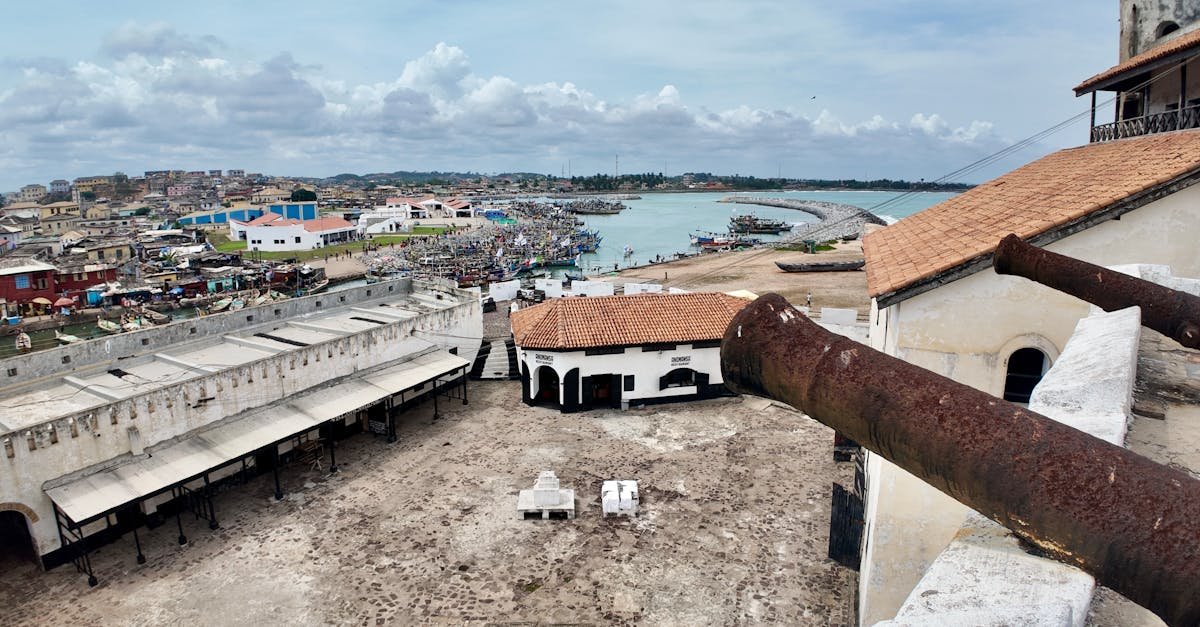
The most important excursion from Accra — roughly three hours west along the coastal highway — is a visit to Cape Coast Castle, a UNESCO World Heritage Site and one of the most significant monuments to the transatlantic slave trade anywhere in the world. The whitewashed fortress looming over the Gulf of Guinea served as the final point of departure for hundreds of thousands of enslaved Africans, and the guided tour through the dungeons and the Door of No Return is a profoundly affecting experience. Combine it with nearby Elmina Castle, just 15 kilometres further, for a full day engaging with this history. The town of Cape Coast itself warrants an hour of exploration for its crumbling colonial architecture and excellent beachfront restaurants. Many visitors find this the single most meaningful day of their Accra itinerary, so allow adequate time rather than rushing.
What to eat in Greater Accra — the essential list
Jollof Rice
Ghana's entry in the great West African jollof debate is smoky, deeply tomato-flavoured, and often cooked over firewood for added complexity. Served with fried chicken, beef, or fish, it is the benchmark dish by which Accra restaurants are quietly judged.
Waakye
A beloved Accra breakfast staple of rice and black-eyed beans cooked together with dried millet leaves that give the dish its distinctive reddish-purple hue. Served from roadside stands with gari, fried eggs, spaghetti, and shito — a fiery black pepper sauce — waakye is the city's definitive morning ritual.
Banku & Tilapia
Fermented corn and cassava dough shaped into smooth balls and served alongside whole grilled tilapia with shito and chopped onions. The slight sourness of the banku cuts through the smoky fish perfectly, and the dish is eaten by hand — an experience as tactile as it is delicious.
Kelewele
Spiced fried plantain cubes seasoned with ginger, cayenne, and sometimes nutmeg, sold by street vendors after dark. Kelewele is Accra's favourite evening snack — crispy outside, caramelised within — and pairs perfectly with roasted peanuts purchased from the same vendor.
Fufu & Light Soup
Pounded cassava and plantain formed into an elastic, stretchy ball and submerged in a clear, intensely aromatic light soup made with goat, chicken, or crab. Fufu is eaten with the fingers, pinching off pieces to scoop the broth — a communal, deeply comforting dish central to Akan food culture.
Shito
Ghana's irreplaceable condiment — a thick, deeply umami black sauce made from dried shrimp, herring, chilli, and spices fried down in oil until intensely concentrated. It accompanies almost everything in Accra, from waakye to grilled fish, and serious travellers inevitably pack a jar home.
Where to eat in Accra — our top 4 picks
Fine Dining
Buka Restaurant
📍 11 Circular Rd, Cantonments, Accra
Buka elevates traditional West African home cooking into a thoughtful dining experience without stripping away authenticity. The space is warmly designed with Ghanaian textiles and the menu moves confidently between jollof risotto, oxtail pepper soup, and whole grilled snapper. Service is polished and the wine list includes South African labels alongside Ghanaian-brewed craft beer.
Fancy & Photogenic
Santoku Restaurant
📍 Kanda Highway, Accra
A rooftop Asian fusion restaurant that has become one of Accra's most photographed dining spots, with views over the city skyline and a menu blending Japanese technique with West African flavours. The sushi rolls incorporating plantain and smoked fish are genuinely creative, and the cocktail programme draws on local spirits and tropical fruit. Book a sunset table for the full effect.
Good & Authentic
Azmera Ethiopian & Eritrean Restaurant
📍 Osu, Accra
A beloved long-standing restaurant in Osu serving injera-based Ethiopian and Eritrean dishes to a mixed crowd of expats, diaspora visitors, and Accra locals who have made it a weekly ritual. The vegetarian platter is extraordinary value, the tej honey wine is served cold, and the communal eating format encourages the kind of table conversation that makes travel memorable.
The Unexpected
The Chop Bar at Nima
📍 Nima Market Road, Nima, Accra
A no-frills neighbourhood chop bar in the predominantly Muslim district of Nima that serves some of the finest grilled suya and rice and stew in the city. There are no menus and no reservations — you point, you pay very little, and you eat at a plastic table surrounded by market traders on lunch break. Absolutely essential for travellers who want to understand Accra beyond its polished surfaces.
Accra's Café Culture — top 3 cafés
The Institution
Kooks Creamery & Café
📍 Osu, Accra
Kooks has been an Accra institution for years, beloved by locals and expats alike for its homemade ice cream in tropical flavours — sobolo sorbet, groundnut crunch, spiced pineapple — alongside reliable espresso drinks and fresh pastries. The covered outdoor seating is ideal for Accra's gentle dry-season mornings, and the WiFi is among the most reliable in the area.
The Aesthetic Hub
Bloom Bar & Café
📍 Labone, Accra
By day a sunlit café with exposed brick, trailing plants, and a menu of cold brew, fresh juices, and avocado toast served to Accra's creative professional class; by night it transforms into one of the city's most celebrated live music and DJ venues. The transition happens organically, making Bloom a single address that captures two completely different sides of the city.
The Local Hangout
Café Kwae
📍 Airport Residential Area, Accra
A quietly excellent specialty coffee shop sourcing beans directly from Ghanaian and broader West African farms, Café Kwae has built a loyal following among the Airport Residential community for its meticulous pour-overs and knowledgeable baristas. The space doubles as a small gallery for emerging Ghanaian artists, rotating monthly, making every visit subtly different.
Best time to visit Accra
Jan
Feb
Mar
Apr
May
Jun
Jul
Aug
Sep
Oct
Nov
Dec
Dry Season (Jan–Apr & Dec) — sunny skies, low humidity, ideal beach and sightseeing conditionsShoulder Season (Oct–Nov) — second dry spell, quieter crowds, good valueRainy Season (May–Sep) — heavy afternoon downpours, high humidity, lower prices but limited beach appeal
Accra events & festivals 2026
Whether you're planning around a specific celebration or simply want to know what's happening, this guide covers the best events and festivals in Accra — from major annual traditions to cultural highlights worth timing your trip around.
January 2026culture
Ghana Tourism Awards
January in Accra sees the annual Ghana Tourism Awards recognising the best in hospitality, heritage, and innovation across the country. A great reason to visit Accra in January when the dry season is at its peak and the city's hotel and restaurant scene is performing at its finest.
February 2026culture
Chale Wote Street Art Festival
One of the International and Ghanaian artists collaborate on installations that remain visible for months after the festival closes.
March 2026culture
Ghana Independence Day Celebrations
March 6th marks Ghana's independence from British rule in 1957, and Accra celebrates with military parades at Independence Square, cultural performances, and street parties across the city. Visiting Accra during independence week offers rare insight into Ghanaian national identity and civic pride.
April 2026music
Afrochella Pre-Season Events
Accra's Afrobeats scene launches its summer calendar in April with pop-up concerts, producer showcases, and label showcases in Osu and East Legon clubs. These smaller events offer a more intimate experience than the December headline festival and are easier to access for first-time visitors.
June 2026culture
Ghana Fashion Week
Accra's fashion week in June brings together designers from across West Africa for runway shows, pop-up boutiques, and panel discussions on African fabric innovation. The event has grown rapidly in international profile and draws buyers and press from Europe and the United States.
August 2026religious
Homowo Festival
Homowo — meaning 'hooting at hunger' — is the harvest festival of the Ga people, the indigenous inhabitants of Accra. Celebrated in August, it involves family feasting on kpokpoi, pouring of libations for ancestors, and drumming processions through traditional neighbourhoods. It is one of the most authentic cultural experiences in the city.
September 2026culture
Accra Art Week
Gallery openings, studio tours, and artist-in-residence showcases across the Airport Residential and Labone districts make September's Accra Art Week a magnet for collectors and creatives. The event has cemented Accra's reputation as sub-Saharan Africa's most exciting contemporary art destination.
October 2026market
Makola Market Anniversary Fair
Makola Market's annual anniversary celebrations in October see the already-vibrant market expand into surrounding streets with special fabric fairs, cooking demonstrations, and cultural performances. Prices are competitive and the atmosphere is even more festive than usual — ideal for serious souvenir shopping.
November 2026music
GhanaJollof Music Festival
A growing annual outdoor music festival held on the outskirts of Accra celebrating Ghanaian highlife, hiplife, and Afrobeats across multiple stages. The festival deliberately celebrates local music heritage alongside contemporary sounds and draws a largely young Ghanaian audience alongside diaspora visitors.
December 2026culture
Afrochella Festival
The crown jewel of the Accra events calendar, Afrochella in late December draws tens of thousands of diaspora visitors from the UK, US, and Europe for headline Afrobeats acts, fashion markets, and cultural programming. The December season transforms Accra into the most exciting city in Africa — book flights and hotels months in advance.
🗓 For the complete official events calendar and visitor information, visit the Ghana Tourism Authority →
Accra budget guide
Type
Daily budget
What you get
€ Budget
€15–30/day
Guesthouses, chop bars, trotros, street food — full Accra experience at minimal cost
€€ Mid-range
€30–70/day
Boutique hotels, restaurant dining, Uber rides, occasional rooftop bar evenings
€€€ Luxury
€100+/day
Five-star hotels like Kempinski, fine dining, private drivers, exclusive beach clubs
Getting to and around Accra (Transport Tips)
By air: Accra's Kotoka International Airport (KIA) is the main hub for West Africa, with direct flights from London Heathrow (British Airways), Amsterdam (KLM), Frankfurt (Lufthansa), Paris CDG (Air France), and Brussels. Flight time from Western Europe is approximately six to seven hours, making Accra one of Africa's most reachable capitals.
From the airport: Kotoka International Airport is located in the Airport Residential district, roughly 10 kilometres from Osu and 15 kilometres from central Accra. Licensed taxis from the airport rank charge fixed rates of approximately 60–80 GHS to Osu. Ride-hailing apps Uber and Bolt both operate from arrivals and offer metered, reliable alternatives at similar prices. A dedicated airport bus service runs to central Accra for a fraction of the taxi fare but is slower during peak hours.
Getting around the city: Accra's primary public transport consists of shared minibuses called trotros, which run fixed routes across the city for as little as 2–5 GHS per journey. They are crowded, unpredictable in timing, and entirely authentic — an experience in themselves. Uber and Bolt are widely available, cheap by European standards, and the recommended option for independent navigation. Traffic congestion is severe during morning and evening rush hours; allow extra time for any journey between 7–9 a.m. and 4–7 p.m.
Transport Safety & Scam Prevention:
Unlicensed Airport Taxis: Avoid drivers who approach you inside the arrivals hall offering 'special rates.' Always use the official taxi rank outside or pre-book Uber before landing. Unlicensed drivers routinely overcharge visitors by three to five times the fair rate.
Fake Currency Exchange: Exchange money only at licensed forex bureaux — found throughout Osu and Airport Residential — rather than street changers. Check the current GHS rate online before exchanging and always count notes carefully before leaving the counter. ATMs at major banks are reliable and often give competitive rates.
Distraction Theft at Markets: In crowded areas like Makola Market, keep bags in front of you and divide your cash between multiple pockets. Friendly 'guides' who attach themselves at market entrances sometimes work in pairs; decline politely but firmly if you have not arranged a guide in advance.
Do I need a visa for Accra?
Visa requirements for Accra depend on your nationality. Select your passport below for an instant answer — based on the Passport Index dataset for entry into Ghana.
ℹ️ Indicative only. Always verify with the official consulate before booking. Data: Passport Index, April 2026.
For detailed requirements, documentation checklists and processing times by nationality: TravelDoc →
Search & Book your trip to Accra
Find the best flight routes and hotel combinations using our partner Kiwi.com.
Frequently Asked Questions
Is Accra safe for tourists?
Accra is generally one of the safer capitals in West Africa, with a stable political environment and a government that actively promotes tourism. Petty theft — pickpocketing and bag snatching — is the most common risk, particularly in crowded markets like Makola and on busy Osu streets at night. Violent crime against tourists is rare but not unknown. Practical precautions — keeping valuables out of sight, using reputable ride-hailing apps rather than unlicensed taxis, and avoiding deserted areas after midnight — will substantially reduce your risk. Solo female travellers report largely positive experiences but should expect persistent (if usually harmless) attention.
Can I drink the tap water in Accra?
Tap water in Accra is not reliably safe to drink and travellers should stick to bottled water or filtered water provided by hotels. Sachet water — small sealed plastic pouches called 'pure water' sold for a few pesewas everywhere — is the local solution and is generally considered safe. Ice in restaurants and smoothies at street stalls are a grey area; reputable restaurants use filtered ice but street vendors may not. Carry a refillable bottle with a filter if you are environmentally conscious and staying longer than a few days.
What is the best time to visit Accra?
The best time to visit Accra is during the main dry season from January to April, when humidity is lower, skies are mostly clear, and beach conditions are excellent. December is also wonderful — coinciding with the Afrochella festival season that draws a massive diaspora crowd — but prices spike sharply and accommodation books out months in advance. October and November offer a pleasant shoulder season with occasional light rain, quieter crowds, and better value. The rainy seasons of May–June and September–October bring heavy afternoon downpours, high humidity, and occasional flooding, though prices drop considerably for budget travellers willing to adapt.
How many days do you need in Accra?
A minimum of four days is needed to experience Accra properly — covering Jamestown, at least one museum, a market visit, and a beach day without feeling rushed. Five to seven days is the sweet spot for most visitors on an Accra itinerary, allowing a day trip to Cape Coast Castle (essential), exploration of the gallery scene, and enough evenings to experience the nightlife properly. Ten days or more allows you to venture to Kakum National Park, the Volta Region, and the surf beaches of Busua, effectively using Accra as a base for a broader Ghana itinerary. Rushing Accra in two days will leave you feeling you only scratched the surface.
Accra vs Lagos — which should you choose?
Accra and Lagos are both thrilling West African megacities but they offer fundamentally different experiences. Accra is smaller, more navigable, and English-speaking throughout, making it the more comfortable entry point for first-time visitors to the region. Lagos is rawer, faster, and more overwhelming — a city of extreme contrasts that rewards travellers who embrace controlled chaos. Accra's heritage sites, beach proximity, and Cape Coast day-trip potential give it stronger sightseeing credentials, while Lagos has arguably the more explosive Afrobeats nightlife scene. Budget travellers will find Accra slightly cheaper and considerably easier to navigate independently. If this is your first trip to West Africa, Accra is the wiser starting point.
Do people speak English in Accra?
English is Ghana's official language and is spoken fluently throughout Accra at virtually every level of society — from market traders and trotro drivers to hotel staff and government officials. This makes Accra one of the most accessible cities in Africa for English-speaking travellers. You will encounter no meaningful language barrier anywhere in the city. Many Ghanaians also speak Twi, Ga, or Hausa as first languages, and learning a few words of greeting — 'Akwaaba' for welcome, 'Medaase' for thank you in Twi — is genuinely appreciated and always met with warm smiles.
★ Hidden Gems Weekly
Like this? One place per week, in your inbox.
No spam, no fluff — just one underrated destination, every Tuesday.
Hand-picked and verified by Max, who founded Vacanexus from Luxembourg in 2026. No sponsorships, no paid placements. Every recommendation — restaurants, neighbourhoods, things to do — is selected for authenticity over popularity.