Antalya Travel Guide — Where ancient ruins meet turquoise perfection
⏱ 11 min read📅 Updated 2026💶 €€ Mid-Range✈️ Best: Apr–Sep
€50–120/day
Daily budget
Apr–Sep
Best time
5–7 days
Ideal stay
TRY (Turkish Lira)
Currency
Antalya hits you with an almost theatrical immediacy — the shimmer of the Mediterranean catching the limestone cliffs, the minaret calls echoing across terracotta rooftops, and the smell of grilled sea bass drifting up from the harbour. Stretching across one of the world's most celebrated coastlines, Antalya is Turkey's undisputed resort capital, drawing over fifteen million visitors a year to its improbable combination of Roman-era streets, Seljuk minarets, and world-class beaches. The city sprawls dramatically above the Gulf of Antalya, its old quarter tumbling toward a yacht-filled marina that was already busy when the Romans built it. Whether you arrive by direct flight from Munich or cross the mountains from Cappadocia, Antalya announces itself as something genuinely special.
Unlike the smaller, quieter resorts along Turkey's Aegean coast, Antalya offers real urban energy alongside its beach credentials — you can spend a morning in a Roman amphitheatre, an afternoon anchored in a cove, and an evening eating mezes in an Ottoman caravanserai. Visiting Antalya means engaging with one of history's great crossroads: Lycians, Greeks, Romans, Seljuks, and Ottomans all left unmistakable fingerprints. Things to do in Antalya range from snorkelling in transparent sea-caves to hiking sections of the ancient Lycian Way above the cliffs, making it far more than a sun-and-pool destination. If you arrived expecting a one-dimensional beach resort and are now reconsidering, that recalibration is exactly correct.
✦ Find your perfect destination
Is Antalya really your perfect match?
Answer 12 quick questions about your travel style, budget and dates — we match you with the destinations that fit you best, from 600+ worldwide.
Antalya earns its place on any serious travel list for reasons that extend well beyond its famously blue water. The old city of Kaleiçi preserves two millennia of continuous habitation inside walls you can still walk. Within an hour's drive, the Roman cities of Perge, Aspendos, and Termessos rank among the best-preserved classical sites in the entire Mediterranean world. Antalya's beaches — from the famous Konyaaltı pebble strand to the sand ribbons of Lara — suit every temperament, while the Taurus Mountains loom behind, offering pine-scented day hikes and cool refuges from summer heat. Few destinations of this scale deliver this density of quality.
The case for going now: The Turkish lira's sustained weakness against the euro and pound makes Antalya exceptional value for European visitors in 2026 — five-star hotels and fresh-caught fish dinners arrive at prices that feel almost implausible. Direct flights from Berlin, Amsterdam, London, and Paris multiply each spring, keeping access frictionless. New waterfront promenade upgrades along Konyaaltı and improved ferry links to Greek islands mean Antalya is quietly becoming the anchor point for broader Eastern Mediterranean itineraries. Go before the word fully spreads.
🏛️
Roman Ruins
The ancient theatre at Aspendos seats 15,000 and still hosts opera performances — a jaw-dropping reminder that Antalya's hinterland was Rome's playground. Perge and Termessos add layers of Hellenistic and Lycian drama.
🏖️
Beach Hopping
From the urban sweep of Konyaaltı Beach to secluded coves near Phaselis reachable only by boat, Antalya's coastline offers strikingly varied swimming. The water is genuinely turquoise, warm from May through October.
⛵
Gulet Boat Tours
Renting a gulet — Turkey's traditional wooden sailing vessel — for a day or multi-night Blue Cruise is the definitive Antalya experience. Anchor in sea caves, swim over submerged ruins, eat grilled fish at sunset.
🕌
Kaleiçi Old City
Antalya's historic core is a living museum where Roman walls, Seljuk gates, and Ottoman mansions crowd cobblestone lanes. The Hadrian's Gate and Yivli Minaret dominate, but the real pleasure is getting genuinely lost.
Antalya's neighbourhoods — where to focus
Historic Core
Kaleiçi
The old walled city is Antalya's atmospheric heart — a dense tangle of Roman foundations, Byzantine churches, Seljuk towers, and Ottoman timber houses now converted into boutique hotels and rooftop restaurants. The Roman harbour below hosts sailing boats rather than galleys, but the scale and drama remain entirely intact. This is where every visit should begin.
Modern Centre
Muratpaşa
Immediately west of Kaleiçi, Muratpaşa is Antalya's busy urban core — wide boulevards lined with local restaurants, covered bazaars, and the huge Ataturk Caddesi shopping strip. It lacks the postcard romance of the old quarter but delivers an authentic slice of how a modern Turkish city actually functions day to day. The Antalya Museum is the essential anchor here.
Beach District
Konyaaltı
Stretching west of the city centre along a wide pebbly bay backed by dramatic cliffs, Konyaaltı is Antalya's urban beach neighbourhood — affordable hotels, family-friendly facilities, and a long promenade lined with cafés and ice-cream stands. The water clarity is impressive given the proximity to a city of over two million. Sunsets viewed from the cliff-top parks above are hard to top.
Resort Strip
Lara
East of the city, Lara is Antalya's all-inclusive stronghold — a long sandy beach fronted by colossal five-star resorts whose lobbies alone could swallow most European airports. It is unapologetically grand and deliberately self-contained, but the long Lara Beach itself is genuinely beautiful, the sand fine and the sea calm behind a natural breakwater of sandbars.
Top things to do in Antalya
1. Explore Roman Perge & Aspendos
A day trip combining Perge and Aspendos is arguably the finest thing to do in Antalya for anyone with even a passing interest in history. Perge, 18 kilometres east of the city, was one of the most prosperous cities in the ancient world — its colonnaded streets, thermal baths, and agora survive in remarkable condition. The site is rarely crowded before ten in the morning, making early arrival the single best strategic decision you can make. Aspendos, another 30 kilometres east, houses the best-preserved Roman theatre anywhere on earth: the two-tier stage building standing to its original height, the seating for 15,000 still structurally sound enough to host the Aspendos Opera and Ballet Festival each summer. Rent a car or join a small-group day tour from Antalya's old harbour — the road through citrus groves and olive orchards is half the pleasure.
2. Walk the Lycian Way Above the Cliffs
The Lycian Way is a 540-kilometre marked trail tracing the ancient Lycian coastline from Antalya west to Fethiye, and several sections directly accessible from the city deliver extraordinary cliff-top walking without requiring any serious trekking commitment. The stretch from Phaselis through pine forest to the ruins of Olympos passes abandoned Lycian tombs, collapsed Byzantine chapels, and viewpoints over coves of implausible turquoise — all within two hours' drive of central Antalya. Spring is the ideal season: wildflowers carpet the rocky ground between March and May, temperatures stay comfortable for sustained walking, and the sea is already warm enough to swim in after descending to the shore. Even if you only manage two or three hours on the trail before finding a cove to swim in, the Lycian Way fundamentally changes your understanding of what this coastline actually is.
3. Take a Blue Cruise from Antalya Harbour
No Antalya itinerary is complete without at least one full day spent at sea. The classic format is a shared or private gulet — Turkey's traditional wooden ketch — departing from the Roman harbour at Kaleiçi and spending six to eight hours working along the sea-caves and hidden coves west of the city. Standard routes call at Düden Waterfall (where the river pours directly off the limestone cliffs into the sea), the sea caves near Phaselis, and several anonymous swimming spots accessible only by boat. Private hire is genuinely affordable by European standards, especially when split across a group of four to eight people, and gives you the freedom to dictate pace and anchorage. Multi-night Blue Cruises heading west toward Kaş and the Lycian islands represent one of the great slow-travel experiences in the entire Mediterranean — book early for July and August.
4. Lose the Afternoon in Kaleiçi and the Antalya Museum
The Antalya Archaeological Museum on Cumhuriyet Bulvarı is among the most important classical collections in Turkey, housing finds from Perge, Aspendos, and Termessos alongside Bronze Age artefacts from the surrounding region. The gallery of Perge statuary — marble gods and emperors found in the city's bath complex — rivals anything in Rome for sheer sculptural quality, and the sarcophagus halls feel almost vertiginously rich. Spend a morning here, then walk east into Kaleiçi to decompress through the lanes. Hadrian's Gate, erected in 130 CE to mark the emperor's visit, remains arrow-straight and elegantly proportioned. The Yivli Minaret — a fluted Seljuk tower from 1230 CE — rises above the bazaar quarter and provides the most photographed silhouette in Antalya. End in the harbour for a cold Efes beer and whatever the day's catch turns out to be.
What to eat in the Turkish Riviera — the essential list
Piyaz
Antalya's signature salad is a substantial affair of white beans, hard-boiled eggs, tomatoes, onions, and tahini-vinegar dressing. It functions as both side dish and light meal, appearing at virtually every traditional restaurant in the city.
Simit Çorbası
A rich, tangy soup made from crumbled simit (sesame bread rings) soaked in lamb broth with tomato and butter. Sold from street carts around the bazaar district, it is the definitive Antalya breakfast, warming and deeply savoury.
Grilled Sea Bass (Levrek)
The Mediterranean delivers outstanding levrek to Antalya's harbour restaurants daily. Grilled over charcoal and served with lemon, wild herbs, and a drizzle of olive oil, it is disarmingly simple and entirely delicious — order it wherever you see it fresh.
Köfte
Antalya's köfte — hand-rolled spiced lamb patties, char-grilled and served with flatbread and pickled chilli — are notably better inland near the bazaar than in tourist-facing harbour restaurants. A generous portion with ayran rarely exceeds four euros.
Gözleme
Paper-thin savoury pastry folded around white cheese, spinach, or minced meat and cooked on a domed griddle by women who make the whole process look effortless. Market versions in the old bazaar are substantially better than anything sold to tourists.
Kabak Tatlısı
Slow-roasted pumpkin soaked in sugar syrup and topped with crushed walnuts and kaymak (clotted cream), this classic Ottoman dessert appears on traditional menus across Antalya in autumn and winter but is findable year-round in established lokanta restaurants.
Where to eat in Antalya — our top 4 picks
Fine Dining
7 Mehmet Restaurant
📍 Atatürk Kültür Parkı, Konyaaltı, Antalya
Antalya's most celebrated fine-dining address, 7 Mehmet has been redefining Ottoman-influenced Turkish cuisine for four decades inside Atatürk Culture Park. The zeytinyağlı cold starters and slow-braised lamb dishes are prepared with exceptional care, and the terrace seating overlooking the park makes any meal feel like an occasion worth lingering over.
Fancy & Photogenic
Vanilla Restaurant & Bar
📍 Hesapçı Sokak, Kaleiçi, Antalya
Perched on a restored Ottoman mansion terrace in the heart of Kaleiçi, Vanilla offers Mediterranean-Turkish fusion with harbour views that justify the slightly elevated prices entirely. The sea bream carpaccio and pistachio baklava cheesecake have developed loyal followings. Reserve a terrace table at dusk for the full effect.
Good & Authentic
Parlak Restaurant
📍 Kazım Özalp Caddesi, Kaleiçi, Antalya
A family-run lokanta operating in Kaleiçi for over forty years, Parlak serves no-nonsense Turkish home cooking — piyaz, köfte, stuffed vine leaves, and daily stews — at prices that feel almost anachronistic given the surrounding tourist infrastructure. Lunch service ends early; arrive by 12:30 to guarantee the full menu selection.
The Unexpected
Dem Restaurant
📍 Zafer Mahallesi, Muratpaşa, Antalya
Away from the harbour postcard strip, Dem draws a loyal local crowd with its creative takes on Aegean and Turkish mezes paired with an unusually thoughtful natural wine list. The atmosphere is low-lit, genuinely unhurried, and entirely devoid of the tourist-menu laminate cards that plague Kaleiçi. A reminder that Antalya has a real food culture.
Antalya's Café Culture — top 3 cafés
The Institution
Kaleiçi Kahvesi
📍 Hesapçı Geçidi, Kaleiçi, Antalya
An old-quarter institution occupying a converted Ottoman courtyard, Kaleiçi Kahvesi serves excellent Turkish coffee prepared on hot sand in the traditional method, alongside trays of lokum and dried fruit. The courtyard fountain and vine-covered pergola create the kind of atmosphere you will spend the rest of your trip trying to recreate.
The Aesthetic Hub
Avlu Café
📍 Tabakhane Sokak, Kaleiçi, Antalya
A beautifully restored stone building in Kaleiçi's quieter lanes, Avlu serves single-origin filter coffee alongside house-baked börek and seasonal cakes. The interior — exposed stonework, hanging lanterns, mismatched vintage furniture — photographs exceptionally well but doesn't feel performative. WiFi is reliable and the oat milk flat white is a genuine surprise.
The Local Hangout
Konyaaltı Çay Bahçesi
📍 Konyaaltı Sahil Parkı, Antalya
A sprawling open-air tea garden on the Konyaaltı beachfront promenade, this is where local Antalya families gather on weekend mornings over endless glasses of çay (Turkish tea) and backgammon. The food is simple — börek, simit, menemen — but the unpretentious, genuinely local atmosphere is worth more than any boutique café menu.
Best time to visit Antalya
Jan
Feb
Mar
Apr
May
Jun
Jul
Aug
Sep
Oct
Nov
Dec
Peak Season (Apr–Sep) — warm sea, long days, festivals; book aheadShoulder Season (Mar & Oct) — mild, far fewer crowds, good valueOff-Season (Nov–Feb) — quiet, some rain; ruins and museums uncrowded
Antalya events & festivals 2026
Whether you're planning around a specific celebration or simply want to know what's happening, this guide covers the best events and festivals in Antalya — from major annual traditions to cultural highlights worth timing your trip around.
June 2026culture
Aspendos International Opera and Ballet Festival
One of the finest things to do in Antalya in June, this world-renowned festival stages opera and ballet performances inside the 2,000-year-old Aspendos theatre. International companies from Vienna, Milan, and Istanbul perform under the stars in an acoustically extraordinary ancient venue — book seats months in advance.
April 2026culture
Antalya International Film Festival
Known as the Golden Orange Film Festival, this is Turkey's oldest and most prestigious film festival, running since 1964. Screenings, red-carpet premieres, and industry events take place across Kaleiçi and the Congress Centre, drawing Turkish and international cinema talent to Antalya each spring.
May 2026culture
Antalya Lycia Archaeology Festival
A specialist but increasingly popular annual event combining guided archaeological site tours across Termessos, Perge, and Phaselis with lectures by leading Turkish and European historians. An exceptional framework for visitors who want structured access to the region's ancient sites with expert commentary.
July 2026music
Antalya Sand Music Festival
One of the best Antalya festivals for summer visitors, the Sand Music Festival transforms Lara Beach into an open-air concert venue across multiple weekends in July. Turkish pop, rock, and folk artists perform on beach stages at sunset — entirely free entry with food and drink stands along the shoreline.
March 2026culture
Antalya Piano Festival
An intimate classical music event bringing internationally acclaimed pianists to perform in the acoustically fine surroundings of the Antalya Cultural Centre and occasionally the open courtyard of historical Kaleiçi buildings. Running annually since 2001, it attracts a sophisticated European audience each spring.
October 2026culture
Golden Orange Film Festival
Turkey's flagship cinema celebration returns to Antalya each October with international competition screenings, retrospectives, and a visible presence across the city. Hotel rates are elevated but still reasonable by Western European standards, and the cultural atmosphere during festival week is palpably electric.
April 2026religious
Hıdırellez Spring Festival
Celebrated across Turkey on the night of 5–6 May, Hıdırellez marks the coming of spring with outdoor fires, folk music, and wish-making ceremonies that are particularly lively in Antalya's Kaleiçi quarter. A genuine cultural window into Turkish folk tradition that aligns naturally with pleasant April temperatures.
August 2026market
Antalya Organic Market Days
Every Saturday morning, the market below the Konyaaltı cliffs fills with producers from the fertile Antalya plain — citrus, pomegranates, fresh herbs, local honey, and handmade textiles from surrounding villages. A highlight for food-focused visitors and one of the most photogenic weekly markets on the Turkish Riviera.
September 2026culture
Mediterranean Triathlon Antalya
Part of a growing international triathlon circuit, this late-September race uses Antalya's coastline and urban infrastructure as a genuinely spectacular course backdrop. Even for non-participants, the event atmosphere along Konyaaltı Beach and through Kaleiçi on race morning is energetic and worth witnessing.
December 2026culture
Antalya New Year Festivities
Kaleiçi and the harbour area transform for December with illuminations, outdoor concerts, and extended restaurant hours. While Antalya is quieter in winter, New Year's Eve in the old harbour — surrounded by Ottoman architecture and a surprisingly lively local crowd — is an unexpectedly atmospheric experience.
Hostel dorm or simple guesthouse in Kaleiçi, street food, shared boat tours, public buses everywhere.
€€ Mid-range
€50–120/day
Boutique hotel in old quarter, sit-down restaurant meals, private half-day excursions, taxis when needed.
€€€ Luxury
€120+/day
Five-star Lara resort or premium Kaleiçi mansion, private gulet hire, fine dining, airport transfers included.
Getting to and around Antalya (Transport Tips)
By air: Antalya Airport (AYT) is one of Europe's busiest charter and scheduled airports, with direct connections from London, Amsterdam, Berlin, Paris, Vienna, and dozens of other European cities. Flight times range from three to four hours from most Northern and Western European capitals. Low-cost carriers including easyJet and Wizz Air operate seasonal routes from spring through October.
From the airport: Antalya Airport sits 13 kilometres east of the city centre. The Havaş airport bus (around €4) connects to the city centre and major hotel districts every 30 minutes. Taxis take 20–25 minutes to Kaleiçi and cost approximately €15–20 — always use the meter or agree a fare before departing. Lara resort hotels typically offer free shuttle services. Ride-hailing apps including BiTaksi operate reliably from the arrivals zone.
Getting around the city: Antalya's bus and tram network is efficient and inexpensive — the single tram line connects the museum district, city centre, and Kaleiçi in under 15 minutes for around €0.60. Minibuses (dolmuş) serve Konyaaltı, Lara, and outlying areas at fixed low fares. Taxis are metered and affordable by European standards. The old city of Kaleiçi is entirely walkable once you are inside; most of the worthwhile attractions cluster within a 15-minute walk of the harbour.
Transport Safety & Scam Prevention:
Taxi Meter Rule: Always insist the meter is running before a Antalya taxi moves. A small minority of drivers near the airport and harbour quote inflated flat rates to new arrivals — simply get out and choose another cab if the meter is refused.
Currency Exchange Rates: Exchange kiosks in tourist areas of Kaleiçi can apply poor rates without displaying them clearly. Use ATMs from recognised Turkish banks (Garanti, İş Bankası, Yapı Kredi) for competitive rates, and always decline dynamic currency conversion when offered.
Boat Tour Bait-and-Switch: Some harbour touts advertise shared gulet tours at very low prices but add mandatory 'fuel surcharges' on boarding. Book tours through your accommodation or an established agency, read the inclusion list carefully, and pay only after clarifying exactly what the price covers.
Do I need a visa for Antalya?
Visa requirements for Antalya depend on your nationality. Select your passport below for an instant answer — based on the Passport Index dataset for entry into Turkey.
ℹ️ Indicative only. Always verify with the official consulate before booking. Data: Passport Index, April 2026.
For detailed requirements, documentation checklists and processing times by nationality: TravelDoc →
Search & Book your trip to Antalya
Find the best flight routes and hotel combinations using our partner Kiwi.com.
Frequently Asked Questions
Is Antalya safe for tourists?
Antalya is a well-established, heavily visited international resort city and is generally very safe for tourists from Europe and beyond. The main visitor areas — Kaleiçi, Konyaaltı, and Lara — have high police visibility and are accustomed to foreign travellers. Standard urban precautions apply: watch your valuables in crowded bazaar areas, be alert to the taxi and currency scams described above, and exercise normal judgment after dark in less-visited neighbourhoods. The UK Foreign Office and German Auswärtiges Amt both categorise Antalya province as broadly safe for tourism.
Can I drink the tap water in Antalya?
Tap water in Antalya is technically treated and not acutely dangerous, but the local advice — followed by most residents — is to drink bottled water. The water is heavily mineralised and chlorinated, which affects taste considerably. Bottled water is extremely cheap throughout Antalya (under €0.50 for 1.5 litres from supermarkets) and available everywhere. Use tap water freely for brushing teeth and showering without concern.
What is the best time to visit Antalya?
The best time to visit Antalya depends on your priorities. April and May offer warm temperatures (20–26°C), wildflowers along the Lycian Way, a warm enough sea for swimming from late May, and far smaller crowds than peak summer. June through August delivers guaranteed sunshine and sea temperatures above 28°C, but also the highest prices and busiest resorts. September is arguably the sweet spot — sea still warm from summer, crowds thinning noticeably, and prices dropping. October remains pleasant for sightseeing but the beach season effectively ends. Winter is mild, uncrowded, and excellent for archaeology.
How many days do you need in Antalya?
A minimum Antalya itinerary of five days allows you to cover the old city properly, visit Perge and Aspendos on a day trip, take a full-day boat trip, and spend at least two evenings genuinely relaxing by the sea. Seven days is the comfortable standard for most visitors, adding Termessos, a section of the Lycian Way, and a slower pace through the bazaar and museum. Ten days or more opens up the wider Turkish Riviera — day trips to Side, Kaş, and Saklıkent Gorge — and allows a multi-night Blue Cruise west along the coast, which is the experience that tends to make the trip genuinely memorable.
Antalya vs Bodrum — which should you choose?
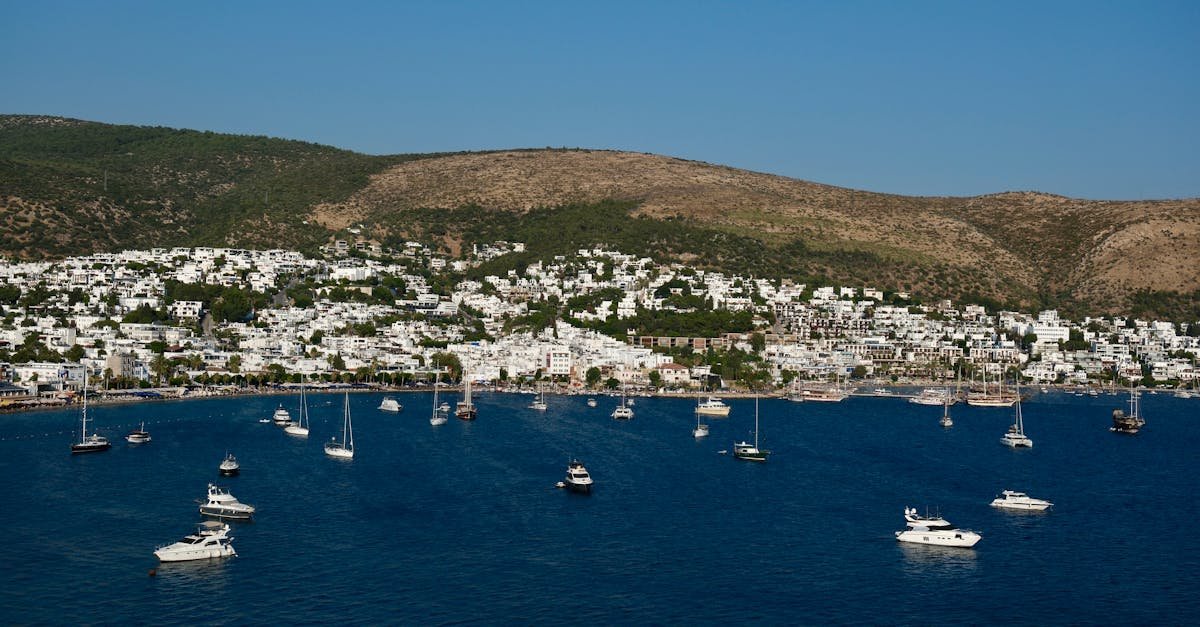
Antalya and Bodrum both sit on Turkey's Mediterranean coastline but attract quite different visitors. Bodrum is smaller, more boutique, and has an established glamour associated with yacht-set nightlife and high-end beach clubs — it is also significantly more expensive. Antalya is larger and more diverse: it offers genuine ancient ruins (Perge, Aspendos, Termessos) of far greater scale, a real urban old quarter in Kaleiçi, better-value accommodation across all budget tiers, and a more family-friendly profile overall. Bodrum suits those prioritising nightlife and style; Antalya suits those who want beach time combined with meaningful cultural depth and better value for money.
Do people speak English in Antalya?
English is widely spoken across Antalya's tourist infrastructure — hotel staff, restaurant workers in Kaleiçi and Lara, tour operators, and transport providers generally communicate comfortably in English. German is also widely understood given the large number of German tourists. Away from the tourist zone, in local markets and residential neighbourhoods, English becomes patchier, but Google Translate handles most situations. Learning a handful of Turkish phrases (merhaba for hello, teşekkürler for thank you) is warmly received and will win you immediate goodwill from locals.
★ Hotel guide
Where to stay in Antalya
7+ hand-picked hotels across luxury, mid-range and budget — verified by Max.
Hand-picked and verified by Max, who founded Vacanexus from Luxembourg in 2026. No sponsorships, no paid placements. Every recommendation — restaurants, neighbourhoods, things to do — is selected for authenticity over popularity.