Adventure & Trekking · Kyrgyzstan · Issyk-Kul Region 🇰🇬
Karakol Travel Guide — Where the Tian Shan meets raw adventure
⏱ 11 min read📅 Updated 2026💶 € Budget✈️ Best: Jun–Sep
€20–45/day
Daily budget
Jun–Sep
Best time
4–7 days
Ideal stay
KGS (Kyrgyz Som)
Currency
Karakol sits at the eastern tip of the luminous Issyk-Kul lake, cradled by snow-capped ridges that signal the beginning of one of Central Asia's most formidable mountain systems — the Tian Shan. The air here carries the scent of pine resin and cold glacial water, and on clear mornings the peaks glow a deep amber before the rest of the world has woken up. This compact, unhurried city of roughly 70,000 people is the last significant urban stop before the wilderness swallows you whole. Streets lined with Russian-era wooden houses and a thriving Sunday animal market remind you that Karakol has always been a meeting point between nomadic herders and the outside world. It is a town that wears its frontier character without apology.
Compared to the polished trekking hubs of Nepal or the over-curated trails of the Swiss Alps, visiting Karakol feels genuinely unfiltered. The infrastructure here has improved dramatically over the past five years — reliable guesthouses, experienced local guides, and well-maintained trailheads — yet the landscape and culture remain startlingly authentic. Things to do in Karakol range from multi-day glacier treks and mountain-biking descents to relaxed afternoons in a yurt camp beside a turquoise lake. There is no cable car to Ala Kul, no espresso bar at the hot springs — and that is precisely the point. Travellers who choose Karakol over safer, more familiar alternatives are rewarded with an intimacy with Central Asian wilderness that is becoming increasingly rare across the wider region.
✦ Find your perfect destination
Is Karakol really your perfect match?
Answer 12 quick questions about your travel style, budget and dates — we match you with the destinations that fit you best, from 600+ worldwide.
Karakol is the undisputed adventure capital of Kyrgyzstan, and its credentials are formidable. The Ala Kul trek is consistently ranked among the most spectacular high-altitude routes in the former Soviet Union, offering ice-blue glacial lakes and brutal yet rewarding passes above 3,800 metres. Karakol's position next to Issyk-Kul — the world's second-largest alpine lake — means the scenery extends well beyond the mountains. The town itself rewards curiosity: a wooden Orthodox cathedral built without a single nail, a beautifully tiled Dungan mosque, and a lively Sunday livestock market speak to centuries of cultural layering. For the budget-conscious adventurer, Karakol remains one of the best-value destinations on earth.
The case for going now: Kyrgyzstan recorded its highest-ever international visitor numbers in 2023 and 2024, yet Karakol's trail network still sees a fraction of comparable Himalayan destinations. New Community Based Tourism guesthouses have opened across the Karakol Valley, and direct marshrutka links from Bishkek have become faster and more frequent. The Kyrgyz Som remains extremely weak against the euro and pound, meaning your daily budget stretches further than almost anywhere else in Asia right now. Go before the secret fully breaks.
🏔️
Ala Kul Trek
Karakol's signature multi-day hike crosses a glacier-flanked pass at 3,860 m to reach a surreal turquoise lake. The views reward every punishing metre of elevation gain.
♨️
Altyn Arashan Springs
A half-day hike or horseback ride leads to steaming hot springs at the head of a wild valley, where you soak in mineral-rich water with Tian Shan peaks as your backdrop.
🐴
Horseback Riding
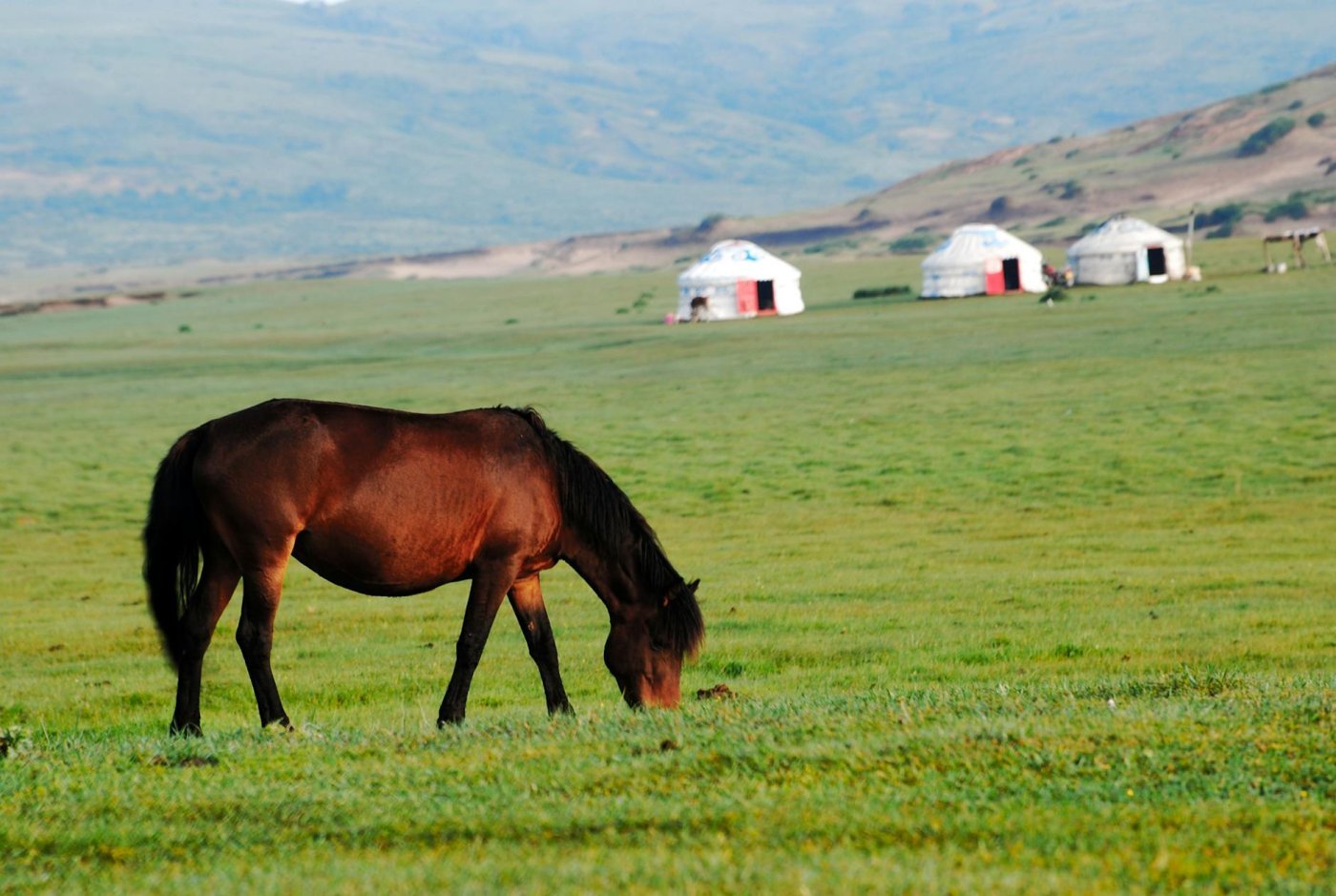
Nomadic horse culture is inseparable from Karakol. Local operators run everything from afternoon valley rides to week-long jailoo journeys between remote summer pastures.
🕌
Dungan Mosque
Built in 1910 by Chinese Muslim craftsmen without a single nail, this pagoda-style mosque is Karakol's most unexpected architectural gem — vivid, intricate and completely free to visit.
Karakol's neighbourhoods — where to focus
Historic Core
Central Karakol
The grid of Soviet-era streets around the central bazaar forms Karakol's beating heart. Here you will find the main market, most guesthouses, travel agencies, and the essential gear-rental shops. The wooden Russian Orthodox Cathedral of the Holy Trinity anchors the neighbourhood with quiet dignity.
Lakeside Escape
Pristan District
Pristan stretches toward the southern shore of Issyk-Kul and is the place for long evening walks along the waterfront. A handful of relaxed cafes and simple guesthouses face the lake, and the sunsets over the water — with the Kungey Ala-Too range reflected in the distance — are genuinely breathtaking.
Adventure Gateway
Karakol Valley Entrance
The road south from town quickly transitions into the Karakol Valley, where the air drops several degrees and the pines close in. This is where most trekking groups stage their departures for Ala Kul and Altyn Arashan. Several excellent yurt camps and family guesthouses cluster near the valley mouth.
Local Life
Sunday Market Area
The weekly livestock market on the western edge of Karakol is one of Central Asia's most vivid spectacles. On Sunday mornings, herders drive horses, sheep, and cattle into a dusty arena while traders in traditional kalpak hats conduct deals in rapid Kyrgyz. It is chaotic, photogenic, and utterly authentic.
Top things to do in Karakol
1. #1 — Ala Kul Glacial Trek
The Ala Kul loop trek is the defining experience of any Karakol itinerary and one of the most rewarding mountain routes in Central Asia. The classic circuit takes three to four days, ascending through dense spruce forest before breaking above the tree line into a high alpine bowl of scree, snow patches, and wild flowers. The Ala Kul pass at 3,860 metres demands an early alpine start and crampons are advisable on the icy descent to the turquoise lake below. Most trekkers complete the loop via Altyn Arashan valley, descending to natural hot springs on the final afternoon. Hiring a local guide through one of Karakol's Community Based Tourism cooperatives costs roughly €20–30 per day and keeps your money directly in the local economy. Pack for sudden weather changes — afternoon thunderstorms are common in July and August.
2. #2 — Altyn Arashan Hot Springs
Even travellers who prefer not to tackle a multi-day mountain route should make the journey to Altyn Arashan, a hidden valley roughly 12 kilometres south of Karakol that feels like the end of the known world. A rough jeep track winds through gorges draped in birch and pine before depositing you at a cluster of simple guesthouses and a series of steaming outdoor pools fed by geothermal springs. The minerals give the water a silky texture and the experience of soaking here, with glacial peaks visible in every direction, is difficult to overstate. The valley can be reached on foot in around four hours, by horse in three, or by 4WD in under one. Most visitors combine Altyn Arashan with the Ala Kul trek, treating the hot springs as a well-earned final night reward. Book your guesthouse bed in advance during July and August.
3. #3 — Karakol Sunday Animal Market
Every Sunday from roughly 07:00 to 12:00, the western edge of Karakol transforms into one of the most fascinating livestock markets in the former Soviet Union. Shepherds and traders arrive on horseback and by battered Soviet-era vehicles, bringing hundreds of horses, cattle, sheep, and goats to a large dusty field that buzzes with negotiation, laughter, and the smell of freshly grilled shashlik. This is not a tourist attraction — it is a functioning agricultural market where real commercial transactions determine real livelihoods. Visitors are welcome to walk freely through the pens and observe, though photographing vendors directly is best done with a smile and a respectful nod first. Arrive early: the action peaks before 09:00 and much of the market winds down by late morning. The adjacent bazaar sells freshly baked non bread, dried fruits, and local honey.
4. #4 — Jyrgalan Valley Mountain Biking
Roughly 80 kilometres east of Karakol, the resurgent mining village of Jyrgalan has quietly become one of the most exciting mountain-biking destinations in Central Asia. A community-led tourism project has mapped dozens of kilometres of single-track and descents across the surrounding ridges, with trails ranging from mellow valley loops to technically demanding alpine routes above 3,000 metres. Several Karakol-based operators run day trips and multi-day itineraries that combine trail riding with overnight stays in local guesthouses. The riding season runs from late June through September, with September offering particularly vivid golden-larch scenery. Jyrgalan is also excellent for cross-country trekking and skiers are beginning to discover its potential in winter. The valley represents exactly the kind of slow-burn sustainable tourism success story that Karakol's wider region is increasingly known for.
What to eat in the Issyk-Kul Region — the essential list
Beshbarmak
Kyrgyzstan's national dish — wide flat noodles simmered in meat broth and topped with slow-cooked lamb or horse — is most authentically served in Karakol at family guesthouses. The name literally means 'five fingers', reflecting the traditional way of eating.
Laghman
Pulled noodles stir-fried or served in a rich broth with peppers, tomatoes, and fatty lamb — a Dungan legacy that makes Karakol's version distinctly different from anything you will find in Bishkek. The Dungan community here has been perfecting this dish for over a century.
Shorpo
A clear, deeply savoury broth built from lamb ribs, potato, carrot, and onion that serves as a warming staple after a long day in the mountains. Simple but restorative, shorpo is Karakol's unofficial post-trek medicine.
Samsa
Flaky, oven-baked pastries stuffed with minced lamb and onion, sold hot from wood-fired clay ovens in Karakol's central market. The best samsas have a shatteringly crisp exterior giving way to a juicy, well-spiced interior.
Kymyz
Fermented mare's milk — fizzy, slightly sour, and mildly alcoholic — is the drink of Kyrgyz nomads and a genuine cultural experience. Offered in yurts and roadside stalls throughout summer, it is best approached with an open mind.
Dungan Ashlan-Fu
A cold noodle dish unique to the Dungan community of Karakol, featuring gelatinous starch noodles in a sharp vinegar and chilli broth with egg. Refreshing and strange and completely addictive on a hot summer afternoon.
Where to eat in Karakol — our top 4 picks
Fine Dining
Café Zhibek Jolu
📍 ul. Toktogula 45, Karakol
The most polished dining room in Karakol, Zhibek Jolu serves well-executed Kyrgyz classics alongside a handful of Russian dishes in a warm, wood-panelled setting. The slow-braised lamb is particularly good, and the menu reliably sources meat from local farms. Staff speak some English.
Fancy & Photogenic
Supara Ethno Complex
📍 Karakol Valley Road, near Karakol
Set in a beautifully decorated yurt and open-air complex on the edge of town, Supara offers the full theatrical Kyrgyz dining experience — felt rugs, embroidered wall hangings, and beshbarmak served in traditional wooden bowls. Book in advance during peak summer season.
Good & Authentic
Stolovaya Café Na Rynke
📍 Central Bazaar area, ul. Abdrakhmanova, Karakol
A no-nonsense Soviet-style stolovaya hidden inside the central market, where local traders and hikers queue side by side for steaming bowls of laghman and freshly baked samsa. Meals rarely exceed €2, portions are enormous, and the atmosphere is cheerfully chaotic.
The Unexpected
Fatboy's Guesthouse Kitchen
📍 ul. Gagarina 57, Karakol
Attached to one of Karakol's most popular backpacker guesthouses, Fatboy's serves an eclectic menu of pizza, pancakes, and Kyrgyz staples that draws a reliably international crowd. The communal atmosphere makes it ideal for finding trekking partners, and the homemade jam at breakfast is exceptional.
Karakol's Café Culture — top 3 cafés
The Institution
Café Trigon
📍 ul. Toktogula, Karakol
The longest-established meeting point for trekkers and overland travellers in Karakol, Trigon serves good espresso alongside generous breakfasts and homemade cakes. Notice boards cover every surface with trek reports, ride-share requests, and handwritten guide recommendations — an essential first stop on arrival.
The Aesthetic Hub
Art Café Karakol
📍 ul. Lenina, Karakol
A bright, airy cafe decorated with local artwork and handmade ceramics, Art Café Karakol attracts a creative local crowd alongside curious visitors. The menu leans toward lighter options — fresh salads, fruit teas, and good pastries — making it a welcome contrast to the meat-heavy Kyrgyz staples found elsewhere.
The Local Hangout
Chaikhana near the Mosque
📍 Near Dungan Mosque, Karakol
This informal teahouse just steps from the Dungan Mosque is where local men gather for glasses of green tea and unhurried conversation throughout the day. The setting is entirely undesigned and authentic — low tables, cushioned benches, and the occasional plate of dried apricots placed without ceremony.
Best time to visit Karakol
Jan
Feb
Mar
Apr
May
Jun
Jul
Aug
Sep
Oct
Nov
Dec
Peak Season (Jun–Sep) — warm days, all trails open, hot springs accessible, festivals activeShoulder Season — mild but unpredictable; some higher trails may retain snowOff-Season — cold to very cold; Ala Kul and Altyn Arashan trails often closed or snowbound
Karakol events & festivals 2026
Whether you're planning around a specific celebration or simply want to know what's happening, this guide covers the best events and festivals in Karakol — from major annual traditions to cultural highlights worth timing your trip around.
June 2026culture
Issyk-Kul International Tourism Forum
Held each June along the shores of Issyk-Kul, this regional forum brings together Central Asian tourism operators, adventure guides, and travellers to celebrate Kyrgyzstan's growing reputation as an adventure destination. One of the
July 2026culture
Karakol National Games Day
Local celebrations of traditional Kyrgyz nomadic games take place in and around Karakol each July, featuring horse racing, kok-boru (a polo-like horseback sport), and wrestling competitions. The event draws herders from across the Issyk-Kul region and is utterly spectacular to watch.
August 2026culture
World Nomad Games (Issyk-Kul)
Held biennially at Cholpon-Ata on Issyk-Kul's northern shore and reachable from Karakol, the World Nomad Games celebrate traditional sports from across 80 nations.
August 2026music
Teskey Fest
An open-air music and culture festival staged near Karakol that blends Kyrgyz folk music with contemporary Central Asian sounds against a backdrop of mountains and lake. Local musicians perform alongside artists from Kazakhstan, Uzbekistan, and Russia in a genuinely festive atmosphere.
September 2026culture
Harvest Bazaar Festival
As the high-summer trekking season draws to a close, Karakol's bazaar swells each September with produce from farms across the Issyk-Kul valley. Dried fruits, walnuts, honey, and freshly pressed oils fill the stalls, and the whole market takes on a celebratory, harvest-fair character.
March 2026culture
Nowruz Spring Festival
Nowruz, the Persian and Central Asian New Year, is celebrated with particular warmth in Karakol's Dungan and Kyrgyz communities each 21 March. Communal meals, public games, and open-air music mark the day, and locals are exceptionally welcoming to foreign visitors who show up curious.
July 2026religious
Orozo Ait (Eid al-Fitr)
The end of Ramadan is observed across Karakol with communal prayers at the Dungan Mosque and an outpouring of hospitality — guesthouses may offer guests traditional sweets and tea. The date shifts each year with the Islamic calendar; check exact dates when planning your Karakol itinerary.
August 2026market
Karakol Mountain Handicraft Market
A dedicated outdoor market for traditional Kyrgyz crafts — felt shyrdak rugs, leather goods, and hand-embroidered textiles — runs throughout August in Karakol's central square. Ideal for buying authentic souvenirs directly from the artisans who made them, with prices far below anything found in Bishkek.
May 2026culture
Silk Road Adventure Race
A multi-stage adventure race that uses the mountain trails around Karakol as its central arena each May. Competitors from Europe, Russia, and Asia tackle running, cycling, and kayaking stages across the Issyk-Kul region — ideal for spectators visiting Karakol in spring before the main trekking rush.
October 2026culture
Autumn Eagle Hunting Festival
Berkutchi eagle hunters from the Issyk-Kul Region gather outside Karakol each October for a traditional competition that showcases one of Central Asia's oldest hunting traditions. Golden eagles trained over years perform stunning aerial hunts while riders in embroidered cloaks gallop across golden steppe.
Dorm bed in guesthouse, stolovaya meals, shared marshrutka transport, self-guided trekking on marked trails.
€€ Mid-range
€30–55/day
Private guesthouse room, sit-down restaurant meals, licensed guide for Ala Kul, occasional 4WD hire.
€€€ Comfort
€55+/day
Best guesthouse in town, full guide and horse package, private jeep transfers to Altyn Arashan each day.
Getting to and around Karakol (Transport Tips)
By air: The nearest airport to Karakol is Manas International Airport in Bishkek (FRU), which receives direct flights from Moscow, Istanbul, Dubai, Frankfurt, and several Central Asian capitals. There is no commercial airport at Karakol itself, meaning all arrivals travel overland from Bishkek — a journey of roughly 360 kilometres.
From the airport: From Bishkek's Manas Airport, travellers reach Karakol by shared marshrutka (minibus) departing from Bishkek's Western Bus Station — the journey takes five to six hours and costs roughly €4–6. Private taxis cover the same route in under five hours for €40–60. Some guesthouses in Karakol offer pre-arranged airport pickup services at reasonable prices if booked in advance. The road follows the northern shore of Issyk-Kul and the scenery becomes increasingly dramatic after Balykchy.
Getting around the city: Karakol's compact centre is almost entirely walkable — the Dungan Mosque, Orthodox Cathedral, central bazaar, and most guesthouses sit within a 15-minute walk of each other. Local shared taxis (marshrutkas) serve the main arteries for under €0.30 per ride. For reaching the Karakol Valley trailhead or Altyn Arashan, negotiate with 4WD drivers at the bazaar or ask your guesthouse to arrange a jeep. Horse hire is widely available through Community Based Tourism cooperatives.
Transport Safety & Scam Prevention:
Negotiate Jeep Prices Upfront: 4WD drivers to Altyn Arashan frequently quote inflated prices to arriving trekkers. Always agree on a full return price before departure, confirm whether the driver will wait or return at a set time, and book through your guesthouse or the CBT cooperative for a fair fixed rate.
Use Official Currency Exchange: Karakol has licensed currency exchange booths in the central bazaar offering competitive rates for euros and US dollars. Avoid exchanging money with informal street changers, who sometimes shortchange tourists or pass counterfeit notes, particularly near the bus station area.
Confirm Guide Credentials: With Karakol's trekking boom has come a small number of unlicensed guides offering cut-price Ala Kul trips. Always hire through the Community Based Tourism office or established guesthouses — licensed guides carry ID, know mountain first aid, and ensure your fee supports local families rather than intermediaries.
Do I need a visa for Karakol?
Visa requirements for Karakol depend on your nationality. Select your passport below for an instant answer — based on the Passport Index dataset for entry into Kyrgyzstan.
ℹ️ Indicative only. Always verify with the official consulate before booking. Data: Passport Index, April 2026.
For detailed requirements, documentation checklists and processing times by nationality: TravelDoc →
Search & Book your trip to Karakol
Find the best flight routes and hotel combinations using our partner Kiwi.com.
Frequently Asked Questions
Is Karakol safe for tourists?
Karakol is generally a safe destination for international travellers, including solo visitors and women travelling alone. Petty crime is low and the local population is notably hospitable toward foreigners. The main safety considerations are mountain-related: altitude sickness, sudden weather changes, and glacier crossings on the Ala Kul route demand proper preparation and, ideally, a licensed guide. Carry a first-aid kit, inform your guesthouse of your trekking plans, and always check weather forecasts before heading above 3,000 metres. Road travel at night between Bishkek and Karakol carries some risk due to poor road surfaces, so travelling by day is advisable.
Can I drink the tap water in Karakol?
Tap water in Karakol is not consistently safe to drink and most guesthouses will advise against it. Bottled water is inexpensive and widely available throughout the town. On the mountain trails, stream and glacial meltwater is generally clean at high altitude but should be treated with a filter or purification tablets before drinking — especially below areas where livestock graze. Staying hydrated is particularly important when trekking above 3,000 metres in the Tian Shan, where altitude exacerbates dehydration faster than many visitors expect.
What is the best time to visit Karakol?
The best time to visit Karakol for trekking and outdoor adventure is between mid-June and mid-September, when all high mountain trails are fully open, the Ala Kul pass is largely snow-free, and Altyn Arashan is accessible without specialist equipment. July and August are peak months with the warmest temperatures and the longest daylight hours, though accommodation books up quickly and the Ala Kul route can feel busy. September is a wonderful shoulder month — crowds thin, the larch forests begin to glow gold, and temperatures remain comfortable at lower elevations. Winter travel is possible but the major trek routes close, making Karakol better suited to ski tourers and experienced cold-weather travellers between November and April.
How many days do you need in Karakol?
A minimum of four days allows you to experience Karakol's cultural highlights — the Sunday market, the Dungan Mosque, the Orthodox Cathedral — and complete a day trip to Altyn Arashan hot springs. However, most visitors who make the long journey from Europe find that seven days is the sweet spot for a satisfying Karakol itinerary. This allows three days for the Ala Kul loop trek, one day at Altyn Arashan, and two days exploring the city and Issyk-Kul lake. If you have ten days or more, adding a Jyrgalan Valley excursion for mountain biking or extending into the wider Issyk-Kul region is strongly recommended. Rushing Karakol means missing its best experiences.
Karakol vs Bishkek — which should you choose?
Bishkek and Karakol serve very different purposes on a Kyrgyzstan trip and the comparison is less either-or than it might appear. Bishkek is the capital — cosmopolitan by Central Asian standards, with excellent restaurants, lively nightlife, and useful logistics for onward travel. Karakol is a smaller, slower town whose entire appeal is proximity to some of the most spectacular mountain terrain in Central Asia. If your priority is trekking, horseback riding, hot springs, and immersion in nomadic culture, Karakol wins emphatically. Most travellers wisely spend one or two nights in Bishkek for logistics before travelling east to base themselves in Karakol for the core of their Kyrgyzstan experience. The two towns complement rather than compete with each other.
Do people speak English in Karakol?
English is limited in Karakol compared to major European or Southeast Asian tourism hubs. At guesthouses popular with international trekkers — particularly those affiliated with Community Based Tourism networks — English is spoken reasonably well and staff are experienced at communicating with foreign visitors. In the central market, restaurants, and with older locals, Russian is far more useful than English and will open many more doors. A few words of Kyrgyz — 'rakhmat' (thank you) and 'zhakshi' (good) — are received with genuine delight. Downloading the Russian and Kyrgyz packs on Google Translate before arriving in Karakol is genuinely worthwhile.
★ Hidden Gems Weekly
Like this? One place per week, in your inbox.
No spam, no fluff — just one underrated destination, every Tuesday.
Hand-picked and verified by Max, who founded Vacanexus from Luxembourg in 2026. No sponsorships, no paid placements. Every recommendation — restaurants, neighbourhoods, things to do — is selected for authenticity over popularity.