Martinique Travel Guide — Where French elegance meets Caribbean soul
⏱ 11 min read📅 Updated 2026💶 €€€ Comfort✈️ Best: Jan–Apr
€120–250/day
Daily budget
Jan–Apr
Best time
7–10 days
Ideal stay
EUR (€)
Currency
Martinique announces itself with a burst of colour — flame trees lining coastal roads, the Atlantic breaking white against volcanic cliffs, and the sweet-bitter scent of sugarcane drifting across hillside plantations. This French Caribbean island is unlike anywhere else in the Antilles: streets lined with boulangeries, ferry timetables printed in crisp French, and euros jingling in your pocket as a steel drum band rehearses in the town square. Martinique's beaches range from the black-sand coves of the wild Atlantic coast to the powder-white arc of Les Salines in the south, arguably the finest beach in the entire Caribbean. Above it all, the brooding cone of Mont Pelée watches over every postcard view.
Visiting Martinique feels distinct from its neighbours Guadeloupe, Saint Lucia or Barbados in one fundamental way: it is not a resort island but a living, breathing French department where locals shop at the marché, argue over rugby matches in rum bars, and cook Creole feasts with the same seriousness they apply to coq au vin. Things to do in Martinique range from snorkelling the protected reefs of the Rocher du Diamant to hiking volcanic rainforests and sipping aged rhum agricole straight from the distillery barrel. The island rewards slow exploration: rent a car, follow the coastal Route de la Trace, and let the island unfold on its own Creole-French terms.
✦ Find your perfect destination
Is Martinique really your perfect match?
Answer 12 quick questions about your travel style, budget and dates — we match you with the destinations that fit you best, from 600+ worldwide.
Martinique sits at a rare intersection of comfort and authenticity. Because it is a French overseas department, travellers from the EU face zero currency hassle and strong consumer protections, while the island's healthcare infrastructure outclasses most Caribbean neighbours. Yet Martinique has never sacrificed its Creole identity: the food markets smell of colombo spice and fresh crayfish, distilleries still press sugarcane the traditional way, and local fêtes fill village squares on weekends. The landscape alone — volcanic peaks, tropical forest, black and white beaches within an hour's drive of each other — would justify a visit.
The case for going now: Martinique is experiencing a quiet renaissance. The Fort-de-France waterfront has been substantially redeveloped, with new ferry connections linking the capital to the Trois-Îlets peninsula cutting what was once a gridlocked drive into a breezy 20-minute crossing. Visitor numbers remain significantly below pre-pandemic peaks, meaning beaches feel roomier and restaurant reservations easier than they have been in years. The strong euro-to-dollar ratio also makes transatlantic flights from Europe surprisingly competitive right now.
🏖️
Les Salines Beach
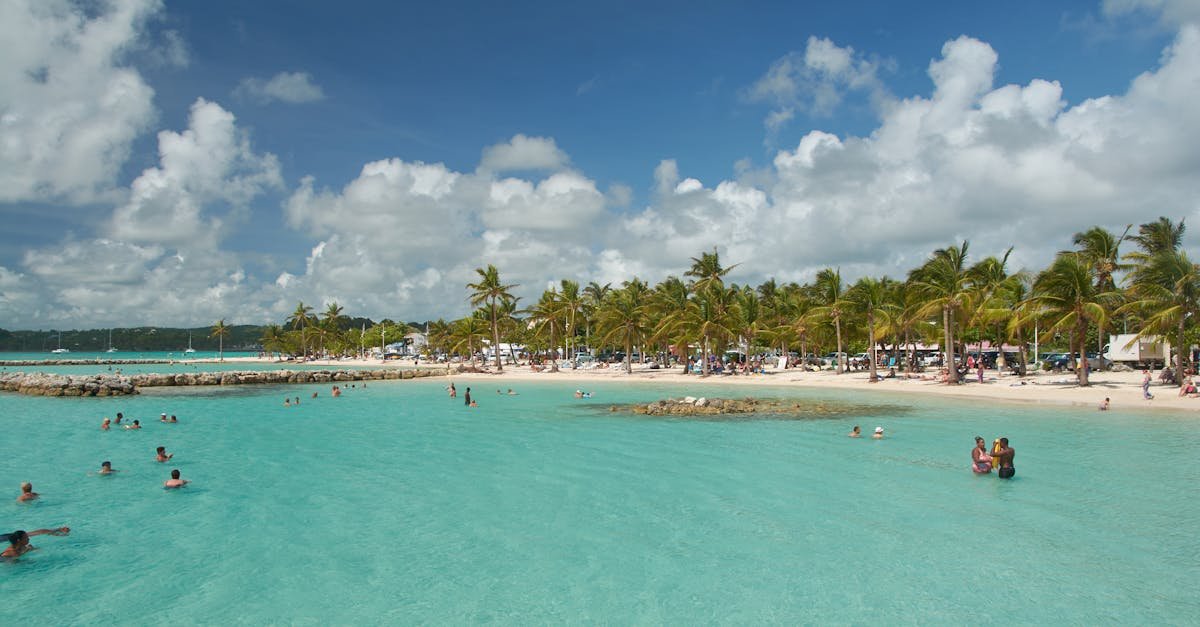
A kilometre-long crescent of impossibly white sand fringed by sea-grape trees, Les Salines is Martinique's crown jewel. Arrive early, bring a picnic of local accras and rosé, and stay until the pelicans own the shoreline.
🌋
Mont Pelée Hike
The volcano that obliterated Saint-Pierre in 1902 is now a challenging yet rewarding hike through cloud forest. The summit reveals jaw-dropping views across the entire island when the mist briefly clears on clear mornings.
🥃
Rhum Agricole Trail
Martinique holds the only AOC designation for rum outside France. Distilleries like Rhum Clément and Habitation Saint-Étienne welcome visitors for free or ticketed tours, ending with a ti-punch tasting you won't soon forget.
🐠
Diamond Rock Dive
The Rocher du Diamant, a dramatic basalt monolith off Martinique's southern coast, offers some of the Caribbean's most vivid snorkelling and diving — barracuda, sea turtles and clouds of sergeant-major fish patrol its walls.
Martinique's neighbourhoods — where to focus
Capital & Culture
Fort-de-France
Martinique's bustling capital is a sensory collision of Creole architecture, covered market stalls overflowing with spices, and pavement cafés serving café serré alongside pain au chocolat. The recently renovated waterfront promenade and the imposing Bibliothèque Schoelcher are unmissable, and the Grand Marché spice market makes an ideal morning stop before the heat builds.
Beach & Leisure
Trois-Îlets
Across the Baie de Fort-de-France by ferry, Trois-Îlets is a pretty village that serves as Martinique's leisure hub. Watersports operators line the beach at Pointe du Bout, boutique hotels dot the hillside, and the village square buzzes every evening with families and visiting yachties. The Musée de la Pagerie, birthplace of Empress Joséphine, is a short drive away.
Wild & Volcanic
Saint-Pierre
Once the 'Paris of the Caribbean', Saint-Pierre was destroyed in minutes by Mont Pelée's 1902 eruption and today wears its ruins as a badge of haunting distinction. Wreck divers flock here for some of the Caribbean's best accessible wrecks — eleven ships sunk in the disaster — while the atmospheric museum and blackened ruins give the town a compelling, melancholy beauty.
Nature & Escape
Presqu'île de la Caravelle
This slender peninsula jutting into the Atlantic is Martinique's best-kept secret for hikers and solitude-seekers. A nature reserve protects its interior, where trails wind past mangroves, crumbling sugarcane ruins and two rugged Atlantic beaches. The Château Dubuc ruins at the tip are dramatically photogenic, and the peninsula's windward beaches attract serious surfers from October through January.
Top things to do in Martinique
1. #1 Explore Les Salines & Southern Beaches
The Presqu'île des Salines at Martinique's southern tip is home to what many travel writers consistently rank among the Caribbean's top five beaches, and the designation is hard to argue with. Les Salines stretches for just over a kilometre in a gentle arc, backed by a row of sea-grape trees that provide natural shade by mid-morning. The water is shallow, calm and a shifting palette of turquoise and jade. Arrive before 10 AM to secure a shaded spot and to experience the beach at its serene best before the day-trip crowds arrive from Fort-de-France. Nearby Grande Anse des Salines and the clothing-optional Anse Trabaud are within a ten-minute walk, giving you an entire afternoon of beach-hopping. Pack accras de morue (salt cod fritters) from a roadside stall in Sainte-Anne village and a chilled bottle of local Bière Lorraine — this is not a beach for rushing.
2. #2 Hike the Rainforest & Mont Pelée
Martinique's interior is a UNESCO-recognised tropical rainforest threaded with marked trails maintained by the ONF (Office National des Forêts). The Route de la Trace cuts through the heart of this green cathedral, passing giant tree ferns, orchids and trilling hummingbirds, and serves as the starting point for several half-day hikes. The summit hike of Mont Pelée (1,397 m) begins at the Aileron trailhead and takes around four to five hours return — the path is steep, often muddy, and shrouded in cloud, so waterproof gear is non-negotiable. The reward is a volcanic crater landscape that feels like another planet, plus panoramic views stretching to Dominica on clear days. Easier jungle trails around the Gorges de la Falaise lead to a waterfall where you can swim in a natural pool; hire a local guide from the nearby village for maximum safety and ecological context. Martinique's trails are among the finest things to do in Martinique for active travellers.
3. #3 Follow the Rhum Agricole Distillery Trail
Martinique's rhum agricole — distilled from fresh sugarcane juice rather than molasses, and protected by the island's own AOC classification — is one of the world's great spirits, and visiting the distilleries is one of the defining experiences when visiting Martinique. The northern Habitation Clément estate outside Le François combines a working distillery with a beautifully preserved colonial great house and a sculpture park spread across its grounds. Rhum JM near Macouba in the far north operates in a dramatic clifftop setting with ocean views, while the more accessible Distillerie Saint-James near Sainte-Marie offers a rum museum alongside its tour. Tastings are generally included with entry, and the signature order is a ti-punch — white rhum agricole, a teaspoon of cane sugar syrup and a squeeze of local lime. The island's rum calendar peaks in June with the Martinique Rum Festival, but distilleries welcome visitors year-round. Allow a full day if you plan to tour more than two estates, and arrange a designated driver or taxi in advance.
4. #4 Dive the Wrecks of Saint-Pierre
The waters off Saint-Pierre contain one of the most accessible wreck diving collections anywhere in the Caribbean. When Mont Pelée erupted on 8 May 1902, it destroyed the entire fleet anchored in the bay — eleven ships now lie at depths ranging from 5 to 55 metres, making them suitable for divers of all experience levels. The Roraima and the Tamaya are popular among advanced divers for their depth and intactness, while the Gabrielle and the Dalton are superb for open-water-certified divers and snorkellers. Coral and sponge have colonised every surface over the intervening century, and the wrecks support a rich ecosystem of sea horses, frogfish and moray eels. Several established dive operators in Saint-Pierre run morning two-tank trips, and equipment rental is generally included. For non-divers, the Diamond Rock (Rocher du Diamant) near the southern tip of Martinique offers outstanding snorkelling from the boat without the need for certification. Between the volcanic history and the marine life, Saint-Pierre is one of the most layered and rewarding stops on any Martinique itinerary.
What to eat in the French Antilles — the essential list
Accras de Morue
These light, crispy salt cod fritters seasoned with chives, parsley and birdseye pepper are Martinique's definitive street snack. Eaten at the beach, from market stalls or as a restaurant starter, they are best when freshly fried and still blistering hot.
Colombo de Poulet
Martinique's signature curry, brought by 19th-century South Asian indentured workers and transformed into an island staple. Chicken (or goat) is slow-cooked with a fragrant colombo spice blend, sweet potato and courgette, served over white rice.
Boudin Antillais
This Creole blood sausage is spicier, looser and more intensely flavoured than its metropolitan French cousin. Served from roadside vans on weekend mornings, it is stuffed with peppers, spring onions and Scotch bonnet, and eaten with your fingers from a paper napkin.
Chatrou (Octopus) Fricassee
Local fishermen deliver octopus daily to Martinique's restaurants and home cooks. Fricasseed with garlic, tomatoes, lime juice and local peppers, chatrou is a deeply savoury dish that exemplifies how the island blends French technique with Creole heat.
Ti-Punch
Less a cocktail than a ritual, ti-punch — white rhum agricole, cane sugar syrup and a coin of lime — is how Martiniquans begin any serious conversation. The proportions are debated endlessly; ordering it in a local bar is an instant icebreaker.
Tarte à la Banane
The island's abundant plantains and dessert bananas inspire this rich Creole tart — caramelised bananas in a buttery pastry shell, sometimes spiked with a splash of rhum vieux. Found in boulangeries and at Sunday market dessert stalls across Martinique.
Where to eat in Martinique — our top 4 picks
Fine Dining
La Table de Marcel
📍 Habitation Clément, Le François, Martinique
Set within the grounds of the legendary Clément estate, La Table de Marcel serves refined Creole-French cuisine — think crab farci followed by rack of lamb with christophine gratin — in an open-air colonial great house. The cellar carries an exceptional selection of aged rhum vieux to accompany each course.
Fancy & Photogenic
Le Petibonum
📍 Le Carbet, Martinique
Perched on stilts directly over the Caribbean Sea with Mont Pelée as its dramatic backdrop, Le Petibonum is Martinique's most photographed restaurant table. Chef Mario Laclef serves creative Creole seafood — lobster, sea urchin, crayfish — matched with natural wines and a legendary homemade shrub cocktail list.
Good & Authentic
Chez Yvette
📍 Sainte-Anne, Martinique
A no-frills, family-run terrace restaurant in Sainte-Anne village near Les Salines beach, Chez Yvette has been feeding locals and savvy visitors for decades. The daily menu is chalked on a blackboard and follows whatever the boats brought in that morning — usually grilled kingfish, stuffed crab and plantain.
The Unexpected
Le Grain de Sel
📍 Sainte-Anne, Martinique
A French bistro transplanted to the tropics with astonishing results. The menu at Le Grain de Sel rotates seasonally and blends metropolitan French technique — duck confit, beef tartare — with island ingredients like breadfruit purée and local peppers. The wine list is serious, and the service is warm without being formal.
Martinique's Café Culture — top 3 cafés
The Institution
Café de la Paix
📍 Place de la Savane, Fort-de-France, Martinique
Overlooking the palm-lined Place de la Savane in the heart of Fort-de-France, the Café de la Paix has been the city's social hub since the mid-20th century. Order a double espresso and a croissant, watch the morning market come to life, and linger over a copy of France-Antilles newspaper for the full local experience.
The Aesthetic Hub
Bloom Coffee
📍 Rue Victor Hugo, Fort-de-France, Martinique
Fort-de-France's most design-conscious café brings specialty third-wave coffee culture to Martinique with single-origin beans, pour-overs and housemade pastries with local guava and passion fruit. The space is light-filled and minimal, popular with the island's creative community, and the iced café Créole with sweetened condensed milk is a revelation.
The Local Hangout
Snack Bar du Marché
📍 Grand Marché, Rue Isambert, Fort-de-France, Martinique
Not a café in the formal sense — more a collection of market women serving plastic cups of strong Creole coffee, fresh-squeezed cane juice and piping-hot accras from seven in the morning. The Grand Marché snack bar strip is where Fort-de-France actually wakes up, and it offers the most authentic start to any day in Martinique.
Best time to visit Martinique
Jan
Feb
Mar
Apr
May
Jun
Jul
Aug
Sep
Oct
Nov
Dec
Peak season (Jan–Apr & Dec) — dry skies, low humidity, ideal beach weatherShoulder season (Oct–Nov) — post-hurricane, quieter crowds, good valueRainy & hurricane season (May–Sep) — hot, humid, daily showers possible
Martinique events & festivals 2026
Whether you're planning around a specific celebration or simply want to know what's happening, this guide covers the best events and festivals in Martinique — from major annual traditions to cultural highlights worth timing your trip around.
February 2026culture
Martinique Carnival (Vaval)
One of the Caribbean's most exuberant carnival celebrations, Martinique's Vaval runs for four days of increasingly wild costume parades through Fort-de-France, culminating in the burning of the carnival king on Ash Wednesday.
April 2026culture
Tour des Yoles Rondes (Training Races)
The iconic Martinique traditional sailing race — contested in the distinctive flat-bottomed yoles rondes crewed by acrobatic sailors hanging off outriggers — begins its qualifying season in spring. Racing along Martinique's coastline is spectacular to watch from any seaside restaurant or beach. A defining cultural event unlike anything found elsewhere in the Caribbean.
June 2026culture
Martinique Rum Festival
The annual Festival du Rhum held across Martinique celebrates the island's AOC-protected rhum agricole with distillery open days, masterclasses, cocktail competitions and pairing dinners. Major estates including Clément, JM and Saint-James open their gates for special guided tastings, making this a calendar highlight for any serious spirits enthusiast visiting Martinique.
July 2026music
Festival de Madinina Jazz
Martinique's summer jazz festival brings international and Caribbean jazz artists to open-air stages in Fort-de-France and across the island. Evening concerts are held at iconic venues including the waterfront and the botanical gardens at Balata, blending cool jazz harmonies with warm tropical nights and a very French approach to interval drinks.
August 2026culture
Tour des Yoles Rondes (Main Race)
The full Tour des Yoles Rondes regatta is Martinique's most important sporting and cultural event of the year — a multi-day circumnavigation of the island by crews of traditional yoles. Spectators follow by road and fishing boat, and every coastal village hosts fêtes with dancing, rum and grilled fish to welcome the sailors.
October 2026music
Festival Culturel de Fort-de-France
Fort-de-France's annual arts and culture festival fills theatres, streets and museum courtyards with Creole theatre, contemporary dance, music from across the Francophone world and visual arts exhibitions. The shoulder-season timing means hotel rates are lower, and the best Martinique travel tips always include attending at least one evening performance.
November 2026religious
Fête des Morts / All Saints Day
The 1st and 2nd of November are observed with particular reverence across Martinique, where families spend the evening cleaning and illuminating ancestral graves with thousands of candles. Cemeteries across the island — especially those in Sainte-Marie and Le Marin — glow with an otherworldly beauty that is simultaneously solemn and deeply moving for visiting travellers.
December 2026market
Marchés de Noël (Christmas Markets)
From early December, Martinique's town squares host Christmas markets with a distinctly Creole flavour — stalls selling homemade rum punch, tropical fruit jams, hand-painted pottery and local vanilla. Fort-de-France's Place de la Savane is the most impressive, and the warm evenings, fairy lights and smell of grilled meats create a festive atmosphere unlike any European Christmas market.
January 2026culture
Fête des Cuisinières Preparations
January marks the start of Martinique's Creole cooking celebration season, with preliminary events and cooking competitions across the island's villages ahead of the main August festival. Local women's food associations host public tastings of colombo, accras and traditional Creole desserts — one of the most
March 2026culture
Semaine de la Créolité
This annual week-long celebration of Creole identity and language takes place across Martinique with conferences, poetry readings, concerts and art installations that explore the island's unique cultural heritage — a fusion of African, European and South Asian influences. Held in Fort-de-France and several outlying communes, it is an unmissable window into what makes Martinique distinct.
🗓 For the complete official events calendar and visitor information, visit the Martinique Tourism Board →
Martinique budget guide
Type
Daily budget
What you get
€ Budget
€70–100/day
Guesthouses, roadside accras, packed lunches from the market, local buses and beach days without watersports.
€€ Mid-range
€120–180/day
Boutique hotel, car rental, sit-down Creole restaurants daily, one distillery tour and snorkelling trip.
€€€ Luxury
€250+/day
Design hotel or villa, fine dining, private boat trips, diving packages and transfers throughout Martinique.
Getting to and around Martinique (Transport Tips)
By air: Martinique Aimé Césaire International Airport (FDF) receives direct flights from Paris CDG and Orly year-round with Air France and Corsair, with journey times of approximately eight and a half hours. Connecting flights from Amsterdam, Frankfurt and London operate via Paris or via Miami and other Caribbean hubs. During peak season (January–April), booking at least three months ahead is strongly recommended.
From the airport: The airport sits roughly 11 kilometres from Fort-de-France. Official taxis are metered and the journey to the capital costs approximately €25–35; agree the price before departure or insist on the meter. There is no direct public bus from the airport to Fort-de-France, though a local shared taxi (taxi collectif) departs from near the terminal to the Le Lamentin bus hub for a few euros. Car rental desks are located inside the arrivals hall, and picking up a car at the airport is by far the most convenient option for exploring Martinique independently.
Getting around the city: Fort-de-France is walkable within the centre, but Martinique has no rail network and public transport between towns relies on shared taxis collectifs — minibuses that follow fixed routes and depart when full. They are extremely cheap but schedules are irregular and service stops early in the evening. Renting a car (€40–70/day) is strongly recommended for anyone planning to explore beyond the capital. The ferry between Fort-de-France and Trois-Îlets (€8 return) is a fast and scenic alternative to driving around the southern bay, and well worth using.
Transport Safety & Scam Prevention:
Unmetered Airport Taxis: Unofficial drivers outside arrivals will approach with flat-rate offers that often exceed the legitimate metered fare. Always use the official rank inside the terminal and confirm whether the driver will use the meter before you load your luggage.
Rental Car Fuel Confusion: Several smaller rental agencies quote prices excluding mandatory insurance and return the car with a full tank expecting you to return it full — then charge inflated rates if you don't. Read the contract carefully and photograph the fuel gauge and any existing damage before driving away.
Beach Vendor Pressure: Vendors on Les Salines and Sainte-Anne beaches can be persistent with bracelets, coconuts and boat trips. Prices are often negotiable but rarely stated upfront. A firm, polite 'non merci' is universally understood; engaging in bargaining signals genuine interest and is hard to exit gracefully.
Do I need a visa for Martinique?
Visa requirements for Martinique depend on your nationality. Select your passport below for an instant answer — based on the Passport Index dataset for entry into Martinique.
ℹ️ Indicative only. Always verify with the official consulate before booking. Data: Passport Index, April 2026.
For detailed requirements, documentation checklists and processing times by nationality: TravelDoc →
Search & Book your trip to Martinique
Find the best flight routes and hotel combinations using our partner Kiwi.com.
Frequently Asked Questions
Is Martinique safe for tourists?
Martinique is generally safe for tourists, particularly in resort areas, beaches and the main tourist routes. As a French overseas department it benefits from French law enforcement and infrastructure. Petty theft from parked cars is the most common issue — never leave valuables visible on the back seat, particularly at beach car parks near Les Salines or Diamond Rock. Fort-de-France has a few neighbourhoods best avoided after dark, but the city centre and waterfront are perfectly safe in the evening. Exercise standard urban caution and you are unlikely to encounter any problems during your visit to Martinique.
Can I drink the tap water in Martinique?
Yes, tap water in Martinique is safe to drink and meets French EU standards — a significant advantage over many Caribbean neighbours. The water supply across the island is treated and monitored, and locals drink it without concern. Some older buildings in rural areas may have ageing pipework, so when in doubt in very remote gîtes, bottled water is inexpensive and widely available. In the capital and at hotels, tap water is perfectly fine.
What is the best time to visit Martinique?
The best time to visit Martinique is between January and April, when the island enjoys its dry season: days are consistently sunny with low humidity, temperatures hover around 27–29°C, and trade winds keep things pleasantly breezy. December is also excellent. May through November is the rainy and hurricane season — showers are often short but can be intense, and September–October sees the highest storm risk. If you are flexible, visiting Martinique in late January or February combines ideal weather with the spectacular Carnival celebrations, making it arguably the single best time of year.
How many days do you need in Martinique?
A minimum of seven days is needed to do Martinique justice without feeling rushed. Three days covers the south — Les Salines, Sainte-Anne and Trois-Îlets — but you would miss the north entirely. A seven-day Martinique itinerary allows you to add Mont Pelée, Saint-Pierre, one or two distilleries and the Caravelle Peninsula without sacrificing beach time. Ten days is the sweet spot for travellers who want to combine beaches, hiking, diving and cultural exploration at a genuinely relaxed pace. Two weeks suits anyone planning to combine Martinique with a neighbouring island such as Saint Lucia or Guadeloupe via inter-island ferry or short flight.
Martinique vs Guadeloupe — which should you choose?
Both are French Caribbean departments sharing the euro, baguettes and rhum agricole culture, but they have distinct personalities. Martinique feels more cohesive and easier to navigate as a single island — it is smaller, with a stronger single identity and arguably better Creole cuisine. Guadeloupe is actually an archipelago and offers more diversity: the butterfly-shaped main island, plus Marie-Galante, Les Saintes and La Désirade each have their own character. Martinique wins for volcanic drama, rum history and beach quality at Les Salines. Guadeloupe wins for variety if you have more than ten days. For a first French Caribbean visit, most travellers find Martinique more immediately rewarding and logistically straightforward.
Do people speak English in Martinique?
English is spoken at a basic to intermediate level in tourist-facing businesses — hotels, car rental desks, popular restaurants and water sports operators — but Martinique is fundamentally a French and Creole-speaking island. Away from the main tourist zones, you should expect to communicate in French. A few phrases go an enormously long way: 'Bonjour', 'merci' and 'une table pour deux, s'il vous plaît' will be warmly received. Younger Martiniquans in urban areas often speak reasonable English, but relying on it exclusively, particularly in markets and local restaurants, will limit your experience significantly.
★ Hidden Gems Weekly
Like this? One place per week, in your inbox.
No spam, no fluff — just one underrated destination, every Tuesday.
Hand-picked and verified by Max, who founded Vacanexus from Luxembourg in 2026. No sponsorships, no paid placements. Every recommendation — restaurants, neighbourhoods, things to do — is selected for authenticity over popularity.