Culture & Nature · France · Provence-Alpes-Côte d'Azur 🇫🇷
Provence Travel Guide — Lavender fields, rosé at noon, and Cézanne's light
⏱ 12 min read📅 Updated 2026💶 €€€ Comfort✈️ Best: Apr–Sep
€120–250/day
Daily budget
Apr–Sep
Best time
5–10 days
Ideal stay
EUR
Currency
Provence arrives on your senses like a slow exhale. The air in summer carries wild thyme and sunbaked stone, and at dusk the Luberon hills turn amber and violet in a light that Paul Cézanne spent a lifetime trying to capture on canvas. Rows of lavender stripe the plateau of Valensole in purple so vivid they look digitally enhanced; fountain-cooled market squares in Aix-en-Provence buzz with the clatter of pétanque balls and the hiss of a good espresso machine. Provence is a region of the Var, Bouches-du-Rhône, and Vaucluse departments in southeastern France, each corner with its own personality — and yet all unmistakably, unapologetically Provençal.
Visiting Provence requires a different pace than you'd bring to Paris. This is a region built for slow mornings at village markets and long lunches under plane trees. Compared to the glamour of the Côte d'Azur just to its east, Provence trades yachts and celebrity beach clubs for truffle fairs, abbeys carved from white limestone, and cellar doors where a winemaker pours you a pale rosé without ceremony. Things to do in Provence range from hiking the Calanques above Cassis to photographing the Pont du Gard at golden hour, so the region rewards travellers who mix active mornings with thoroughly idle afternoons.
✦ Find your perfect destination
Is Provence really your perfect match?
Answer 12 quick questions about your travel style, budget and dates — we match you with the destinations that fit you best, from 600+ worldwide.
Provence belongs on your travel list because it delivers beauty that is earned rather than packaged. Every hilltop village — Les Baux-de-Provence, Gordes, Ménerbes — requires a short climb and rewards you with a panorama that stretches to the Alps or the Mediterranean. The food scene in Provence is grounded and generous: bouillabaisse in Marseille, tapenade on warm bread, lamb roasted with rosemary from the garrigue. The region's wine appellations, from Bandol to Châteauneuf-du-Pape, produce bottles that European connoisseurs travel specifically to taste at source.
The case for going now: Provence is experiencing a quiet renaissance in 2025–2026, with a new wave of boutique maisons d'hôtes restoring abandoned bastides and international chefs opening countryside restaurants that rival those in Lyon or Paris. The lavender bloom of 2025 was the most abundant in a decade following targeted replanting programs, and the new TGV frequency from Paris reduces travel time to Avignon to under two and a half hours, making Provence genuinely accessible for a long weekend from northern Europe.
💜
Lavender Plateau
The Valensole plateau peaks in late June and July, when entire hillsides turn a deep violet. Walking between rows at sunrise, with bees audibly at work, is one of France's great sensory experiences.
🏛️
Roman Monuments
Provence contains some of Europe's best-preserved Roman architecture. The Pont du Gard aqueduct, the amphitheatre in Nîmes, and the ancient theatre in Orange each stand with a grandeur that textbooks cannot prepare you for.
🍷
Rosé & Cave Visits
Provence produces eighty percent of France's rosé, and a cellar visit in the Côtes de Provence appellation is an afternoon well spent. Winemakers pour generously and prices remain far below what the same bottles fetch in London or Amsterdam.
🏘️
Villages Perchés
Gordes, Roussillon, and Les Baux-de-Provence cling to limestone ridges like medieval stage sets. Arrive early before tour coaches, and you'll have stone streets and geranium-filled windowsills entirely to yourself.
Provence's neighbourhoods — where to focus
Cultural Capital
Aix-en-Provence
Aix is the intellectual and artistic heart of Provence, home to the Cours Mirabeau — a grand boulevard of platane trees and fountain-flanked cafés — and the studio where Cézanne painted his final Mont Sainte-Victoire canvases. The weekly market on Place Richelme is one of southern France's finest, piled with olives, lavender honey, and cheesemakers who've driven down from the Var hills before dawn.
Rugged & Urban
Marseille
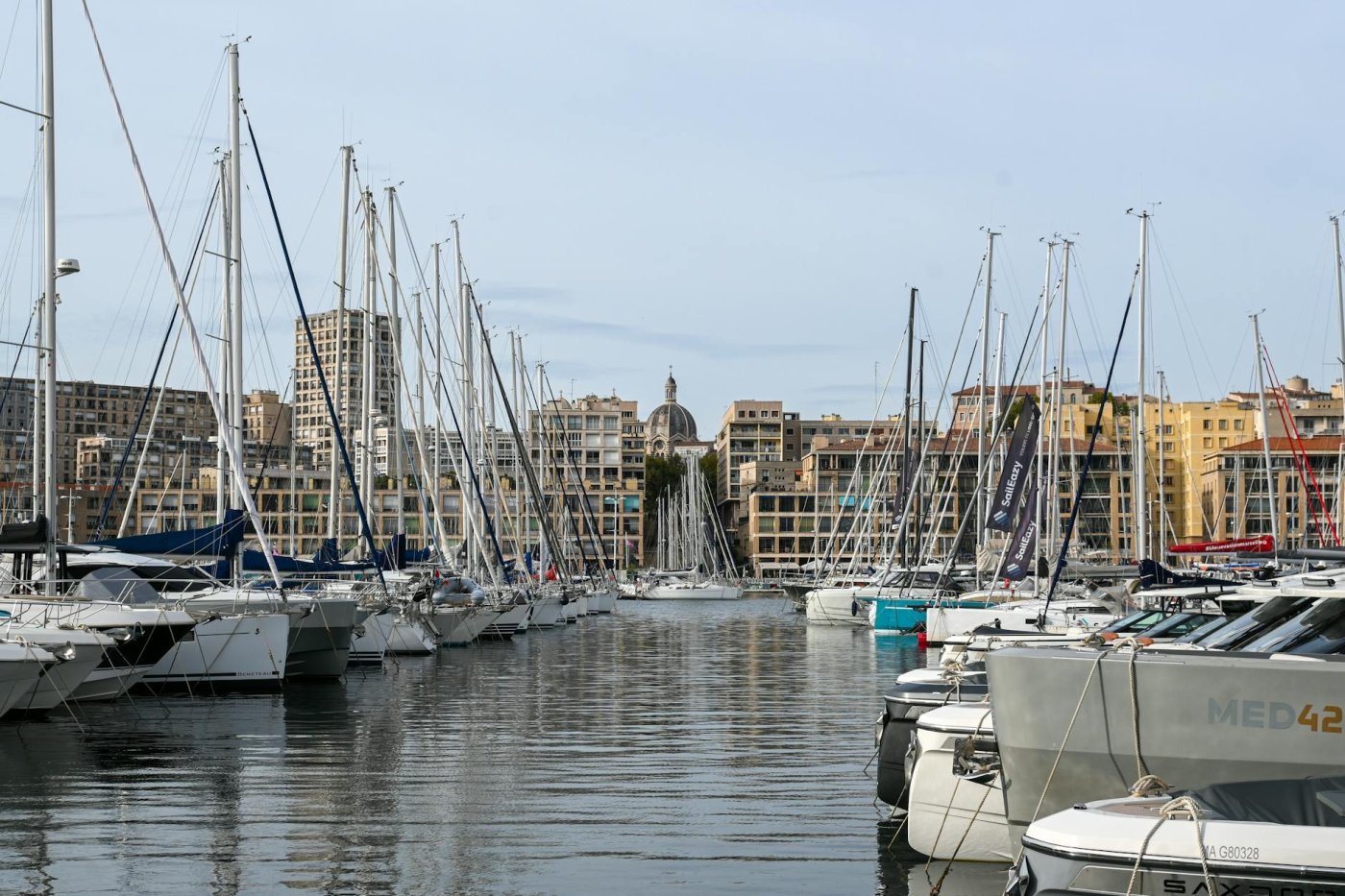
France's second city occupies a dramatic coastal bowl and rewards travellers who embrace its grit and grandeur in equal measure. The Vieux-Port is always in motion — fishing boats, ferry traffic, and market stalls selling sea-urchin spines and fresh bouillabaisse spice mixes. The MuCEM museum on the waterfront is one of France's great contemporary cultural institutions.
Papal City
Avignon
Avignon spent nearly a century as the seat of the Catholic papacy, and its walled medieval city still radiates that sense of concentrated power. The Palais des Papes is Europe's largest Gothic palace, and the surrounding streets are packed with wine bars, antique shops, and theatre venues that multiply every July during the famous festival.
Luberon Gem
Lourmarin
Lourmarin sits at the southern foot of the Luberon massif and carries a quiet sophistication that its size doesn't suggest. Albert Camus is buried in the village cemetery, and the weekly Friday market draws food producers from across the Vaucluse. Its château is one of the Renaissance's earliest examples in Provence and doubles as an arts foundation with rotating exhibitions.
Top things to do in Provence
1. #1 — Walk the Ochre Trail, Roussillon
Roussillon sits above the world's largest ochre deposits, and its buildings glow in seventeen recorded shades of yellow, orange, and deep red depending on the hour and the season. The Sentier des Ocres is a short-marked trail of about one kilometre that winds through eroded ochre cliffs and sculptural formations called 'fairy chimneys,' where the mineral pigment that once supplied artists across Europe still stains your shoes rust-orange. The best light for photography falls in the two hours before sunset, when the western face of the cliffs catches the full warmth of the low Provençal sun. The village itself perches above the valley and offers a string of good restaurants; book ahead in July and August when Roussillon fills with summer visitors drawn by its reputation as one of France's most scenic communes.
2. #2 — Explore the Calanques Near Cassis
Between Marseille and Cassis, the Mediterranean coastline fractures into a series of deep limestone inlets — calanques — whose turquoise water is accessible only on foot or by boat. The Calanques National Park protects 20 kilometres of this coastline, and hiking the trail from Cassis to En-Vau (the most dramatic of the inlets) takes around three hours return, with sections of exposed ridge walking that require reasonable fitness and a head for heights. The reward is a narrow pebble beach enclosed by white cliffs rising over 300 metres, with water so clear you can count the stones on the seabed from the surface. Visit in May, June, or September — the park restricts access during peak summer on fire-risk days, and the heat in August makes the exposed path genuinely demanding.
3. #3 — Visit the Abbaye de Sénanque
Few images of Provence are as instantly recognizable as the twelfth-century Cistercian abbey of Sénanque rising from a fold in the Luberon hills, surrounded by lavender. The monks who still live there cultivate the lavender fields themselves, and visiting in late June or early July means walking through the blooming rows and hearing vespers sung by the resident community in an unheated Romanesque nave that hasn't changed its essential character in eight centuries. Guided tours of the abbey cloister and chapter house run several times daily in multiple languages. The site sits four kilometres north of Gordes along a narrow lane, so arrive by car early morning or take the shuttle from Gordes village to avoid parking frustration in the high season.
4. #4 — Taste Châteauneuf-du-Pape in the Vineyard
Châteauneuf-du-Pape is one of France's most storied appellations, and the village north of Avignon that bears its name is surrounded by the distinctive galets roulés — large rounded pebbles deposited by glacial rivers — that store daytime heat and release it to the grenache vines overnight. A Provence itinerary that omits a cellar visit here is one that will be regretted. Domaine du Vieux Télégraphe and Château Rayas are two names that wine travellers cross continents to visit; for a more accessible introduction, the village's wine cooperative offers well-structured tastings with no appointment required. The ruined papal summer residence on the hill above the village provides a free panoramic view over the Rhône valley and the vineyards that stretch south toward Avignon.
What to eat in Provence — the essential list
Bouillabaisse
Marseille's iconic fish stew is not a single dish but a ritual: a procession of whole fish cooked in saffron-and-fennel broth, served alongside rouille-spread croutons and the broth itself as a second course. Authentic bouillabaisse must include at least four Marseille-specific fish species by law.
Tapenade
Ground black olives, capers, and anchovies blended with olive oil into a paste that tastes exactly like the Provençal landscape smells. Spread on warm toasted bread before any meal, tapenade is simultaneously aperitif, amuse-bouche, and proof that simplicity is its own form of cooking genius.
Ratatouille
The original Provençal ratatouille bears little resemblance to the layered dish popularized by cinema. It is a slow-cooked stew of courgette, aubergine, tomato, and red pepper, seasoned with thyme and bay, that improves enormously the following day. Served warm as a side dish or cold as a starter in summer.
Daube Provençale
A slow braise of beef cheek or shoulder cooked for hours in red wine, with olives, orange peel, and a bouquet of Provençal herbs. The result is deeply savoury and gelatinous in the best possible sense. It is the archetypal winter Sunday dish across the Var and Bouches-du-Rhône.
Soupe au Pistou
Provence's answer to minestrone is a thick summer vegetable soup finished tableside with a dollop of pistou — a basil, garlic, and olive oil paste that is the Provençal cousin of pesto. The pistou melts into the hot broth, releasing an aromatic hit that defines the taste of August in the region.
Calisson d'Aix
The almond-and-candied-melon confection of Aix-en-Provence has been made in the same diamond shape since the fifteenth century. Topped with a thin layer of royal icing, calissons are sold in distinctive oval wooden boxes from confiseries on the Cours Mirabeau and make the region's most elegant edible souvenir.
Where to eat in Provence — our top 4 picks
Fine Dining
Le Petit Nice Passédat
📍 Anse de Maldormé, 17 Rue des Braves, 13007 Marseille
Gérald Passédat's three-Michelin-star restaurant perches above a private cove in Marseille with views that compete with the food — which is saying something. His Mediterranean tasting menus are built entirely around the sea: sea urchins from the Calanques, fish landed that morning at the Vieux-Port, algae gathered by local divers. One of Provence's most essential fine-dining experiences.
Fancy & Photogenic
Le Jardin de l'Église
📍 Place de l'Église, 84160 Lourmarin
A shaded garden restaurant in Lourmarin's village square that serves elevated Provençal cooking in a setting of climbing roses and candlelight. The menu rotates with the market; expect lamb from the Luberon plateau, summer truffle shavings, and a wine list drawn exclusively from regional appellations. Book the terrace well in advance for summer evenings.
Good & Authentic
Chez Fonfon
📍 140 Rue du Vallon des Auffes, 13007 Marseille
Tucked into the tiny calanque-like harbour of Vallon des Auffes, Chez Fonfon has been serving bouillabaisse to Marseillais and well-informed visitors since 1952. The formula is fixed and unsentimental: the real dish, the right fish, the traditional service, a spectacular harbour view. A benchmark bouillabaisse that justifies the trip to Marseille entirely.
The Unexpected
La Mirande Restaurant
📍 4 Place de l'Amirande, 84000 Avignon
Hidden inside one of Avignon's most beautiful historic houses, La Mirande's kitchen school has produced some of the Rhône valley's most interesting modern Provençal cooking. Lunches in the wisteria courtyard feel impossibly civilized; Thursday market dinners cooked on the wood-burning kitchen stove are one of the most convivial experiences in the city.
Provence's Café Culture — top 3 cafés
The Institution
Les Deux Garçons
📍 53 Cours Mirabeau, 13100 Aix-en-Provence
Open since 1792 on the Cours Mirabeau, Les Deux Garçons is the place where Cézanne, Zola, and Picasso once argued over coffee. The gilded interior and white-jacketed waiters are unreconstructed and unapologetic. Croissants and a café crème here, watching the morning market crowd, is the definitive Aix-en-Provence ritual.
The Aesthetic Hub
Café de la Fontaine
📍 Place du Portail, 83690 Tourtour
This village café in Tourtour — known locally as 'the village in the sky' — sits beside a Romanesque fountain with views over the Var plain toward the coast. The terrace is shaded by four-hundred-year-old elms, and the house rosé, served in ceramic carafes, is sourced from a cooperative five kilometres down the hill.
The Local Hangout
Café de France
📍 Place Louis Giraud, 84110 Vaison-la-Romaine
The Café de France on Vaison's market square has been the social centre of this Roman-archaeology-rich Vaucluse town for generations. Tuesday mornings, when the weekly market stretches across the square, are the best time to arrive early, order a pastis, and watch farmers unload vegetables and local truffles in season. Unaffected, honest, and exactly right.
Best time to visit Provence
Jan
Feb
Mar
Apr
May
Jun
Jul
Aug
Sep
Oct
Nov
Dec
Peak Season (Apr–Sep) — lavender bloom, warm markets, full cultural calendar; book accommodation earlyShoulder Season (Mar & Oct) — fewer crowds, lower prices, truffle season in spring and autumn; ideal for walkersOff-Season (Nov–Feb) — villages quieter, some restaurants closed; great for wine cellars and winter markets in Aix
Provence events & festivals 2026
Whether you're planning around a specific celebration or simply want to know what's happening, this guide covers the best events and festivals in Provence — from major annual traditions to cultural highlights worth timing your trip around.
July 2026culture
Festival d'Avignon
The world's most prestigious theatre festival transforms Avignon each July into a stage of extraordinary scale. Over three weeks, the Palais des Papes courtyard and 40 other venues host avant-garde productions from every continent.
Late June–July 2026culture
Valensole Lavender Festival
The Valensole plateau celebrates the lavender harvest with a week of distillery open days, guided field walks, and artisan markets selling lavender-infused products. Farmers invite visitors to participate in the cut, and the local cooperative offers exclusive tastings of lavender honey and essential oils pressed the same morning.
July 2026music
Les Chorégies d'Orange
The Roman amphitheatre in Orange hosts one of Europe's oldest opera festivals, founded in 1869. Performances of Verdi and Puccini staged against the two-thousand-year-old wall of the Théâtre Antique, under open skies, create an atmosphere that modern concert halls simply cannot replicate. A highlight of any Provence itinerary in summer.
January 2026market
Truffe du Tricastin Festival, Richerenches
The black truffle market of Richerenches, in the northern Vaucluse, is one of Europe's most important truffle exchanges. Each January weekend, dealers and chefs gather to buy and sell the season's tuber melanosporum harvest. A unique and aromatic Provence travel experience well off the summer tourist trail.
Easter 2026religious
Procession de la Passion, Roquebrune
The village of Roquebrune-Cap-Martin has staged its passion procession every year since 1467. Villagers in period costumes recreate the Via Crucis through the medieval streets on Good Friday evening by torchlight. One of the most atmospheric and historically rooted religious observances along the Provence-Riviera border.
September 2026culture
Journées du Patrimoine (Heritage Days)
France's national heritage weekend opens the doors of monuments normally closed to the public across Provence: private bastides, monastery cloisters, and municipal archives offer free guided tours. It is one of the best weekends of the year for discovering Provence's architectural depth without crowds or entrance fees.
August 2026music
Piano à Riez Festival
This intimate classical piano festival, staged in the small Haute-Provence town of Riez each August, draws international soloists to perform in a restored Gallo-Roman baptistery and the market square. The combination of extraordinary acoustics, village setting, and world-class playing makes it a beloved discovery for culturally minded visitors to Provence.
November 2026market
Foire aux Santons, Marseille
Marseille's traditional Christmas santon fair, held on the Canebière from late November, celebrates the Provençal art of hand-painted clay nativity figures. Artisan santoniers from across the region display figures that represent every trade and character of old Provence. The oldest continuously held craft fair in France, running since 1803.
April 2026culture
Fête de la Saint-Marc, Châteauneuf-du-Pape
Each April, the winegrowers of Châteauneuf-du-Pape celebrate the feast of Saint Mark with a procession through the vineyards, a blessing of the vines, and a communal banquet that opens the winemaking season with theatrical ceremony. Visitors are welcomed to the public portions of this deeply traditional Rhône valley celebration.
May 2026religious
Pèlerinage des Saintes-Maries-de-la-Mer
Each May, thousands of Romani people from across Europe converge on the Camargue village of Saintes-Maries-de-la-Mer to honour their patron saint Sara in a magnificent procession that carries her statue to the sea. The festival blends flamenco music, horseback Gardians, and profound communal devotion in a spectacle unlike anything else in southern France.
Gîte or hostel dormitory, market picnics, one café meal, free Roman monuments and village walks
€€ Mid-range
€120–180/day
Boutique chambre d'hôtes, lunch at a village bistro, cellar tastings, paid museum entry and day trips by car
€€€ Luxury
€250+/day
Bastide hotel with pool, Michelin-starred dinners, private wine tours, helicopter transfer from Nice or Marseille airport
Getting to and around Provence (Transport Tips)
By air: Marseille Provence Airport (MRS) is the main gateway, with direct flights from London, Amsterdam, Brussels, Frankfurt, and Zurich taking under two hours. Avignon's TGV station also receives high-speed trains from Paris in two hours and twenty minutes, making Provence genuinely reachable from northern Europe without flying.
From the airport: From Marseille Provence Airport, the Navette Marseille shuttle bus reaches the city centre Saint-Charles station in 25 minutes for around €10. Taxis cost €50–65 and take the same time. Car hire desks at the terminal are the most practical option for exploring rural Provence, as the region's villages are largely inaccessible by public transport. Collect your rental immediately on arrival and drive out.
Getting around the city: Driving is by far the best way to explore Provence. The autoroute network connects Marseille, Aix, Avignon, and Arles efficiently, while departmental roads wind to every village perché. Aix-en-Provence and Avignon both have pedestrian historic centres where a car is unnecessary, and both cities have good public parking outside the walls. The TER regional train links Marseille, Aix, and Avignon for those staying city-based. Cycling is excellent in the Luberon, with many bastide hotels offering bike hire.
Transport Safety & Scam Prevention:
Autoroute Toll Planning: French motorways are heavily tolled, and a Marseille-to-Avignon return can cost €25 or more. Budget for tolls when hiring a car in Provence, or download the Via Michelin app to calculate costs in advance and plan toll-free alternative routes.
Lavender Field Parking: In July, unofficial parking touts operate on tracks near the Valensole lavender fields, charging €5–10 for access to land they do not own. Park only in designated roadside areas or use the official tourist board parking points marked on the Valensole commune map online.
Restaurant Tourist Menus in Gordes: In the most visited perched villages — Gordes and Les Baux especially — some restaurants near the main square offer overpriced set menus aimed at coach-tour visitors. Walk one or two streets from the parking area to find genuinely local restaurants with honest pricing and the same views.
Do I need a visa for Provence?
Visa requirements for Provence depend on your nationality. Select your passport below for an instant answer — based on the Passport Index dataset for entry into France.
ℹ️ Indicative only. Always verify with the official consulate before booking. Data: Passport Index, April 2026.
For detailed requirements, documentation checklists and processing times by nationality: TravelDoc →
Search & Book your trip to Provence
Find the best flight routes and hotel combinations using our partner Kiwi.com.
Frequently Asked Questions
Is Provence safe for tourists?
Provence is one of France's safest regions for travel. Rural areas, villages, and market towns carry virtually no risk beyond the ordinary precautions you would take anywhere in Europe. Marseille has a reputation that its city centre does not entirely deserve for international visitors: the Vieux-Port area, Le Panier, and MuCEM waterfront are all thoroughly comfortable for tourists. Exercise the same bag-security awareness you would in any busy Mediterranean port city, particularly around the Canebière and the main railway station.
Can I drink the tap water in Provence?
Tap water in Provence is safe to drink throughout the region and meets all EU standards. In some towns supplied by the Durance river system the water can taste faintly mineral or chlorinated, which is why locals often prefer bottled or filtered water. Restaurants will always bring a free carafe d'eau on request — there is no need to order bottled water unless you prefer the taste.
What is the best time to visit Provence?
The best time to visit Provence depends on what you are chasing. April and May offer wildflower-covered hillsides, cool hiking weather, and almost no tourist crowds — this is the finest window for walking the Luberon and visiting villages. Late June to mid-July brings the lavender bloom that defines Provence in the popular imagination, but also school-holiday crowds and 35°C heat. September is arguably the most balanced month: the light is golden, the heat is softer, the vendange is underway in the vineyards, and restaurants and hotels are still fully operating.
How many days do you need in Provence?
A minimum of five days gives you enough time to do Provence justice: two days exploring the Luberon villages, one day in Aix-en-Provence, one day in Avignon or the Rhône vineyards, and one day at the Calanques or on the coast. A ten-day Provence itinerary allows you to add Marseille properly, the Verdon Gorge, the Valensole plateau, and the Roman monuments of Orange and Vaison-la-Romaine. Anything shorter than four nights risks turning Provence into a checklist rather than an experience, and the region rewards exactly the unhurried pace it demands.
Provence vs Tuscany — which should you choose?
Provence and Tuscany are natural rivals in the European slow-travel imagination and share more than they differ: hilltop villages, great wine, excellent olive oil, medieval churches, and autumn truffle markets. Tuscany's villages — San Gimignano, Montepulciano, Montalcino — tend to be larger and busier in summer, while Provence's villages perchés feel more intimate. Provence wins on coast access (the Calanques and Cassis have no Tuscan equivalent), on rosé wine (incomparable), and on Roman heritage. Tuscany wins on Renaissance art, the Chianti red wine tradition, and the sheer concentration of UNESCO World Heritage sites within an hour of Florence. If you want a road-trip combining swimming, wine, and medieval history with fewer crowds, Provence edges it for most European travellers.
Do people speak English in Provence?
English is widely spoken in Provence, particularly in tourist-facing contexts. Hotel staff, restaurant teams in the villages perchés, wine cellar receptionists, and museum guides in Aix and Avignon all speak comfortable English. In rural villages — especially in the Var or the northern Vaucluse — you may find older locals with limited English, and a few words of French (bonjour, s'il vous plaît, merci) are appreciated and go a long way. Menus in the most-visited areas are routinely printed in English, French, and sometimes German or Dutch.
★ Hotel guide
Where to stay in Provence
7+ hand-picked hotels across luxury, mid-range and budget — verified by Max.
Hand-picked and verified by Max, who founded Vacanexus from Luxembourg in 2026. No sponsorships, no paid placements. Every recommendation — restaurants, neighbourhoods, things to do — is selected for authenticity over popularity.