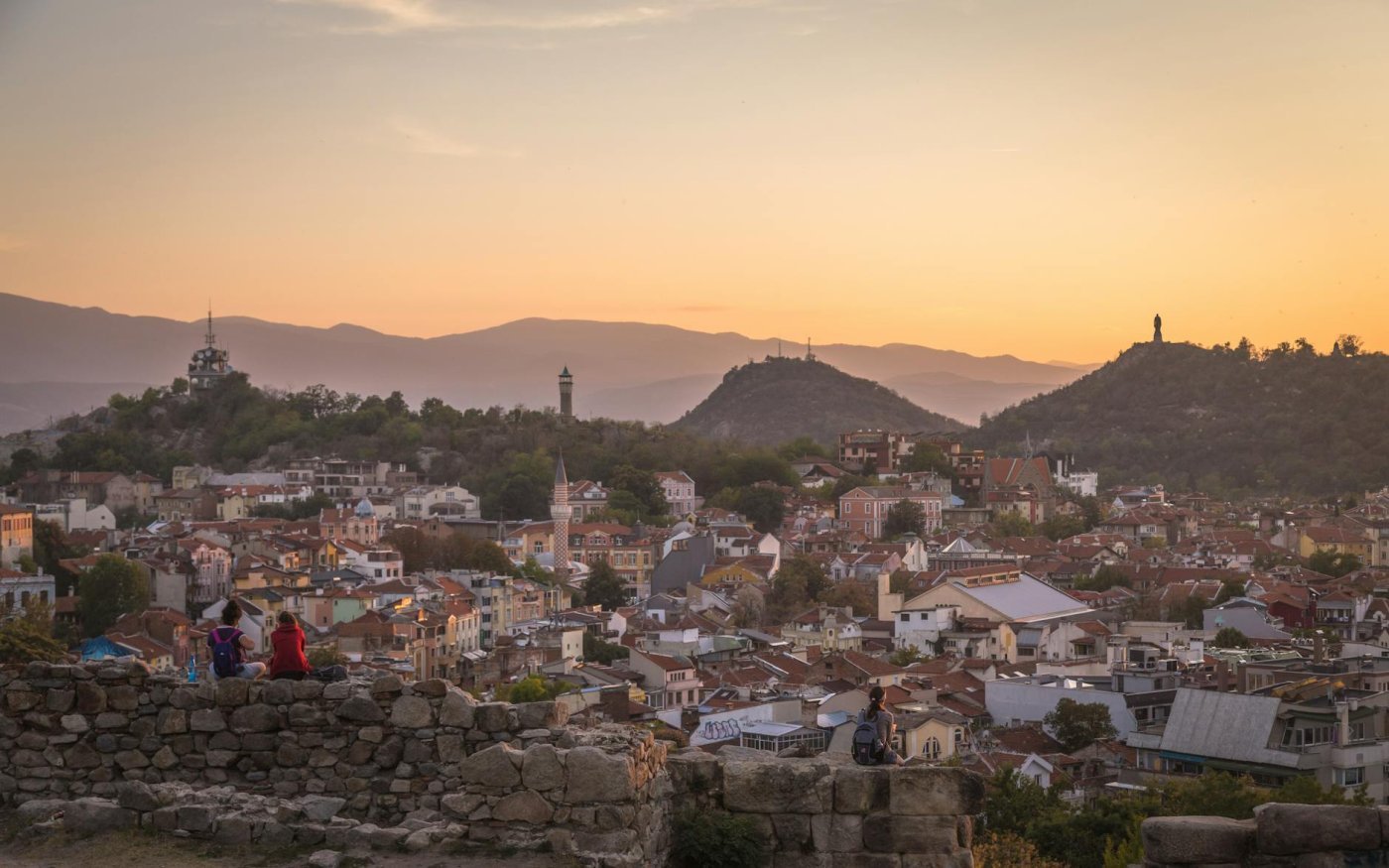
Veliko Tarnovo Travel Guide — Bulgaria's medieval capital, cascading down a gorge with fortress walls glowing at midnight
⏱ 11 min read📅 Updated 2026💶 € Budget✈️ Best: Apr–Sep
€25–50/day
Daily budget
Apr–Sep
Best time
3–5 days
Ideal stay
BGN (Lev)
Currency
Veliko Tarnovo tumbles down the limestone cliffs of the Yantra River gorge in a cascade of terracotta rooftops, medieval watchtowers and whitewashed merchant houses that have barely changed in centuries. The city hums with a particular energy — students debate over cheap coffee in pavement cafés while Orthodox bells echo off the canyon walls and swifts dart between the battlements of Tsarevets Fortress. When the famous sound-and-light show ignites the fortress each summer evening, projecting Bulgaria's entire turbulent history across the ancient stones, Veliko Tarnovo reveals itself as one of Europe's most theatrically dramatic cities. Few places on the continent stage history quite so literally or so beautifully.
Visiting Veliko Tarnovo rewards travellers who have grown tired of overrun Western European heritage cities, because this place has not yet been smoothed into a tourist conveyor belt. Things to do in Veliko Tarnovo range from exploring the labyrinthine Samovodska Charshia craft quarter to hiking the forested ridges above the Yantra — and virtually everything costs a fraction of what you would pay in Dubrovnik, Mostar or Plovdiv. The city's large university population keeps the restaurant and bar scene genuinely local, and day trips to the rock monasteries of Ivanovo or the rose-valley villages of the Balkan range are straightforward by car or bus. This is the Balkans at its most authentic and most affordable.
✦ Find your perfect destination
Is Veliko Tarnovo really your perfect match?
Answer 12 quick questions about your travel style, budget and dates — we match you with the destinations that fit you best, from 600+ worldwide.
Veliko Tarnovo was the capital of the Second Bulgarian Empire from 1185 to 1393, and the weight of that medieval glory still presses against every cobblestone. The hilltop fortress of Tsarevets dominates a peninsula almost entirely encircled by the Yantra River, making it one of the most naturally fortified citadels in the Balkans. Beyond history, Veliko Tarnovo delivers outstanding value: a restaurant meal rarely exceeds €8, a craft beer costs €1.50, and guesthouses with gorge-view terraces charge less than €40 per night. The combination of spectacular scenery, genuine cultural depth and rock-bottom prices is simply unmatched in this corner of Europe.
The case for going now: Veliko Tarnovo is quietly attracting a younger wave of digital-nomad travellers and slow-travel Europeans who discovered Bulgaria's interior during the past three years, yet major infrastructure investment — including the restored Tsarevets inner fortress path and improved bus links to Sofia — has been completed without any corresponding spike in prices or crowds. Go before the boutique-hotel developers fully arrive and while a sunset table on Gurko Street still feels like a local secret rather than a listed experience.
🏰
Tsarevets Fortress
Walk the fully restored ramparts of Bulgaria's greatest medieval citadel, perched on a river-looped peninsula. The nightly sound-and-light show transforms the ruins into a breathtaking open-air spectacle of fire and colour.
🛖
Artisan Quarter Stroll
Wander the Samovodska Charshia, a restored 19th-century craft market where potters, icon painters and woodcarvers work in open workshops. The cobbled alley is one of the best-preserved artisan streets in the entire Balkans.
🌄
Yantra Gorge Hiking
Trail down the steep forested banks of the Yantra River for jaw-dropping upward views of Tsarevets and Trapezitsa hills. The eco-trail takes roughly two hours and passes medieval church ruins and Asenova quarter.
🎨
Icon Painting Workshop
Join a hands-on icon painting class in one of the studio-workshops clustered near the old bazaar. Artists teach traditional Byzantine gilding and tempera techniques in sessions suitable for complete beginners.
Veliko Tarnovo's neighbourhoods — where to focus
Historic Core
Tsarevets & Asenova Quarter
The old town's spiritual heart, where the fortress peninsula dominates every view and the medieval Church of the Forty Martyrs stands in the riverside Asenova quarter below. Streets are narrow, stepped and almost car-free. This is where you should base yourself for the first night to feel the full theatrical drama of Veliko Tarnovo at dusk.
Artisan & Café Belt
Samovodska Charshia
The restored 19th-century bazaar strip running parallel to Gurko Street is lined with craft workshops, small galleries and relaxed cafés that serve Bulgarian wine by the glass. Come in the morning to watch potters and woodcarvers at work, then linger for lunch at one of the terrace restaurants overlooking the gorge below.
Student & Nightlife Hub
Gurko Street & Centre
The steep, winding Gurko Street is arguably the most photogenic lane in Bulgaria, its National Revival-era houses jutting out on wooden corbels over a near-vertical drop. Below on Stefan Stambolov Street, student bars, craft-beer taprooms and live-music venues keep the city buzzing well past midnight without feeling tourist-manufactured.
Local & Residential
Sveta Gora Hill
Climbing south of the centre, Sveta Gora (Holy Mountain) is a tranquil ridge above the city where the old literary academy once stood and where Bulgarian poets and monks traditionally sought inspiration. Today it offers the finest panoramic views of all three fortress hills and is far less visited than the main tourist corridors even in high summer.
Top things to do in Veliko Tarnovo
1. Tsarevets Fortress & Sound-and-Light Show
No Veliko Tarnovo itinerary is complete without spending at least half a day exploring Tsarevets Fortress, the medieval Bulgarian capital's defining monument. The fortress complex covers the entire Tsarevets Hill and includes the reconstructed Baldwin's Tower, the Church of the Blessed Saviour at the hilltop, and kilometre after kilometre of restored curtain walls that afford vertiginous views in every direction. Visit in the afternoon to walk the ramparts at leisure, read the interpretive panels explaining each Bulgarian tsar, and watch swifts wheel over the gorge. Then return after dark for the famous light-and-sound show, which projects laser displays and dramatic narration across the fortress walls — easily one of the most impressive open-air spectacles in Eastern Europe. Check the seasonal schedule at the gate, as performances typically run on Friday and Saturday evenings from May through October, with additional shows added in July and August.
2. Rock-Hewn Ivanovo Monastery Day Trip
Roughly 20 kilometres north of Veliko Tarnovo, the UNESCO-listed rock monasteries of Ivanovo are carved directly into vertical limestone cliffs above the Rusenski Lom River and contain 14th-century frescoes of extraordinary painterly quality that influenced the entire Tarnovo School of art. The site is smaller than its fame suggests, which means you will rarely share the narrow wooden walkways with more than a handful of other visitors — a remarkable contrast to the Meteora monasteries in Greece, which attract thousands daily. The frescoes visible inside the Chapel of the Virgin remain vivid despite seven centuries of exposure, with expressive Byzantine faces unlike anything in the region. Reach Ivanovo by local bus from Tarnovo's main station to the town of Rousse direction, then walk 3 km from the village, or hire a taxi for a half-day round trip that costs roughly €30 total. Combine with a lunch stop in the Rusenski Lom Nature Park for a genuinely memorable day out from Veliko Tarnovo.
3. Samovodska Charshia Craft Exploration
The Samovodska Charshia is the restored 19th-century artisan bazaar of Veliko Tarnovo and one of the most rewarding places in the entire Balkans to watch traditional crafts being made and to buy directly from the maker. The long cobbled street is lined with open-fronted workshops where you can watch a potter throw a clay vessel, observe an icon painter applying gold leaf, or commission a hand-carved wooden panel to take home. Unlike the souvenir-shop strips that have replaced genuine craft quarters in most Balkan tourist towns, the Charshia retains real working studios where the craftspeople have often inherited their trade across generations. Arrive on a weekday morning for the most active workshops, and allow time to duck into the small museums of the National Revival house tucked between the workshops. Several studios offer short introductory classes in pottery or icon painting that can be booked without advance notice during quieter months.
4. Trapezitsa Hill & Arbanasi Village
Directly opposite Tsarevets across the Yantra gorge, Trapezitsa Hill was the aristocratic and religious quarter of medieval Tarnovo and is far less visited than its famous neighbour despite containing the foundations of more than seventeen medieval churches and a small but absorbing on-site museum. The climb takes about twenty minutes from the town centre and rewards with lateral views across to the illuminated Tsarevets battlements — a perspective most visitors never see. From Trapezitsa, a short taxi ride or a pleasant 4-kilometre uphill walk leads to Arbanasi, a fortified village of extraordinary 17th-century merchant houses and frescoed churches sitting on the plateau above the city. The Nativity Church in Arbanasi contains Bulgaria's most elaborate interior iconostasis and ceiling fresco cycle, painted in the 1640s and covering every square centimetre of wall and ceiling in vivid narrative scenes. Budget at least three hours for Arbanasi and consider timing your visit for the small weekly market on Saturday mornings.
What to eat in Central Bulgaria and the Tarnovo region — the essential list
Kavarma
Bulgaria's beloved slow-cooked stew of pork or chicken with onions, peppers and mushrooms, sealed and baked in an earthenware pot. In Tarnovo, the local version often includes local white wine and walnuts, giving it a distinctive richness.
Shopska Salata
The national salad of diced tomatoes, cucumbers, roasted peppers and white sirene cheese grated generously on top. In Veliko Tarnovo restaurants, sirene from local Balkan mountain dairies is noticeably sharper and creamier than its supermarket equivalent.
Banitsa
A flaky filo pastry stuffed with a mixture of whisked eggs and white cheese, baked until golden and served hot for breakfast across Tarnovo's bakeries. The definitive Bulgarian street food, eaten alongside a glass of cold boza or ayran.
Tarator
A cold soup of strained yoghurt, diced cucumber, garlic, dill and walnut oil that is uniquely Bulgarian and indispensable in summer heat. Thick, tangy and impossibly refreshing, it appears on virtually every restaurant menu in Tarnovo from May onwards.
Kebapche
Minced pork and beef seasoned with cumin and black pepper, shaped into finger-sized rolls and grilled over charcoal. Sold in specialist grillhouses across the Tarnovo centre for under €3, usually accompanied by a shopska salad and a slice of bread.
Melindrashki
A regional Tarnovo specialty of pan-fried dough rounds served with honey, walnut and powdered sugar, traditionally prepared for feast days and now found in the old-town restaurants as a dessert or indulgent breakfast option.
Where to eat in Veliko Tarnovo — our top 4 picks
Fine Dining
Restaurant Shtastlivetsa
📍 ul. Stefan Stambolov 79, Veliko Tarnovo
Perched on a terrace cantilevered directly over the Yantra gorge, Shtastlivetsa is Veliko Tarnovo's most celebrated restaurant and earns its reputation with refined Bulgarian cuisine — think slow-braised lamb with rose hip, or grilled Danube catfish with local herb butter. The gorge panorama from the outdoor tables is genuinely unforgettable, especially at sunset. Book ahead in summer.
Fancy & Photogenic
Restaurant Ego
📍 ul. Gurko 19, Veliko Tarnovo
Occupying a restored National Revival house on the iconic Gurko Street, Ego pairs an atmospheric vaulted interior with a menu that blends Bulgarian classics and European bistro dishes. The outdoor balcony tables hanging over the canyon are among the most photographed dining spots in the entire country. Exceptional local wines at very reasonable prices.
Good & Authentic
Mehana Pri Hadji Nikoli
📍 ul. Nikoli Pikolo 17, Veliko Tarnovo
A traditional Bulgarian mehana tavern set inside one of the oldest preserved merchants' houses in the old town, serving no-frills grilled meats, kavarma and shopska salad at prices that feel closer to 2005 than 2026. The interior walls are hung with folk embroidery and antique copper vessels, and rakija comes complimentary with every main course.
The Unexpected
Soul Kitchen
📍 ul. Bacho Kiro 4, Veliko Tarnovo
A bright, plant-filled café-restaurant run by young Tarnovo locals that serves imaginative vegetarian and vegan dishes — roasted aubergine with tahini, chickpea stews, grain bowls with Bulgarian pickles — in a city where meat-heavy mehanas still dominate. The all-day brunch menu and reliable espresso make it an excellent base for digital nomads.
Veliko Tarnovo's Café Culture — top 3 cafés
The Institution
Café Etara
📍 ul. Stefan Stambolov 53, Veliko Tarnovo
The old-town café institution beloved by Tarnovo's academics and writers for decades, serving strong Bulgarian coffee in small copper džezves alongside homemade walnut cake. The interior is lined with framed photographs of the city's medieval past, and the terrace faces directly across the gorge towards Trapezitsa Hill. Arrive early on weekday mornings for the best seat.
The Aesthetic Hub
Trud & Byal Lav Gallery Café
📍 ul. Rakovski 3, Veliko Tarnovo
A double-function art gallery and specialty-coffee bar in the centre of Veliko Tarnovo that rotates exhibitions of local painters and photographers every six weeks. The baristas take third-wave coffee seriously — single-origin pour-overs alongside excellent Bulgarian rose tea — and the high-ceilinged space with exposed brick feels more Berlin than Balkans.
The Local Hangout
Caffe Bar Veda
📍 ul. Nezavisimost 14, Veliko Tarnovo
The unpretentious student favourite near the university campus where a cappuccino costs under €1 and the outdoor terrace fills with Tarnovo locals from mid-morning to late evening. No tourist menus, no English-language chalk boards — just strong coffee, cold Zagorka beer and an authentic slice of daily life in Bulgaria's most historically significant city.
Best time to visit Veliko Tarnovo
Jan
Feb
Mar
Apr
May
Jun
Jul
Aug
Sep
Oct
Nov
Dec
Peak season (Apr–Sep) — warm sunny days, fortress shows running, outdoor terraces fully openShoulder season (Mar & Oct) — fewer crowds, cooler weather, good value accommodationOff-season (Nov–Feb) — cold and quiet, most terrace venues closed, atmospheric but limited light-show schedule
Veliko Tarnovo events & festivals 2026
Whether you're planning around a specific celebration or simply want to know what's happening, this guide covers the best events and festivals in Veliko Tarnovo — from major annual traditions to cultural highlights worth timing your trip around.
May 2026culture
Days of Culture of Tarnovo
Held every May across Veliko Tarnovo's old town, this week-long civic festival fills the Charshia and fortress area with open-air theatre, traditional music performances and folk craft exhibitions.
June 2026culture
Festival of the Spiritual and Spiritual Music
An annual June gathering of Orthodox choirs, chamber orchestras and early-music ensembles performing in the medieval churches and fortress courtyards of Veliko Tarnovo.
July 2026music
Tarnovo Blues Festival
The Tarnovo Blues Festival draws Bulgarian and international blues acts to outdoor stages in the city centre each July, combining afternoon workshops with evening concerts beneath the illuminated fortress walls. The festival has grown steadily in reputation and now attracts visitors from across Central Europe alongside dedicated local blues fans.
August 2026culture
International Folklore Festival Tarnovo
Dance and music troupes from across Bulgaria and neighbouring Balkan countries converge on Veliko Tarnovo in August for a week of traditional folk performances. Street parades through the old town in full regional costume are among the most visually spectacular free events in Bulgaria — a highlight for photographers visiting Veliko Tarnovo in summer.
March 2026culture
Liberation Day Celebrations (3rd March)
Bulgaria's National Liberation Day on 3rd March is marked with particular solemnity and pride in Veliko Tarnovo, since the city served as the capital where Bulgarian statehood was re-established after Ottoman rule. Wreath-laying ceremonies at the Tsarevets monument and torchlight processions through the old town make this an unexpectedly moving civic event.
July 2026religious
Feast of Sts Peter and Paul at Arbanasi
The village of Arbanasi above Veliko Tarnovo celebrates its patron saints in late June or early July with a liturgical service inside the Nativity Church followed by an outdoor feast of traditional foods and folk music. The combination of sacred ceremony and village festivity in the frescoed churchyard is a rare and authentic religious cultural experience.
September 2026culture
Tarnovo Film Nights
An open-air film programme screens European and Bulgarian cinema on a projected screen in the Tsarevets fortress courtyard each September, combining film culture with one of the most dramatic natural cinema settings on the continent. Screenings run from dusk with the fortress walls as a backdrop — a completely unique cinematic experience.
December 2026market
Tarnovo Christmas Market
The central square of Veliko Tarnovo transforms into a traditional Christmas market in December with stalls selling handmade wooden toys, Bulgarian honey wines, ceramic ornaments and rose-oil cosmetics. The market runs for three weekends and is surrounded by light installations that echo the summer fortress show on a more intimate winter scale.
April 2026culture
St George's Day Spring Festival
Bulgaria's most popular folk holiday on 6th May (St George's Day) is celebrated across the Tarnovo region with lamb roasts, outdoor gatherings and folk musicians performing on village greens above the city. Arbanasi and the nearby Balkan foothills villages hold the most traditional celebrations, welcoming curious visitors without reservation.
October 2026culture
Autumn Harvest Festival, Arbanasi
Each October the plateau village of Arbanasi celebrates the wine and walnut harvest with tastings, grape-treading demonstrations and traditional cooking workshops inside the old merchant houses. The autumn foliage framing the village and fortress panorama below makes October one of the most visually rewarding times for visiting Veliko Tarnovo and its surroundings.
Hostel dorm or family guesthouse, banitsa breakfast, mehana meals, local buses and free fortress-hill walks.
€€ Mid-range
€35–65/day
Gorge-view guesthouse room, restaurant lunches and dinners, Tsarevets entrance, taxi day trips, light-show tickets.
€€€ Luxury
€65+/day
Boutique hotel suite, Shtastlivetsa dining, private guide, car hire for Ivanovo and Rose Valley, wine tastings.
Getting to and around Veliko Tarnovo (Transport Tips)
By air: The most practical gateway for Veliko Tarnovo is Sofia Airport (SOF), served by direct flights from most major European hubs including London, Amsterdam, Berlin, Paris and Vienna. Alternatively, Varna Airport (VAR) on the Black Sea coast is roughly the same driving distance and useful if you plan to combine Tarnovo with a coastal stay. Budget airlines including Ryanair and Wizz Air offer competitive fares to both airports year-round.
From the airport: From Sofia Airport, Veliko Tarnovo is approximately 220 kilometres east, reachable by direct bus from Sofia's Yug Bus Terminal (around 3.5 hours, under €10) or by rental car on the A2 motorway in roughly 2.5 hours. There is no direct train, but a connection via Gorna Oryahovitsa — the nearest railway junction, 10 km from Tarnovo — works well if you enjoy scenic Balkan rail travel. Taxis from Gorna Oryahovitsa station to the old town cost under €5.
Getting around the city: Veliko Tarnovo's compact old town is best explored entirely on foot — the steep cobbled streets and stepped lanes are inaccessible to cars in any case. Local buses connect the centre to Arbanasi village and the Gorna Oryahovitsa railway station for under €1 per journey. Taxis are inexpensive by European standards (a cross-city fare rarely exceeds €3) and widely available via the local Taxi OK app. Renting a car for a day to reach Ivanovo, Dryanovo or Elena costs from €25 through local agencies near the bus terminal.
Transport Safety & Scam Prevention:
Agree taxi fares before departure: While Tarnovo taxis are generally honest, a small number of drivers near the bus terminal quote inflated rates to new arrivals. Always ask for the meter to be turned on, or agree a specific price before getting in — a ride across the old town should never exceed €4.
Book light-show tickets in advance: The Tsarevets sound-and-light show sells out on summer weekends, and touts occasionally offer tickets at marked-up prices outside the fortress gate. Purchase your tickets directly at the Tsarevets ticket office earlier in the afternoon on the day of your visit to avoid paying over the odds.
Withdraw Bulgarian Lev locally: Dynamic currency conversion offered by some Tarnovo ATMs and currency-exchange kiosks near the tourist area can add 5–8% to your rate. Always choose to be charged in Bulgarian Lev rather than your home currency, and use ATMs attached to major Bulgarian banks such as DSK or UniCredit Bulbank for the best exchange rates.
Do I need a visa for Veliko Tarnovo?
Visa requirements for Veliko Tarnovo depend on your nationality. Select your passport below for an instant answer — based on the Passport Index dataset for entry into Bulgaria.
ℹ️ Indicative only. Always verify with the official consulate before booking. Data: Passport Index, April 2026.
For detailed requirements, documentation checklists and processing times by nationality: TravelDoc →
Search & Book your trip to Veliko Tarnovo
Find the best flight routes and hotel combinations using our partner Kiwi.com.
Frequently Asked Questions
Is Veliko Tarnovo safe for tourists?
Veliko Tarnovo is one of the safest cities in Bulgaria and among the most visitor-friendly destinations in the Balkans. Petty theft is rare compared to Western European tourist cities, and the old town's steep streets and guesthouse-heavy accommodation mean the area retains a genuinely residential, community feel rather than the anonymity of mass-tourism zones. Solo travellers, including women travelling alone, consistently report feeling comfortable here. Standard precautions — keeping valuables secure, being alert around the bus terminal at night — apply as in any European city, but Tarnovo requires no special vigilance.
Can I drink the tap water in Veliko Tarnovo?
Tap water in Veliko Tarnovo is treated to EU safety standards and is technically safe to drink. However, many local residents and long-term visitors prefer bottled mineral water for taste reasons — Bulgaria has excellent affordable mineral water brands such as Devin and Bankya available everywhere for under €0.50 per litre. Restaurants automatically serve tap water on request, and you will not encounter any stomach issues from drinking it. The water hardness in the Tarnovo region is moderate.
What is the best time to visit Veliko Tarnovo?
The best time to visit Veliko Tarnovo is from late April through September, with May, June and September offering the ideal balance of warm weather, lower crowds and the full programme of fortress sound-and-light shows. July and August are the peak months when the city is liveliest but also most visited. Spring is particularly beautiful when wildflowers carpet the Yantra gorge slopes and the Balkan foothills turn vivid green. October remains a rewarding shoulder month with golden autumn foliage and the harvest festivals in Arbanasi, while winter is cold and quiet, with limited evening programming but excellent accommodation prices.
How many days do you need in Veliko Tarnovo?
Three days is the minimum to experience Veliko Tarnovo properly — enough time for a thorough Tsarevets fortress visit, the sound-and-light show, a wander through the Samovodska Charshia, and at least one meal on a gorge-view terrace. Five days allows you to add the Arbanasi village churches, a day trip to the UNESCO Ivanovo rock monasteries, and a hike through the Yantra gorge without feeling rushed. Travellers planning a Veliko Tarnovo itinerary of seven days or more can extend to Dryanovo Monastery, Elena, the Rose Valley at Kazanlak, and even a Black Sea coast detour — the city makes an excellent central base for exploring central and northern Bulgaria.
Veliko Tarnovo vs Plovdiv — which should you choose?
Both are extraordinary Bulgarian heritage cities, but they offer genuinely different experiences. Plovdiv is more cosmopolitan, with a larger Kapana creative district, a more developed restaurant and cocktail-bar scene, and a Roman amphitheatre that hosts major international concerts and the Plovdiv Opera Verdi festival. Veliko Tarnovo is more dramatically situated, more medieval in atmosphere, and considerably less visited — if the Tsarevets sound-and-light show and the raw gorge setting appeal more than urban café culture, Tarnovo wins decisively. Budget travellers will find both cities equally affordable. The ideal Bulgaria itinerary visits both: Plovdiv first by direct bus or train from Sofia, then Tarnovo as the journey continues east.
Do people speak English in Veliko Tarnovo?
English is spoken to a good standard in Veliko Tarnovo's tourist-facing businesses — hotels, guesthouses, restaurants on Gurko and Stambolov streets, and most craft workshops in the Charshia area. The city's substantial student population means younger Bulgarians generally speak confident English, and navigating the old town with English alone is straightforward. Away from the tourist core — local buses, the market hall, neighbourhood bakeries — you may encounter limited English, but Bulgarians are almost universally helpful and patient with gestures and translation apps. Learning a few Bulgarian phrases (blagodarya for thank you, molya for please) is warmly appreciated.
★ Hidden Gems Weekly
Like this? One place per week, in your inbox.
No spam, no fluff — just one underrated destination, every Tuesday.
Hand-picked and verified by Max, who founded Vacanexus from Luxembourg in 2026. No sponsorships, no paid placements. Every recommendation — restaurants, neighbourhoods, things to do — is selected for authenticity over popularity.