History & Culture · Uzbekistan · Bukhara Region 🇺🇿
Bukhara Travel Guide — The Silk Road city that time forgot — exploring Bukhara's living medieval medina
⏱ 11 min read📅 Updated 2026💶 €€ Mid-range✈️ Best: Mar–Apr
€50–120/day
Daily budget
Mar–Apr & Oct–Nov
Best time
3–5 days
Ideal stay
UZS (Uzbek Som)
Currency
Stand beneath the Kalon Minaret at dusk and you begin to understand why Bukhara has transfixed travellers for over a thousand years. The warm terracotta glow of baked-brick minarets deepens to amber as the call to prayer rolls across a skyline almost unchanged since the medieval era. Camel traders and Persian scholars once navigated the same labyrinthine lanes you walk today — past domed bazaars, madrassa courtyards draped in blue tilework, and tea houses where time appears to have simply stopped. Bukhara is not a reconstructed heritage theme park but a living, breathing city where residents shop in 16th-century covered markets and silk weavers still thread looms by hand. With 140 protected monuments packed into a single walkable old city, Bukhara rewards slow exploration at every turn.
Visiting Bukhara is a fundamentally different experience from touring other Central Asian cities. Where Samarkand dazzles with monumental scale and Khiva can feel overly curated, Bukhara strikes a rare balance between authentic community life and world-class Islamic architecture. Things to do in Bukhara range from climbing 9th-century fortresses to bargaining for hand-stitched suzani embroidery, from moonlit strolls around the Lyab-i Hauz pool to tasting plov ladled straight from a giant cast-iron kazan. The old city is a UNESCO World Heritage Site, yet entry to most monuments costs just a few dollars. Uzbekistan's rapid tourism infrastructure improvements — better flights, renovated riads-as-hotels, streamlined e-visas — have made Bukhara more accessible than ever, without yet overwhelming the intimate character that makes it so extraordinary.
✦ Find your perfect destination
Is Bukhara really your perfect match?
Answer 12 quick questions about your travel style, budget and dates — we match you with the destinations that fit you best, from 600+ worldwide.
Bukhara belongs on your travel list because it offers something increasingly rare: genuine historical immersion without tourist saturation. The city's 140 monuments are not corralled behind fences but woven into neighbourhood streets where children play and bakers pull non bread from clay ovens. Staying in a converted caravanserai — many of Bukhara's best guesthouses occupy 16th- and 17th-century merchant lodges — connects you physically to the Silk Road era in a way no museum exhibit can replicate. Bukhara's crafts tradition is equally compelling: master craftsmen continue producing ikat silk, hand-painted ceramics, and carved wooden panels using techniques passed down across centuries.
The case for going now: Bukhara is experiencing a quiet renaissance right now. Uzbekistan introduced a simplified e-visa in 2024, slashing entry bureaucracy for over 90 nationalities, while new direct flights from Istanbul, Dubai, and several European hubs have cut travel times dramatically. Hotel quality in the old city has surged, with boutique caravanserai conversions now offering genuine comfort at mid-range prices. Visit in 2026 before the inevitable crowd surge catches up with the city's still-intimate scale.
🕌
Kalon Minaret
The 47-metre brick minaret built in 1127 is so magnificent that Genghis Khan reportedly ordered it spared during his otherwise total destruction of Bukhara. Climb it at dawn for panoramic views over the old city's rooftop sea.
🛍️
Domed Bazaars
Bukhara's four 16th-century trading domes — Toki Sarrofon, Toki Telpak Furushon, Toki Zargaron, and Tim Abdullah Khan — are still active markets selling spices, silk, and jewellery under their original muqarnas vaults.
🌙
Lyab-i Hauz at Night
The 17th-century pool at Lyab-i Hauz transforms after dark into Bukhara's social heart, with teahouses and restaurants spilling onto its mulberry-tree-shaded banks — perfect for lingering over green tea and watching the reflections of minarets on the water.
🎨
Silk & Ikat Workshops
Bukhara's artisan workshops produce ikat-dyed silk using centuries-old resist techniques. Visit looms in the old city where craftsmen stretch thread by hand, then browse the resulting cloth — deep indigo, pomegranate red, saffron gold — in nearby studio shops.
Bukhara's neighbourhoods — where to focus
Historic Core
Old City (Shahriston)
The walled heart of Bukhara holds the overwhelming majority of the city's 140 monuments within a compact, walkable radius. Labyrinthine alleys connect madrassa courtyards, caravanserai hotels, and working mosques. This is where most visitors base themselves — and rightly so, since the atmospheric density here is unmatched anywhere in Central Asia.
Landmark District
Kalon Complex Area
The neighbourhood clustered around the Kalon Minaret, Kalon Mosque, and Mir-i Arab Madrassa forms Bukhara's architectural showpiece. Wide flagstone squares between the monuments fill with local families in the evenings. Several of the best carpet and ceramics shops occupy the surrounding streets.
Ancient Fortress
Ark Citadel Quarter
The massive Ark Fortress — inhabited continuously for at least 1,400 years — anchors the northwestern corner of the old city. The surrounding neighbourhood retains a quieter, more residential character than the bazaar districts. The Bolo Hauz Mosque directly opposite the Ark's main gate is one of Bukhara's most photogenic monuments.
Artisan Village
Sitorai Mokhi Khosa Area
This district on the northern edge of the old city surrounds the early 20th-century Summer Palace of the last Bukhara emir. The lanes between the palace and the main bazaars are home to independent ikat studios, woodcarving workshops, and small family guesthouses that offer a calmer alternative to the central tourist bustle.
Top things to do in Bukhara
1. Explore the Ark Fortress
The Ark of Bukhara is one of Central Asia's most ancient and impressive structures — a massive mud-brick citadel that served as the seat of Bukharan rulers from at least the 5th century AD right up to the 1920 Soviet bombardment that ended the emirate. Its great gate, flanked by two squat towers, opens onto a ramp that climbs through successive courtyards once housing the throne room, royal mosque, treasury, and prison (where the 19th-century British spies Stoddart and Conolly were infamously executed). Today a well-curated museum inside displays coins, robes, and weaponry that chart Bukhara's extraordinary historical arc. The views from the upper ramparts across the old city roofscape — a jumble of domes, minarets, and flat-roofed houses — are among the best in Uzbekistan. Allow at least two hours to do the Ark justice.
2. Visit the Samanid Mausoleum
Built between 892 and 943 AD, the Samanid Mausoleum is the oldest intact Islamic building in Central Asia and one of the most technically remarkable structures of the medieval world. Its fired-brick exterior achieves an almost miraculous visual effect: the brickwork is laid in twelve different decorative patterns that change the appearance of the building as the angle of sunlight shifts throughout the day — an architectural trick that predates elaborate tilework by several centuries. The mausoleum stands in a quiet park on the western edge of the old city, slightly removed from the main tourist circuit, giving it a pleasantly contemplative atmosphere. It is also the resting place of Ismail Samani, founder of the Samanid dynasty and one of the great patrons of Persian literature and science. Admission costs almost nothing; the experience is priceless.
3. Wander the Trading Domes
Bukhara's four surviving 16th-century trading domes — known collectively as the Toks — are among the best-preserved bazaar structures anywhere in the Islamic world. Each dome was purpose-built for a specific trade: Toki Sarrofon for money-changers, Toki Telpak Furushon for hat merchants, Toki Zargaron for jewellers, and Tim Abdullah Khan for silk traders. Unlike the sanitised souvenir markets of many heritage cities, the Bukhara domes continue to function as genuine commercial spaces where locals and tourists haggle side by side over spice sacks, embroidered skullcaps, and hand-knotted suzani wall hangings. The interiors are naturally climate-controlled by the thick brick vaulting, remaining pleasantly cool even in summer. Arrive in the morning when light filters through the oculus apertures and the spice aromas are freshest for the most atmospheric Bukhara shopping experience.
4. Day Trip to Chor Bakr Necropolis
Just five kilometres west of central Bukhara, the Chor Bakr necropolis is one of the most atmospheric and undervisited sites in the entire Bukhara region. The complex — a vast ensemble of mosque, khanqah, madrassa, and hundreds of tombs — was built in the 1560s around the burial site of the Abu Bakr Muhammad Saad family, considered descendants of the Prophet. It served as the spiritual heart of the Bukharan emirate for centuries and remains a place of active pilgrimage today. The scale is extraordinary: the complex spreads across a hillside dotted with carved stone turbans marking the graves of Sufi sheikhs and scholars. Wandering its overgrown lanes at sunrise, when local families arrive to pray and birdsong fills the mulberry trees, is one of the most genuinely moving things to do in Bukhara. Hire a local taxi for the return journey and ask to stop at the Bahauddin Naqshband complex en route.
What to eat in the Bukhara Region — the essential list
Bukhara Plov
Bukhara's version of Central Asia's defining dish is cooked with chickpeas, raisins, and quince alongside the standard carrots and lamb, giving it a subtle sweetness. It is traditionally served communally from a shared platter on Friday mornings after mosque.
Non Bread
Bukharan non is a round, stamped flatbread baked in a tandoor clay oven. The city's bakers are renowned across Uzbekistan for the distinctive crunch of their crust and the pillowy chew of the interior — best eaten warm, straight from the oven, with nothing at all.
Shurpa Soup
A robust lamb and vegetable broth served in wide ceramic bowls, shurpa is Bukhara's all-weather comfort food. The long-simmered stock carries deep notes of cumin and coriander; chunks of potato, turnip, and bone-in lamb make it a full meal in itself.
Samsa
Bukhara's triangular or round baked pastries are filled with minced lamb, onion, and fat — a combination that produces an almost impossibly juicy interior encased in shattering pastry. Sold from street-side tandoor stalls for cents each, they make the ideal mid-morning snack while exploring the old city.
Kaymak with Honey
Thick clotted cream drizzled with Uzbek mountain honey is the definitive Bukhara breakfast accompaniment, spread lavishly on warm non bread. The kaymak here is denser and richer than Georgian or Turkish equivalents — closer to crème fraîche with fat globules still visible.
Mastava
A porridge-thick rice soup cooked with lamb, tomatoes, and herbs, mastava is what Bukhara locals eat when they want something sustaining but lighter than plov. It occupies every teahouse menu in the old city and is served with a generous scattering of fresh dill.
Where to eat in Bukhara — our top 4 picks
Fine Dining
Minzifa Restaurant
📍 Kazak St 18, Bukhara Old City
Set in a beautifully restored 19th-century courtyard house with carved wooden columns and a vine-shaded terrace, Minzifa serves elevated Uzbek cuisine with sophisticated plating. The tasting menu — featuring duck plov, stuffed quince, and mulberry wine — is the finest sit-down meal available in Bukhara. Reservations are strongly recommended in high season.
Fancy & Photogenic
Lyabi-House Restaurant
📍 Lyab-i Hauz Square, Bukhara
The terrace tables at Lyabi-House look directly across the 17th-century pool toward the Nadir Divan-Begi Madrassa — arguably the most photogenic restaurant setting in all of Central Asia. The menu covers Uzbek classics competently, but it is the location, candlelit at night with reflections shimmering on the water, that makes this unmissable.
Good & Authentic
Chaikhaneh Farrukh
📍 Near Kalon Mosque, Bukhara Old City
A no-frills teahouse beloved by locals for its plov, shurpa, and samsa served at communal tables. There is no printed menu — just a blackboard of daily dishes and a proprietor who brings what is freshest. Prices are a third of what you pay in tourist-facing restaurants, and the food is substantially better.
The Unexpected
Silk Road Spice House
📍 Toki Zargaron Bazaar area, Bukhara
This hybrid spice merchant and café occupies a vaulted brick chamber near the jewellers' dome, serving spiced green tea, walnut-stuffed dried apricots, and unusual fusion small plates inspired by medieval Silk Road trade ingredients — saffron, dried barberries, black cumin. An inventive stop unlike anything else in Bukhara.
Bukhara's Café Culture — top 3 cafés
The Institution
Chaikhana at Lyab-i Hauz
📍 Lyab-i Hauz Pool, Bukhara
The ancient mulberry trees overhanging the Lyab-i Hauz pool have shaded tea-drinkers for centuries, and the low wooden platforms around the pool edge remain Bukhara's definitive gathering spot. Order green tea in a blue ceramic pot, decline the tourist menus, and simply watch the old city pass by for an hour.
The Aesthetic Hub
Art Café Wishbone
📍 Near Nadir Divan-Begi Madrassa, Bukhara
A whitewashed courtyard café doubling as a gallery for contemporary Uzbek artists, Wishbone serves proper espresso — rare in Bukhara — alongside carrot cake and freshly squeezed pomegranate juice. The ceramic and textile artwork displayed on its walls is for sale, making it the city's best spot for handmade gifts.
The Local Hangout
Navruz Café
📍 Khakikat Street, Bukhara Old City
Tucked down a residential alley away from the main monument circuit, Navruz is where Bukhara's students and young professionals come for tea, chess, and cheap lagman noodle soup. The interior is simple — plastic chairs, tiled walls — but the atmosphere is entirely genuine and the owners speak enough English to navigate the menu together.
Best time to visit Bukhara
Jan
Feb
Mar
Apr
May
Jun
Jul
Aug
Sep
Oct
Nov
Dec
Best season (Jan–Apr & Dec) — mild days, low crowds, ideal sightseeing temperatures between 10–22°CShoulder season (Oct–Nov) — warm autumn light, harvest festivals, comfortable but busierSummer heat (May–Sep) — temperatures exceed 38°C, monuments sizzle, only for determined heat-tolerant travellers
Bukhara events & festivals 2026
Whether you're planning around a specific celebration or simply want to know what's happening, this guide covers the best events and festivals in Bukhara — from major annual traditions to cultural highlights worth timing your trip around.
March 2026culture
Navruz Spring Festival
Navruz, the Persian New Year celebrated on 21 March, is Bukhara's most joyful public holiday. The old city fills with street music, sumalak cooking ceremonies, and enormous communal plov gatherings. Things to do in Bukhara in March centre on this extraordinary celebration of spring renewal, which has been observed here for over 3,000 years.
April 2026culture
Silk & Spices International Festival
Bukhara's flagship annual festival transforms the old city into a living Silk Road tableau. Craftspeople, musicians, and folk performers from across Central Asia and beyond gather in the historic squares. The best Bukhara festivals for international visitors, this event showcases ikat weaving, ceramics, and Sufi music in spectacular monument settings.
May 2026music
Sharq Taronalari Pre-Events
The Sharq Taronalari (Melodies of the East) festival traditionally centres on Samarkand but generates associated musical performances across Uzbekistan including Bukhara. Expect impromptu classical maqam concerts in madrassa courtyards and teahouse sessions featuring traditional doira drum and dutar lute players.
June 2026culture
Bukhara Old City Art Days
A week-long open-air exhibition in which contemporary Uzbek visual artists install works within and around Bukhara's historic monuments. The contrast of modern painting against 12th-century brickwork draws photographers and art collectors from across Europe and Russia, with evening vernissages held in caravanserai courtyards.
August 2026music
Sharq Taronalari Festival
The biennial Sharq Taronalari international music festival, hosted primarily in Samarkand but with satellite events in Bukhara, gathers traditional musicians from over 40 countries. Bukhara's Nadir Divan-Begi Madrassa courtyard hosts evening performances of maqam, Andalusian, and Persian classical traditions.
September 2026culture
Bukhara Culinary Heritage Days
An autumn food festival celebrating the traditional plov, non bread, and confectionery traditions of the Bukhara region. Master cooks compete in the Ark Fortress forecourt with kazan pots as tall as a person, while workshops teach visitors the art of samsa pastry, dried fruit preparation, and spice blending.
October 2026market
Autumn Craft Bazaar
As autumn cools the old city, Bukhara's artisan community stages its largest annual outdoor market in the squares around the Kalon Mosque. Ikat silk, hand-knotted carpets, suzani embroidery, and carved woodwork are sold directly by the craftspeople who made them — far better value than year-round tourist shops.
November 2026culture
Bukhara Photography Festival
An international photography festival using the old city's monuments as both backdrop and gallery space. Large-format prints of Bukhara and Central Asian subjects are installed on the facades of historic buildings, while workshops and portfolio reviews attract photographers from across Europe and the Middle East.
December 2026religious
Mawlid al-Nabi Observances
The Prophet Muhammad's birthday is marked in Bukhara with particular solemnity and communal warmth. The city's active mosques hold special prayers and readings, local families share festive foods with neighbours, and the atmosphere in the old city acquires a reflective, intimate quality quite unlike the busier tourist seasons.
January 2026culture
Winter Bukhara Open Doors
January is Bukhara's quietest tourism month, when several heritage sites and private caravanserai collections open their normally closed doors to small groups. The cold, clear winter light is exceptional for monument photography, and local families host winter plov gatherings that visitors can join through guesthouse connections.
Guesthouse dorm or basic private room, teahouse meals, public minibus transport, free monument entry where possible.
€€ Mid-range
€50–120/day
Boutique caravanserai hotel, restaurant dinners, taxi transport, all monument admissions, plus one guided tour or workshop.
€€€ Luxury
€120+/day
Restored heritage hotel suite, private guide, fine dining at Minzifa-level restaurants, private car transfers and day trips.
Getting to and around Bukhara (Transport Tips)
By air: Bukhara International Airport (BHK) receives direct flights from Tashkent (daily, 1 hour), Istanbul (several weekly with Turkish Airlines), Dubai (flydubai), Moscow, and several other regional hubs. From European cities, the most common routing is via Istanbul or Dubai with a single connection. Total flight time from Western Europe is typically 7–9 hours including the layover.
From the airport: Bukhara airport sits just 5 kilometres from the old city centre — a 10–15 minute taxi ride costing around 30,000–50,000 UZS (roughly €2–4). Agree the price before entering the cab as meters are rare. Some caravanserai hotels offer free or subsidised airport pickup if booked in advance — always worth asking. There is no reliable bus service from the terminal.
Getting around the city: The Bukhara old city is almost entirely walkable — the entire walled historic district can be crossed on foot in under 25 minutes. Taxis (flagged or booked via Yandex Go, which works well in Bukhara) cost €1–3 for most in-city journeys. For outlying sites such as Chor Bakr or Bahauddin Naqshband, negotiate a half-day taxi rate of around €15–25, which is far more convenient than any public option.
Transport Safety & Scam Prevention:
Agree taxi prices upfront: Metered taxis are uncommon in Bukhara. Always agree the total fare in Uzbek Som before you get in — drivers sometimes quote in dollars then convert unfavourably. The Yandex Go app offers transparent pricing and eliminates negotiation entirely for most routes.
Watch for unofficial 'guides': Men near the Kalon Minaret and Ark Fortress entrance sometimes attach themselves to tourists as self-appointed guides, then demand payment at the end. Politely decline from the outset if you haven't agreed a fee — official licensed guides can be booked through your hotel for €20–35 per day.
Money exchange only at banks or official kiosks: Street money changers around the bazaars may offer slightly better rates but use sleight-of-hand to short-count notes. Use bank ATMs or the official exchange windows inside the trading domes — the rates are transparent and the process is fast and safe in Bukhara.
Do I need a visa for Bukhara?
Visa requirements for Bukhara depend on your nationality. Select your passport below for an instant answer — based on the Passport Index dataset for entry into Uzbekistan.
ℹ️ Indicative only. Always verify with the official consulate before booking. Data: Passport Index, April 2026.
For detailed requirements, documentation checklists and processing times by nationality: TravelDoc →
Search & Book your trip to Bukhara
Find the best flight routes and hotel combinations using our partner Kiwi.com.
Frequently Asked Questions
Is Bukhara safe for tourists?
Bukhara is one of the safest destinations in Central Asia for international travellers. Violent crime against tourists is extremely rare, and the old city — even late at night — feels calm and welcoming. The main issues are minor: occasional over-eager touts near popular monuments and the standard risk of petty pickpocketing in crowded bazaar areas. Solo female travellers generally report feeling comfortable throughout the old city. Uzbekistan has invested heavily in tourism security in recent years, and Bukhara benefits noticeably from this. Standard travel precautions — keeping valuables out of sight, not displaying large amounts of cash — are sufficient.
Can I drink the tap water in Bukhara?
Tap water in Bukhara is not reliably safe to drink and most experienced travellers avoid it entirely. Bottled water is cheap and universally available throughout the old city — typically 2,000–3,000 UZS (under €0.30) for a 1.5-litre bottle. All reputable guesthouses and restaurants use bottled or filtered water for cooking and beverages. Brushing teeth with tap water is generally considered low-risk, but using bottled water is the cautious approach. The green tea served endlessly in Bukhara's teahouses is made with boiled water and is entirely safe to drink.
What is the best time to visit Bukhara?
The best time to visit Bukhara is March and April, when daytime temperatures hover between 15–22°C, the spring light is exceptional for photography, and the Navruz festival (21 March) fills the old city with music and communal celebration. October and November offer a similarly comfortable shoulder season with warm autumn light and harvest produce in the markets. Avoid June through August when temperatures regularly exceed 38–42°C and the baked-brick monuments become genuinely punishing to explore on foot. January and February are cold but clear, with almost no crowds and the intimate winter atmosphere of a city going about its daily life undisturbed by tourism.
How many days do you need in Bukhara?
Three full days is the minimum to see Bukhara's headline monuments without feeling rushed — the Ark Fortress, Kalon Complex, Samanid Mausoleum, Lyab-i Hauz, and the trading domes can be covered thoroughly in that time. Five days is ideal for the full Bukhara experience: it allows for a day trip to Chor Bakr Necropolis or the Bahauddin Naqshband shrine complex, time for craft workshops, and the luxury of wandering residential lanes without an agenda. Seven to ten days suits travellers who want to combine Bukhara with the nearby Vabkent Minaret, a day trip to Shakhrisabz, or deep dives into ikat weaving and cooking. Bukhara is also a natural base for the broader Bukhara region — the surrounding countryside and Zarafshan Valley repay exploration for longer stays.
Bukhara vs Samarkand — which should you choose?
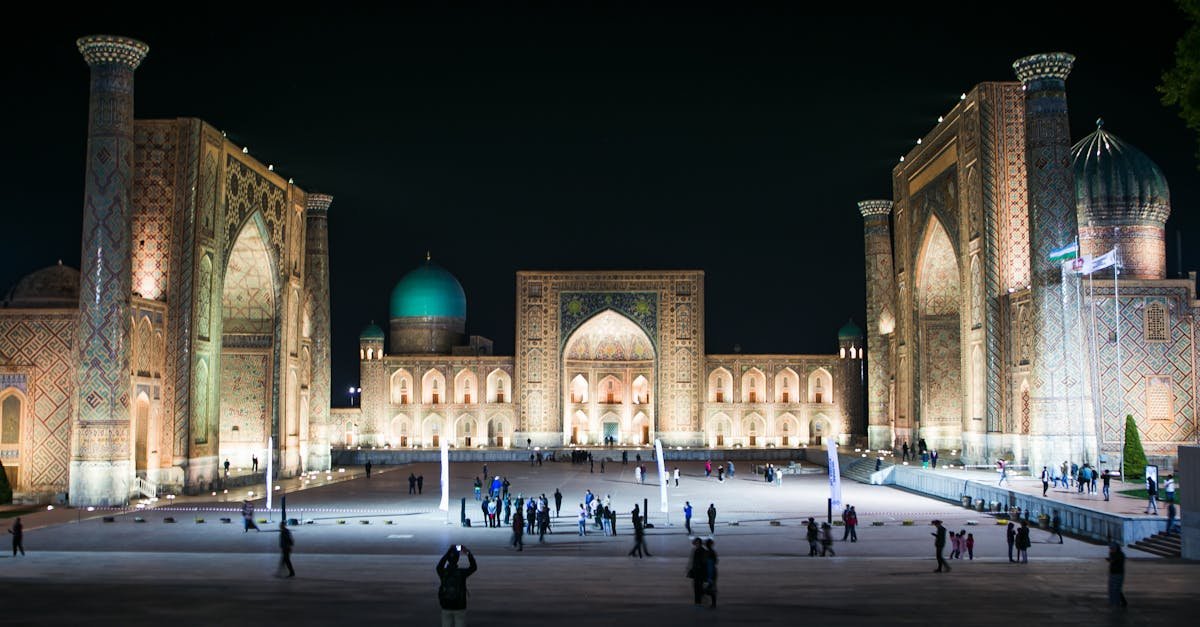
Bukhara and Samarkand are Uzbekistan's two great Silk Road cities, but they offer fundamentally different experiences. Samarkand is about monumental grandeur — the Registan's three madrassas are among the most awe-inspiring structures on earth, and everything is built at a scale designed to overwhelm. Bukhara is about immersion and intimacy: its 140 monuments are smaller individually but woven into a still-functioning city where the gap between history and daily life disappears. Samarkand is better for a single headline punch; Bukhara rewards several days of slow exploration. Most travellers who visit Uzbekistan find Bukhara the more emotionally affecting of the two cities precisely because it feels genuinely lived-in rather than curated for spectacle. If you can only choose one, Bukhara is the richer, more authentic experience — but the ideal Uzbekistan itinerary includes both.
Do people speak English in Bukhara?
English is spoken at a basic level in Bukhara's main hotels, upmarket restaurants, and the larger monument ticket offices, but it is not widely understood among the general population. Staff at guesthouses catering to international tourists often speak functional English, and younger Uzbeks in the old city sometimes have school-level ability. Away from the tourist circuit — in neighbourhood teahouses, local markets, and residential areas — Russian is far more useful as a lingua franca than English. Downloading the Google Translate app with the Russian and Uzbek offline packs before travelling is strongly recommended. A small phrasebook or language app will be repaid many times over in richer interactions with locals in Bukhara.
★ Hidden Gems Weekly
Like this? One place per week, in your inbox.
No spam, no fluff — just one underrated destination, every Tuesday.
Hand-picked and verified by Max, who founded Vacanexus from Luxembourg in 2026. No sponsorships, no paid placements. Every recommendation — restaurants, neighbourhoods, things to do — is selected for authenticity over popularity.