Dakar Travel Guide — Gorée Island's shadow, midnight mbalax, and the soul of West Africa
⏱ 12 min read📅 Updated 2026💶 €€ Mid-Range✈️ Best: Jan–Apr
€50–120/day
Daily budget
Jan–Apr
Best time
5–7 days
Ideal stay
XOF (CFA Franc)
Currency
Dakar arrives like a drumbeat — unannounced, insistent, and impossible to ignore. Perched on the westernmost tip of continental Africa, this Atlantic-facing capital presses its salt-sprayed cliffs against the ocean while the medina behind it hums with tailors, tea sellers, and wrestlers training in sandy lots. Dakar's light is extraordinary: a particular gold that makes hand-dyed indigo fabric glow and turns the pink lake of Lac Rose into something out of a fever dream. From the first call to prayer echoing over Plateau to the last kora note fading at a Sacré-Cœur nightclub, Dakar is a city that performs for nobody but itself.
Compared to other African capitals, Dakar punches well above its weight in cultural intensity. Visiting Dakar means navigating a city that produced Léopold Sédar Senghor's Négritude movement, shaped global wrestling culture, and turned teranga — Wolof hospitality — into a genuine civic religion. Things to do in Dakar range from the sobering pilgrimage to Gorée Island to the delirious joy of a mbalax concert that starts properly after midnight. Unlike Accra or Lagos, which sprawl relentlessly, Dakar fits its ambitions onto a compact peninsula, making it surprisingly walkable for a capital that vibrates at this decibel level.
✦ Find your perfect destination
Is Dakar really your perfect match?
Answer 12 quick questions about your travel style, budget and dates — we match you with the destinations that fit you best, from 600+ worldwide.
Dakar earns its place on serious travelers' lists because it refuses to be a facsimile of anywhere else. The city's artistic scene — anchored by the Dak'Art Biennale, the IFAN Museum, and a new generation of galleries in Almadies — rivals many European capitals in ambition. Dakar's beaches run from the urban grit of Plage de l'Île de N'Gor to the surfer-friendly swells of Yoff, all within taxi distance of the center. Senegalese cuisine, led by the nationally revered tiéboudienne, is widely considered the most sophisticated on the continent. Add a music culture so deep that mbalax became an international export, and Dakar makes an almost unanswerable case for itself.
The case for going now: Dakar is experiencing a quiet infrastructure renaissance ahead of hosting matches for the 2030 FIFA World Cup. New boutique hotels are opening in Plateau and Almadies, and direct Air France and Royal Air Maroc connections have made the city dramatically more accessible from Europe. The CFA franc's current exchange rate makes Dakar one of the most rewarding mid-range destinations in Africa right now — before the crowds discover it.
⛵
Gorée Island
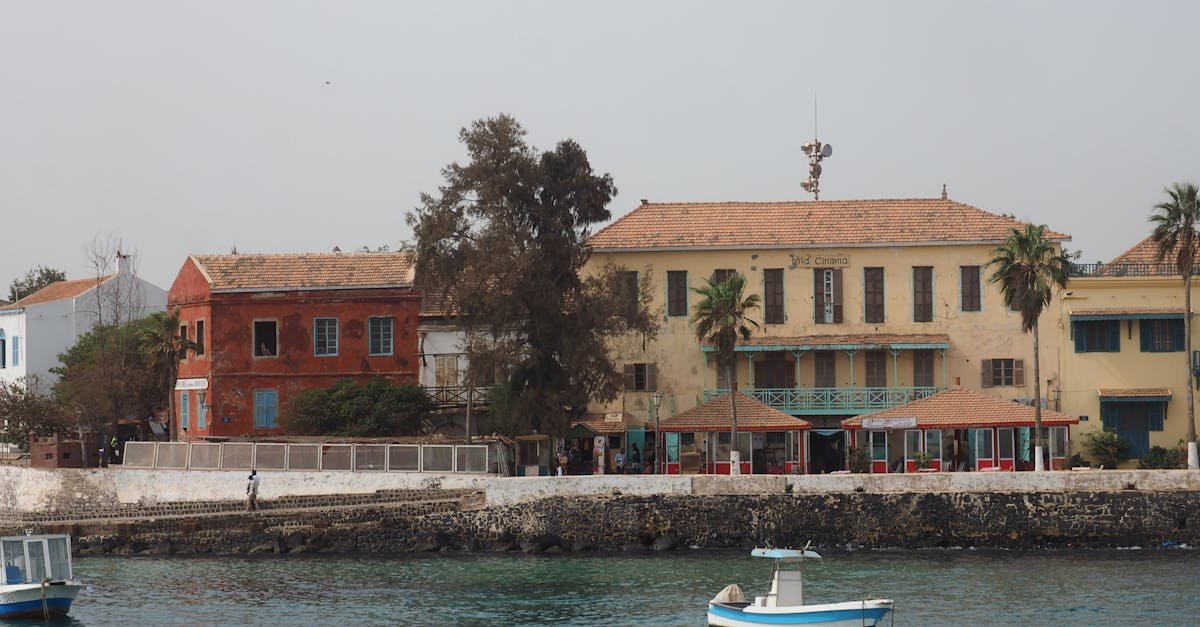
A fifteen-minute ferry from the mainland, Gorée Island carries the weight of the transatlantic slave trade in every coral-stone alley. The Maison des Esclaves and its haunting Door of No Return are among the most emotionally significant sites in Africa.
🥁
Live Mbalax Nights
Dakar's mbalax scene — the syncopated percussion tradition pioneered by Youssou N'Dour — reaches full velocity after midnight in clubs like Just 4 U. The sabar drums are so fast and complex that watching live feels physically overwhelming in the best way.
🎨
Dak'Art Biennale
The premier contemporary art event in Africa, held every even year in Dakar, transforms warehouses, rooftops, and colonial buildings into gallery spaces. Even in off years, the residual galerie network around the Plateau district offers extraordinary West African contemporary art.
🌊
Atlantic Surf & Beaches
The Presqu'île du Cap-Vert offers a surprising variety of beach experiences, from the lagoon-calm bay of N'Gor Island — reached by pirogue — to the consistent beach break at Virage favored by local surfers learning on secondhand boards.
Dakar's neighbourhoods — where to focus
Historic Core
Plateau
Dakar's administrative and historical heart clusters around the cathedral, the presidential palace, and the IFAN Museum of African Arts. Colonial-era buildings stand beside modern ministries while street vendors sell grilled fish from charcoal braziers at midday. Plateau is where you understand what Dakar was built to become.
Local & Loud
Médina
Established in 1914 when French colonial authorities relocated Dakar's African population, Médina is a grid of tight streets packed with tailors, Quranic schools, wrestling gyms, and the Grand Mosque. It rewards slow, aimless walking — every alley turns up something unmissable and entirely undesigned for tourists.
Beachside Buzz
Almadies
Dakar's most affluent residential and nightlife quarter stretches along the northwest coast to the Pointe des Almadies, Africa's westernmost point. Boutique hotels, rooftop restaurants, and the city's best craft cocktail bars cluster here. The beach is cleaner than anywhere near the center, and the sunsets are frankly unfair.
Creative Village
Ouakam
Tucked between Almadies and the Mamelles lighthouse district, Ouakam is where Dakar's artists, musicians, and young designers have set up studios and small concert spaces. The mosaic-covered Monument de la Renaissance Africaine looms above the neighborhood, visible from almost every rooftop in this part of the city.
Top things to do in Dakar
1. #1 — Ferry to Gorée Island
No Dakar itinerary is complete without the short but profound ferry crossing to Gorée Island, departing from the port terminal near Place de l'Indépendance. The island served as one of the principal embarkation points for enslaved Africans shipped to the Americas between the 15th and 19th centuries, and its Maison des Esclaves — with the infamous Door of No Return opening directly onto the Atlantic — has become one of the most visited heritage sites on the continent. Beyond the harrowing history, Gorée is also a remarkably beautiful place: bougainvillea tumbles over terracotta walls, there are no cars, and local artists sell work in studios along the main lane. Budget a full morning, eat grilled barracuda on the waterfront, and take the late-morning ferry back before the afternoon heat peaks.
2. #2 — IFAN Museum of African Arts
The Institut Fondamental d'Afrique Noire Museum on Place Soweto in Plateau holds one of the continent's most important collections of traditional African art and ethnographic objects, assembled across decades of field research. Masks from the Dogon country, ceremonial textiles from the Sahel, and Senegambian jewelry pieces share space in a building that itself dates from the French colonial period — a tension the museum's curators address with refreshing honesty. Visiting Dakar without stopping at IFAN is like visiting Florence and skipping the Uffizi; this is where the visual intelligence of the region comes into focus. Allow two hours, hire a guide from the museum's in-house team, and combine the visit with a walk through the adjacent Plateau streets afterward.
3. #3 — Wrestling at the Arène Nationale
Senegalese traditional wrestling — laamb — is the national sport, and watching a bout at Dakar's Arène Nationale or at one of the sand-ring venues in Médina is an experience that exists nowhere else on earth. Wrestlers undergo months of spiritual preparation with marabouts before major bouts, and the pre-fight rituals — dancers, griots, protective amulets tied to bare skin — are as elaborate and emotionally charged as the combat itself. Major championship bouts draw crowds of tens of thousands and the atmosphere is closer to religious festival than sporting event. Your hotel can often advise on upcoming bouts; alternatively, wandering through Médina on weekend mornings will almost certainly surface a neighborhood training session worth pausing for.
4. #4 — Lac Rose (Retba) Day Trip
Roughly 35 kilometers northeast of Dakar, Lac Retba — universally called Lac Rose — turns a startling shade of strawberry pink due to the Dunaliella salina algae that thrives in its hyper-saline water. Salt collectors wade through the shallows daily, their skin protected by shea butter, heaping white blocks of salt into wooden pirogues in a scene that has looked exactly the same for generations. The lake was formerly a stage finish of the Paris-Dakar Rally, and a small monument near the shore commemorates this. The best color saturation occurs in the dry season (November to April) and in the late afternoon light. Organize transport through your accommodation, combine it with a visit to the nearby fishing village of Niaga, and bring sun protection — the reflective surface is intense.
What to eat in Dakar and Greater Senegal — the essential list
Tiéboudienne
Senegal's national dish — braised fish layered over broken rice cooked in a rich tomato and tamarind broth with fermented shellfish — is the foundation of Dakar's food identity. Every household and restaurant has its own version, but the best are cooked in a single blackened pot for hours until the base rice chars slightly.
Yassa Poulet
Chicken marinated in lemon juice, caramelized onions, and mustard then slow-cooked until the sauce becomes sticky and intensely savory. Yassa originates with the Diola people of Casamance but is now a Dakar staple found everywhere from beachside shacks to proper restaurants.
Thiébou Yapp
The beef counterpart to tiéboudienne, slower in flavor and richer in fat, with root vegetables — cassava, eggplant, carrot — absorbing the meat juices during cooking. A single plate is typically a full day's meal, and refusing a second helping requires firm but respectful negotiation with your host.
Café Touba
Dakar's signature drink: strong coffee brewed with selim pepper and cloves, sweetened heavily with sugar, and sold from thermoses by street vendors at almost every corner. It is simultaneously stimulating and spiritual — named after the holy city of Touba and central to Mouride brotherhood culture.
Accara
Deep-fried black-eyed pea fritters sold hot from cast-iron pans by street vendors, especially in the morning. Light, crispy, and slightly earthy, accara are typically served in a torn piece of baguette with a spoonful of tomato and onion sauce — a breakfast that costs less than a euro.
Bissap Juice
Chilled hibiscus flower infusion — electric magenta in color, tart, and refreshing — served in every restaurant and poured from roadside pitchers by the glass. Bissap is sometimes blended with ginger or mint and remains the most-consumed non-alcoholic drink in Dakar across all social strata.
Where to eat in Dakar — our top 4 picks
Fine Dining
La Maison Rose
📍 Route de la Corniche-Est, Plateau, Dakar
Set in a coral-pink colonial villa above the Corniche with panoramic Atlantic views, La Maison Rose serves elevated Senegalese-French fusion: think thiéboudienne deconstructed with smoked grouper and saffron rice cream. The wine list is serious, the service is formal, and the sunset from the terrace is the finest in Dakar.
Fancy & Photogenic
Lagon 2
📍 Corniche Ouest, Plateau, Dakar
Built literally over the water on a platform jutting into the Atlantic, Lagon 2 is the most architecturally dramatic restaurant in Dakar. Fresh grilled lobster, crevettes, and catch-of-the-day barracuda are the reasons to come; the sensation of dining surrounded by ocean on three sides is the reason to book weeks ahead.
Good & Authentic
Chez Loutcha
📍 20 Rue Félix Faure, Médina, Dakar
A Dakar institution serving straightforward, enormous plates of tiéboudienne, yassa, and mafé since the 1970s. The dining room is fan-cooled and packed with civil servants, market traders, and the occasional visiting diplomat who knows where to find the real thing. Arrive before 1pm or the best fish is gone.
The Unexpected
Ngor Diarama
📍 Village de Ngor, Almadies, Dakar
Reached by a two-minute pirogue ride from Ngor beach, this open-air restaurant on Île de N'Gor serves whole grilled fish caught the same morning, eaten at plastic tables with sand between your toes. The 'menu' is whatever swam closest to the boat that day — ask the owner and trust the answer completely.
Dakar's Café Culture — top 3 cafés
The Institution
Pâtisserie Madina
📍 Avenue Blaise Diagne, Plateau, Dakar
Dakar's most beloved bakery-café has been producing flaky croissants, pain au chocolat, and strong Café Touba since the 1980s. The morning queue tells you everything — it contains everyone from schoolchildren to ministry officials. Sit on the pavement terrace and watch the Plateau come to life with a buttered baguette.
The Aesthetic Hub
Galerie Le Manège Café
📍 Rue du Dr Thèze, Plateau, Dakar
Attached to one of Dakar's most active contemporary art spaces, this café draws the city's creative class for post-opening discussions, working lunches, and weekend brunches. The walls rotate exhibitions, the WiFi is reliable, and the cold bissap with ginger is the best in Plateau. An essential stop on any Dakar arts itinerary.
The Local Hangout
Café des Arts de Soumbédioune
📍 Corniche Ouest near Soumbédioune Market, Dakar
A modest, covered terrace overlooking the famous Soumbédioune fishing beach where traditional pirogues launch before dawn. Fishermen sell their catch on the sand below while you drink tea and eat omelette sandwiches. The combination of quiet sea air, morning activity, and total lack of tourist infrastructure makes it one of Dakar's most authentic cafés.
Best time to visit Dakar
Jan
Feb
Mar
Apr
May
Jun
Jul
Aug
Sep
Oct
Nov
Dec
Jan–Apr: Dry season — clear skies, low humidity, ideal temperatures 24–30°CNov–Dec: Short shoulder — warming up, some humidity, fewer crowds than peakMay–Oct: Humid season — harmattan dust, July–Sep heavy rains, reduced tourism infrastructure
Dakar events & festivals 2026
Whether you're planning around a specific celebration or simply want to know what's happening, this guide covers the best events and festivals in Dakar — from major annual traditions to cultural highlights worth timing your trip around.
June 2026culture
Dak'Art Biennale of Contemporary African Art
Africa's most prestigious contemporary art event transforms Dakar's warehouses, colonial buildings, and public squares into gallery spaces every even-numbered year.
May 2026music
Saint-Louis Jazz Festival
Held in the UNESCO-listed colonial city of Saint-Louis, three hours north of Dakar, this internationally acclaimed festival brings African and global jazz musicians to rooftop terraces, river stages, and colonial courtyards each May. An easy day trip or overnight addition to any Dakar itinerary focused on music.
January 2026religious
Grand Magal of Touba
The largest annual religious gathering in Senegal — and one of the largest in Africa — commemorates the exile of Mouride founder Cheikh Ahmadou Bamba. Millions of pilgrims travel through Dakar en route to Touba, filling the city's gares routières and transforming the streets for several extraordinary days.
March 2026culture
Récréâtrales Festival
A major West African theatre and performing arts festival with installations and performances across Dakar venues, celebrating francophone African dramaturgy. Visiting Dakar in March during Récréâtrales means access to theatre, spoken word, and street performance in neighborhoods rarely penetrated by conventional tourism.
February 2026culture
Dakar Fashion Week
One of the premier fashion events on the African continent, showcasing Senegalese and pan-African designers working in wax prints, hand-dyed indigo, and contemporary hybrid styles. Shows take place in Almadies villas and Plateau galleries, making it the most photogenic week of the Dakar calendar.
April 2026music
Festa 2H Festival
Dakar's dedicated hip-hop and urban music festival celebrates Senegalese rap — one of Africa's most politically engaged and culturally rich rap scenes — with outdoor concerts, freestyle battles, and graffiti workshops across the Médina and Plateau districts across several evenings in April.
November 2026culture
Festival International du Film de Quartier
A grassroots film festival that screens African cinema in open-air neighborhood settings across Dakar, bringing independent West African film to communities who rarely access traditional cinema infrastructure. The format — plastic chairs, projector screens, night air — is uniquely communal and moving.
March 2026market
Marché Artisanal de la Médina
The Médina's annual expanded artisan market in March draws craftspeople from across Senegal and the wider Sahel region, selling hand-tooled leather, bronze casting, woven baskets, and silver jewelry. The best Dakar travel tips consistently include visiting during this market for the region's widest craft selection.
August 2026culture
Tabaski (Eid al-Adha) Dakar
Senegal's most visually spectacular public holiday sees Dakar's streets fill with families in their finest boubou robes, sheep markets spring up across every neighborhood, and the smell of grilled lamb waft citywide. Witnessing Tabaski in Dakar as a respectful visitor is a genuinely extraordinary cultural experience.
October 2026culture
Festival de Lutte Traditionnelle
Dakar's most significant traditional wrestling championship of the autumn calendar packs the Arène Nationale with passionate crowds for bouts between regional champions. The pre-match rituals — griots, dancers, protective marabout ceremonies — are as compelling as the athletic spectacle of laamb itself.
Guesthouses in Médina, local restaurant tiéboudienne plates, shared taxis, free beach access and public market visits.
€€ Mid-range
€50–120/day
Boutique hotels in Plateau or Almadies, quality restaurant dinners, private taxi transfers, Gorée ferry and museum entries.
€€€ Luxury
€120+/day
Design hotels like Pullman Teranga, fine dining at Lagon 2, private guided tours, and curated cultural experiences.
Getting to and around Dakar (Transport Tips)
By air: Dakar's Blaise Diagne International Airport (DSS), opened in 2017 and located 47 kilometers southeast of the city center, serves direct routes from Paris (Air France, ~5.5 hours), Casablanca (Royal Air Maroc), Brussels, and Lisbon, making it the most connected West African capital for European travelers. Connecting options via Addis Ababa (Ethiopian Airlines) and Istanbul (Turkish Airlines) expand access from further afield.
From the airport: The journey from Blaise Diagne Airport into central Dakar takes 45–90 minutes depending on traffic, which can be severe during peak hours. Official airport taxis charge a fixed rate of around 15,000–20,000 CFA (€23–30) to the Plateau; always confirm the price before entering. Yango (Dakar's dominant ride-hailing app) offers cheaper metered fares. A bus service (Dakar Dem Dikk) runs to the Petite Côte and city center at lower cost but with significantly more stops.
Getting around the city: Within Dakar, yellow-and-black taxis are the most practical option for visitors — always negotiate the fare before departing, as meters are rarely used. Yango app works reliably and offers fixed prices. The informal sept-place shared taxis and dakar-dem-dikk buses are used by locals and are extremely cheap but require Wolof or French navigation skills. Walking is viable across much of Plateau and Almadies, though heat and uneven pavements can make longer walks tiring.
Transport Safety & Scam Prevention:
Agree Taxi Fares Before Boarding: Dakar taxis do not use meters for tourists. Always negotiate and confirm the price clearly in CFA francs before the car moves — a short Plateau trip should cost 1,000–2,000 CFA, and airport runs 15,000–20,000 CFA. Use Yango app to benchmark fair prices before negotiating in person.
Gorée Ferry Ticket Touts: The official Gorée Island ferry runs from the official port terminal and costs around 5,200 CFA return for non-residents. Men offering 'special' ferry access or faster boarding outside the terminal are invariably charging inflated prices for the same standard service — queue at the official window.
Unsolicited Guides in Médina: Young men offering to guide you through Médina or to wrestling events may demand payment far above agreed rates at the end. Agree in writing (a note on your phone) on any guided service fee before following anyone, and book guided experiences through your hotel where possible.
Do I need a visa for Dakar?
Visa requirements for Dakar depend on your nationality. Select your passport below for an instant answer — based on the Passport Index dataset for entry into Senegal.
ℹ️ Indicative only. Always verify with the official consulate before booking. Data: Passport Index, April 2026.
For detailed requirements, documentation checklists and processing times by nationality: TravelDoc →
Search & Book your trip to Dakar
Find the best flight routes and hotel combinations using our partner Kiwi.com.
Frequently Asked Questions
Is Dakar safe for tourists?
Dakar is generally considered one of the safer capitals in West Africa, with no significant risk of terrorism targeting tourists and a culture of teranga (hospitality) that extends to visitors. Petty theft, bag snatching, and opportunistic scams around the port and Médina are the primary concerns — keep phones out of sight, use hotel safes for passports, and take taxis after dark rather than walking. The beach areas of Almadies and N'Gor are calm and widely used by expats and tourists without incident. Solo female travelers should exercise standard big-city caution.
Can I drink the tap water in Dakar?
Tap water in Dakar is treated and technically considered potable by local standards, but the aging pipe infrastructure in many parts of the city means contamination risk is real. Most visitors and all residents drink bottled or filtered water, which is cheap, widely available, and sold at every street corner. Avoid ice in drinks at informal establishments, and use bottled water for brushing teeth if your stomach is sensitive to new bacteria. Quality hotels in Plateau and Almadies typically provide filtered water in rooms.
What is the best time to visit Dakar?
The best time to visit Dakar is during the dry season, running from January through April. Temperatures sit at a comfortable 24–30°C, humidity is low, skies are reliably clear, and the Atlantic breeze keeps the city pleasant even at midday. November and December are a decent shoulder season — warming up and occasionally dusty from harmattan winds but still manageable. Avoid July through September if possible: the rainy season brings heavy downpours, high humidity, and occasional flooding in lower-lying neighborhoods. The Dak'Art Biennale in June of even-numbered years is a compelling reason to visit slightly outside the dry season.
How many days do you need in Dakar?
Five to seven days is the ideal length for a Dakar trip that balances the city's main cultural attractions with a day trip or two. Two days covers the essentials — Gorée Island and the IFAN Museum — but leaves Dakar feeling truncated. Three to four days allows you to add the Médina, Soumbédioune, Ngor Island, and a live mbalax night. A full week lets you include Lac Rose, a day trip to Saint-Louis, a wrestling event, and enough idle time to sit with the city at café terraces and understand it properly. Ten days is not excessive if you plan to explore Casamance or the Sine-Saloum Delta from Dakar as a base.
Dakar vs Accra — which should you choose?
Dakar and Accra are both compelling West African capitals but serve genuinely different travel appetites. Dakar is more compact, architecturally dramatic (the Corniche, Gorée Island, the Médina's dense grid), and defined by a specific cultural identity — Wolof language, Mouride Islam, mbalax music, and one of the great food traditions in Africa. Accra is larger, more anglophone (English is widely spoken), and has a faster-growing international creative scene. Dakar suits travelers drawn to cultural depth, music, history, and French-influenced cuisine; Accra suits those who want nightlife, English-language ease, and a gateway to Ghana's extraordinary beaches and Ashanti heritage. If you can, visit both.
Do people speak English in Dakar?
French is Dakar's official language and the primary language of government, education, and upscale hospitality, while Wolof is the dominant street language spoken by nearly all Dakarois regardless of ethnicity. English is spoken in top-tier hotels, international restaurants, and by professionals in the tourism sector, but is not reliable for day-to-day navigation through Médina, local markets, or with taxi drivers. Learning a handful of Wolof phrases — 'Mangi fi' (I'm here/I'm fine), 'Jërëjëf' (thank you), 'Naka nga def?' (how are you?) — generates warmth entirely disproportionate to the effort involved and will make your Dakar experience significantly richer.
★ Hidden Gems Weekly
Like this? One place per week, in your inbox.
No spam, no fluff — just one underrated destination, every Tuesday.
Hand-picked and verified by Max, who founded Vacanexus from Luxembourg in 2026. No sponsorships, no paid placements. Every recommendation — restaurants, neighbourhoods, things to do — is selected for authenticity over popularity.