Sidi Bou Said Travel Guide — The clifftop village that inspired Paul Klee
⏱ 11 min read📅 Updated 2026💶 €€ Mid-Range✈️ Best: Mar–Nov
€50–120/day
Daily budget
Mar–Nov
Best time
2–4 days
Ideal stay
TND
Currency
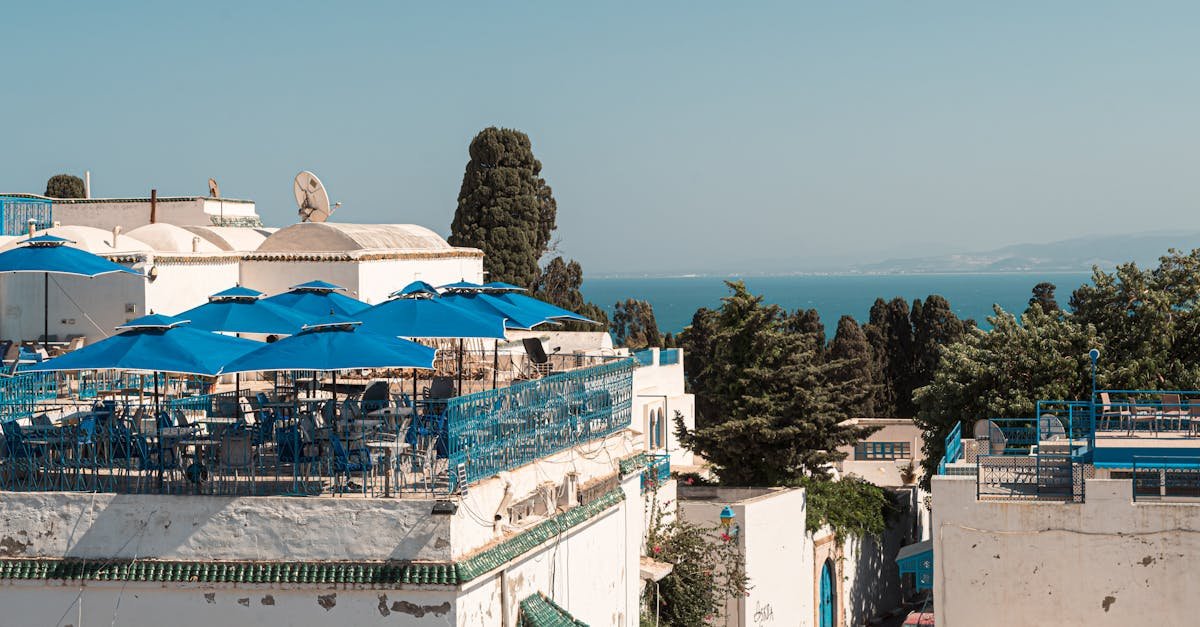
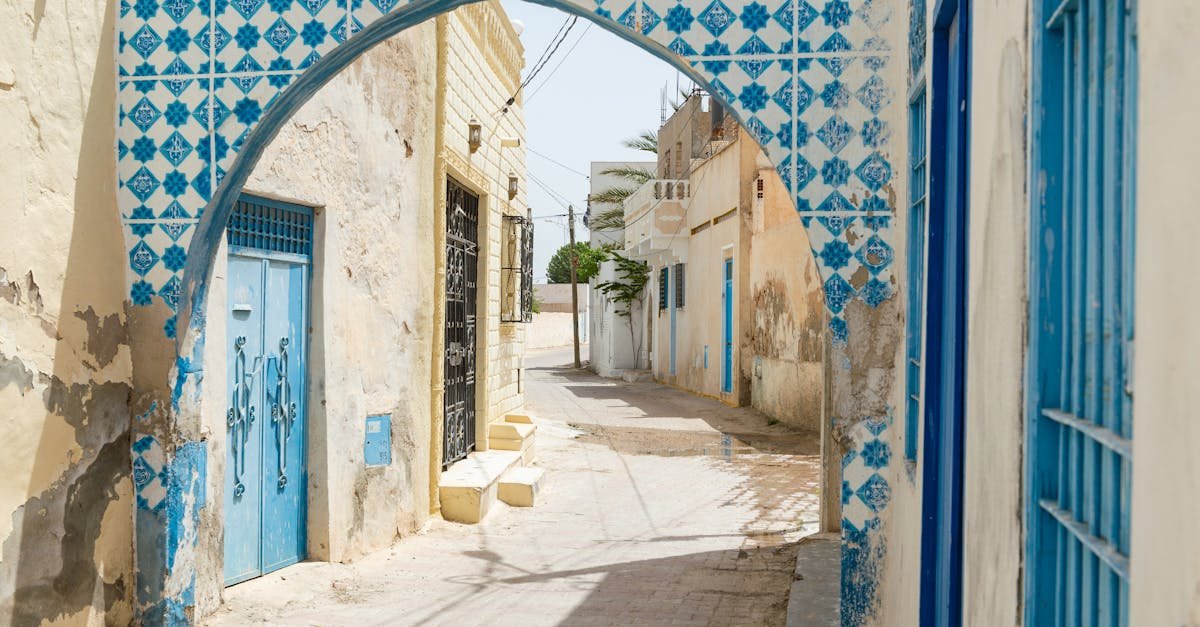
Perched on a limestone cliff above the Gulf of Tunis, Sidi Bou Said rewards visitors with one of the Mediterranean's most arresting streetscapes: chalk-white walls set against a sky so blue it blurs where sea ends and heaven begins. The air here carries salt, jasmine, and the low murmur of a medina that has barely shifted in a century. Cobalt-painted doors studded with iron nails punctuate every narrow lane, and bougainvillea spills over courtyard walls in extravagant magenta cascades. Sidi Bou Said is simultaneously art gallery, sacred village, and seaside escape — three identities worn as effortlessly as locals carry trays of pine-nut tea.
Visiting Sidi Bou Said is fundamentally different from touring a major North African city like Tunis or Sousse. There is no overwhelming souk rush, no sprawling medina labyrinth to navigate with white-knuckled focus. Instead, the village offers a curated, almost painterly experience — which is precisely why August Macke, Paul Klee, and Louis Moilliet made their famous 1914 pilgrimage here and returned to Europe transformed. Things to do in Sidi Bou Said range from lingering in landmark cafés to exploring the Ennejma Ezzahra palace museum, yet the real pleasure is simply wandering lanes and letting the light do what artists have always known it does here — make everything shimmer.
✦ Find your perfect destination
Is Sidi Bou Said really your perfect match?
Answer 12 quick questions about your travel style, budget and dates — we match you with the destinations that fit you best, from 600+ worldwide.
Sidi Bou Said has an almost unfair concentration of beauty for a village of under ten thousand souls. The protected blue-and-white building code — enforced since 1915 and among the earliest heritage preservation laws in Africa — means the aesthetics remain intact, unpolluted by billboard creep or concrete sprawl. Beyond the photogenic lanes, Sidi Bou Said sits on Carthaginian ground: the ruins of ancient Carthage lie barely three kilometres away, lending the village genuine archaeological gravitas. Add a working artists' community, excellent Tunisian cooking, and train access from central Tunis in under thirty minutes, and Sidi Bou Said becomes one of the most accessible and rewarding day-trips or short stays in the entire Mediterranean basin.
The case for going now: Tunisia's tourism infrastructure has seen meaningful investment since 2022, with upgraded coastal rail services and a renovated marina district below the cliff. The Tunisian dinar remains highly favourable for European visitors, making Sidi Bou Said outstanding value: a long lunch with wine costs less than a café stop in Paris. International flight competition has grown, with new direct routes from several European cities, so there has never been a better, cheaper moment to join the artists who discovered this clifftop gem.
🎨
Artist Quarter Strolls
Follow the same cobblestone lanes that captivated Paul Klee in 1914. Every doorway and tiled arch offers a ready-made composition in cobalt, white, and terracotta that rewards slow, aimless wandering.
🏛️
Carthage Ruins
Just three kilometres away, the UNESCO-listed ruins of ancient Carthage include Roman baths, Punic tophet, and an amphitheatre overlooking the Gulf of Tunis — an extraordinary complement to a Sidi Bou Said itinerary.
☕
Clifftop Café Culture
Café des Nattes and Café Sidi Chabaane perch above the sea and have served pine-nut tea for over a century. Sharing a tray of thé à la menthe here as the sun drops is an essential Sidi Bou Said ritual.
🌊
Marina & Beach Life
The Sidi Bou Said marina below the cliff offers sailing excursions and a small beach popular with Tunisians on weekends. It makes a refreshing counterpoint to a morning of cultural sightseeing on the hilltop.
Sidi Bou Said's neighbourhoods — where to focus
Village Heart
Rue Habib Thameur
The village's main spine climbs steeply from the train station to the central square, lined with souvenir workshops, cage-bird vendors, and the best concentration of blue-painted façades. Most visitors begin and end their Sidi Bou Said experience on this single photogenic street, yet its side alleys repay exploration equally well.
Cultural Enclave
Ennejma Ezzahra Quarter
Clustered around the Baron d'Erlanger's ornate palace-museum, this quieter northern section of Sidi Bou Said attracts fewer day-trippers. The Andalusian gardens spill down the cliff and the streets here feel like a living archaeology of Ottoman, Moorish, and Art Nouveau influence layered into a single neighbourhood.
Sea Level
La Marina District
Descend the cliff path and the whitewashed dreamscape gives way to a working marina lined with fishing boats and pleasure craft. Seafood restaurants here serve the freshest catch in the area and the evening promenade, popular with Tunis families who commute by train, has a genuinely local rhythm rarely found up on the hill.
Sacred Ground
Mausoleum of Sidi Bou Said
The village takes its name from the thirteenth-century Sufi holy man Abu Said al-Beji, whose white-domed mausoleum anchors the highest point of the settlement. Non-Muslims view only the exterior, but the surrounding lanes — narrower, quieter, shaded by ancient fig trees — offer the most serene experience in all of Sidi Bou Said.
Top things to do in Sidi Bou Said
1. Wander the Blue-Door Lanes
No Sidi Bou Said itinerary is complete without surrendering to pure, unscheduled wandering through the village's protected historic core. The 1915 heritage decree, championed by French resident Baron Rodolphe d'Erlanger, mandated that every building be whitewashed and every door and window painted in a specific shade of cobalt — one of the earliest urban conservation laws in Africa. The result is visually extraordinary: a coherent chromatic world that makes even mediocre photography look like gallery work. Start near the train station and climb slowly, ducking into whichever side lane catches your eye. Don't miss the wrought-iron window grilles, the hand-painted tile numbers above doorways, and the birdcages hung over thresholds — a local custom said to bring good fortune to the household within.
2. Visit Ennejma Ezzahra Palace
The Ennejma Ezzahra — meaning 'star of Venus' — is Sidi Bou Said's most important indoor attraction and arguably the finest example of early twentieth-century Moorish revival architecture in Tunisia. Baron Rodolphe d'Erlanger, a French-British musicologist and painter, spent three decades constructing and decorating this clifftop palace, filling it with hand-carved stucco, Andalusian tilework, and a sweeping terrace overlooking the Gulf of Tunis. Today the palace operates as the Centre des Musiques Arabes et Méditerranéennes, housing d'Erlanger's monumental six-volume study of Arab music alongside instruments, manuscripts, and rotating exhibitions. Entry is inexpensive, the guides are knowledgeable, and the upper terrace provides arguably the best panoramic view available anywhere in Sidi Bou Said — a worthy rival to the Café Sidi Chabaane outlook.
3. Day Trip to Carthage
Sidi Bou Said sits on the TGM suburban rail line that also connects Carthage, making a combined visit entirely practical and highly recommended. Ancient Carthage, founded by Phoenician settlers around 814 BC, was once Rome's great rival — a city of perhaps 500,000 people whose destruction in 146 BC the Romans considered so essential they salted the earth. What remains is scattered across a residential suburb but is no less compelling for it: the Antonine Baths, the largest in Africa outside Rome, the Punic ports, the tophet sanctuary, and the Byrsa Hill museum all reward a half-day of exploration. Most Sidi Bou Said visitors make Carthage their morning programme and return to the village for a long afternoon lunch and sunset cocktails on the clifftop — a near-perfect Tunisian day.
4. Drink Tea at Café des Nattes
Café des Nattes — named for the woven rush mats covering its tiered wooden benches — opened in the early twentieth century and quickly became the symbolic heart of Sidi Bou Said's artistic legend. André Gide wrote at its tables; Simone de Beauvoir reportedly preferred the upper terrace. Today it remains a working café rather than a museum piece, and locals mix freely with visitors over small glasses of thé à la menthe studded with pine nuts — a drink that has become so associated with the village it almost functions as a trademark. The experience costs almost nothing: a pot of tea rarely exceeds two dinars. Arrive early morning for solitude, midday for the full social theatre, or at dusk when the fading light turns every surface amber and the Gulf of Tunis glitters below like hammered copper.
What to eat in the Greater Tunis Coast — the essential list
Brik à l'Oeuf
Tunisia's definitive street snack: a paper-thin malsouka pastry folded around a whole egg, tuna, capers, and harissa then deep-fried until shatteringly crisp. Eating it without spilling yolk is a Tunisian rite of passage — locals claim it can't be done.
Lablabi
A robustly spiced chickpea broth poured over torn stale bread, garnished with harissa, cumin, olive oil, and a soft-cooked egg. Lablabi is Tunis's cold-morning cure-all and a deeply comforting lunch option in the cafés below Sidi Bou Said's cliff.
Thé au Pin
Pine-nut tea — strong, sweet mint tea topped with a floating layer of whole pine nuts — is Sidi Bou Said's signature drink. The nuts soften slowly in the hot liquid, adding a subtle resinous richness that transforms a familiar North African brew into something entirely local.
Grilled Sea Bass
The marina restaurants below the village serve whole sea bass grilled over charcoal with preserved lemon, chermoula, and a side of Tunisian salad. Caught the same morning in the Gulf of Tunis, the fish has an iodine sweetness that no amount of inland preparation can replicate.
Makroudh
A semolina pastry stuffed with date paste, orange-blossom water, and spices then fried and drenched in honey syrup. Makroudh originated in Kairouan but is sold at every Sidi Bou Said pastry shop, and its dense sweetness pairs perfectly with a bitter espresso.
Ojja aux Crevettes
A shakshuka-adjacent Tunisian classic: a spiced tomato and pepper sauce simmered with fresh prawns and finished with eggs poached directly in the pan. Served in a heavy cast-iron dish, ojja is one of the most satisfying late lunches the Tunisian coast produces.
Where to eat in Sidi Bou Said — our top 4 picks
Fine Dining
Restaurant Dar Zarrouk
📍 Rue Sidi Dhrif, Sidi Bou Said 2026, Tunisia
Set inside a converted Ottoman mansion with a bougainvillea-draped terrace overlooking the Gulf, Dar Zarrouk is the benchmark for upscale Tunisian dining in Sidi Bou Said. The menu centres on refined versions of coastal classics — grilled rouget, lamb mechoui, and artisanal brik — executed with evident technique. Reservations are essential in summer.
Fancy & Photogenic
Au Bon Vieux Temps
📍 Rue Habib Thameur, Sidi Bou Said, Tunisia
One of the village's most visually arresting dining rooms, Au Bon Vieux Temps occupies a historic courtyard house decorated with antique Tunisian lanterns and hand-painted Nabeul tiles. The food leans toward French-Tunisian fusion and the wine list, unusual for the region, features creditable Tunisian labels. Best experienced at weekend lunch.
Good & Authentic
Restaurant Chergui
📍 La Marina, Sidi Bou Said, Tunisia
Down at marina level, Chergui fills daily with Tunis families and local fishermen who treat it as a canteen. The grilled catch of the day, listed on a handwritten board, arrives with excellent harissa, fresh bread, and a simple salad for around twelve dinars. No pretension, serious flavour, and a genuine window into everyday coastal Tunisian life.
The Unexpected
Café Sidi Chabaane
📍 Route Touristique, Sidi Bou Said, Tunisia
Technically a café but serving light Tunisian plates alongside its famous pine-nut tea, Sidi Chabaane clings to the cliff face on a series of dramatic terraces. The view across the Gulf of Tunis at sunset is perhaps the single best free spectacle in the region. Food is secondary; the elevation and theatre are the real dish on offer.
Sidi Bou Said's Café Culture — top 3 cafés
The Institution
Café des Nattes
📍 Place Sidi Bou Said, Sidi Bou Said, Tunisia
The most famous café in Tunisia sits at the top of the village's main staircase on woven-mat benches beneath a vaulted ceiling. André Gide and Simone de Beauvoir both drank here. The pine-nut tea remains unchanged, the prices are astonishingly low, and the atmosphere — particularly at dusk — is genuinely irreplaceable.
The Aesthetic Hub
Café de la Nuit
📍 Place Sidi Bou Said, Sidi Bou Said, Tunisia
Directly opposite Café des Nattes on the central square, Café de la Nuit attracts a younger, design-conscious crowd drawn by its terracotta-toned interior and curated playlist of Andalusian and contemporary Tunisian music. Excellent espresso, passable pastries, and a social energy that makes it the ideal place to watch the village come alive at midday.
The Local Hangout
Café du Port
📍 La Marina, Sidi Bou Said, Tunisia
At marina level, entirely bypassed by most tourists, Café du Port opens at six in the morning for fishermen and closes late for marina workers finishing their shifts. The coffee is strong, short, and brutally cheap; the view across the bobbing boats toward open water feels entirely separate from the picturesque village above. A grounding counterpoint to hilltop glamour.
Best time to visit Sidi Bou Said
Jan
Feb
Mar
Apr
May
Jun
Jul
Aug
Sep
Oct
Nov
Dec
Peak Season (Apr–Oct) — warm sun, calm seas, festivals active; book accommodation earlyShoulder (Mar & Nov) — mild temperatures, fewer crowds, best value for European visitorsOff-Season (Dec–Feb) — cool and quiet; village is peaceful but some cafés reduce hours
Sidi Bou Said events & festivals 2026
Whether you're planning around a specific celebration or simply want to know what's happening, this guide covers the best events and festivals in Sidi Bou Said — from major annual traditions to cultural highlights worth timing your trip around.
July 2026culture
Festival International de Carthage
Held annually inside the ancient Roman amphitheatre at Carthage, this is North Africa's most prestigious performing arts festival. World-class musicians, orchestras, and theatre companies perform under the stars just minutes from Sidi Bou Said by TGM train. It's one of the
April 2026culture
Journées du Patrimoine de Carthage
Tunisia's national heritage days open normally closed Carthaginian and Roman sites to free public entry in mid-April. Guided walks, lectures by archaeologists, and open-air exhibitions take place across the Tunis–Carthage–Sidi Bou Said corridor, making it an ideal time to combine the village with deeper historical exploration.
August 2026music
Sidi Bou Said Music Nights
Local organisers stage impromptu and scheduled concerts of Tunisian malouf and classical Arab music in the village square and the Ennejma Ezzahra palace courtyard throughout August. The intimate scale — rarely more than two hundred attendees — makes this one of the most atmospheric small music events in the Mediterranean basin.
March 2026culture
Printemps des Arts de La Marsa
The neighbouring coastal town of La Marsa hosts this contemporary visual arts festival each spring, with galleries, studios, and public spaces exhibiting Tunisian and international artists. Many exhibiting artists are Sidi Bou Said residents, and the shuttle between venues traces the scenic coastal road above the Gulf of Tunis.
June 2026religious
Mawlid al-Nabi Celebrations
The Prophet's birthday is celebrated across Tunisia with particular warmth in Sidi Bou Said, where the mausoleum of the village's patron saint Abu Said becomes a focal point of prayer, candlelight processions, and the distribution of traditional sweets to visitors and locals alike in the hilltop lanes.
October 2026culture
Journées du Film Méditerranéen de Tunis
Tunis hosts this annual Mediterranean film festival in October, with screenings at venues across the capital and satellite events held in Sidi Bou Said. French, Italian, Greek, and North African productions compete, and the outdoor screenings with the Gulf as backdrop create a memorable cinephile atmosphere perfect for autumn visitors.
December 2026market
Marché de Noël de La Marsa
La Marsa's coastal promenade hosts a modest but charming Christmas-period craft market popular with Tunis expatriates and European winter visitors. Stalls sell Tunisian ceramics, woven textiles, preserved olives, and harissa products alongside seasonal European confectionery — an unexpected seasonal treat near Sidi Bou Said.
May 2026culture
Salon des Arts Plastiques de Sidi Bou Said
The village's own annual visual arts salon brings together Tunisian painters, sculptors, and ceramicists in an open-air exhibition along the clifftop terraces. Work for sale ranges from affordable prints to significant original canvases. This is the best single event for visitors interested in the living artistic tradition that Paul Klee helped inspire.
September 2026culture
Festival de la Médina de Tunis
Tunis's UNESCO-listed medina comes alive each September with open-air performances, heritage walks, and artisan demonstrations accessible on a day trip by TGM from Sidi Bou Said. The festival coincides with ideal September weather — warm but losing summer's intensity — making it one of the best times for a Sidi Bou Said and Tunis combined itinerary.
February 2026culture
Almond Blossom Festival, Testour
The Andalusian town of Testour, two hours from Sidi Bou Said, celebrates its famed almond orchards in late February with music, artisan markets, and malouf performances among the blossoming trees. A rewarding winter excursion that pairs well with the quieter, more meditative pace that visiting Sidi Bou Said in the off-season offers.
TGM day-tripper from Tunis; guesthouses; café meals; street food brik and lablabi keeping daily spend very low.
€€ Mid-range
€50–120/day
Boutique riad or hotel in the village; lunch at Dar Zarrouk; cultural entry fees; day trips to Carthage by train.
€€€ Luxury
€120+/day
Heritage mansion rental; private Carthage tours; sailing excursions; fine Tunisian wines; airport transfers by car.
Getting to and around Sidi Bou Said (Transport Tips)
By air: Tunis–Carthage International Airport (TUN) is the primary gateway for visiting Sidi Bou Said, served by direct flights from Paris, Rome, Frankfurt, Amsterdam, London Gatwick, and Brussels among others. Flight time from Paris is roughly two hours and twenty minutes. Low-cost carriers including Transavia and Tunisair Express have expanded European routes since 2023.
From the airport: From Tunis–Carthage Airport, Sidi Bou Said is reached in under thirty minutes by a combination of taxi to Carthage–Hannibal station and the TGM suburban electric train, which runs every fifteen minutes and terminates at Sidi Bou Said station. A taxi directly from the airport to the village costs approximately 25–35 TND. The TGM route also passes through Carthage itself, allowing a logical stop on arrival or departure.
Getting around the city: The TGM — Tunis–La Goulette–La Marsa — is a century-old suburban rail line connecting central Tunis to Sidi Bou Said in around 35 minutes for well under one dinar per journey. Trains run every 15–20 minutes during peak hours. Within Sidi Bou Said itself everything is on foot; the village is tiny and car access to the upper lanes is restricted. Taxis are available at the train station for luggage or mobility needs.
Transport Safety & Scam Prevention:
Agree Taxi Fares Upfront: Taxis in Greater Tunis frequently quote inflated flat rates to obvious tourists rather than using the meter. Always ask for the meter to be activated, or agree a firm price before departure. The airport-to-Sidi Bou Said fare should not exceed 40 TND regardless of time.
Buy TGM Tickets at the Window: The TGM is extremely cheap and legitimate ticket windows are always staffed. Avoid anyone on the platform offering to 'help' with tickets or suggesting the train is cancelled — it almost certainly is not. Tickets cost under one Tunisian dinar and are available at every station window.
Souvenir Pricing & Bargaining: In Sidi Bou Said's village shops, initial prices quoted to obvious tourists are typically two to three times the expected final price. Light, friendly bargaining is entirely normal and expected. A smile and a counter-offer of 50–60 percent of the opening price usually arrives quickly at a fair middle point.
Do I need a visa for Sidi Bou Said?
Visa requirements for Sidi Bou Said depend on your nationality. Select your passport below for an instant answer — based on the Passport Index dataset for entry into Tunisia.
ℹ️ Indicative only. Always verify with the official consulate before booking. Data: Passport Index, April 2026.
For detailed requirements, documentation checklists and processing times by nationality: TravelDoc →
Search & Book your trip to Sidi Bou Said
Find the best flight routes and hotel combinations using our partner Kiwi.com.
Frequently Asked Questions
Is Sidi Bou Said safe for tourists?
Sidi Bou Said is considered one of the safest destinations in Tunisia for visitors. The village is small, well-monitored, and has a long tradition of welcoming European artists, writers, and travellers going back over a century. Street crime is rare and serious incidents involving tourists are exceptional. Standard precautions apply — keep valuables secure in crowded areas and avoid walking alone on unlit paths below the cliff very late at night. Tunisia's overall security situation has improved markedly since 2019 and the UK, French, and German foreign offices currently classify Sidi Bou Said and Greater Tunis as broadly safe for tourism.
Can I drink the tap water in Sidi Bou Said?
Tap water in Sidi Bou Said and across Tunisia is technically treated and meets national safety standards, but the taste is heavily chlorinated and the mineral content can cause stomach upset in visitors not accustomed to it. Most travellers and all locals drink bottled water, which is inexpensive — one-and-a-half-litre bottles cost around 0.5 TND in any shop. Use tap water freely for teeth-brushing and washing. Ice in established cafés and restaurants is generally safe, as reputable venues use filtered or bottled water for it.
What is the best time to visit Sidi Bou Said?
The best time to visit Sidi Bou Said is from late March through early June or from September through October. These shoulder months deliver reliably warm, sunny weather — typically 22–27°C — with far fewer visitors than the July and August peak when Tunis families and European package tourists fill every lane by mid-morning. Spring also brings jasmine in bloom throughout the village. July and August are hot (often 35°C+) but culturally rich thanks to the Festival de Carthage. December through February is quiet and mild by North African standards at around 14–18°C but some smaller cafés reduce hours.
How many days do you need in Sidi Bou Said?
Sidi Bou Said can technically be visited as a half-day excursion from Tunis — the TGM makes it trivially easy — but you would experience only a fraction of what it offers. One full day allows a thorough village walk, the Ennejma Ezzahra palace, and dinner with sunset views. Two days let you add Carthage, which really deserves three to four hours of its own. Three to four days is the sweet spot for a Sidi Bou Said itinerary that includes a day trip to central Tunis, a marina excursion, and properly lingering over meals and tea. Ten days allows deeper exploration of Cap Bon, Dougga, and the medinas of Nabeul and Hammamet.
Sidi Bou Said vs Chefchaouen — which should you choose?
Both Sidi Bou Said and Morocco's Chefchaouen are beloved for their blue-and-white colour schemes, but the experiences are meaningfully different. Chefchaouen sits in the Rif Mountains and offers a landlocked, hiking-oriented atmosphere with a deep medina culture and cannabis-tolerant reputation. Sidi Bou Said is coastal — perched above the sea — and combines its village beauty with proximity to genuine archaeological wonders at Carthage and the cultural weight of Tunis. Sidi Bou Said is significantly smaller, quieter, and less touristy than Chefchaouen in high season. If ancient history, Mediterranean light, and a more refined café culture appeal more than mountain trekking and a busy medina, Sidi Bou Said is the stronger choice.
Do people speak English in Sidi Bou Said?
English is spoken at a basic to moderate level in Sidi Bou Said's tourist-facing businesses — hotels, the main restaurants, and craft shops on Rue Habib Thameur. However, Tunisia's colonial legacy means French is the dominant second language and far more widely understood than English. German is also encountered given the historically strong German tourist presence. For the smoothest experience, a few words of French go a very long way: even simple greetings in French are warmly received. Arabic phrasebook basics — shukran for thank you, laban for milk, brik for the famous pastry — will delight locals and elevate interactions considerably beyond what English alone achieves.
★ Hidden Gems Weekly
Like this? One place per week, in your inbox.
No spam, no fluff — just one underrated destination, every Tuesday.
Hand-picked and verified by Max, who founded Vacanexus from Luxembourg in 2026. No sponsorships, no paid placements. Every recommendation — restaurants, neighbourhoods, things to do — is selected for authenticity over popularity.