Tunis Travel Guide — Where the Medina meets ancient Carthage
⏱ 11 min read📅 Updated 2026💶 € Budget✈️ Best: Mar–Nov
€20–45/day
Daily budget
Mar–May, Sep–Nov
Best time
3–5 days
Ideal stay
TND
Currency
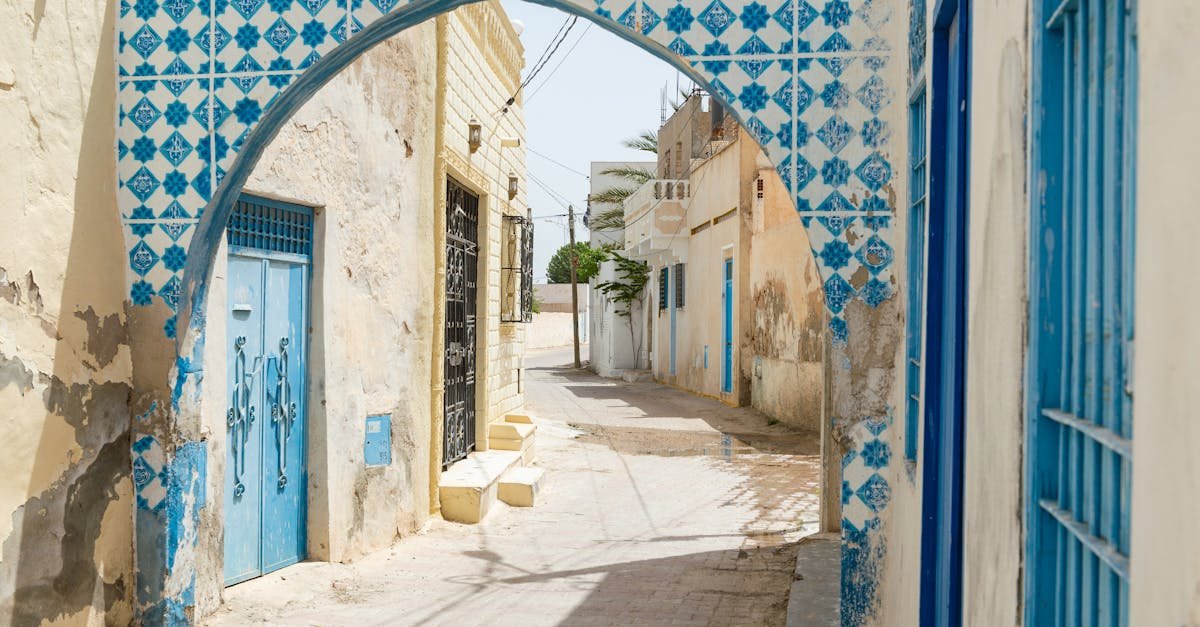
Tunis arrives on your senses all at once — the smoky sweetness of jasmine garlands sold at every corner, the echo of the muezzin threading through whitewashed alleyways, the clatter of a copper workshop where a craftsman has sat since dawn. Tunisia's capital is one of the Arab world's most intact medieval cities, its Medina still following the same organic labyrinth of souks it traced in the 7th century. Dye vats, Quranic schools, hammams and herb-sellers exist side by side, not as a tourist set-piece but as a functioning, breathing neighbourhood that locals call home.
What makes visiting Tunis genuinely special is the sheer density of experience packed into a compact, walkable area. Unlike Marrakech, Tunis doesn't perform for outsiders — its souks are priced for Tunisians, its cafés are full of chess players rather than selfie-takers, and the Roman and Punic ruins at nearby Carthage can be explored on a budget that would barely cover a museum ticket in Rome. Things to do in Tunis range from wandering Bardo's world-class mosaic collection to sipping mint tea on a rooftop overlooking the Great Mosque's minaret as the afternoon light turns the plaster gold.
✦ Find your perfect destination
Is Tunis really your perfect match?
Answer 12 quick questions about your travel style, budget and dates — we match you with the destinations that fit you best, from 600+ worldwide.
Tunis belongs on your travel list because it delivers a depth of history, culture and culinary richness that most European destinations charge five times as much to offer. The UNESCO-listed Medina alone — 700 monuments packed into one square kilometre — could occupy a curious traveller for days. Add the haunting tophet and oceanfront baths of Carthage just 20 minutes away by train, the world's largest collection of Roman mosaics at the Bardo National Museum, and a café culture that feels authentically Mediterranean, and Tunis emerges as one of the most rewarding cities on the southern shore of the sea.
The case for going now: Tunisia has quietly invested in tourism infrastructure over the past three years, with restored riad-hotels opening inside the Medina and a modernised metro line cutting journey times across the city. The Tunisian dinar remains exceptionally weak against the euro and pound, making Tunis extraordinary value right now. International visitor numbers are recovering but still well below pre-2011 peaks, meaning iconic sites like Carthage and the Bardo remain refreshingly uncrowded — a window that won't stay open for ever.
🏛️
Carthage Ruins
Walk the same ground as Hannibal and Dido at the UNESCO-listed ruins of Carthage, from the Antonine Baths at the waterfront to the eerie sacrificial tophet. History this old, this accessible and this uncrowded is rare anywhere in the world.
🕌
Medina Souk Trail
Lose yourself inside the 7th-century Medina, ducking between the Souk des Chéchias — where men still block-felt red hats by hand — and the soaring arches of the Zitouna Mosque. Craft workshops and spice stalls crowd every alley.
🖼️
Bardo Mosaics
The Bardo National Museum houses the planet's largest collection of Roman mosaics, displayed inside a sprawling 19th-century palace. Floor-to-ceiling panels rescued from Carthage and Dougga glow with a vibrancy that photographs cannot capture.
☕
Sidi Bou Saïd Cafés
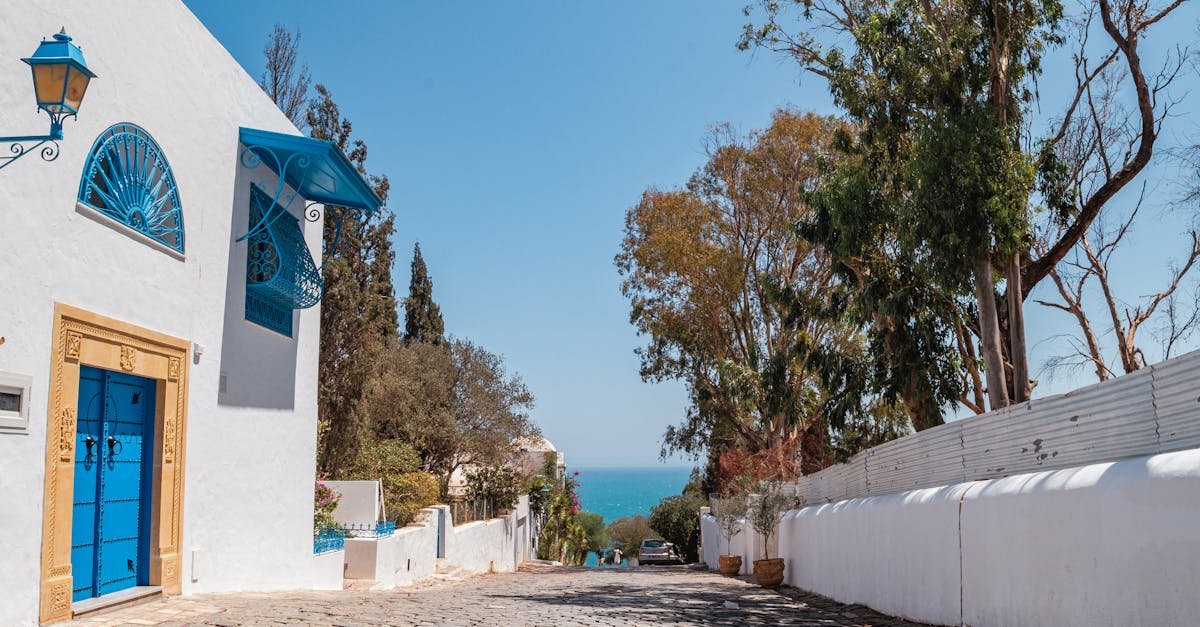
The clifftop village of Sidi Bou Saïd — 20 minutes by train from central Tunis — is all cobalt doors and bougainvillea cascading over brilliant white walls. Café des Nattes perches above the main square, unchanged since Paul Klee and Simone de Beauvoir sipped here.
Tunis's neighbourhoods — where to focus
Historic Heart
Medina
The Medina of Tunis is the oldest and most significant part of the city, a UNESCO World Heritage Site since 1979. Its warren of souks — leather-workers, jewellers, perfumers — rings the Great Mosque of Zitouna. Despite tourism, it remains a working neighbourhood where schoolchildren weave past donkey carts at rush hour.
Colonial Boulevard
Ville Nouvelle
Built by French colonists in the late 19th century, the Ville Nouvelle stretches from the iconic Porte de France to the leafy Avenue Habib Bourguiba. Grand Haussmann-style buildings house street-level patisseries and newspaper kiosks. The broad central promenade is where Tunisois stroll on cool evenings and political discussions spill from café terraces.
Seaside Escape
La Marsa
La Marsa sits at the northern end of the TGM commuter rail line, a breezy seaside suburb favoured by Tunis's middle class and expat community. Its seafront promenade is lined with fish restaurants and ice-cream parlours. On summer evenings, the corniche hums with families, couples and the distant sound of waves on white sand.
Artsy Village
Sidi Bou Saïd
Perched on a cliff above the Gulf of Tunis, this picture-perfect village painted exclusively in white and cobalt blue has attracted artists since the early 20th century. August Macke and Paul Klee both famously painted here. Today, galleries, craft boutiques and the iconic Café des Nattes make it a pilgrimage for aesthetes visiting Tunis.
Top things to do in Tunis
1. #1 Explore the Ancient Medina
Wandering the Medina of Tunis is the single non-negotiable experience in any Tunis itinerary. Enter through the Porte de France and let the alleyways swallow you whole. Begin at the Zitouna Mosque — visitors can enter the courtyard between prayer times — whose 9th-century columns were scavenged from Roman Carthage, making the space a palimpsest of civilisations. From there, follow the Souk des Orfèvres (goldsmiths) and duck into the 13th-century Medersa Slimania to see carved stucco schoolrooms open to a sky-lit courtyard. Allow at least three hours, and resist the urge to navigate by phone — the wrong turn usually leads somewhere more interesting than the intended destination.
2. #2 Day Trip to Carthage
Carthage is one of history's great ghost stories — a civilisation so threatening to Rome that the Senate voted three times to destroy it. Today the ruins are scattered across a residential suburb 20 minutes north of Tunis by TGM train, and a single ticket covers all six sites. Start early at the Antonine Baths, Rome's third-largest thermal complex, where column stumps rise above a blue sea backdrop. Walk uphill to the Byrsa Hill museum for Punic jewellery and carved stelae, then descend to the tophet, the ancient sacred precinct where stone urns and votive offerings were buried. Save the Carthage National Museum for the heat of midday, when its cool rooms and intact Punic mosaics offer welcome shade.
3. #3 The Bardo National Museum
No other museum in the Mediterranean world concentrates Roman mosaic art like the Bardo. Housed inside a 19th-century beylical palace on the western edge of Tunis, its galleries display floor-to-ceiling panels rescued from villas and baths across ancient Tunisia — a province Rome called Africa Proconsularis and considered among its most prosperous. The Virgil mosaic, showing the poet flanked by two muses, is perhaps the finest surviving portrait in Roman art. Beyond the mosaics, the Bardo holds outstanding Punic, Islamic and early Christian collections. Arrive when it opens at 9am to have the grand mirrored halls largely to yourself. Budget two to three hours and consider hiring an on-site guide for context that the sparse labels don't always provide.
4. #4 Hammam & Street Food Circuit
A visit to Tunis is incomplete without a traditional hammam session and an afternoon spent grazing through street food. The Hammam Kachachine in the Medina is one of the oldest operational bath-houses in North Africa, open to visitors at modest prices. After steaming, follow the street food trail on Rue Jemaa Zitouna: brik à l'oeuf (thin pastry folded around a runny egg and tuna, fried until golden) from a pavement stall, followed by a bowl of lablabi — a chickpea soup spiked with harissa, cumin and a torn bread crust — at one of the no-menu lunchrooms that open only until noon. Finish with a cone of fricassée, Tunis's beloved fried sandwich stuffed with olives, harissa and preserved lemon, found at any corner cart.
What to eat in Tunis and the Tunisian coast — the essential list
Brik à l'Oeuf
Tunisia's most iconic street food: a thin warqa pastry sheet folded into a triangle around a whole egg, tuna and parsley, then deep-fried to a shattering crisp. Eaten standing up, leaning forward to avoid the yolk escaping — a badge of honour for first-timers.
Lablabi
A deeply comforting morning dish of soft chickpeas in cumin-spiced broth poured over torn stale bread, topped with a raw egg that cooks in the heat, harissa paste and a thread of olive oil. Tunis's answer to a hangover cure and a working-class breakfast staple.
Merguez
Spicy lamb and beef sausages — brick-red from harissa and paprika — grilled over charcoal until the skin blisters and the fat sizzles. Served in a baguette with more harissa and sliced onions, merguez sandwiches are the after-midnight meal of choice across Tunis.
Ojja
A shakshuka-style dish of eggs poached in a fiery tomato, chilli and sweet pepper sauce, enriched with merguez slices or shrimp depending on the neighbourhood. Served bubbling in the pan at lunchtime restaurants throughout the Medina, scooped up with crusty bread.
Fricassée
Tunis's beloved small fried sandwich — a ring of yeasted dough split open and packed with tuna, olives, harissa, preserved lemon and boiled potato. Sold from corner carts for less than a euro, it is the city's great social equaliser, eaten by every class and generation.
Makroudh
Semolina pastry filled with date paste or fig, cut into diamond shapes, fried and dipped in honey. The Kairouan variety is considered the gold standard, but Tunis pastry shops on Rue de la Kasbah produce excellent versions. Essential with mint tea or strong Tunisian coffee.
Where to eat in Tunis — our top 4 picks
Fine Dining
Dar El Jeld
📍 5–10 Rue Dar El Jeld, Medina, Tunis
Housed inside a magnificently restored 18th-century merchant palace, Dar El Jeld is Tunis's most celebrated restaurant. Zellige-tiled rooms and painted cedarwood ceilings frame a menu of refined Tunisian classics — slow-braised lamb with quince, saffron-spiced fish couscous — executed with precision. Reserve at least a week ahead for dinner.
Fancy & Photogenic
Le Baroque
📍 Avenue de Carthage, Tunis Ville Nouvelle
A sleek brasserie in the Ville Nouvelle where Tunis's creative class gathers over inventive Franco-Tunisian plates — think harissa-glazed duck confit and semolina-crusted sea bream. The interior blends art deco tilework with contemporary lighting, making it one of the most photogenic dining rooms in the city.
Good & Authentic
Restaurant Essaraya
📍 6 Rue Ben Mahmoud, Medina, Tunis
Tucked inside a courtyard off the main souk drag, Essaraya draws a loyal crowd of locals for its unfussy, generous Tunisian home cooking. Daily specials — couscous on Friday, lamb osso buco on Thursdays — come with baskets of bread and a small salad. Cheap, hearty and completely honest.
The Unexpected
Café Culturel M'Rabet
📍 Souk Trouk, Medina, Tunis
One of the oldest café-restaurants in North Africa, M'Rabet occupies a 17th-century caravanserai above the Souk Trouk. Upstairs, low cushioned benches face a carved mashrabiya screen while tea is served in ornate glasses. The kitchen produces solid Tunisian mezze and grilled skewers at prices that haven't caught up with its fame.
Tunis's Café Culture — top 3 cafés
The Institution
Café des Nattes
📍 Place Sidi Bou Saïd, Sidi Bou Saïd
Perched on the main square of Sidi Bou Saïd since the 19th century, Café des Nattes (named for the straw mats covering its benches) is the most famous café in Tunisia. Paul Klee, August Macke and Simone de Beauvoir all sat here. Order pine-nut tea and watch the blue-doored street below in contentment.
The Aesthetic Hub
Café Universe
📍 Avenue Habib Bourguiba, Tunis Ville Nouvelle
A grand belle-époque café on the main boulevard, Café Universe has high ceilings, marble tables and a slow-paced elegance that recalls the colonial era without the awkwardness. It fills with students, journalists and chess players by mid-morning. The espresso is strong, the croissants are local and the people-watching is superb.
The Local Hangout
Café Halfaouine
📍 Place Halfaouine, Medina Nord, Tunis
On the northern edge of the Medina near the lively Place Halfaouine, this no-frills neighbourhood café draws an almost entirely local clientele of retired men playing cards and young workers grabbing a mid-morning mint tea. Plastic chairs, arborite tables and strong coffee served in dented pots — authentic Tunis at its most unguarded.
Best time to visit Tunis
Jan
Feb
Mar
Apr
May
Jun
Jul
Aug
Sep
Oct
Nov
Dec
Best season (Mar–May, Sep–Nov) — warm, dry and uncrowded; ideal for sightseeing in Tunis and day trips to CarthageShoulder season (Jun) — still pleasant before peak summer heat; good value hotelsOff-season (Dec–Feb, Jul–Aug) — December to February brings cool, rainy spells; July and August are extremely hot and humid in Tunis
Tunis events & festivals 2026
Whether you're planning around a specific celebration or simply want to know what's happening, this guide covers the best events and festivals in Tunis — from major annual traditions to cultural highlights worth timing your trip around.
April 2026culture
Journées Culturelles de la Médina
Every April, the Medina of Tunis opens its private courtyard homes, historic fondouks and artisan workshops for a week of guided tours, concerts and craft demonstrations. One of the
July 2026culture
Carthage International Festival
Running since 1964, the Carthage International Festival transforms the ancient Roman theatre of Carthage into one of Africa's premier open-air stages. World-music headliners, Arab pop icons and European orchestras perform under summer stars against a backdrop of 2,000-year-old carved stone. Tickets sell out fast — book ahead if visiting Tunis in July.
October 2026music
Tunis Jazz Festival
The annual Tunis Jazz Festival brings international and North African jazz musicians to venues across the city, from the Ville Nouvelle's cultural centres to intimate Medina courtyards. Shoulder-season timing means comfortable temperatures and manageable crowds — a highlight for the Tunis itinerary in autumn.
March 2026culture
Festival du Printemps de Tunis
A spring arts festival celebrating visual arts, theatre and film across galleries and cultural centres throughout Tunis. New exhibitions open simultaneously across the Ville Nouvelle and Medina, offering visitors a snapshot of contemporary Tunisian creative culture alongside the city's historic attractions.
May 2026religious
Sidi Bou Saïd Sufi Gathering
Each spring, the shrine of Sidi Bou Saïd at the top of the famous clifftop village hosts a gathering of Sufi brotherhoods for music, ritual and collective prayer. Drummers and chanters fill the narrow lanes at dusk in a ceremony largely unchanged for centuries — one of the most atmospheric events near Tunis.
August 2026culture
Festival de Hammamet
Just 60 kilometres south of Tunis, the coastal town of Hammamet hosts its prestigious international cultural festival in an open-air Roman-style theatre built inside a ruined villa. Ballet companies, symphonic orchestras and theatre troupes from across Europe and the Arab world perform through August.
November 2026culture
Journées Cinématographiques de Carthage
The Carthage Film Days (JCC), held biennially in Tunis, is Africa and the Arab world's oldest and most influential film festival. Screenings take place across multiple city cinemas, with a focus on African and Middle Eastern cinema unavailable elsewhere. The 2026 edition falls in odd years — check the official schedule.
December 2026market
Medina Winter Craft Market
In the weeks before and after the new year, artisan cooperatives set up special stalls throughout the Medina's main souks, showcasing the finest Tunisian ceramics, carpets, leather and silverwork. Prices are often better than during peak summer tourist season, making it excellent for considered souvenir shopping.
June 2026culture
Tabarka Jazz & Coral Festival
A two-hour drive northwest of Tunis on the Algerian border, Tabarka's seaside festival combines jazz with a coral-diving heritage celebration. Day trips from Tunis are popular during the festival, combining a scenic drive through the Tell Atlas foothills with evening concerts on the beach.
September 2026culture
Fête du Jasmin — Nabeul
The jasmine harvest festival at Nabeul, 80 kilometres from Tunis, celebrates the flower that defines the scent of the entire region. Garlands are sold throughout Tunis during this period, and the festival market in Nabeul showcases distilled jasmine essence, ceramics and food. A perfect shoulder-season day trip from Tunis.
Medina guesthouse dorm or cheap pension, street food meals, TGM train for Carthage and Sidi Bou Saïd, free mosque courtyards.
€€ Mid-range
€25–55/day
Riad-style boutique hotel in or near the Medina, sit-down restaurant lunches, Bardo entry, occasional taxi, cooking class.
€€€ Luxury
€55+/day
Restored palace hotel, Dar El Jeld dinners, private Carthage guided tour, hammam with full spa treatment and airport transfers.
Getting to and around Tunis (Transport Tips)
By air: Tunis-Carthage International Airport (TUN) receives direct flights from most major European hubs including Paris CDG, London Heathrow, Frankfurt, Amsterdam and Rome, with Tunisair, Air France, Lufthansa and several low-cost carriers operating routes. Flight time from Paris is approximately two and a quarter hours, making Tunis a genuinely easy long-weekend destination from western Europe.
From the airport: Tunis-Carthage Airport sits just 8 kilometres northeast of the city centre. The most convenient option is a yellow taxi — metered rides to central Tunis cost roughly 10–15 TND (€3–5) during the day, though insist the driver uses the meter. A public bus (line 635) runs to the city for a fraction of the cost but is slower. The TGM commuter train station at Ain Zaghouan is a short taxi ride from the airport and provides cheap access to Sidi Bou Saïd and Carthage.
Getting around the city: Tunis has a light metro (tramway) system connecting the main train station to outer suburbs, supplemented by an extensive bus network. The most useful line for tourists is the TGM (Tunis-Goulette-Marsa) coastal rail, which departs from the terminus next to the Medina and runs north through Carthage, Sidi Bou Saïd and La Marsa every 15–20 minutes at very low fares. Within the Medina itself, everything is walkable — the compact layout rewards exploration on foot.
Transport Safety & Scam Prevention:
Insist on the taxi meter: Some drivers at the airport or near tourist sites will quote inflated flat fares to foreigners. Always insist on the meter (compteur) before entering the vehicle — legal metered fares in Tunis are genuinely cheap, so there is no reason to accept an unmetered ride.
Ignore 'guide' offers at Medina entry: Men positioned near the Porte de France will offer Medina tours, claiming it is impossible to navigate alone. The Medina is small and well-signed; a free map from your hotel is sufficient. Unofficial guides sometimes lead visitors to commission-paying shops rather than genuine sights.
Change money at bank bureaux: Street money-changers near the main souks offer rates that appear favourable but often involve sleight of hand. Use official bank bureau de change offices on Avenue Bourguiba or your hotel reception for transparent, legal currency exchange at close-to-official Tunisian dinar rates.
Do I need a visa for Tunis?
Visa requirements for Tunis depend on your nationality. Select your passport below for an instant answer — based on the Passport Index dataset for entry into Tunisia.
ℹ️ Indicative only. Always verify with the official consulate before booking. Data: Passport Index, April 2026.
For detailed requirements, documentation checklists and processing times by nationality: TravelDoc →
Search & Book your trip to Tunis
Find the best flight routes and hotel combinations using our partner Kiwi.com.
Frequently Asked Questions
Is Tunis safe for tourists?
Tunis is generally safe for tourists, with the main visitor areas — the Medina, Ville Nouvelle, Sidi Bou Saïd and Carthage — presenting a low risk of serious crime. Petty theft and bag-snatching are possible in crowded souks, so keep valuables secure and avoid displaying expensive cameras on crowded streets. Solo female travellers should expect unwanted attention in some parts of the Medina but are not at elevated risk of physical harm. The Tunisian government maintains a significant security presence at major tourist sites following incidents in 2015, and the overall security situation has been stable for several years.
Can I drink the tap water in Tunis?
Tap water in Tunis is technically treated and meets WHO standards for chemical safety, but its high mineral and chlorine content means most visitors find it unpleasant to drink. Stomach sensitivities are common among new arrivals, so bottled water (widely available and inexpensive at around 0.5 TND per litre) is the safer choice for drinking. Tap water is perfectly fine for brushing teeth and showering. Avoid ice in drinks from street stalls, as it may be made from unfiltered water.
What is the best time to visit Tunis?
The best time to visit Tunis is during spring (March to May) or autumn (September to November). Both shoulder seasons deliver warm, dry days ideal for walking the Medina and exploring outdoor ruins at Carthage without suffering the intense heat of summer. April and October are particularly ideal — temperatures sit between 18°C and 26°C, crowds are manageable and hotel prices are reasonable. July and August bring extreme heat (often above 35°C) and higher tourist numbers around coastal areas, while December to February can be rainy and cool, though midwinter Tunis has a quiet, authentic charm.
How many days do you need in Tunis?
Three days is the realistic minimum for a satisfying Tunis visit — enough for the Medina, the Bardo and a half-day at Carthage with Sidi Bou Saïd. With five days you can add La Marsa, a hammam session, deeper souk exploration and the Dougga day trip, which is one of the finest Roman sites in North Africa. Ten days allows you to add Sousse, Hammamet and the otherworldly desert landscapes of southern Tunisia via an organised excursion. For most European travellers, a long weekend (4 nights) in Tunis hits the sweet spot — enough to feel the city rather than just tick its boxes.
Tunis vs Marrakech — which should you choose?
Tunis and Marrakech share a surface similarity — medieval medina, souks, hammams, mint tea — but the experience of each city is distinct. Marrakech has been optimised for tourism, with polished riad hotels and experiences calibrated to international expectations. Tunis is rawer, cheaper and less performative: its souks are genuinely priced for locals, its café culture is authentically North African, and its classical sites (Carthage, Dougga, Bardo) are more substantial than anything in Morocco's imperial cities. Marrakech wins on design and ease; Tunis wins on authenticity, value and Roman-Punic history. If you've done Marrakech and want something less scripted, Tunis is the natural next step.
Do people speak English in Tunis?
English is not widely spoken in Tunis outside upscale hotels, airport staff and some younger Tunisians in the Ville Nouvelle. French is the effective second language — a legacy of the French Protectorate — and any competence in French will transform your experience dramatically, unlocking menu comprehension, local conversation and better prices in souks. Arabic (Tunisian dialect, Darija) is the first language. A few words of Arabic — shukran (thank you), bislama (goodbye), addesh (how much?) — are always appreciated. In practice, most tourist interactions in the Medina manage through a combination of French, gesture and goodwill.
★ Hidden Gems Weekly
Like this? One place per week, in your inbox.
No spam, no fluff — just one underrated destination, every Tuesday.
Hand-picked and verified by Max, who founded Vacanexus from Luxembourg in 2026. No sponsorships, no paid placements. Every recommendation — restaurants, neighbourhoods, things to do — is selected for authenticity over popularity.